Receiving and inspection is where your inventory first meets your warehouse. Get this step wrong, and you're setting yourself up for a chain reaction of costly problems—think inaccurate inventory counts, shipping the wrong products, and dealing with unhappy customers. This isn't just a task for the receiving dock; it's your first and best line of defense against supply chain headaches.
Why Flawless Receiving Is Your First Line of Defense

A lot of e-commerce brands and even some 3PLs treat receiving as a simple box-ticking exercise. Just get the stuff off the truck and onto a shelf, right? That’s a huge mistake.
In reality, the receiving dock is where your profitability, inventory accuracy, and customer satisfaction are first put on the line. Every single thing that happens downstream—from putaway and picking to packing and shipping—relies on the data you capture and the quality you verify right at this moment.
The stakes have never been higher. With global e-commerce sales expected to hit $7.4 trillion, the sheer volume of goods flying through warehouses is staggering. This boom means that nearly one in every four dollars spent in retail now happens online, cranking up the pressure on fulfillment operations to be absolutely perfect.
The True Cost of a Small Mistake
Let's walk through a simple, real-world scenario we've seen happen more times than we can count.
A shipment of 500 blue t-shirts (SKU #TS100-BLU) arrives from your supplier. But there was a mix-up at their factory, and 50 of those shirts are actually navy (SKU #TS100-NAV). Without a meticulous receiving process, your team scans the whole lot in as blue. The problems start to snowball immediately:
- Your Inventory is a Mess: Your warehouse management system (WMS) now shows 500 blue shirts, but you only have 450. It also shows you have zero navy shirts, but you actually have 50 sitting on the shelf.
- Unhappy Customers: Fifty people order a blue shirt and get a navy one instead. Cue the customer service emails, bad reviews, and costly returns.
- Stockouts and Lost Sales: Believing you're out of navy shirts, you don't reorder them. You just missed out on 50 potential sales.
- Wasted Time and Money: Your team is now bogged down handling returns, answering angry customers, and searching for inventory that, according to the system, doesn't even exist.
This single, tiny error at the receiving dock creates a ripple effect of financial loss and brand damage. It’s the perfect example of why a rock-solid receiving and inspection process isn’t a cost center—it's a strategic investment in keeping your operations running smoothly.
This guide treats receiving as a core function for building a resilient e-commerce business. To see how this crucial first step fits into the bigger picture, check out our guide on building an efficient supply chain for ecommerce growth.
Building Your Inbound Receiving Playbook
Let's be honest: a generic checklist taped to a wall isn't going to cut it in a busy warehouse. To really get a handle on your receiving and inspection process, you need a solid, repeatable playbook—a detailed standard operating procedure (SOP) that leaves zero room for guesswork. This isn't about just ticking boxes; it's about building a bulletproof system that everyone on your team can execute flawlessly, every single time.
When putting this guide together, it helps to know the lingo. If you compare a runbook versus playbook, you'll see a playbook is more strategic and built to adapt. That makes it the perfect format for the fast-moving, sometimes chaotic world of an e-commerce warehouse.
So, let’s walk through the core stages of a receiving playbook that actually works, starting long before a truck ever backs into your dock.
Before we dive into the details of each step, it's helpful to see the big picture. A truly effective workflow is more than just a series of disconnected tasks; it's a cohesive process where each stage builds on the last.
Here’s a high-level look at the core stages that should form the backbone of your receiving and inspection playbook.
Core Stages of the Receiving and Inspection Workflow
| Stage | Key Activity | Critical Goal |
|---|---|---|
| Pre-Arrival | Verify ASN against PO; schedule dock appointment. | Catch discrepancies early and ensure dock readiness. |
| Unloading | Visually inspect trailer; unload and stage pallets. | Identify and document in-transit damage before accepting. |
| Initial Verification | Count pallets and cartons; verify against BOL. | Confirm high-level shipment accuracy immediately. |
| SKU-Level Inspection | Open cartons, scan items, and verify quantities. | Ensure every item received matches the PO exactly. |
| Quality Control | Visually inspect a sample of units for defects. | Prevent damaged or subpar products from entering stock. |
| Documentation | Record all findings, damages, and discrepancies. | Create a clear audit trail for claims and supplier accountability. |
| System Reconciliation | Update WMS/IMS with accurate received quantities. | Make inventory available for sale with confidence. |
Think of this table as your roadmap. By ensuring each stage is handled with precision, you build a system that protects your inventory, your finances, and your brand's reputation from the moment goods arrive.
The Pre-Arrival Stage
Great receiving starts with great prep. The second you get an Advance Shipping Notice (ASN) from a supplier, the clock starts. This isn’t a passive step where you just wait for the truck—it's your first active checkpoint.
Your team needs to pull up that ASN and immediately compare it to the purchase order (PO) in your Warehouse Management System (WMS). Do the SKUs line up? Are the unit counts what you expected? Catching a mismatch here saves a mountain of headaches later. This is also when you lock in the delivery appointment, making sure you have the dock space and manpower ready to go. No bottlenecks.
A well-managed dock schedule is the foundation of an efficient warehouse. Overlapping deliveries lead to congestion, rushed work, and a much higher likelihood of errors during the crucial receiving and inspection phases.
Unloading and Initial Verification
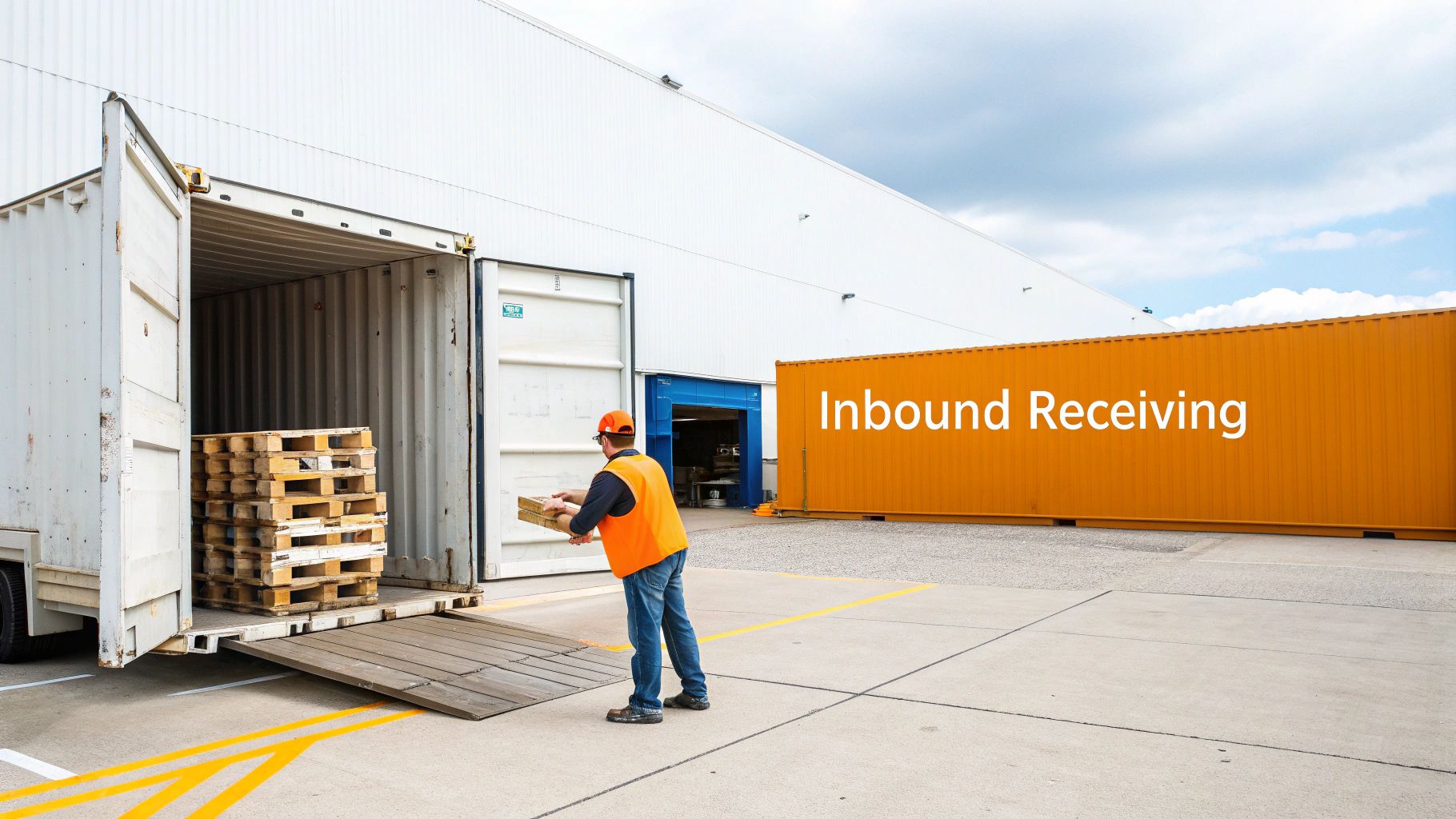
Once the truck arrives, the real work begins, but it has to be methodical. The very first thing to do is a visual inspection of the trailer and pallets before a single box is moved. Look for the tell-tale signs of damage in transit—crushed corners, gnarly water stains, or torn shrink wrap.
If you see anything suspicious, snap photos and make a note on the Bill of Lading (BOL) right then and there, before you sign it. This is your ammunition for filing freight claims. Miss this step, and you’ve got almost no chance of getting reimbursed.
As pallets come off the truck, stage them in a designated receiving area. This spot should be clean, bright, and completely separate from your main pickable inventory. Then, your team does an immediate verification against the BOL and packing slip.
- Pallet Count: Does the number of pallets on the dock match what the BOL says?
- Carton Count: Does the number of boxes on each pallet match the packing slip?
- Label Check: Are the cartons clearly labeled with the right SKU and PO numbers?
This is your first chance to spot big-picture problems. If the BOL says 100 cartons but you only count 98, you’ve already found a discrepancy that needs to be sorted out before you even think about opening a box.
The Power of a Dedicated Inspection Area
One of the biggest mistakes I see warehouses make is trying to inspect inventory in a cramped, chaotic dock area. Don't do it. Set up a specific, well-equipped station just for detailed receiving and inspection. It doesn’t have to be massive, but it absolutely has to be organized.
Stock this area with the tools your team needs to do the job right:
- Box cutters and safety knives
- A calibrated scale for spot-checking weights
- Barcode scanners that talk to your WMS
- A computer terminal for quick data entry
- Good, bright lighting to easily spot defects
- A camera or phone for documenting any damages
Creating a dedicated space transforms inspection from a rushed chore into a professional, controlled part of your operation. It sends a clear message to your team that this step is a priority, which directly leads to better accuracy and higher quality control across the board.
Mastering Quality and Compliance Inspections
Okay, so you’ve counted the cartons and verified the SKUs. Now the real work begins. This is where your team shifts from just receiving inventory to truly inspecting it. This is the moment your attention to detail protects your customers, your brand, and your bottom line.
Simply matching a carton count to a packing list isn’t enough. You need to dig deeper. A tiered approach works best—not every product needs the same level of scrutiny. Low-cost, durable goods might just get a quick spot-check. But high-value electronics or fragile items? Those demand a much closer look.
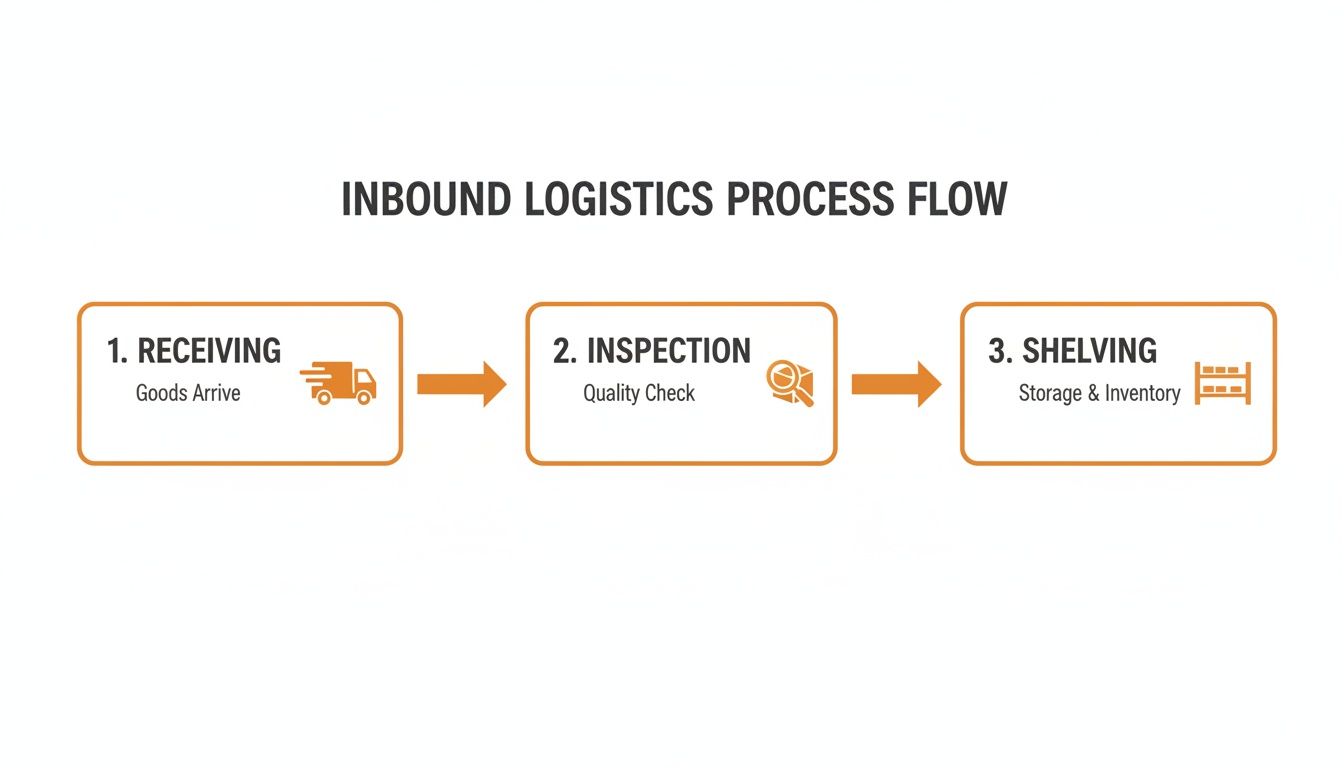
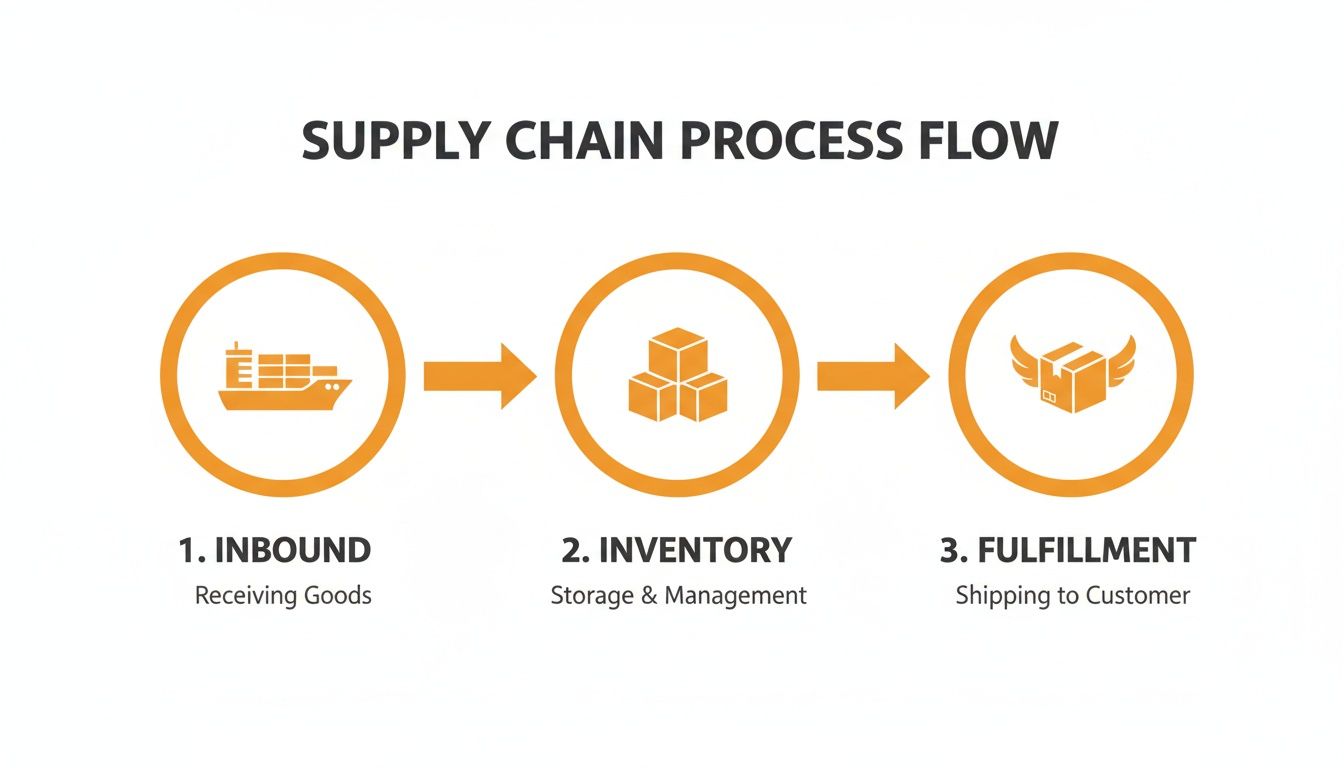
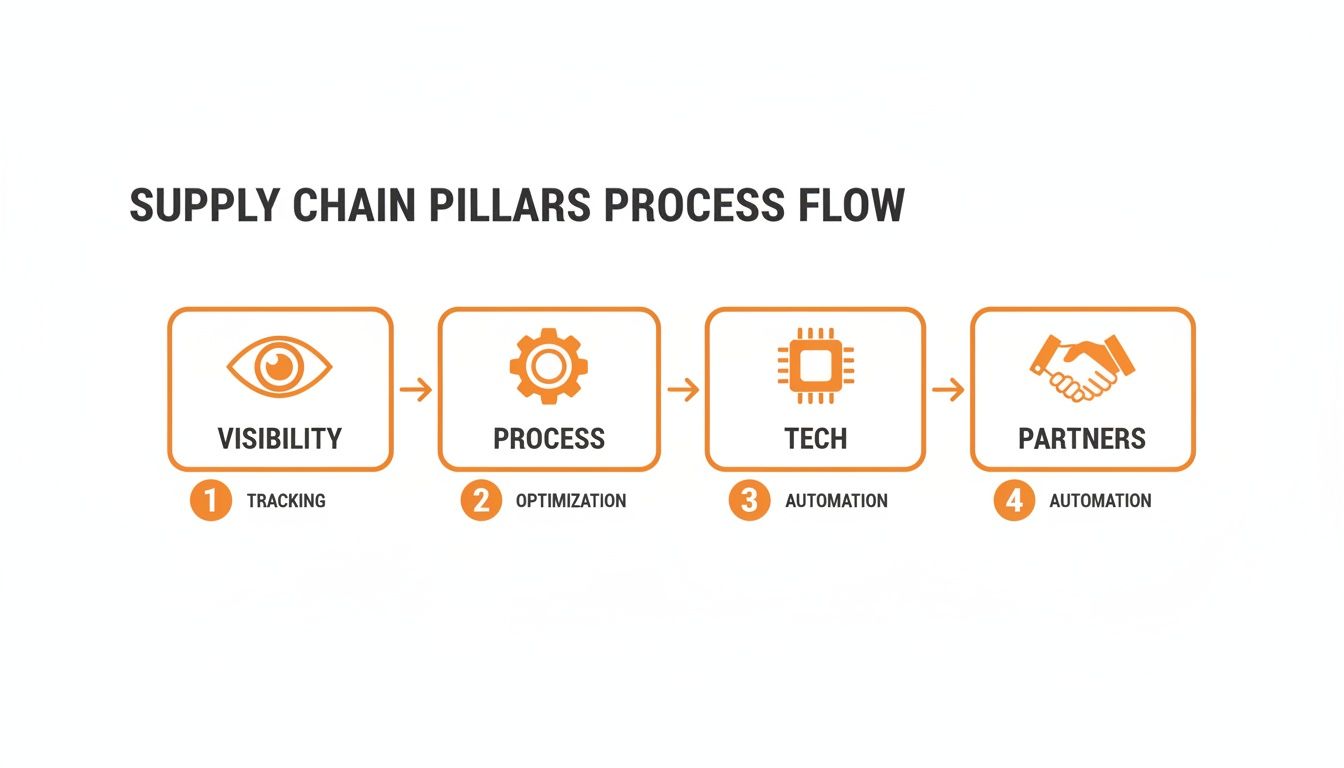
This whole inbound process, from pre-arrival tracking to the final inspection, needs to be a smooth, repeatable workflow.

As you can see, inspection isn’t a standalone task. It’s the critical quality gate that builds on accurate pre-arrival data and a careful unloading process.
Establishing Your Quality Control Checklist
Think of your inspection checklist as your first line of defense against defects and customer complaints. It has to be specific, easy for anyone on your team to follow, and built around the actual products you sell.
An inspector should be able to run through these points quickly:
- Physical Condition: Are there any scratches, dents, tears, or other obvious damage to the product itself?
- Packaging Integrity: Check the retail box. Are the corners crushed? Is the seal broken? Any discoloration?
- Label and Barcode Accuracy: Scan the barcode. Does it pull up the right item in your system?
- Product Specifications: Does the color, size, and model number on the item match what’s on the purchase order? No substitutions.
- Expiration Dates: For anything with a shelf life, check the date. Make sure it meets your minimum requirement, like being at least 90 days out.
Let's say you just received a shipment of high-end skincare. A proper QC check means opening a few units to make sure the jars aren't cracked, the labels are applied straight, and the safety seals are perfectly intact. That one small step is what stops a customer from getting a damaged or tampered-with product.
Navigating Amazon FBA Compliance
For anyone selling on Amazon, FBA compliance is everything. It’s not just a suggestion; it's a set of rules that, if broken, lead to costly chargebacks, receiving delays, or even Amazon refusing your entire shipment. The inspection stage is your final chance to catch these issues before they become a massive headache.
If you need a full breakdown of the rules, our guide on Amazon FBA labeling requirements goes into much greater detail.
Think of FBA prep as a non-negotiable part of your quality inspection. A missing FNSKU label or an incorrect poly bag is just as much a "defect" as a scratch on the product itself.
Your team needs to be trained to spot and fix the common FBA slip-ups during the inspection phase:
- FNSKU Labeling: Is the FNSKU label correct for the ASIN? Is it neatly applied and completely covering any old barcodes?
- Poly Bag Requirements: If an item needs a poly bag, is it in one? And does that bag have the required suffocation warning printed on it?
- Kitting and Bundling: For sets or bundles, are all the components actually there? Are they packaged together correctly so they can be sold as a single unit?
There's a huge difference between inspecting a simple case-packed item and a complex bundle. A case of 24 identical coffee mugs is easy—check one or two for damage and confirm the FNSKU is on every box. But a "Work from Home" kit is another story. You have to verify the mug, a notebook, a pack of pens, and a USB hub are all present, correctly bundled, and have a single FNSKU label for the set. Your inspection process has to be flexible enough to handle that complexity.
What to Do When Shipments Go Wrong: Damages, Discrepancies, and Returns

Let's be real: no matter how airtight your receiving and inspection process is, things go wrong. A forklift bumps a pallet, a truck springs a leak, or the supplier simply miscounts. That’s just the nature of logistics. You’re not judged by whether these things happen, but by how well you deal with them when they do.
Having a clear, repeatable protocol isn't a nice-to-have; it's the only way to protect your inventory and your client's business. When a problem pops up, your team needs a playbook, not a guessing game. The goal is to move from chaos to control, fast.
Damaged Goods: Document and Isolate Immediately
The second your team lays eyes on a damaged item, the clock is ticking on your ability to file a successful claim. Simply pushing a crushed box to the side won't cut it. You need a formal process built on hard evidence.
First thing’s first: photographic evidence is non-negotiable. Train your crew to snap clear pictures from every angle. Make sure they capture:
- The outside of the master carton, especially any rips, punctures, or water stains.
- The inside of the carton, showing how everything was packed (or wasn't).
- Close-up shots of the actual damage on the product itself.
- A crystal-clear photo of the shipping label and any tracking numbers.
Once you've got the pictures, get that damaged stock out of the main receiving area. Set up a dedicated, clearly marked "quarantine" or "hold" zone in your warehouse. Physically separating it is the only way to guarantee a damaged product doesn't get accidentally put away and sold.
Finally, update your WMS. Those damaged units need to be moved to a non-sellable or "On Hold" status in your system. This digital quarantine keeps them out of the sales channels and gives everyone an accurate count of what's actually available.
Dealing with Quantity Mismatches
Quantity discrepancies are a classic receiving headache. You either get a shortage (less than you ordered) or an overage (more than you ordered). Both create chaos for your inventory records if you don't jump on them right away.
If you come up short, the first step is always to double-check. Recount the items, review the packing slip again, and check the carton labels. If the shortage is real, you must note it on the Bill of Lading (BOL) before that driver pulls away. That simple note—"Received 98 of 100 cartons"—is your golden ticket for filing a claim.
Overages are a different beast. It might feel like you just got free stuff, but it's really an accounting problem waiting to happen. The extra units should be separated and logged as "Found Inventory," but don’t add them to your sellable stock. Fire off an email to your client or the supplier immediately and wait for their instructions.
Never assume an overage is "free inventory." It's almost always a mistake that will need to be reconciled later, and absorbing it into your stock will only create bigger problems down the line.
The Unique Beast: Customer Returns
Handling customer returns is its own special kind of receiving and inspection. Returns are a massive, unavoidable part of e-commerce—consumers sent back nearly $850 billion in goods last year. This trend means you need a rock-solid returns process to figure out what can be salvaged and resold. For a deeper dive, you can discover insights about the rising return rates and their impact on logistics.
Inspecting a return is like a mini-forensic investigation. Your team isn’t just looking at the product; they’re assessing the packaging to decide its fate:
- Restock: Is the item in brand-new, unopened, pristine condition?
- Refurbish: Is the product okay but the box is torn or crushed?
- Dispose/Liquidate: Is the item clearly used, damaged, or otherwise unsellable?
Constant communication with your client is key here. They need to know the condition of every return to process refunds correctly and keep their inventory valuation accurate.
Using Technology to Measure and Improve Performance
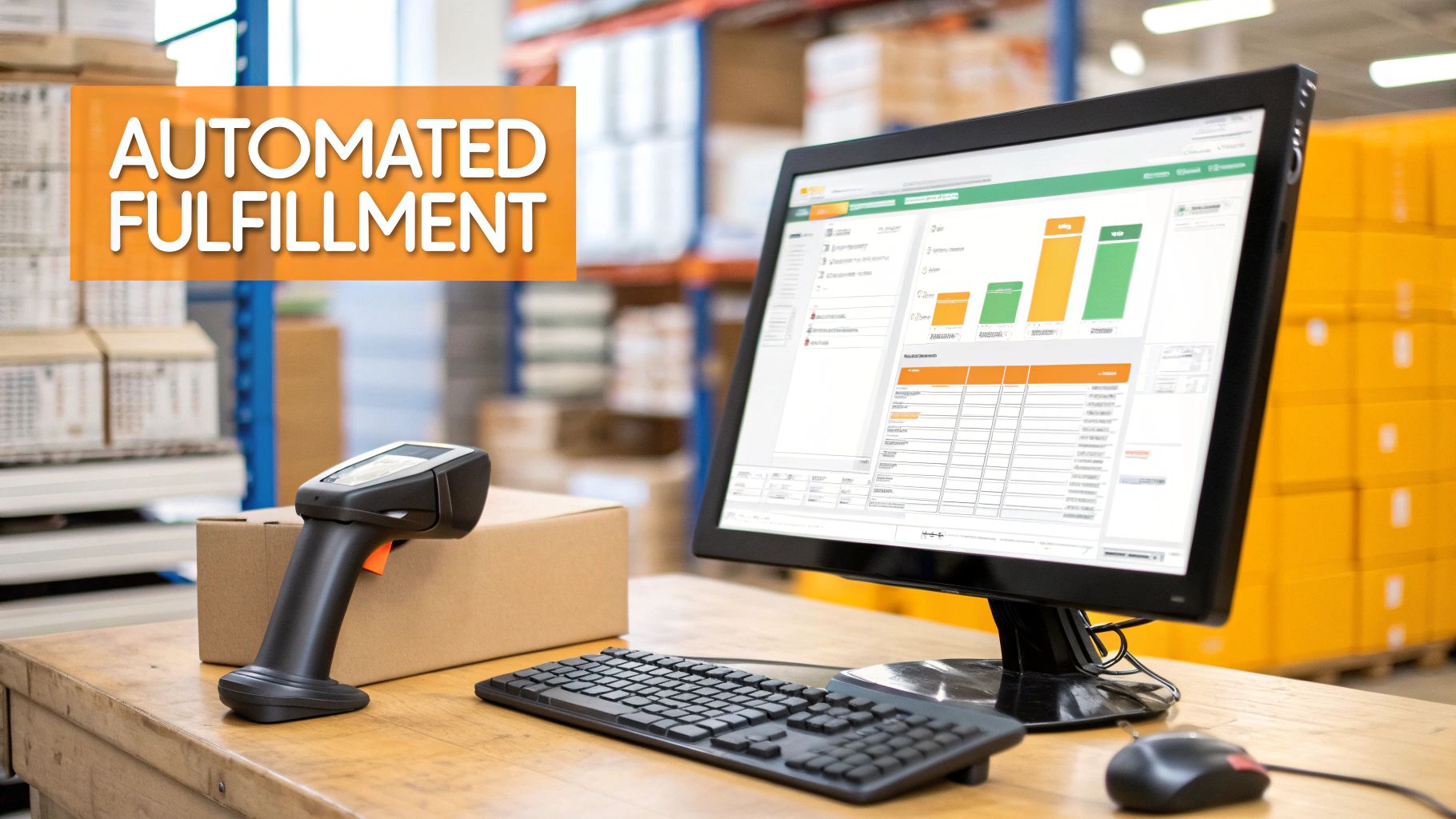
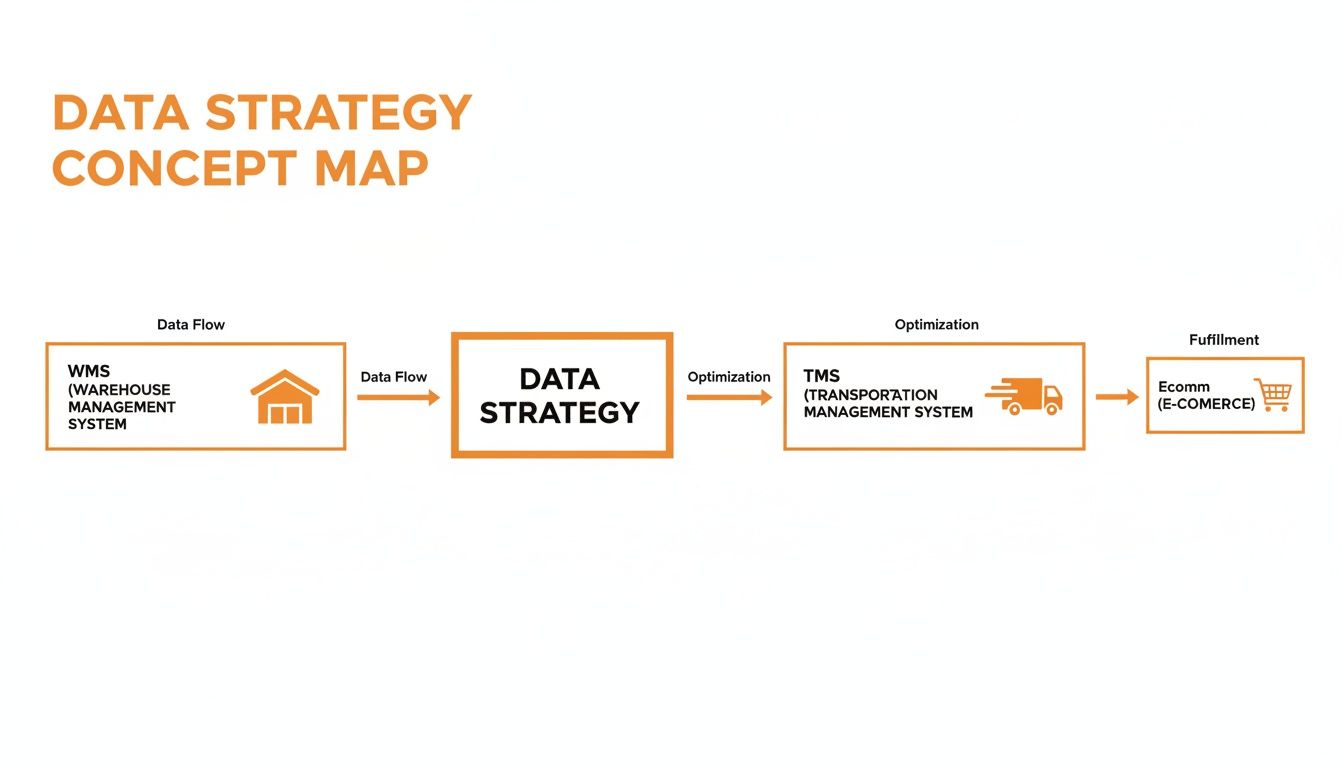
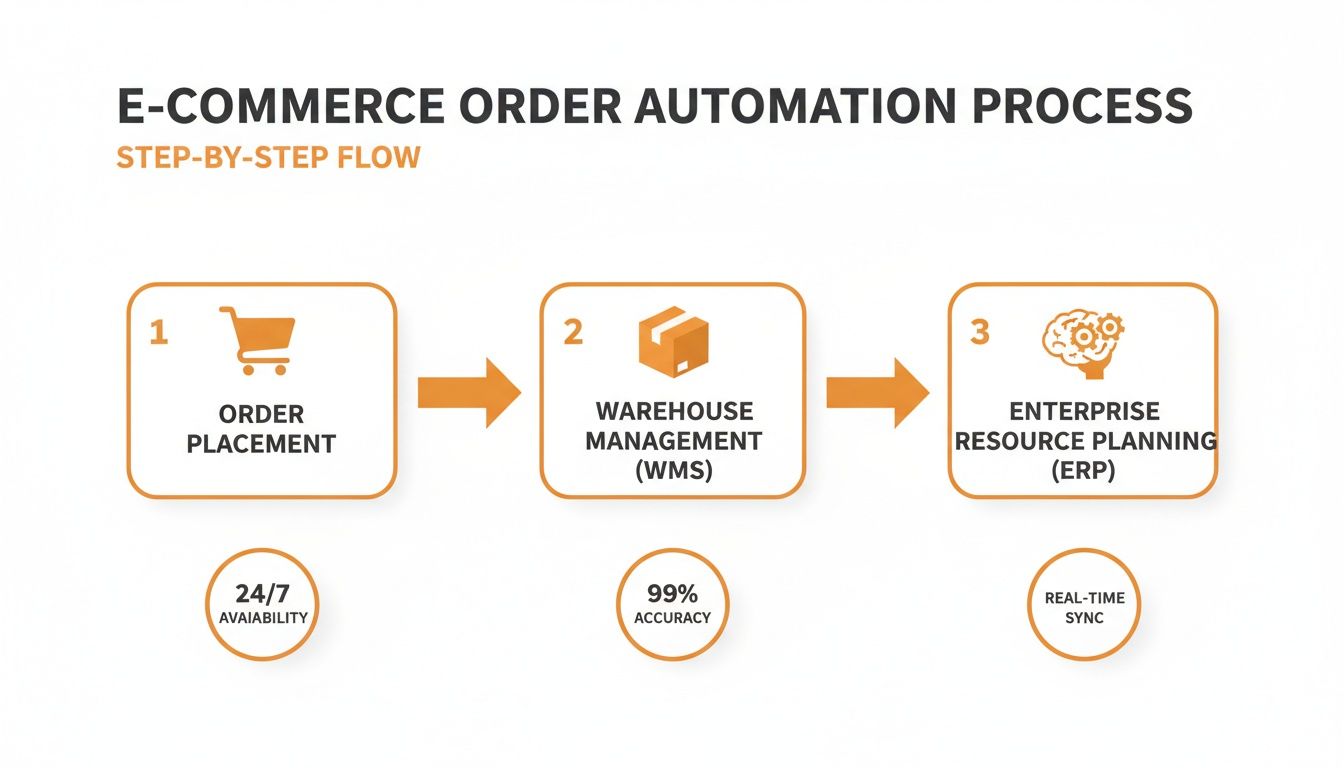
Connecting your physical receiving process to the right technology is where you turn a good operation into a truly great one. A modern Warehouse Management System (WMS) is the brain of your entire inbound operation, finally letting you ditch the clipboards and manual spreadsheets for good. With a simple barcode scan, it automates inventory updates and flags discrepancies the second they happen.
This digital backbone makes every step of the receiving and inspection process faster and far more accurate. When a team member scans a carton, the WMS instantly checks it against the purchase order. Is it the right product? Is the quantity correct? This eliminates all the guesswork and catches supplier errors right on the dock, not weeks later when you're trying to fulfill an order.
The explosive growth of mobile commerce has made this kind of speed non-negotiable. With mobile now driving around 59% of all online retail sales, the flow of orders is constant and relentless. Fulfillment centers have to adapt to this pace, and technology is the only real way to keep up with the demand for rapid, flexible receiving.
Essential Tech for the Modern Receiving Dock
Beyond a solid WMS, a few other tools can seriously supercharge your team’s efficiency. Equipping your staff with mobile scanners is a must—it lets them move freely, scanning items and updating inventory from anywhere in the receiving area without being tethered to a workstation.
Other high-impact tools we see making a big difference include:
- Dimensioners: These devices automatically measure a package's length, width, and height. This captures precise data that's gold for optimizing storage space and nailing down shipping calculations.
- Automated Conveyors: For high-volume operations, conveyors are a game-changer. They can move cartons from the truck straight to the inspection station, drastically cutting down on manual labor and saving your team's backs.
- Software Integrations: Linking your WMS with supplier and carrier systems gives you incredible visibility into what’s coming down the pipeline. This helps you plan labor and clear dock space before the truck even arrives.
And if you're constantly dealing with inconsistently wrapped pallets from suppliers, it might be time to look into automated pallet wrapping machines to standardize your outbound shipments.
Key Performance Indicators That Matter
You can't fix what you can't see. Tracking the right Key Performance Indicators (KPIs) gives you the hard data you need to spot bottlenecks, justify new tech investments, and turn your receiving department into a competitive advantage.
What gets measured gets managed. Focusing on a few core receiving KPIs provides actionable insights that directly impact your warehouse's overall efficiency and profitability.
Start by tracking these crucial metrics:
- Dock-to-Stock Time: This is the big one. It measures the total time it takes for a shipment to be received, inspected, and put away into its final storage location. The faster this happens, the faster your inventory is available to sell.
- Receiving Accuracy Rate: This is the percentage of shipments received perfectly—no damages, no quantity screw-ups. You should be aiming for 99% or higher. Anything less points to a problem somewhere in the chain.
- Cost Per Line Received: This metric helps you understand your operational costs. Just calculate the total cost of your receiving department (labor, equipment, space) and divide it by the number of purchase order lines received.
Keeping a close eye on these numbers will show you exactly where your process is humming along and where it needs a tune-up. To get a better sense of how these metrics drive smart business decisions, check out our guide on the role of analytics in logistics.
Common Receiving and Inspection Questions
Even the most buttoned-up receiving playbook will get thrown a curveball now and then. Things happen. Shipments show up weird. Paperwork goes missing.
Knowing how to handle these common hiccups ahead of time is what separates a smooth-running dock from a chaotic one. Let's walk through a few scenarios we see all the time.
What Is a Blind Receiving Process and When Should I Use It?
Blind receiving is when you have your team count and verify an inbound shipment without giving them the purchase order or ASN first. They have no idea what quantities are supposed to be there.
This forces a completely unbiased, physical count of every single item. It kills the temptation for someone to just glance at the packing slip and assume the supplier’s numbers are correct.
It’s definitely a slower process, so you don’t need it for every shipment. But it's an incredible tool for boosting accuracy. We recommend using it for high-value inventory where a single missing unit is a big financial hit, or when you’re dealing with a supplier who has a history of sending you short-shipments.
Think of blind receiving as a spot-check audit on every inbound. It takes a little more time upfront but can save you from massive inventory headaches and write-offs by catching mistakes the second they hit your door.
How Do I Handle a Shipment with No Packing Slip?
A delivery showing up without a packing slip or an ASN in your system is a huge red flag. The first and only move here is to quarantine it.
Move the entire shipment to a designated holding area and stick a big, clear sign on it. Do not let it get mixed in with your other inventory.
Allowing undocumented stock onto your shelves is how you end up with phantom inventory, fulfillment errors, and a WMS that’s a complete mess. Get on the phone with the supplier or client immediately and track down the paperwork. Only after you have a PO or ASN to receive against should that shipment be touched.
What Are the Most Common Receiving Mistakes to Avoid?
The most expensive errors are almost always the simplest ones. Based on what we've seen over the years, here are the top four rookie mistakes that can sink your inventory accuracy:
- Signing the POD Blindly: Never, ever sign the carrier’s proof of delivery until you’ve walked around the pallets and checked for obvious external damage. A signature means you’ve accepted it "in good condition."
- Trusting Carton Counts: It’s easy to assume a carton labeled "24 units" actually has 24 units inside. This is where most quantity discrepancies hide. You have to spot-check the inner contents.
- Mixing Shipments on the Dock: Letting SKUs from two different POs get staged on the same pallet is a recipe for disaster. It guarantees putaway errors that will haunt you during picking.
- Taking Bad Photos: If you find damage, blurry photos or a lack of detailed notes won't cut it. To file a successful claim with a carrier or supplier, you need clear, well-documented proof.
At Snappycrate, we’ve built our entire receiving and inspection process around one core idea: preventing these simple mistakes from ever happening. We treat your inventory like our own, ensuring every unit is accounted for and ready to sell. Learn more about how our expert fulfillment services can protect your inventory from the moment it arrives.