Skip to Content

Blog Archives

Your Guide to E-Commerce Packaging and Warehousing

When you first start out in e-commerce, “warehousing” is your garage, and “packaging” is a late-night scramble to the post office. But as your brand grows, these two activities stop being separate chores and merge into a single, powerful system: the hidden engine that truly drives your business.

The Hidden Engine of Your E-Commerce Business

For many sellers, the terms warehousing and packaging feel disconnected. One is about shelves and inventory counts; the other is about boxes and tape. But to scale successfully, you have to see them as one integrated process.

Think of it like a professional kitchen. Your warehouse is the mise en place—the prep station. It’s where every ingredient (your inventory) is received, sorted, and stored with absolute precision. Every SKU has its designated spot, ready to be grabbed the second an order dings. A clean, organized prep station is the only way a kitchen can handle the dinner rush.

More Than Just Boxes and Shelves

If warehousing is the prep, then packaging is the final plating. It’s not just about getting the product into a box. It’s about protecting what’s inside, making sure it looks great, and giving your customer that "wow" moment when they open it. The right packaging ensures your hard work arrives intact and reinforces the quality and care you put into your brand.

When you nail this combination, the benefits are huge:

  • Faster Fulfillment: An organized warehouse means your team can pick and pack orders faster. That's how you shrink the time from click to ship.
  • Happier Customers: A great unboxing experience with zero damage is what turns a first-time buyer into a loyal fan.
  • A Healthier Bottom Line: Efficient operations mean lower labor costs, less money wasted on replacing damaged goods, and more repeat business.

In short, mastering warehousing and packaging isn't just a logistical headache to be managed—it's a massive competitive advantage. It's what separates the brands that are just getting by from the ones that are built to last.

This isn't just talk; the numbers back it up. The global packaging market was valued at USD 1.28 trillion in 2026 and is expected to hit USD 1.75 trillion by 2035. That explosive growth is almost entirely fueled by e-commerce, which shows just how critical expert logistics have become. You can explore more data on the packaging market's expansion to see what this trend means for online sellers.

To help you visualize how these two functions work together, let's break down their core activities.

Core Functions of Packaging and Warehousing

This table shows how warehousing provides the foundation (the 'Where') and packaging executes the final steps (the 'How') in the fulfillment journey.

Function Warehousing Activity (The 'Where') Packaging Activity (The 'How')
Receiving Checking in new inventory, inspecting for damage, and entering it into the system (WMS). Sourcing and stocking packaging materials like boxes, mailers, and dunnage.
Storage Organizing products on shelves, bins, or pallets for easy and efficient access.
Order Processing Picking the correct items from their storage locations based on a customer's order. Selecting the right-sized box or mailer for the specific order.
Preparation Bringing picked items to a dedicated packing station. Assembling the product, adding protective dunnage, and including any inserts.
Shipping Sealing the package, applying the shipping label, and sorting it for carrier pickup. Ensuring the final package is secure, correctly labeled, and meets carrier rules.

As you can see, you can't have efficient packaging without organized warehousing. One flows directly into the other.

As your business grows, this relationship becomes impossible to ignore. Understanding how to optimize both is the first step toward building an operation that can handle anything you throw at it. In this guide, we’ll walk you through the entire journey—from the moment inventory hits your dock to the second it lands on your customer’s doorstep.

Tracing Your Product's Journey Through the Warehouse

So, what actually happens to your products after they leave the factory and hit a 3PL warehouse? For many e-commerce sellers, it feels like a total black box. You send off pallets of your hard-earned inventory and just cross your fingers that orders go out correctly.

Let's pull back the curtain and follow your product’s journey, step-by-step.

This whole workflow is built for one thing: getting the right product to the right customer, fast. It’s a world away from the chaos of managing inventory in a garage or the back room of a shop. The process kicks off the second a truck with your goods pulls up to the warehouse receiving dock.

Step 1: Receiving and Inbound Processing

The first step is what we call inbound receiving. This is far more than just unloading boxes; it’s the first and most important checkpoint for your inventory. The warehouse team immediately gets to work, inspecting the shipment to make sure the quantity matches the advance shipping notice (ASN) you sent. They’re also on the lookout for any damage that might have happened in transit.

Once everything is verified, your inventory is scanned into the warehouse management system (WMS). Think of the WMS as the digital brain of the entire operation. It assigns a unique ID to your products, making every single item trackable from that moment on. This is what gives you that real-time visibility into your stock levels.

Want to see how a professional 3PL handles this crucial first step? Check out our detailed guide on the receiving and inspection process.

The diagram below shows the basic flow from receiving to shipping.

Diagram illustrating the e-commerce fulfillment process steps: receive, organize & store, and pack & ship.

As you can see, receiving, storing, and packing aren't just separate tasks. They're connected parts of a fluid system designed to handle your goods with precision.

Step 2: Smart Storage and Inventory Management

With your products checked in, they’re moved into storage. But this isn't random. The WMS tells the team exactly where to put everything—specific bins, shelves, or pallet racks—a process called putaway. This is all optimized for picking speed, so your fastest-selling products are always in the most accessible spots.

Your inventory doesn't just sit there collecting dust, either. A good warehouse performs regular cycle counting, which means counting small sections of inventory on a rotating basis. This is way more effective than a massive, disruptive annual count and helps us spot any discrepancies almost immediately.

By constantly checking physical counts against the WMS data, a 3PL can keep inventory record accuracy at 99% or higher. That level of precision is the bedrock of reliable fulfillment and stops you from overselling products you don't actually have.

To get a complete, end-to-end view of your products, many brands use advanced Supply Chain Management (SCM) software. These powerful systems give you the deep visibility needed to track every step of your product's journey.

Step 3: Order Picking and Packing

The moment a customer clicks "buy" on your Shopify or Amazon store, your e-commerce platform pings the WMS. Instantly, a digital "pick ticket" is created, sending a warehouse associate out to grab the exact items for that order. This is where all that smart, organized storage really pays off.

To make this lightning-fast, warehouse pros use a few different methods:

  • Batch Picking: A picker gathers all the items for a bunch of different orders at the same time, cutting down on travel time across the warehouse floor.
  • Zone Picking: Each picker owns a specific zone. They grab the items from their area and pass the order along to the next zone until it's complete.

Once picked, the items land at a packing station. A packer grabs the right-sized box or mailer, adds any protective dunnage like bubble wrap, and pops in any marketing inserts you want included. This is where packaging and warehousing truly come together—blending storage efficiency with brand presentation.

Finally, the package is sealed, weighed, and a shipping label is printed and stuck on. From there, it’s sorted with other packages going to the same carrier (like UPS or FedEx) and staged for daily pickup. Just like that, it's on its way to your customer, and the tracking information is automatically sent back to your sales channel.

Choosing the Right Packaging for Protection and Branding

Think of your packaging as more than just a box. It’s your customer’s first handshake with your brand, and it’s the only thing standing between your product and a bumpy ride to their doorstep. Getting it right is a careful balancing act between keeping your items safe, creating a great impression, and managing your costs.

Various packaging materials including cardboard boxes, bubble wrap, and padded mailers for product protection.

The choices you make here in packaging and warehousing ripple through your entire business, affecting everything from shipping fees to customer reviews. Let’s walk through the materials you'll be working with and how to pick the right ones.

Primary Packaging: The First Impression

This is the packaging that directly holds your product. It’s the first thing your customer touches after opening the shipping box, and it’s critical for both protection and making your brand look good.

Your main options are:

  • Corrugated Boxes: The undisputed workhorse of e-commerce. They're strong, versatile, and offer fantastic protection for fragile or heavy items. The wavy "flute" layer inside absorbs shocks and impacts like a champ.
  • Mailers (Bubble, Padded, or Rigid): A lifesaver for smaller, less fragile goods like apparel, books, or cosmetics. They’re lightweight, which helps you save a ton on shipping costs, and they take up less storage space.
  • Poly Bags: A super cost-effective and light option for things that don't need rigid protection, like t-shirts. We often use them as an inner layer to protect items from dust or moisture before they go into a box or mailer.

Once you’ve picked your outer container, you need to think about what goes inside to stop your product from bouncing around.

Protective Fillers: Keeping Products Snug and Safe

Protective fillers, which we call dunnage in the logistics world, are what stop your products from getting damaged in transit. The goal is to fill any empty space and absorb shock so your items arrive looking exactly as they should.

Here are the go-to choices:

  1. Bubble Wrap: A classic for a reason. It’s our first choice for cushioning fragile things like glass, ceramics, and electronics.
  2. Air Pillows: These are great for filling big empty spaces in boxes. They’re light and cost-effective, but they offer more general void-fill than targeted cushioning.
  3. Crinkle Paper: An eco-friendly and decorative option that provides decent cushioning. It's perfect for creating a high-end unboxing experience for gift boxes or subscription kits.
  4. Foam Inserts: For high-value or extremely delicate products, nothing beats custom foam inserts. They hold your item in place, offering the highest level of protection possible.

Finding the right mix of outer packaging and inner dunnage is a strategic move. Over-pack, and you're wasting money on materials and shipping. Under-pack, and you're dealing with costly returns and unhappy customers.

The Unboxing Experience: Your New Storefront

In e-commerce, the unboxing is a huge marketing opportunity. It’s your chance to turn a simple delivery into a memorable moment that makes customers feel valued. A great unboxing can make someone feel like they’ve received a special gift, not just another online order.

This is where custom touches come in. Think branded boxes, printed tissue paper, or a simple thank-you note. It all works together to create a powerful brand experience. To really nail this, check out our deep-dive guide on e-commerce packaging solutions.

Special Rules for Amazon FBA

If you’re selling on Amazon FBA, you’ve got another set of rules to follow. Amazon is incredibly strict about packaging because they need to move millions of items through their fulfillment centers efficiently and safely. Get it wrong, and they might reject your entire shipment.

A few key FBA prep requirements include:

  • Poly Bagging: Items sold in sets or with loose parts almost always need to be sealed in a clear poly bag.
  • Suffocation Warnings: Any poly bag with an opening of 5 inches or more must have a suffocation warning clearly printed on it.
  • FNSKU Labeling: Every single unit needs a scannable Amazon barcode (FNSKU), and it has to cover any other barcodes, like the manufacturer's UPC.

On top of that, sustainability is becoming a major driver for customers. The sustainable packaging market hit a value of over USD 270 billion in 2024. More importantly, products with clear sustainability claims have seen 28% cumulative growth over five years, easily outpacing the 20% growth of products without them.

Value-Added Services That Help Your Brand Scale

A modern logistics partner does way more than just store products and ship orders. The best third-party logistics (3PL) providers become an extension of your team, offering a whole suite of value-added services that solve tricky operational problems and unlock real growth.

These are the services that turn a simple vendor relationship into a true strategic partnership.

Workers in a warehouse sorting items into bins, with one bin displaying 'SCALE WITH 3PL'.

Think of these specialized tasks as your secret weapon. They give your e-commerce brand the operational flexibility to jump on new sales channels, launch ambitious marketing campaigns, and meet customer demands head-on. Instead of hitting a wall and saying, "we can't do that," a great partner asks, "how can we make that happen?"

Kitting and Assembly Services

One of the most powerful value-added services is kitting and assembly. This is simply the process of combining multiple individual products (or SKUs) into a single, ready-to-ship unit. It's a game-changer for brands that want to boost their average order value and create unique product bundles.

Let’s say you sell skincare. Instead of a customer buying a cleanser, a toner, and a moisturizer separately, you can offer them a "3-Step Glow Kit." In the warehouse, a team pulls these three items and bundles them together into a new, custom-packaged set.

Warehouse assembly can cover a huge range of tasks:

  • Building Subscription Boxes: Assembling your monthly or quarterly boxes with a rotating mix of products.
  • Creating Gift Sets: Bundling items for holidays or promotions, often with special packaging and inserts.
  • Light Product Assembly: Putting together simple components to create a finished product right before it ships out.

This service effectively moves a final production step from a separate, often expensive, factory right into your fulfillment center. You cut down on transit time, minimize extra handling, and get your new product bundles to market way faster.

By combining separate items into a single kit, you not only give customers a better experience but also make your own operations much leaner. A 3PL can build these kits in advance based on your sales forecasts or assemble them on-demand as orders roll in.

Repackaging and Compliance

Your packaging needs can change completely depending on where you sell. The branded box that works perfectly for your Shopify store might not fly with Amazon FBA or a big-box retailer. This is where repackaging services are a lifesaver.

For instance, a product might arrive from your manufacturer packed in a bulk case of 24, but you need to sell it as a single unit. A 3PL can break down those master cartons and repackage each item for individual sale.

This is absolutely critical for Amazon FBA sellers. Your logistics partner can make sure every single item is prepped to meet Amazon's strict compliance rules, handling tasks like:

  • Applying FNSKU labels over existing barcodes
  • Poly bagging items to keep them clean or together
  • Adding suffocation warnings or other required labels

Getting this prep work right means your inventory will never get rejected by Amazon, saving you from frustrating delays and expensive chargeback fees.

Handling Complex Inbound and Outbound Logistics

Not all inventory arrives at the warehouse on neat, easy-to-unload pallets. Many brands that import goods receive them in floor-loaded containers, where boxes are stacked from floor to ceiling. Unloading these is a slow, labor-intensive job that needs a dedicated team. A full-service 3PL has the staff and processes to handle this efficiently, getting your goods counted, inspected, and put away quickly.

On the other side of the equation is reverse logistics—or as most people call it, returns management. Let's be honest, handling returns is a huge headache for almost every brand.

A 3PL can take this completely off your plate. They'll receive returned items, inspect them for damage, and determine if they can be restocked and sold again or if they need to be disposed of.

By centralizing these specialized packaging and warehousing tasks under one roof, you create a far more efficient and resilient supply chain. It frees you up to focus on what you do best: marketing your products and growing your brand.

How to Measure Your Fulfillment Performance

When it comes to packaging and warehousing, winging it just doesn't cut it. Relying on gut feelings is a surefire way to burn through cash and miss your targets. To really get a handle on how your fulfillment operation is running, you have to track the right numbers—your key performance indicators (KPIs).

Think of these metrics as the language you use to have honest, data-backed conversations with your 3PL. They turn all the complex activity happening in the warehouse into simple, clear numbers. Tracking these KPIs is how you make sure you’re getting the speed and accuracy your brand paid for.

Foundational Accuracy and Speed Metrics

Before you even glance at costs, you need to know if your 3PL is getting the basics right. The two most critical metrics for this are your inventory accuracy and your order cycle time. They tell you everything about the fundamental quality of your fulfillment.

  • Inventory Record Accuracy (IRA): This one is simple: does the inventory your system says you have match what’s physically on the shelf? A high IRA, ideally 99% or higher, is non-negotiable. It’s what keeps you from overselling products you don't have or telling customers something is out of stock when it isn’t.
  • Order Cycle Time: This measures the total time from when a customer clicks "buy" to when their order is officially out the door. Faster cycle times lead to happier customers and give you a serious leg up on the competition.

If you see a low IRA or a slow cycle time, consider them major red flags. These numbers often point to bigger problems, like a disorganized warehouse or clunky picking routes. They should be the very first things you check on any performance report.

Key Operational Performance Indicators

Once you've confirmed your inventory is accurate and your orders are moving quickly, it's time to dig a little deeper into operational efficiency. These metrics give you a pulse on the health of the entire workflow, from receiving your products to getting them shipped.

Imagine your fulfillment center is a finely tuned engine. These KPIs are the gauges on the dashboard. A dip in one area can signal a problem that will soon impact the whole system.

Here are the operational KPIs we always keep a close eye on:

  • Dock-to-Stock Time: How long does it take for new inventory to get off the truck, be processed, and be put away on a shelf, ready to be sold? A good 3PL can get this done in under 24-48 hours. The faster this happens, the faster your products are live and available for purchase.
  • Order Accuracy Rate: This is the percentage of orders shipped without a single mistake—no wrong items, no incorrect quantities. The industry standard here is a whopping 99.8% or higher. Even a tiny dip can cause a huge spike in expensive returns and hurt your brand's reputation.
  • On-Time Shipping Rate: What percentage of orders are shipped out on or before the promised date? For any e-commerce brand that wants to keep its customers, this number should be as close to 100% as humanly possible.

Keeping a close watch on efficiency has become even more critical lately. Recent consolidation in the packaging industry triggered a 10% drop in North American containerboard capacity—the largest on record. This shortage, mixed with manufacturing slowdowns, has made a tight supply chain more important than ever. You can explore the full impact of these industry shifts to get a better sense of the current landscape.

Financial and Cost-Related Metrics

Last but not least, you have to know what all this is costing you. These KPIs connect your warehouse operations directly to your P&L, showing you exactly what you’re paying for and where you might be able to find savings.

  • Cost Per Order (CPO): This is the holy grail of fulfillment finance. It’s your total fulfillment cost (receiving, storage, picking, packing, and shipping) divided by the total number of orders you shipped. It’s the clearest measure of how efficient your entire operation is from a financial standpoint.
  • Inventory Holding Cost: This calculates how much it costs to store unsold inventory over a period of time. This isn't just the storage fee; it includes insurance, space, and labor. Tracking this helps you spot slow-moving products that are just sitting there, tying up cash and valuable shelf space.

By consistently reviewing these three groups of KPIs—accuracy, operational, and financial—you get a complete, 360-degree view of your fulfillment performance. This is the data you need to hold your logistics partner accountable, make smarter inventory decisions, and build a supply chain that can actually support your growth.

Finding the Right 3PL Partner for Your Business

Choosing a third-party logistics (3PL) partner is one of the biggest decisions you’ll make for your brand. This isn't just about finding cheap storage—it’s about bringing on a team that will become a core part of your operations.

A great 3PL can be your launchpad for growth. A bad one? They can create logistical nightmares that tank your customer reviews and damage your reputation.

The right partner gets your business, inside and out. They know your sales channels, whether you’re a Shopify powerhouse or an Amazon FBA specialist, and they have proven experience handling products just like yours. This isn't a one-size-fits-all service; it’s a hands-on extension of your brand.

Core Technical Competencies to Vet

Before you even talk about pricing, you need to lift the hood and check their operational engine. Your business will run on their capabilities, so don't be shy about digging into the details. Start here.

  • Channel Expertise: Do they actually have experience with your sales platforms? A 3PL that deeply understands Amazon’s strict FBA prep rules or how to integrate seamlessly with Shopify’s API will save you countless headaches.
  • Product Handling: Can they store and handle your specific products safely? If you sell fragile glassware, frozen goods, or oversized items, you absolutely need a partner with the right equipment and established processes.
  • Technology Integration: How does their warehouse management system (WMS) talk to your store? Look for real-time inventory syncing, automated order processing, and a client portal that gives you a clear window into your operations.

The right 3PL partner doesn't just offer services; they offer solutions. Their expertise in packaging and warehousing should directly solve your biggest operational headaches, from managing complex inventory to meeting strict retail compliance standards.

Understanding the full scope of what a 3PL does is a great first step. To get a foundational overview, check out our guide explaining what a 3PL warehouse is and how they function.

The Partnership and Communication Factor

Beyond the technical checklist, you have to evaluate the human element. You're entering a long-term relationship, and clear, responsive communication is what holds it all together. A low price means nothing if you can’t get your account manager on the phone when an order goes wrong.

Think about these "soft" but critical factors:

  • Communication Style: How do they handle problems? Look for a partner who is proactive, transparent, and takes ownership when things inevitably go sideways.
  • Scalability and Flexibility: Can they grow with you? Talk about their capacity to handle your sales spikes during Q4 and their ability to add services like kitting as your needs change.
  • Pricing Transparency: Are their fees clear and easy to understand? Run from partners with confusing fee structures or a long list of hidden charges. You want a simple, honest pricing model.

Ultimately, you’re looking for a partner, not just a vendor. You need a team that is genuinely invested in your success and can act as a strategic advisor. The right 3PL will feel like an extension of your own company, working right alongside you to make sure every customer order is a perfect experience.

Frequently Asked Questions

Diving into the world of third-party logistics always brings up a few key questions. We get it. As sellers ourselves, we've been there. Here are answers to some of the most common things e-commerce brands ask us about packaging and warehousing.

What Is the Difference Between Kitting and Assembly?

People often use these terms interchangeably, but they’re two distinct services that can save you a ton of time and money.

Kitting is all about grouping separate items (different SKUs) into a single, ready-to-ship unit. Think of a subscription box, a gift set, or a "starter pack" that bundles several of your products together. We’re just gathering existing items and putting them in one package.

Assembly, on the other hand, is when we actually build a part of your product. This could be as simple as attaching a spray nozzle to a bottle or as involved as putting together a small piece of furniture before it’s boxed up. Both get your products ready for customers right from the warehouse floor.

How Much Warehouse Space Do I Really Need?

The honest answer? It depends entirely on your sales velocity and how much inventory you need to hold. One of the biggest mistakes we see is brands overpaying for warehouse space they aren't using, which just kills your margins.

The smart move is to partner with a 3PL that offers flexible storage. You want someone who can scale your footprint up during your busy season and back down when things are slower. This way, you’re only paying for what you actually use.

What Are the Most Common Hidden Fees with 3PLs?

Most 3PLs are upfront, but some fee structures have surprises lurking in the fine print. Always ask about these potential costs before signing a contract:

  • Onboarding Fees: This is usually a one-time cost to get your account set up, connect your store, and integrate with their software.
  • Monthly Minimums: Some 3PLs require a minimum spend on storage or a minimum number of orders per month. If you have a slow month, you could still get a bill.
  • Special Project Fees: Need something outside the standard pick, pack, and ship? Things like quality control checks, returns processing, or special repackaging jobs often come with a separate price tag.

Getting a clear picture of a 3PL’s entire fee schedule is critical for managing your budget. If you're looking for more general info on packaging supplies, you can often find answers in a supplier's own Frequently Asked Questions.


Ready to work with a 3PL that believes in transparent pricing and provides genuine expertise on packaging and warehousing? At Snappycrate, we operate as a true extension of your team, ready to help you scale with confidence. Explore our fulfillment services today!

0 Continue Reading →

Warehouse Management Definition: Unlock E-commerce Success

So, what exactly is warehouse management? It’s not just about stacking boxes in a storage unit. Think of it as the complete, strategic system you use to run your inventory, space, and team. It's every process that controls how your products move, from the moment they hit your receiving dock until they’re in a customer's hands.

What Is Warehouse Management in E-commerce?

Let's use an analogy. Imagine running a busy restaurant kitchen during the dinner rush. You're not just storing food. You have a system for receiving fresh ingredients, organizing them for quick access, prepping dishes perfectly (picking and packing), and sending them out to eager diners without a single mistake.

If one part of that system breaks down, the whole experience is ruined. For your e-commerce brand, your warehouse is that kitchen. Solid warehouse management is the engine that keeps your fulfillment running smoothly, ensuring every order is accurate and on time.

More Than Just Storage

A lot of sellers think warehouse management is just about finding a place to keep their products. But that’s a huge misconception. Storage is only a tiny piece of the puzzle. The real goal is to turn your warehouse into a lean, mean, order-fulfilling machine that’s optimized for speed, accuracy, and cost.

True warehouse management transforms a static storage space into a dynamic fulfillment hub. The focus shifts from merely holding inventory to enabling the rapid and accurate flow of goods, directly impacting customer satisfaction and profitability.

It's about managing the entire journey of your inventory while it's inside your four walls. You can dive deeper into how this connects to your overall business strategy by exploring the relationship between supply chain and warehouse management. This approach ensures every single step, from receiving to shipping, is executed with precision.

The Core Components of Warehouse Management

A well-run warehouse isn't a happy accident; it’s built on a few fundamental components that all have to work together. Getting these right is what separates a smooth operation from a chaotic one.

This table breaks down the fundamental jobs that make up any effective warehouse operation.

Component Description
Receiving Checking in new inventory, verifying quantities and quality, and getting it ready for storage.
Put-Away The process of moving received goods from the dock to their designated storage location.
Storage Strategically organizing inventory in a way that maximizes space and makes picking fast and easy.
Picking Retrieving the correct items from their storage locations to fulfill a customer order.
Packing Preparing and packaging the picked items securely for shipment, including adding any marketing inserts.
Shipping Labeling the package, generating a shipping label, and handing it off to the right carrier.

When you get these six steps right, you have a solid foundation. From there, you can focus on optimizing each one for even better performance.

The Six Core Processes of Modern Warehousing

So, we've talked about what warehouse management is in theory. But what does it actually look like on the ground? It all breaks down into six core stages that every single product moves through.

Think of it like a relay race. Each stage is a runner, and the product is the baton. A sloppy handoff at any point—a delay, a mistake, a dropped baton—and the whole operation slows down, costing you time and money. For any e-commerce brand, mastering these six steps is non-negotiable for fast, accurate fulfillment.

This infographic boils it all down to the three main phases that are the true backbone of your fulfillment operation.

Infographic outlining the three-step warehouse management process: receiving goods, storing inventory, and shipping orders.

As you can see, every product's journey starts with Receiving, moves into Storage, and ends with Shipping. Let's break down exactly what happens at each step.

1. Receiving

This is where it all begins—the moment your inventory hits the warehouse dock. Receiving is your first, and best, chance to stop problems before they start. It's way more than just taking boxes off a truck.

A solid receiving process means your team is meticulously checking the new inventory against the purchase order (PO). Are these the right SKUs? Is the quantity correct? Is anything damaged from transit? A mistake here is a guarantee of a headache later.

Imagine you ordered 100 red shirts, but the supplier sent 100 blue ones. If your receiving team doesn't catch it, those blue shirts get logged into your inventory as "red." When customers start ordering red shirts, your pickers will find the wrong product, leading to order delays, angry customers, and a massive inventory mess.

2. Put-Away

Once your inventory is checked in and verified, it needs a home. Put-away is the process of moving those products from the receiving dock to their designated spot in the warehouse. This is where efficiency really kicks in.

If put-away is slow or disorganized, your inventory just sits on the dock, creating clutter and making it unavailable for sale. The goal is to get items into their storage bins and ready to be picked as fast as possible. In a modern warehouse, a Warehouse Management System (WMS) tells the team exactly where to put each item for maximum efficiency.

3. Storage

Storage isn't just about finding an empty shelf. It's the art and science of organizing your inventory to make the best use of your space and, more importantly, to make it fast and easy to grab those products when an order comes in.

There are two main strategies here:

  • Fixed Location Storage: Simple and straightforward. Every SKU gets its own permanent spot. This works well if you have a small, predictable product catalog, but it can waste a lot of space if certain spots are often empty.
  • Chaotic Storage (Dynamic Storage): This sounds messy, but it’s incredibly efficient. Items are put into any open, available spot. A WMS keeps track of where every single item is, so pickers can always find what they need. This method maximizes every square inch of your warehouse and is perfect for businesses with a large, rotating inventory.

Storing products isn't a passive activity; it's an active strategy. The way your inventory is organized directly impacts picking speed, which in turn dictates how fast you can get orders out the door. A well-organized warehouse is a fast warehouse.

Choosing the right method is key. A small coffee roaster might be fine with fixed locations. But a 3PL like Snappycrate, which handles thousands of different SKUs for dozens of brands, relies on a chaotic system to stay flexible and efficient.

4. Picking

Picking is exactly what it sounds like: grabbing items from their storage locations to fulfill customer orders. It’s often the most labor-intensive part of the entire process, making up as much as 55% of all warehouse operational costs. Optimizing your picking is one of the fastest ways to improve your bottom line.

Here are a few common strategies to make picking faster:

  1. Batch Picking: A picker grabs all the items needed for a "batch" of multiple orders in a single trip through the warehouse. Less walking, more picking.
  2. Zone Picking: The warehouse is split into zones, and each picker stays in their assigned area. Orders are passed from one zone to the next like an assembly line until they're complete.
  3. Wave Picking: This is a hybrid approach. All orders scheduled for a specific time window (a "wave") are picked at once, with multiple pickers often working in different zones to get it all done quickly.

Choosing the right strategy can have a massive impact on how many orders you can get out the door each day.

5. Packing

Once all the items for an order are picked, they land at the packing station. This step is critical for both protecting your products and delivering a great brand experience.

The packer’s job is to choose the right-sized box, add the right amount of dunnage (like bubble wrap or air pillows) to keep things safe, and seal it all up securely. This is also the last chance for a quality check—verifying the items against the packing slip to ensure the order is 100% correct.

Plus, this is where you can add a personal touch. Branded tape, a thank-you note, or a marketing insert can make the unboxing experience memorable and help you stand out.

6. Shipping

The final handoff. At the shipping station, the packed box gets weighed, a shipping label is printed, and the package is given to the right carrier (like UPS, FedEx, or USPS).

Modern shipping management involves more than just printing a label. It includes "rate shopping"—automatically comparing carrier prices in real-time to find the cheapest service that still meets the customer's delivery promise. Once the package is on the truck, tracking information is automatically sent to the customer, closing the loop and giving them peace of mind.

The Digital Brain of the Operation: Your WMS

If the six core processes are the muscle of your fulfillment operation, then a Warehouse Management System (WMS) is the brain that makes every move happen. It’s the command center connecting everything—from the receiving dock to the shipping station—and making sure it all works together perfectly.

Think of it like an air traffic control tower. Without that tower, a busy airport would be a mess of confusion, delays, and potential disasters. A WMS is that control tower for your inventory, giving you total visibility and directing every product and person with absolute precision.

A man in a high-visibility vest works at a WMS control station in a modern warehouse.

This is the software that separates a modern, efficient warehouse from an old-school operation running on spreadsheets and clipboards. It automates your data, cuts down on human error, and gives you a real-time, bird's-eye view of everything going on inside your four walls.

How a WMS Powers Your Warehouse

A WMS isn't just a fancy database; it's an active player in your day-to-day operations. It uses smart logic and live data to make your warehouse faster and more accurate at every single step.

Here’s how it completely changes the game for the core processes we’ve already covered:

  • Receiving: When a shipment arrives, a worker scans the barcode. The WMS instantly checks it against the purchase order, flags any problems, and makes the inventory available for sale. No manual counting or guesswork.
  • Put-Away: The system doesn’t just track where an item is. It tells the employee exactly where to put it—the most efficient spot based on rules you set. For example, it might direct fast-moving products to a location right next to the packing stations.
  • Picking: Instead of wandering the aisles with a paper list, a picker gets instructions on a handheld scanner. The WMS maps out the most efficient path through the warehouse to grab all the items for an order, or even a whole batch of them.

This kind of digital direction gets rid of the guesswork and makes your team incredibly productive. Your workers can move with confidence, knowing they are always in the right place, grabbing the right product.

Unlocking Total Inventory Visibility

Honestly, one of the most powerful things a WMS does is create a single source of truth for your inventory. It tracks every single unit from the second it enters the building to the moment it leaves, giving you complete, real-time visibility.

A Warehouse Management System is what allows you to build a proactive fulfillment strategy. It helps you stop just reacting to orders and start strategically managing your inventory, labor, and space with data you can actually trust.

This means you know exactly how many units of a SKU you have, where every single one is, and what its status is right now. That kind of real-time accuracy is what prevents stockouts, lowers your carrying costs, and makes sure the inventory levels on your e-commerce store are always correct. If you're selling across multiple channels, you might want to check out our guide on real-time inventory management software to see how this works in practice.

The proof is in the numbers. The global WMS market was valued at USD 3.38 billion in 2025 and is projected to hit USD 3.99 billion in 2026. This huge growth—expected to continue at an annual rate of 21.9% through 2033—tells a clear story: a WMS is no longer a luxury. It’s essential infrastructure for any competitive e-commerce business. You can read the full research about the expanding WMS market on grandviewresearch.com.

For any growing e-commerce brand, implementing a WMS or partnering with a 3PL that uses a top-tier one isn't just a good idea—it's a non-negotiable step toward scaling successfully.

Boosting Efficiency with Automation and Robotics

If a Warehouse Management System (WMS) is the digital brain of your operation, then automation and robotics are the powerful muscles. This is where modern warehouse management gets really exciting. It’s where physical hardware works hand-in-hand with smart software to create an order fulfillment machine that is faster, stronger, and more accurate than ever before.

Think of it like this: the WMS is the coach calling the plays from the sideline. The automation—everything from simple conveyor belts to intelligent robots—are the star players on the field, executing those plays with perfect precision. Your WMS points the way, and the robotics get it done, moving inventory with incredible speed.

Autonomous mobile robots with orange bins move along an aisle in a modern automated warehouse.

When this digital intelligence and physical machinery come together, every core process gets a massive upgrade, pushing the boundaries of what’s possible in fulfillment.

The Spectrum of Warehouse Automation

Here's the good news: automation isn't an all-or-nothing game. Even small, smart upgrades can deliver a huge return on efficiency. The technology exists on a spectrum, from foundational tools that help a little to highly advanced systems that change everything.

Here’s a look at some of the most common technologies you'll find in a modern warehouse:

  • Barcode Scanners and Conveyors: These are the basics. Scanners are what connect your physical inventory to your WMS, and conveyor belts cut down on manual transport by moving goods between different work zones automatically.
  • Pick-to-Light Systems: These systems are brilliantly simple. Lights guide pickers directly to the right item and then display the exact quantity they need. This one visual cue dramatically cuts down on picking errors and wasted search time.
  • Autonomous Mobile Robots (AMRs): This is where automation gets truly powerful. Instead of having workers walk miles of aisles every day, AMRs bring the shelves directly to them. This "goods-to-person" model flips the traditional picking process on its head and can supercharge picking rates.

This stuff isn't science fiction anymore; it’s quickly becoming the standard in high-performance warehouses. The impact is so significant that it's projected 4.7 million commercial warehouse robots will be installed across more than 50,000 warehouses globally by 2026.

Automation fundamentally changes the math of fulfillment. It allows a warehouse to multiply its output without multiplying its labor costs, turning operational efficiency into a true competitive advantage.

This shift isn’t just about adding cool robots; it’s about completely redesigning workflows to eliminate wasted movement and squeeze every drop of productivity out of the system. The result is a warehouse that works smarter, not just harder.

The Real-World Impact of Automation

The numbers behind warehouse automation tell a pretty compelling story. Businesses that embrace these technologies see dramatic improvements across the board. They often achieve 25–30% reductions in labor costs, can fulfill orders up to 300% faster, and see accuracy rates climb to nearly 99%. You can dig into more warehouse automation statistics and see how companies are getting these results on sellerscommerce.com.

Let's be realistic, though. For most growing e-commerce sellers, building an automated warehouse from scratch just isn't feasible because of the massive capital investment required. This is where partnering with a tech-forward 3PL like Snappycrate becomes a powerful strategic move.

By working with an automated 3PL, you get to plug directly into this advanced infrastructure without the crippling upfront cost or operational headaches. It allows you to tap into the speed, accuracy, and cost savings of robotics, giving your brand the kind of fulfillment power that was once only available to major corporations. You can finally compete on speed and service, not just on your products.

Measuring What Matters with Key Performance Indicators

You’ve got your processes and technology in place, but how can you be sure your warehouse is actually performing well? If you don't measure it, you can't improve it. This is where Key Performance Indicators (KPIs) come into play—they’re the vital signs that show you the true health of your fulfillment engine.

Think of your warehouse like a high-performance race car. The processes are the engine, and the WMS is the onboard computer. KPIs are the gauges on your dashboard—the speedometer, fuel level, and engine temp—telling you exactly how everything is running. Without them, you’re just driving blind and hoping for the best.

Let's break down the essential KPIs every e-commerce seller should be tracking.

Inventory Accuracy

This is the bedrock metric for your entire operation. It measures the difference between the inventory your WMS thinks you have and the actual, physical stock on your shelves. A low score here is a major red flag.

  • What It Tells You: A high inventory accuracy rate—ideally 99% or better—means your receiving, put-away, and picking processes are dialed in. A low rate points to serious issues like theft, receiving errors, or misplaced products, which directly cause stockouts and overselling.

If your inventory numbers are consistently off, it creates a ripple effect of problems that can sink your business, from unhappy customers to wasted ad spend on out-of-stock items.

Order Fill Rate

Also known as order accuracy, this KPI tracks the percentage of orders you ship completely and correctly on the first try. It’s a direct reflection of your ability to meet customer promises.

A high order fill rate isn’t just a number; it's a direct measure of customer satisfaction. Getting it right every time builds trust and loyalty, while every wrong shipment actively damages your brand’s reputation.

To hit those high accuracy marks, many modern warehouses are turning to technology. Digging into how strategic industrial automation solutions can sharpen these processes is key to unlocking operational excellence and driving KPIs like fill rate even higher.

Order Cycle Time

This KPI tracks the total time it takes from the moment a customer clicks "buy" to the moment their order is on a truck. It’s a critical measure of your warehouse’s speed and efficiency. In the world of e-commerce, shorter cycle times are a massive competitive advantage.

A long cycle time could point to several bottlenecks:

  • Slow order processing in your system.
  • Inefficient picking routes or strategies.
  • Delays piling up at the packing or shipping stations.

By tracking this metric, you can pinpoint exactly where your fulfillment process is hitting a snag and take targeted action to fix it.

Cost Per Order

Finally, this KPI ties everything back to your bottom line. It calculates the total warehouse operational cost—labor, supplies, and facility overhead—associated with fulfilling a single order.

  • What It Tells You: This metric reveals the financial efficiency of your entire operation. A high cost per order might mean you have inefficient labor, are wasting packing supplies, or aren't making good use of your warehouse space.

To help you get a handle on these metrics, we've put together a quick-reference table of the most important KPIs.

Essential Warehouse Management KPIs at a Glance

KPI What It Measures Importance for E-commerce Sellers
Inventory Accuracy The variance between your recorded inventory (in the WMS) and your actual physical inventory. Prevents overselling and stockouts, ensuring the products listed online are actually available. High accuracy is crucial for customer trust and reliable forecasting.
Order Fill Rate The percentage of orders shipped completely and correctly without any errors (wrong items, quantities, or damages). A direct indicator of customer satisfaction. A low rate leads to returns, negative reviews, and lost customers. A high rate builds brand loyalty.
Order Cycle Time The total time from when an order is placed by a customer to when it is shipped from the warehouse. Measures fulfillment speed. In the age of Amazon Prime, customers expect fast shipping. Shorter cycle times are a key competitive advantage.
Cost Per Order The total warehouse cost (labor, supplies, overhead) divided by the number of orders shipped. Reveals the financial efficiency of your fulfillment. Tracking this helps you control expenses, protect your profit margins, and identify operational waste.

Tracking these four KPIs gives you a clear, data-driven picture of your warehouse’s performance. They turn the abstract idea of "good fulfillment" into concrete numbers, empowering you to make smart decisions that cut costs, drive growth, and keep your customers coming back.

How a 3PL Partner Unlocks Your Growth Potential

Let's be honest. Everything we've covered—the processes, the systems, the metrics—points to one simple truth: running a warehouse is a full-time job. For most e-commerce sellers, it quickly becomes a massive bottleneck, stealing time and energy away from what you do best: developing products, marketing your brand, and talking to your customers.

This is exactly where a third-party logistics (3PL) partner changes the game.

Working with a specialized 3PL like Snappycrate lets you tap into a world-class fulfillment operation without the astronomical upfront cost. You instantly get the optimized warehouse space, expert staff, and advanced WMS technology that would take years and a huge investment to build yourself. It’s a shortcut past all the expensive trial-and-error.

From Daily Grind to Effortless Growth

The real value of a 3PL is how it frees you from the daily operational grind. Instead of worrying about pick rates and packing tape, you can finally put all your focus back on growing your business.

Think about these common headaches that a good 3PL partner solves immediately:

  • FBA Prep and Compliance: Sending inventory to Amazon is a minefield of rules. A 3PL that specializes in FBA prep handles all the tedious details—FNSKU labeling, poly bagging, bundling, and inspections—to make sure your inventory gets checked in at Amazon without delays, penalties, or rejections.
  • Multi-Channel Fulfillment: Selling across Shopify, Walmart, and your own site? A 3PL integrates all your channels, managing inventory from a single, unified pool. This prevents you from overselling and makes expanding to new marketplaces feel simple, not chaotic.

A 3PL turns warehouse management from a costly, time-consuming liability into a flexible, on-demand service. It’s the engine that lets your business grow as fast as you want, without being dragged down by the weight of logistics.

By handing off these complex jobs, you’re not just saving time—you’re gaining a dedicated partner whose only goal is to get your orders out the door quickly and accurately.

An Expert Partner for a Global Market

The demand for sharp, efficient logistics is only getting bigger. While North America leads the WMS market today, the Asia-Pacific region is growing explosively. This worldwide e-commerce boom is expected to push the number of warehouses globally to 180,000 by 2026. At the same time, cross-border sales are set to jump 15–20% each year. You can dive deeper into these global warehouse and e-commerce trends at hdinresearch.com.

Trying to keep up with all that on your own is a monumental task. A 3PL gives you the stability and expertise to compete, turning global supply chain pressures into an opportunity. To see exactly how that relationship works, take a look at our guide on what a 3PL warehouse provides.

Ultimately, working with a 3PL isn’t just about outsourcing your shipping. It’s about getting your freedom back and unlocking your brand’s true potential to grow.

Frequently Asked Questions About Warehouse Management

Even after you get the hang of the basics, real-world questions always pop up. We hear these all the time from growing e-commerce brands, so let's tackle the big ones head-on to help you navigate your logistics.

When Should I Switch from Self-Fulfillment to a 3PL?

There’s no magic number, but the signs are usually crystal clear. You've probably hit the tipping point when you’re spending more time taping boxes than growing your business.

Look for these signals: your daily order volume is consistently hitting 10-20+ orders per day, you’re tripping over inventory in your garage or office, and fulfillment is eating up hours you should be spending on marketing or product development. A 3PL lets you hand off the logistics chaos so you can get back to what you do best.

What Is the Difference Between a Warehouse and a Fulfillment Center?

It’s easy to use these terms interchangeably, but they serve very different roles. Think of a traditional warehouse as a place for long-term storage—a holding pen for inventory that isn’t needed right away.

A fulfillment center, on the other hand, is built for speed. It’s a highly active hub designed to get online orders out the door as fast as possible. The entire layout and workflow prioritize efficient picking, packing, and shipping. Most modern 3PLs, including us, operate as fulfillment centers.

A key part of the 3PL partnership is trust and risk management. When choosing a partner, understanding their insurance coverage is vital for protecting your assets. It’s worth taking time to delve deeper into the specifics of 3PL insurance to ensure your inventory is secure.

How Does a 3PL Handle Amazon FBA Prep?

A 3PL that specializes in FBA prep acts as your expert compliance team. Instead of you trying to keep up with Amazon’s ever-changing rules, the 3PL does it all for you.

They receive your bulk inventory, inspect it, and perform all the tedious tasks required to meet Amazon’s strict standards. This includes:

  • Applying FNSKU labels correctly
  • Poly bagging loose items or apparel
  • Creating product bundles or multi-packs
  • Building and palletizing shipments for freight

This professional prep is your ticket to avoiding costly delays, rejections, and non-compliance fees at Amazon’s fulfillment centers. It keeps your products checked in and available for sale, protecting your momentum.


Ready to stop worrying about logistics and start focusing on growth? Snappycrate provides the expert fulfillment and FBA prep services you need to scale your e-commerce brand. Get your free quote today.

0 Continue Reading →

What is intermodal transportation: A smarter, cost-cutting logistics guide

Let's cut through the logistics jargon. At its heart, intermodal transportation is simply moving freight inside a single container using two or more types of transport—like a truck, a train, and a ship—without ever unpacking the goods inside.

Think of it like a relay race. Your products are the baton, passed seamlessly from a truck to a train and then back to a truck, all while staying sealed in the same container.

What Is Intermodal Transportation Explained Simply

A blue semi-truck with an orange shipping container drives near railroad tracks and a port, showing intermodal transfer.

The whole system is built around one brilliant piece of equipment: the standardized shipping container. This simple steel box is the key that unlocks a more efficient and cost-effective journey for your inventory.

Instead of relying on a single, expensive method like long-haul trucking for the entire trip, intermodal creates a smarter supply chain. A container is loaded at an overseas factory, trucked to a port, lifted onto a massive container ship, and sailed across the ocean. Once it arrives, it's transferred onto a train for the long inland haul, and finally, it's placed back on a truck for the "last mile" delivery to your 3PL or fulfillment center.

The best part? Your products remain untouched and secure from the moment the container is sealed until it arrives at its final destination.

The Intermodal Playbook: How It Works

This team-based approach works by letting each mode of transport do what it does best:

  • Trucks: They handle the flexible first-mile pickup and last-mile delivery, getting your container to and from virtually any factory or warehouse.
  • Trains: For long cross-country distances, nothing beats rail. It’s incredibly fuel-efficient and far more cost-effective for moving heavy freight over land.
  • Ships: The undisputed champions of global trade, container ships move enormous volumes between continents at an unbeatable per-unit cost.

This combination of strengths is exactly why intermodal has become a pillar of modern e-commerce logistics.

The global intermodal shipping market has grown to $250 billion, with North America owning a massive 45% market share thanks to its vast rail networks. The scale is huge, and you can explore more data on the intermodal market to see just how big it's become.

The Intermodal Transportation Relay Race

Here’s a quick look at how the different modes work together in a typical intermodal journey.

Transportation Mode Role in the Journey Best For
Truck (Drayage) First-mile pickup from the factory and last-mile delivery to the warehouse. Short-haul flexibility, door-to-door access.
Ocean Ship The long-haul ocean voyage, connecting continents. Moving massive volumes of containers internationally.
Train (Rail) The long-haul land bridge, moving containers across the country. Cost-effective, fuel-efficient transport for heavy loads over 750+ miles.
Truck (Drayage) Final delivery from the rail yard to the destination fulfillment center. Covering the final few miles of the journey quickly.

Ultimately, intermodal isn't just about moving a box. It’s a powerful strategy for building a supply chain that's more affordable, reliable, and sustainable. For e-commerce sellers importing goods, it’s one of the best tools for managing the flow of inventory from a factory floor to your customer’s door.

How an Intermodal Shipment Moves From Start to Finish

To really get a feel for intermodal transportation, let's walk through a typical shipment of e-commerce goods. Picture this: your brand-new products are sitting at a factory in Asia, ready to go. The entire process works like a perfectly choreographed relay race, where the shipping container is the baton—and your products never leave its protective shell.

This journey kicks off with what's called first-mile drayage. A local truck pulls up to the factory, and your products are loaded into an empty container. Once it’s packed, the container is sealed. This is a critical step for security. That truck then hauls the container a relatively short distance to a nearby port.

The Ocean Voyage and Port Arrival

At the port, a massive crane lifts the container right off the truck's chassis and stacks it onto a colossal container ship. This vessel, which carries thousands of other containers, then starts its long journey across the ocean, which can take several weeks. All the while, your inventory is safely stowed away, crossing the sea at an incredibly low cost per unit.

When the ship arrives at its destination port, say the Port of Los Angeles, the whole process happens in reverse. Another crane plucks your container off the ship and sets it down in the terminal yard. It waits here for the next leg of its journey, which is where the true power of intermodal really shines.

This is where coordination is everything. A container can easily sit at a busy port for several days waiting for its next move. That's why having a logistics partner who can expertly manage port operations and rail schedules is so crucial for avoiding expensive delays and demurrage fees.

The Inland Journey by Rail and Truck

Instead of getting loaded onto a truck for a long and pricey cross-country drive, your container is transferred onto a train. For long-haul land routes, rail is the workhorse of intermodal transport, delivering big savings on fuel and costs. The train will then travel hundreds or even thousands of miles inland to a rail terminal located near your final destination.

Once it pulls into the inland rail yard, the container's journey is almost over. A final last-mile drayage truck shows up to grab the container and take it to its final stop. This is often where your 3PL, like SnappyCrate, steps in to coordinate the final delivery to their warehouse. You can learn more about this crucial final step by reading our guide to what is intermodal trucking and its role in the supply chain.

The truck delivers the sealed container right to the 3PL's receiving dock. Only then is the seal broken and the container finally unloaded. Your products, having traveled across the world by truck, ship, and train, are now ready to be inventoried and prepped for fulfillment.

The Real-World Benefits for Your E-Commerce Business

Okay, so you get the mechanics of intermodal. But how does it actually help your e-commerce business? The answer comes down to your bottom line. For any growing brand, the advantages are very real, starting with serious cost savings.

When you strategically move long-haul freight off the road and onto the rails, you start to insulate your business from some of the most volatile costs in logistics. We're talking about fuel surcharges, driver shortages, and peak season congestion on the highways.

More Than Just Cost Savings

By swapping trucks for trains on those long cross-country routes, businesses can often cut their freight expenses by up to 20-30%. For a direct-to-consumer brand or marketplace seller trying to scale, that’s a game-changer.

Beyond the direct cash savings, intermodal introduces something just as valuable: predictability. While it might not always be the absolute fastest method, rail schedules are far more consistent than over-the-road trucking. Trains aren't stuck in rush hour traffic, and they aren't limited by driver hours-of-service rules.

A more predictable supply chain means you can manage inventory with confidence. You can shrink your safety stock, tie up less cash in the warehouse, and dramatically lower your risk of stockouts. That kind of stability is a huge competitive edge.

This simple graphic shows how all the pieces fit together in a typical intermodal journey.

Diagram illustrating the intermodal shipment process: origin truck, ocean ship, rail, and delivery truck, highlighting benefits.

It’s all about those seamless handoffs between the first-mile truck, the ship, the train, and the final delivery truck. When done right, it's a well-oiled machine.

Sustainability and Security Gains

Let’s be honest, customers today care about where their products come from and how they get there. The green benefits of intermodal are a great story to tell. Trains are incredibly fuel-efficient, moving one ton of freight nearly 500 miles on a single gallon of fuel. That's a massive reduction in your carbon footprint compared to trucking.

Security gets a major boost, too. Your products are sealed inside a container when they leave the factory and aren't opened again until they arrive at the destination. This single-unit approach all but eliminates opportunities for damage or theft along the way. For anyone shipping high-value goods, that peace of mind is priceless.

Looking for more ways to get your logistics spending under control? Check out our guide on how to reduce shipping costs.

Of course. Here is the rewritten section, adopting the expert, direct, and practical voice from the provided examples.


What Are the Downsides? When Intermodal Isn't the Right Fit

Let's be real—while intermodal is a powerhouse for cost savings, it’s not a magic bullet for every shipment. Before you jump in, you need to know the trade-offs. Knowing when to use it (and when not to) is what separates the pros from the rookies.

First and foremost, you have to consider transit time. Intermodal is reliable, but it’s almost always slower than sending a truck straight across the country. A cross-country rail trip can easily add a few days compared to a dedicated truck team. If you’re dealing with a hot, time-sensitive shipment, this is not the move.

Another big factor is geography. The whole system depends on having good access to ports and rail terminals. If your warehouse or your destination is in the middle of nowhere, the truck trips to and from the rail yard (called drayage) can get long and expensive. Those extra trucking miles can quickly eat up any money you thought you were saving.

More Handoffs, More Problems?

Every time your container gets moved—from a truck to a ship, from a ship to a train, from a train back to a truck—there’s a chance for something to go wrong. More moving parts mean more potential for delays if the timing isn't perfect. Each transfer point is a potential bottleneck.

A missed connection at a busy rail yard or a holdup waiting for a chassis at the port can throw your entire timeline off track. This is exactly why having a logistics partner who lives and breathes this stuff is so important—they manage the handoffs so you don't have to.

Finally, think about your cargo. While your goods stay sealed in the container, they still get lifted and moved multiple times. For most products, this is no big deal. But if you’re shipping something extremely fragile or high-value, that extra handling might be a risk you’re not willing to take.

These points aren't meant to scare you off intermodal. They're just the reality of logistics. For businesses that can build a little flex into their schedules and are located near major freight hubs, the cost and environmental perks are hard to beat.

How Technology Is Making Intermodal Smarter

White real-time tracking sensor on an orange shipping container with trucks in a logistics yard.

The old image of intermodal shipping—a black box where containers disappear for weeks—is being completely overhauled by technology. That complex dance of handoffs between ships, trains, and trucks is finally becoming a transparent, predictable system. For e-commerce sellers, this means getting unprecedented control over your inventory while it's in motion.

This shift is all about digitalization. Once-dumb containers are now becoming intelligent assets. Major carriers like Maersk and CMA CGM are outfitting their fleets with Internet of Things (IoT) sensors, which provide a live feed of data on location, temperature, humidity, and even if a container's doors have been opened.

For your e-commerce brand, this means you’re no longer in the dark. You can track your shipment’s precise location, confirm that your temperature-sensitive products are safe, and get instant alerts for potential security issues. This level of visibility turns inventory forecasting from a guessing game into a data-driven science.

The Rise of AI and Machine Learning

Beyond just tracking, Artificial Intelligence (AI) and machine learning are now optimizing the actual routes your containers take. Logistics giants like UPS and FedEx use sophisticated AI algorithms to analyze everything from weather patterns and port congestion to real-time traffic, all to find the most efficient path for a shipment.

This delivers two huge wins for sellers:

  • More Accurate ETAs: AI-powered predictions give you a much clearer, more reliable picture of when your inventory will arrive. This helps you manage customer expectations and plan your fulfillment operations down to the day.
  • Lower Fuel Costs: By finding the smartest routes, these AI systems help carriers burn less fuel. That translates to lower shipping costs for you and a smaller carbon footprint for your supply chain.

The global intermodal transport market is projected to more than double in value to $109.5 billion by 2032, growing at a 10.4% annual rate. A huge part of that growth is being fueled by exactly these kinds of technological breakthroughs. You can discover more about the future of intermodal growth and its impact on modern supply chains.

From Long-Haul to the Final Mile

These smart technologies are knitting together the entire supply chain, from the factory to the customer’s doorstep. While intermodal optimizes the long-haul journey across oceans and continents, advanced last-mile logistics software takes over to ensure the final leg of the delivery is just as efficient and transparent.

Ultimately, this wave of innovation makes what is intermodal transportation an even more powerful strategy for any modern e-commerce business. It’s no longer just a cheap way to move goods—it’s a highly visible, predictable, and intelligent system for managing your global inventory flow.

Working with Your 3PL to Receive Intermodal Shipments

Your products have traveled thousands of miles across oceans and railways. But the final, most critical step is the handoff from the container to your fulfillment partner's warehouse. This is where a smooth operation really proves its worth—or where things can get messy, fast.

Getting this right boils down to great communication between you and your Third-Party Logistics (3PL) partner. Your job is to make sure your 3PL has all the key documents ahead of time. Think of the Bill of Lading (BOL), container number, and ETA as your freight's passport. Without them, your 3PL can't schedule the delivery with the drayage carrier, and your container ends up stuck in limbo.

Scheduling and Unloading the Container

Once you’ve provided the paperwork, a good 3PL takes charge. They’ll work directly with the trucking company to book a specific delivery appointment at their receiving dock. This is a huge deal—it prevents a free-for-all at the warehouse and makes sure the right team and equipment are ready the second your container arrives. It helps to understand the carrier's side of things, too; concepts like factoring for truckers shed light on the financial gears that keep freight moving.

When the container is finally backed into the dock, your 3PL’s crew gets to work on the heavy lifting—a process called “devanning.”

  • Floor-Loaded Containers: This is all hands on deck, with the team manually unloading every single box by hand.
  • Palletized Containers: This is much faster, with forklifts efficiently pulling out entire pallets of your product.

This is where you see the real value of an experienced fulfillment partner. They aren't just moving boxes. They're breaking down pallets, inspecting goods for shipping damage, and counting everything against your packing list. If there’s a problem, you’ll know immediately.

From Container to Ready-to-Ship Inventory

Getting the boxes off the truck is only half the battle. Now, your 3PL shifts gears to turn that bulk inventory into products ready for customer orders. This is the "prep" phase, where they might apply SKU labels, build kits, or poly-bag items to meet specific marketplace rules, like Amazon FBA requirements.

This is a core part of what a fulfillment partner does. To see the full range of services, check out our guide on what is a 3PL warehouse.

Intermodal Shipment Receiving Checklist

To ensure your container handoff goes off without a hitch, a little prep goes a long way. This checklist outlines the key steps and clarifies who is responsible for what.

Checklist Item Why It's Important Who Is Responsible (Seller/3PL)
Provide BOL & Container # The 3PL needs this to identify your specific container and schedule its arrival. Seller
Confirm Estimated Arrival Date Gives your 3PL a heads-up to prepare dock space and labor. Seller
Share Packing List/Manifest Essential for the 3PL to verify counts and check for damages or discrepancies. Seller
Schedule Drayage Delivery The 3PL coordinates with the final-mile trucking company for a specific dock time. 3PL
Prepare Dock and Staff Ensures the team and equipment (forklifts, etc.) are ready for unloading. 3PL
Unload Container (Devan) The physical work of emptying the container, either by hand or forklift. 3PL
Count and Inspect Inventory The 3PL verifies product quantities and checks for damage against the packing list. 3PL
Report Discrepancies If counts are off or items are damaged, the 3PL immediately notifies you. 3PL

By handling all these inbound steps, your 3PL transforms a massive, messy container of goods into perfectly organized, sellable inventory—letting you focus on growing your business instead of worrying about logistics.

Common Questions About Intermodal Transportation

Even with a good handle on the basics, you probably still have some real-world questions about how intermodal actually works for your business. It's one thing to understand the concept, but another to see if it fits your brand.

Let's clear up a few of the most common questions we hear from sellers.

Is Intermodal a Good Fit for My Small Business?

Absolutely. There's a common myth that intermodal is only for massive brands moving dozens of containers. That’s just not true anymore, especially for businesses that import products.

You don't need to fill an entire container to get started. With Less-than-Container Load (LCL) shipping, you can share container space—and the cost—with other shippers. A good 3PL will handle the consolidation, making intermodal a smart, scalable option even if you're just starting out.

What Is the Difference Between Intermodal and Multimodal?

This is a big point of confusion, and the answer comes down to who holds the contracts. It's a simple but important difference.

  • Intermodal Transportation: You (or your 3PL) have separate agreements for each leg of the trip. You'll have a contract with the ocean carrier, another with the railroad, and a third with the drayage company. This gives you more control and lets you shop around for the best rates on each leg.

  • Multimodal Transportation: You sign one contract with a single company that takes full responsibility for the entire journey from start to finish. They manage all the handoffs behind the scenes.

The physical journey your products take is identical. The only difference is in the paperwork, liability, and who's coordinating the moves.

The key takeaway is this: With intermodal, you’re the general contractor piecing together the best specialists for the job. With multimodal, you’re hiring a project manager to handle everything for you.

How Do I Track My Shipment During an Intermodal Journey?

Gone are the days of black-box shipping where your inventory disappeared for weeks. Modern tracking is surprisingly seamless.

Your logistics partner should provide a single tracking portal that pulls data from every carrier involved—the ocean line, the railroad, and the final trucking company. By using your container number, you get one unified, real-time view of your shipment's progress.

Many containers are now also equipped with IoT sensors, giving you a live GPS location and even alerts for things like temperature changes or if the doors are opened. You’ll know exactly where your products are, every step of the way.


At SnappyCrate, we simplify the entire inbound process for e-commerce sellers, from coordinating container arrivals to providing FBA prep and fast order fulfillment. Learn how we can streamline your logistics today!

0 Continue Reading →

What Is Transportation Logistics and How Does It Work?

Let's be honest—at its core, transportation logistics is all about getting your products from Point A to Point B. But it's so much more than just shipping. Think of it as the central nervous system of your entire supply chain, coordinating the complex journey of every single item you sell.

It’s the strategic planning and execution behind moving goods efficiently, affordably, and right on time. Without a solid logistics strategy, even the best products can fail.

What Is Transportation Logistics in E-commerce?

Man in safety vest uses tablet to scan a package on a conveyor belt in a logistics warehouse.

The moment a customer clicks “Buy Now,” a whole chain of events is set in motion. That click is the starting gun for a race that transportation logistics is built to win—a race to get that product from your warehouse shelf to the customer’s doorstep.

But this isn’t just about putting a label on a box and calling it a day. Real transportation logistics is the science of making smart decisions that directly impact your bottom line and your customer’s happiness. It’s all about answering the tough questions:

  • What’s the absolute fastest and most cost-effective way to ship this order?
  • Which carrier can we trust for this specific route and delivery window?
  • How can we batch shipments together to slash our freight costs?
  • How do we give customers the real-time tracking they expect?

These aren't just operational details; they are critical business decisions that define your brand's reputation.

The 5 Core Functions of Transportation Logistics

To really get a handle on it, you need to understand the five key activities that make up transportation logistics. Each one plays a vital role in getting your products where they need to go.

Here's a quick look at what each function involves and why it matters for your e-commerce business.

The 5 Core Functions of Transportation Logistics at a Glance

Function What It Means for Your Business
Mode & Carrier Selection Choosing the right mix of transport—air, sea, rail, or road—and the specific company (like UPS or a freight carrier) to handle the job based on speed, cost, and reliability.
Route Optimization Planning the most efficient path from the warehouse to the customer, minimizing distance, time, and fuel costs to keep shipping fees low.
Freight Management Handling all the details for larger shipments (LTL/FTL), including negotiating rates with carriers, managing paperwork, and coordinating schedules for bulk inventory movements.
Tracking & Visibility Using technology to monitor a package's location in real-time. This provides peace of mind for you and transparency for your customers.
Last-Mile Delivery Managing the final, most expensive leg of the journey: from the local distribution center to the customer’s front door. This is where customer experience is won or lost.

Each of these functions is a piece of a much larger puzzle. When they all work together seamlessly, your business runs like a well-oiled machine. When one piece is missing or broken, you get delays, high costs, and unhappy customers.

It's More Than Just Shipping

Think of it like planning a big family road trip. You wouldn't just pile everyone in the car and start driving west. You’d map out the route, budget for gas and hotels, and plan your stops along the way. Transportation logistics is the "map" for your products.

For an e-commerce brand, getting transportation logistics right is non-negotiable. It’s the difference between five-star reviews for fast shipping and angry emails about lost packages and surprise fees.

Trying to manage this tangled web of carriers, routes, and tracking systems on your own can quickly become a full-time job—distracting you from what you do best: growing your brand. This is exactly why savvy businesses partner with a third-party logistics (3PL) provider like SnappyCrate.

By outsourcing, you turn a massive operational headache into a powerful competitive advantage, ensuring your products always find the smartest, fastest, and most affordable path to your customers.

The Building Blocks of a Strong Logistics Strategy

Miniature models of a delivery truck, airplane, and cargo ship illustrating a logistics strategy.

A solid logistics strategy isn't built on a single decision. It's a system where several key pieces have to work together perfectly. Think of it as a well-oiled machine—if one gear grinds, the whole operation can slow down or even break.

Get one part wrong, and you'll feel it in your costs and delivery times. Let's break down the essential components you need to get right to build a transportation plan that truly works for your business.

Choosing Your Transportation Modes

The first, most fundamental choice you'll make is the transportation mode. This is all about the how—how your products will physically get from point A to point B. The right answer always comes down to balancing speed, cost, and the sheer size of your shipment.

You have four main options to choose from:

  • Road (Trucking): This is the workhorse of domestic shipping. It’s flexible, offers true door-to-door service, and is almost always part of the final journey to your customer or warehouse.
  • Rail (Train): When you need to move a lot of heavy product across the country and aren't in a huge rush, rail is your best friend. It’s far more cost-effective than trucking for bulk inventory, though it is slower.
  • Air (Cargo Plane): Need it there yesterday? Air freight is your express option. It’s the fastest way to cross countries and continents, but that speed comes at a premium. It’s best for high-value, lightweight, or extremely time-sensitive goods.
  • Sea (Cargo Ship): For global trade, nothing beats a cargo ship. It’s the most economical method for shipping large, heavy orders internationally. It’s also the slowest by a long shot, but its massive capacity is what keeps global commerce moving.

Most smart strategies don't just stick to one. They use a multimodal approach, seamlessly combining sea freight for the ocean leg, rail to move it inland, and a truck for that final delivery.

Selecting Parcel vs Freight Carriers

Once you know the mode, you need a carrier—the company that actually owns the trucks, planes, or ships. These fall into two main buckets: parcel and freight.

Parcel carriers are names you know, like UPS, FedEx, and USPS. They are experts at handling small, individual packages typically weighing under 150 pounds. If you're an e-commerce brand shipping orders directly to customers, this is your world.

Freight carriers, on the other hand, move the big stuff. They handle large, palletized shipments using Less-Than-Truckload (LTL) services, where you share truck space, or Full Truckload (FTL), where you get the whole truck. Freight is how you move inventory from a factory to your 3PL’s warehouse. To cut freight costs, many businesses are adopting innovations like plastic slip sheets to maximize container space and reduce weight.

A critical part of knowing what is transportation logistics involves understanding that recent global events have made carrier and mode selection more complex than ever. Maritime trade, which carries over 80% of world trade, faced unprecedented disruption in 2025, with growth slowing to just 0.5%. Geopolitical tensions have forced cargo to travel longer distances, with tonnage through the Suez Canal remaining 70% below 2023 levels as of May 2025, directly impacting costs and timelines for businesses that rely on container receiving. You can explore more about these maritime pressures and their effects on global trade from UNCTAD's analysis.

Optimizing Routes and Managing Freight

The final pieces are about planning and execution. Route optimization is exactly what it sounds like—finding the smartest path for your shipment. It’s like using a GPS for your supply chain, factoring in traffic, fuel costs, and delivery windows to save you time and money.

And finally, freight management ties it all together. This is the day-to-day grind of making sure things actually happen. It includes everything from negotiating carrier rates and booking shipments to tracking inventory in transit, handling customs paperwork, and making sure everyone involved is on the same page. Without solid freight management, you're just shipping and hoping.

Tracing the E-commerce Transportation Journey

To really get a feel for what transportation logistics is, let’s follow a single product on its journey. This brings all the theory to life, showing you the real-world steps that make modern e-commerce possible. The whole trip can be broken down into two main parts: getting products to your warehouse (inbound) and getting them from your warehouse to the customer (outbound).

And this path begins long before anyone ever clicks "buy."

The First Step: Inbound Logistics

Inbound logistics is all about moving your products from the factory or manufacturer to a fulfillment center. Think of it as stocking the shelves of your store before you open the doors. For most e-commerce brands, this means receiving big, bulk shipments of inventory, often from overseas.

A typical inbound flow looks something like this:

  1. Container Receiving: Your products arrive at a port in a massive shipping container and are then trucked to your 3PL partner's warehouse. This requires some serious coordination to get everything unloaded efficiently.
  2. Inventory Inspection: Once everything's off the truck, each item is checked for damage, counted, and verified against the packing list. This is a critical quality control step—it stops damaged goods from ever getting into a customer's hands.
  3. Processing and Storage: After inspection, the products are scanned into the Warehouse Management System (WMS). Each item gets assigned a specific storage spot, like a bin or a pallet rack, and is put away. Now, every single unit is tracked and can be found in an instant when an order comes through.

For sellers juggling multiple sales channels, this stage is where things can get a little more interesting.

Preparing Inventory for Different Sales Channels

A huge part of inbound logistics is prepping inventory to meet the strict rules of different marketplaces, especially Amazon FBA. You can't just send products to an Amazon fulfillment center in their original boxes. They demand special prep work to avoid racking up penalties or having your shipment flat-out rejected.

Amazon FBA Prep: This is a non-negotiable step for any FBA seller. It involves specific FNSKU barcode labeling, poly bagging items for protection, creating multi-item bundles (or "kits"), and making sure all packaging follows Amazon's constantly changing guidelines.

A good 3PL handles all of this without breaking a sweat. They can take one bulk shipment, then intelligently split and prep the inventory for multiple destinations—some for FBA, some for your Shopify orders, and some for wholesale partners. This centralized prep work saves a ton of time and prevents major headaches down the road.

The Second Step: Outbound Logistics

Once your inventory is safely on the shelves and ready to go, the focus shifts to outbound logistics. This part kicks off the moment a customer places an order and boils down to the classic "pick, pack, and ship" workflow. It's a race against the clock to get the right product into the right box and on its way to the customer.

This process is a finely tuned sequence of events:

  • Picking: When an order drops, a warehouse associate gets sent to the exact storage location to grab the correct item(s). An advanced WMS actually maps out the most efficient walking path for them to save time.
  • Packing: The picker brings the items over to a packing station. Here, another team member chooses the right-sized box, adds protective filler (like bubble wrap or air pillows), tosses in any marketing inserts, and seals the package up tight.
  • Shipping: The packed box is weighed, measured, and a shipping label is slapped on. The 3PL’s software automatically finds the best carrier and service based on cost and speed. The package is then sorted with others heading out with the same carrier (like in a specific bin for UPS) to wait for pickup.

This outbound flow is the true engine of e-commerce. Getting the details of dispatching and logistics right is what separates the brands that scale from the ones that get bogged down by shipping issues.

From the warehouse, the package enters its last—and most critical—phase.

The Final Leg: Last-Mile Delivery

Last-mile delivery is the final step of the entire journey: moving a package from a local distribution hub to the customer's doorstep. It is, without a doubt, the most expensive and complicated part of the whole process, often eating up over 50% of total shipping costs.

So, why is it so tough? Unlike the earlier stages where goods move in bulk pallets and truckloads, the last mile involves delivering individual packages to countless different addresses. It's a logistical puzzle with tons of stops, low "drop density," and soaring fuel and labor costs. It's also where customer expectations are at their peak—they want it fast, with perfect tracking, and delivered without a hitch.

This is where a 3PL’s network is a game-changer. By bundling packages from hundreds of different clients, a 3PL can negotiate huge volume discounts with a wide mix of national and regional carriers. Their tech automatically shops for the best rate on every single order, making sure you get the right delivery speed for the lowest possible price. It turns a massive operational headache into a smooth, affordable process.

Navigating Common Transportation Hurdles and Costs

While a perfectly smooth logistics operation can feel like magic, the truth is that the journey from your warehouse to a customer's doorstep is loaded with potential landmines. For any e-commerce seller, understanding transportation logistics means getting real about the hurdles and hidden costs that can quickly drain your profits and cause frustrating delays.

These aren't just small bumps in the road; they're serious business risks. An unexpected snag can freeze your entire supply chain, leaving you with a backlog of angry customers and a mountain of unplanned expenses. The key isn't just reacting to fires—it's learning to anticipate where they might start.

Common Disruptions in Transportation

Even the most buttoned-up shipping plan can get thrown off course by factors completely outside your control. This is where having a robust strategy becomes critical.

Here are a few of the most frequent curveballs we see:

  • Volatile Fuel Prices: Fuel is a massive slice of any shipping bill. A sudden price spike can blow up your budget overnight, making it nearly impossible to forecast costs accurately.
  • Carrier Capacity Shortages: During peak shopping seasons or major economic shifts, there simply aren't enough trucks and drivers to go around. This scarcity jacks up prices and can leave your inventory sitting on a dock instead of heading to customers.
  • Unexpected Delays: From hurricanes and blizzards to random highway closures and backed-up ports, a dozen different things can add days—or even weeks—to your transit times.

These problems don’t happen in a vacuum. A delay in one link of the supply chain sends ripples everywhere else, proving just how interconnected everything really is.

Key Cost Drivers You Can’t Ignore

Beyond those sudden disruptions, a handful of core variables always dictate your shipping expenses. Getting a handle on these is the first step toward controlling your budget. If you want some actionable strategies, check out our guide on how to reduce shipping costs for your business.

At the end of the day, your shipping invoice is mostly a reflection of four things:

  1. Distance: It’s simple—the farther a package travels, the more it costs in fuel and labor.
  2. Weight and Dimensions: Carriers use something called dimensional weight (DIM weight), which means they charge you based on a package's size and its actual weight. This is why large, lightweight items can be shockingly expensive to ship.
  3. Speed: Everyone wants their stuff yesterday, but speed costs money. Express and overnight services are always going to be significantly more expensive than standard ground shipping.
  4. Surcharges: Carriers love to tack on extra fees for everything from fuel and residential deliveries to special handling during peak season. These can add up fast if you're not watching them.

This infographic breaks down how all these moving parts fit into the bigger e-commerce picture, from the moment inventory arrives to the final delivery.

Illustration of the e-commerce fulfillment process: inbound, outbound, and last-mile delivery stages.

As you can see, costs and potential hurdles pop up at every single stage. It’s a constant balancing act that demands expert management from start to finish.

The Broader Economic Climate

The challenges hitting your business are often just symptoms of much larger economic trends. The entire global logistics industry is navigating some serious headwinds right now, from geopolitical tensions to ongoing labor shortages, and every seller feels the impact.

Projections now show that global transportation and logistics output is forecast to grow by only 2.4% in 2026, a major downward revision from earlier forecasts. In the United States, the sector faces even greater pressure, with output projected to decline by 0.6% in 2025 before a modest rebound. As of December 2025, transportation capacity hit its lowest level since October 2021, while pricing surged to its highest point since January 2025, creating a perfect storm of scarcity and high costs.

In this kind of volatile environment, it’s almost impossible for a single business to lock in stable pricing and reliable capacity on its own. This is where a 3PL partner acts as a crucial shield. By leveraging our scale and deep industry knowledge, we can navigate these market-wide disruptions and give your business the stability it needs to keep growing.

Measuring Success with Key Logistics KPIs

You’ve probably heard the old saying, "You can't improve what you don't measure." In logistics, that’s the absolute truth. To know if your shipping is actually working—and not just costing you a fortune—you need to look past gut feelings and dig into the data. This is where Key Performance Indicators (KPIs) come in.

Think of KPIs as the gauges on your business's dashboard. They’re specific, measurable numbers that give you a crystal-clear picture of how your shipping operations are performing. They tell you what's working, what’s broken, and exactly where you can tighten things up to save money and keep your customers coming back. Without them, you're just guessing.

Tracking the right KPIs turns mountains of operational data into simple, actionable insights. A good third-party logistics (3PL) partner gives you the dashboards to monitor these metrics in real-time, putting you in complete control.

On-Time Delivery Rate The Customer Happiness Score

For any e-commerce brand, the On-Time Delivery (OTD) Rate is king. It’s the percentage of your orders that actually show up on your customer’s doorstep by the promised delivery date. A high OTD rate is a direct sign of an efficient, reliable supply chain, and it's what builds the customer trust that leads to repeat business.

The math is simple:

(Number of Orders Delivered On Time / Total Number of Orders Shipped) x 100

If your OTD rate is consistently low, that’s a huge red flag. It points to deeper problems like slow warehouse picking, choosing the wrong carriers, or just giving customers bad delivery estimates. For most online businesses, an OTD rate of 95% or higher is the gold standard.

Cost Per Shipment Your Budget Efficiency Tracker

Getting orders out on time is one thing, but you have to do it without blowing your budget. The Cost Per Shipment KPI tracks the average amount it costs you to get a single order out the door and into your customer's hands. This isn't just the postage—it includes labor for picking and packing, the cost of boxes and mailers, and any of those pesky carrier surcharges.

Keeping a close eye on this number helps you see the real financial impact of your shipping strategy. If you notice your cost per shipment creeping up, it might be a signal that it's time to renegotiate your carrier rates, find ways to optimize your packaging to avoid dimensional weight fees, or look into more budget-friendly shipping services.

A skilled 3PL partner uses their massive shipping volume to secure deep discounts from carriers, which directly lowers your cost per shipment. They also use smart software to "rate shop" every single order, automatically picking the cheapest carrier and service that still hits the promised delivery date.

Average Transit Time Your Speed and Reliability Gauge

Finally, Average Transit Time measures how long it takes for a package to get from your warehouse to your customer’s front door. This KPI is a fantastic indicator of both the speed and the predictability of your entire shipping network.

  • Speed: A lower average transit time is simple—customers get their stuff faster, and that makes them happy.
  • Reliability: A consistent transit time (meaning, not a lot of variation) shows that your delivery estimates are accurate. This reduces customer anxiety and cuts down on those "Where is my order?" emails that clog up your support inbox.

Tracking this KPI helps you pinpoint bottlenecks in your system. For instance, if you see that packages going to the West Coast are always taking forever, it could point to a problem with a specific carrier hub. Or, it might just mean you need to stock inventory in a fulfillment center closer to those customers. By monitoring these core KPIs, you get the clarity you need to make smarter, data-driven decisions that make every part of your supply chain stronger.

How a 3PL Partner Optimizes Your Transportation

A man in a warehouse works on a laptop, with stacked boxes and a '3PL Advantage' sign.

Knowing the theory behind transportation logistics is one thing. Actually managing it day-to-day is a whole different beast. For most e-commerce founders, the constant grind of negotiating carrier rates, juggling inventory, and coordinating shipments becomes a massive roadblock to growth.

This is where a dedicated third-party logistics (3PL) partner comes in. Think of a 3PL as the operational arm of your business—they take complete ownership of your products' physical journey, from warehouse check-in to your customer's doorstep. This frees you up to focus on what you do best: marketing, product development, and scaling your brand.

Unlocking Cost Savings Through Scale

One of the first things you'll notice when partnering with a 3PL is a serious drop in your shipping costs. Let's be honest: as a single e-commerce store shipping a few hundred orders, you have almost zero negotiating power with carriers like UPS or FedEx. A 3PL, on the other hand, ships hundreds of thousands of packages for all its clients combined.

This massive, consolidated volume gives them access to deeply discounted, pre-negotiated shipping rates that are simply out of reach for an individual business. Those savings get passed directly to you, instantly lowering your cost per shipment and boosting your profit margins on every order.

But the savings don't stop at postage. By outsourcing, you also get to skip the huge upfront investment in your own warehouse space, equipment, software, and fulfillment team. If you're new to the concept, you can learn more about how a 3PL warehouse operates and the value it brings to the table.

Gaining Expertise and Seamless Scalability

Beyond just saving you money, a good 3PL brings years of institutional knowledge to your business. They are experts in what transportation logistics truly involves, especially when it comes to navigating the complex compliance rules for different sales channels—a minefield for many sellers.

This expertise is absolutely critical for channels like Amazon FBA. A 3PL specializing in FBA prep handles all the tedious tasks required to ensure your inventory is never rejected at the fulfillment center door.

  • FNSKU Labeling: Applying the correct Amazon-specific barcodes to every single unit.
  • Kitting and Bundling: Assembling your multi-item packs or gift sets exactly to spec.
  • Compliance Checks: Making sure all your packaging meets Amazon's strict and constantly changing guidelines.

Navigating the rules for what you can and can't ship is also crucial, especially for regulated products. Understanding the fine print in policies like WooCommerce Third-Party Fulfillment Shipping Restrictions is part of a 3PL's job, protecting you from costly compliance headaches.

The entire logistics market is booming, thanks to the explosive growth of e-commerce. Projections show the global logistics sector is on track to hit $8.14 trillion by 2030, with North America expected to lead the market from 2025 on. This trend just underscores the growing need for specialized partners who can manage fulfillment, allowing brands to ride this wave of growth.

Finally, a 3PL gives you true scalability. When your sales spike during Black Friday or from a viral marketing campaign, you don’t have to scramble to hire temps or worry about running out of packing tape. Your fulfillment partner simply adjusts their resources to handle the surge, ensuring your orders go out on time, every time. It’s an elasticity that gives you the freedom to grow without limits.

Frequently Asked Questions About Logistics

Once you start digging into what is transportation logistics, a few common questions almost always come up. Getting straight answers to these is key to seeing how everything clicks into place. Here are the questions we hear most often from e-commerce founders just like you.

What Is the Difference Between Transportation and Logistics?

It’s really common to hear these two terms used as if they’re the same thing, but they actually cover very different ground. The easiest way I’ve found to explain it is this: logistics is the entire game plan, while transportation is one of the most important plays you run to win.

Think of logistics as the big-picture strategy that covers everything from managing your inventory and warehousing to processing orders and planning the smartest way to get products to customers.

Transportation, on the other hand, is the physical act of getting your products from point A to point B—whether that's by truck, plane, ship, or train. Simply put, logistics is the blueprint, and transportation is the muscle that makes it happen.

When Should My E-commerce Business Outsource to a 3PL?

The tipping point usually comes when you realize logistics is stealing all your time from the things that actually grow your business, like marketing and developing new products. If you’re nodding along to any of these, you’re probably ready:

  • Your garage, office, or spare room is overflowing with inventory.
  • You spend hours every day packing boxes and printing shipping labels.
  • Your shipping costs are getting out of control and chewing up your profits.
  • You want to get on Amazon FBA but feel totally lost in their rulebook.

If you’re spending more time with packing tape and boxes than with your customers, that's your sign. Outsourcing your logistics to a 3PL is how you get back to focusing on your brand and unlock that next level of growth.

How Does a 3PL Help Reduce Transportation Costs?

A good 3PL can slash your shipping costs, and it really comes down to one thing: volume.

Because a 3PL ships massive quantities for hundreds of clients, they get access to deeply discounted rates from carriers like UPS and FedEx—rates that are impossible for a single small business to negotiate on its own.

Beyond just better rates, they use sophisticated software to find the cheapest and most efficient route for every single package, all while still hitting your delivery deadlines. When you combine that with the fact that you no longer have to pay for your own warehouse, staff, and equipment, the savings add up fast and go right back into your pocket.


Ready to stop letting logistics be a headache and turn it into your competitive advantage? The team at Snappycrate lives and breathes e-commerce fulfillment. We help brands scale with expert storage, fulfillment, and FBA prep services. Get in touch with us today and let's see how we can get your operations running smoothly.

0 Continue Reading →

Your Guide to Pick and Pack Fulfillment Services

Think of pick and pack fulfillment as the hands-on, behind-the-scenes engine that powers your ecommerce store. It’s a specialized service where a 3PL partner picks individual items from your stored inventory and packs them into a shippable box the moment a customer places an order.

What Are Pick and Pack Fulfillment Services

Imagine you’re the chef of a popular restaurant, busy creating amazing new dishes (your products). You don't have time to run out to the dining room for every order, right? That’s where your front-of-house team comes in. They take the order, assemble the plate perfectly, package it for takeout, and make sure it gets to the customer flawlessly.

A pick and pack fulfillment partner does the same thing for your online brand. They become an extension of your team, handling all the critical steps that happen after a customer clicks "buy." You ship your products to their warehouse in bulk, and they take it from there—freeing you from the daily grind of sorting inventory, printing labels, and running to the post office.

The Core Goal of Outsourcing Fulfillment

The real goal here is to turn your logistics from a headache into a competitive edge. Instead of getting buried in cardboard boxes and packing tape, you can finally focus your energy on what you do best: marketing, developing new products, and actually growing your brand.

A professional fulfillment partner brings expertise, technology, and an operational infrastructure that most growing businesses simply can't build or afford on their own.

At its heart, pick and pack fulfillment is about achieving speed, accuracy, and scalability. It’s the engine that ensures the promise you make on your website—a great product, delivered quickly and correctly—is kept every single time.

This process is absolutely essential for direct-to-consumer (DTC) brands and Amazon FBA sellers who are up against huge customer expectations for fast, reliable shipping. By partnering with an expert, you get instant access to a finely-tuned operation built to handle anything from a handful of orders to thousands during your busiest sales season. You can explore how different ecommerce order fulfillment services are structured to support brands just like yours.

Key Benefits for Growing Brands

Outsourcing your pick and pack operations gives you a few immediate wins that directly support growth and keep your customers happy. The main advantages really boil down to this:

  • Faster Shipping Times: A good 3PL has strategically located warehouses and pre-negotiated rates with major carriers. This means faster, cheaper delivery for your customers, no matter where they live.
  • Improved Order Accuracy: Professionals use barcode scanners and advanced software to make sure the right items go in the right box. This simple step drastically reduces costly errors and builds incredible customer trust.
  • Scalability on Demand: Got a huge holiday sale coming up? A fulfillment partner can absorb a massive spike in order volume without you having to hire temporary staff or pull all-nighters. They scale with you, instantly.

How the Pick and Pack Process Works Step by Step

To really get why professional pick and pack fulfillment services are a game-changer, it helps to see the journey an item takes through a modern fulfillment center. This isn't just a simple "box-in, box-out" job. It's a finely tuned dance of speed, accuracy, and efficiency, all designed to get products off the warehouse shelf and onto your customer's doorstep without a single misstep.

Let's break down the entire flow into five key stages. Each one is critical to making sure an order is delivered perfectly.

Step 1: Receiving and Inspection

The process kicks off the moment your inventory arrives at the fulfillment center's loading dock. This could be a handful of boxes from a local supplier or entire shipping containers from overseas. The receiving team doesn't just toss these boxes onto a shelf; they start a crucial verification process right away.

Warehouse staff meticulously inspect the shipment, checking the contents against the packing list or Advanced Shipping Notice (ASN) you sent ahead. They count every item, look for any damage that might have happened in transit, and confirm the SKUs received are exactly what was expected. This first quality check is vital for keeping your inventory counts accurate from day one.

Step 2: Intelligent Storage

Once your products pass inspection, they’re officially checked into the Warehouse Management System (WMS) and assigned a specific storage spot. This isn't random. A smart WMS uses logic to find the perfect home for each SKU based on its size, weight, and how fast it sells.

Think of it like a grocery store that puts milk and eggs all the way in the back. A 3PL’s WMS does the opposite: it places your fastest-selling items in the most accessible locations—often right near the packing stations—to slash the time pickers spend walking through the warehouse.

This strategic placement, known as slotting, is the bedrock of efficient fulfillment. Slower-moving products can be stored on higher shelves or further back, while your best-sellers are kept within easy reach. For brands offering bundles or subscription boxes, this is also where a 3PL’s kitting and assembly services come into play, preparing multi-item kits ahead of time.

Step 3: Order Picking

This is the "pick" in pick and pack. As soon as a customer places an order on your Shopify store or Amazon page, that order gets zapped into the 3PL’s WMS. The system then generates a "pick list" for a warehouse associate to get to work.

The core process is pretty straightforward, as this diagram shows.

A clear diagram illustrating the pick and pack fulfillment process flow with steps: Store, Pick, and Pack.

To make this happen as efficiently as possible, warehouses use specific methods guided by their WMS:

  • Batch Picking: A picker grabs all the items needed for multiple orders in one trip. If ten different orders all need the same popular widget, the picker goes to that location once and collects all ten.
  • Zone Picking: The warehouse is carved into zones, and each picker works exclusively in their assigned area. Orders move from zone to zone like they're on an assembly line until all items are collected.
  • Wave Picking: This is a hybrid approach that combines batch and zone picking. Orders are grouped into "waves" and picked during scheduled times, often organized by shipping priority or carrier pickup schedules.

Step 4: Quality Control and Packing

After all the items for an order are picked, they land at a packing station. This is where a second, critical quality check happens. The packer scans each item again to confirm it matches the order, pushing accuracy rates above 99%.

Next, the packer chooses the perfect-sized box and the right kind of dunnage (like bubble wrap or air pillows) to keep the products safe. This step is huge for keeping shipping costs down—no more paying for oversized boxes—and preventing damage. Finally, the order is securely packed, the packing slip is added, and the box is taped up, ready for a shipping label.

Step 5: Shipping and Handover

In the final stage, the WMS automatically prints the right shipping label with the correct carrier and service level (e.g., ground, 2-day). The label goes on the box, and it’s moved to the outbound shipping area with other completed orders.

Carriers like UPS, FedEx, and USPS arrive throughout the day to pick up the sorted packages. The moment a carrier scans the package, tracking information is pushed back to your e-commerce store, and an automated email goes out to your customer letting them know their order is on its way.

How Outsourcing Fulfillment Gives Your Brand a Serious Edge

Handing off your fulfillment isn't just about getting someone else to pack boxes. It's a strategic decision that frees you up to actually grow your brand. Partnering with a third-party logistics (3PL) provider for pick and pack fulfillment services turns one of your biggest time-sinks into a genuine asset.

For most entrepreneurs, the daily grind of printing labels, wrestling with inventory counts, and running to the post office is a huge drain. Those are hours you could be spending on marketing, product development, or talking to your customers.

When you offload those operational headaches, you get your most valuable resource back: your time. You can finally stop stressing about a backlog of orders and start planning your next big marketing campaign or sourcing a new best-selling product.

Give Your Direct-to-Consumer Brand a Competitive Advantage

For direct-to-consumer (DTC) brands, the customer experience is everything. How fast and accurately you get orders out the door directly impacts customer loyalty and whether they’ll ever buy from you again. A specialized fulfillment partner is your secret weapon here.

One of the most immediate perks is getting access to much lower shipping rates. 3PLs ship in massive volumes, which lets them negotiate deep discounts with carriers like FedEx, UPS, and USPS. These are savings you could never get on your own, and they go straight to your bottom line or let you offer cheaper shipping to your customers.

The real value of a 3PL isn’t just packing boxes. It's giving you a professional, scalable infrastructure that lets you compete with the big guys. It levels the playing field, so your customers get a 'big brand' delivery experience from a small business they love.

On top of that, a 3PL’s expertise means every package is packed correctly, which cuts down on products getting damaged in transit and reduces the headache of returns. A smooth pick and pack operation is one of the best ways to enhance customer experience and keep people coming back.

Master Amazon FBA Compliance Without the Headaches

Selling through Fulfillment by Amazon (FBA) gives you incredible reach, but it also comes with a notoriously strict rulebook. One tiny mistake in how you prep your inventory can lead to rejected shipments, expensive non-compliance fees, or even getting your selling privileges suspended. This is where a 3PL that specializes in FBA prep becomes an absolute lifesaver.

A good 3PL acts as your compliance shield, making sure every shipment you send to an Amazon fulfillment center is perfect. They take care of all the tedious and complex tasks that trip up so many sellers.

Key FBA prep services include:

  • FNSKU Labeling: Every single item needs a unique Amazon barcode. Your 3PL can receive your inventory in bulk, unbox it, and stick the correct FNSKU label on each product with precision.
  • Bundling and Kitting: If you sell products in a multipack, your partner can create those bundles according to Amazon's exact rules, often by shrink-wrapping them and adding a "Sold as a Set" label.
  • Poly Bagging: A lot of products, from t-shirts to toys, need to be put in protective poly bags that have a specific suffocation warning. A prep center handles this so you don't have to worry about it.
  • Inspection and Quality Control: Before anything gets shipped to Amazon, your partner will inspect it for damage, check the counts, and make sure it all matches your FBA shipment plan.

By delegating these critical tasks, you avoid the logistical nightmare of FBA rejections. Your 3PL gets your inventory checked in quickly so it’s available for sale without delay, protecting both your revenue and your seller reputation. It’s a smart partnership that reduces risk and keeps your Amazon business running smoothly.

How Pick and Pack Fulfillment Costs Are Calculated

Trying to understand a quote for pick and pack fulfillment services can feel like you're being handed a bill in a foreign language. It doesn't have to be that confusing. While every 3PL has its own way of doing things, the pricing almost always boils down to a few key charges. Once you know what they are, you can budget accurately and avoid any nasty surprises down the road.

Think of it like getting a bill from your mechanic. It’s not just one big number; it’s an itemized list for parts, labor, and shop fees. Fulfillment pricing is the same concept—you pay for each distinct step in the process.

The Four Pillars of Fulfillment Pricing

When you get a quote, you can bet it will be built around four core cost centers. These charges cover your product’s entire journey, from the moment it hits the warehouse dock to when it lands on your customer’s doorstep.

  1. Receiving Fees: This is the first thing you’ll pay for. It’s the cost of getting your inventory checked in, which involves unloading pallets, inspecting products for damage, counting everything to make sure it matches the packing slip, and logging it all into the Warehouse Management System (WMS). Most 3PLs charge for this by the hour, per pallet, or per inbound shipment.

  2. Storage Fees: Once your inventory is in the system, it needs a home. Storage fees cover the physical warehouse space your products take up. This is a recurring monthly cost, typically billed per pallet, per cubic foot, or per bin.

  3. Fulfillment Fees: Here’s the main "pick and pack" cost. You're charged this every time an order goes out the door. The most common structure is a fee for the first item in an order, plus a smaller fee for each additional item. For example, a 3PL might charge $2.50 for the first item and $0.50 for each additional item in the same box.

  4. Packaging Materials: This covers the actual boxes, mailers, bubble wrap, tape, and void fill used to keep your products safe during transit. Some partners roll standard packaging into their fulfillment fee, while others will bill you for materials as a separate line item.

Comparing 3PL Fulfillment Pricing Models

Digging into a quote, you'll see these costs presented in one of two ways. There isn't a single "best" model—the right choice hinges on your business's order volume, product mix, and how you prefer to manage your finances.

Your goal should be to find a pricing structure that gives you total transparency and predictability. You ought to be able to look at your sales forecast and know almost exactly what your fulfillment bill will be.

Here's a breakdown of the two pricing models you're most likely to encounter.

Pricing Model How It Works Ideal For Potential Pitfall
Itemized Pricing Each service (receiving, storage, picking, etc.) is broken out as its own line item on your invoice. Businesses with fluctuating order volumes, lots of SKUs, or custom needs who want to see exactly where their money goes. Can feel complex if you're not used to it. Unexpected special projects can add up if not budgeted for.
All-in-One Pricing A single flat fee is charged per order, bundling picking, packing, and sometimes standard packaging into one price. Brands with simple, predictable orders (like a single hero product) who value simplicity and an easy-to-forecast cost-per-order. The bundled price might hide higher costs for certain services, and you may pay for things you don't always need.

Ultimately, a good partner will walk you through their pricing so you feel confident in what you're paying for.

Don't Forget Special Project Fees

Beyond the big four, you absolutely have to ask about costs for any work that falls outside the standard pick-pack-ship routine. These are usually billed at an hourly rate or a flat per-item fee and can quickly inflate your bill if you aren't prepared.

Common special projects include:

  • Kitting and Assembly: Building multi-item bundles or subscription boxes before they are stored.
  • FBA Prep: Applying FNSKU labels, poly bagging, or creating case packs to meet Amazon's strict requirements.
  • Returns Processing: Inspecting returned items, deciding if they can be resold, and putting them back into inventory.

Getting clarity on these costs upfront is critical for creating a realistic budget. A transparent 3PL partner will be open about these charges, empowering you to scale your brand without getting hit by unexpected fees.

How to Choose the Right Fulfillment Partner

Two warehouse managers, one in a safety vest, reviewing logistics data on a tablet in a facility.

Picking a partner for your pick and pack fulfillment services is one of the biggest calls you'll make for your e-commerce brand. The right one will feel like a launchpad for growth, helping you scale up and keep customers happy. The wrong one? It's a fast track to operational chaos, a damaged reputation, and bleeding profits.

It’s tempting to just go with the lowest quote, but that's a classic mistake. A cheap price tag often hides operational weaknesses that will cost you way more in the long run through lost inventory, messed-up orders, and angry customers. To find a real partner, you have to dig deeper.

This checklist walks you through what to look for, so you can find a fulfillment provider that works like a true extension of your own team.

Technology and Seamless Integrations

The backbone of any modern fulfillment operation is its technology. Your 3PL’s software has to connect flawlessly with your sales channels, whether that's Shopify, WooCommerce, Amazon, or Walmart Marketplace. Think of this connection as the digital nervous system for your entire business.

A clunky integration means someone is manually entering orders, shipments are getting delayed, and your inventory counts are always wrong—a recipe for disaster. Before you sign anything, you need to see that the 3PL can establish a solid, real-time sync with your stores. A robust Warehouse Management System (WMS) is non-negotiable.

Ask for a demo of their client portal. You should be able to see:

  • Real-Time Inventory Levels: Exactly how much stock you have on the shelf, right now.
  • Order Status: A clear view of an order from the moment it’s placed until it’s out the door.
  • Reporting and Analytics: Hard data on order accuracy, turnaround times, and which products are moving fastest.

A transparent system gives you the power to make smart business decisions without having to chase down an account manager for basic info. This level of insight is everything, since a well-run 3PL warehouse is the heart of your operation.

Scalability and Warehouse Network

You're building your business to grow, and your fulfillment partner needs to be able to keep up. A 3PL that handles 500 orders a month just fine might completely fall apart when you hit 5,000 orders during your Black Friday sale. You need a partner with a proven track record of handling massive volume spikes without sacrificing speed or accuracy.

The real test of a fulfillment partner isn't how they perform on a quiet Tuesday in May. It's how they perform on your busiest day of the year.

Beyond just volume, look at their physical footprint. A 3PL with a few warehouses strategically placed across the country can slash your shipping times and costs. By storing inventory closer to your customers, you can reach most of the US population with 2-day ground shipping—a massive competitive advantage.

Service Specialization and Experience

Let's be clear: not all 3PLs are created equal. Some are pros at handling apparel, while others specialize in fragile goods, electronics, or oversized items. It's crucial to find a partner who has experience with products just like yours. A fulfillment center that mostly ships tiny, lightweight items probably doesn't have the right equipment or workflows to handle heavy furniture.

Even more, if you sell on Amazon, FBA prep expertise is an absolute must. A partner who gets Amazon’s constantly changing rules for FNSKU labels, kitting, and poly bagging will save you from expensive compliance fees and rejected shipments. Always ask for case studies or references from brands in your niche.

Clear Communication and Support

When there's an urgent problem—like a wrong address on a big order or a surprise inventory issue—who do you call? The answer tells you everything you need to know about a 3PL’s service. Steer clear of partners that push you into a generic support ticket system with 24-48 hour response times.

You want a provider that gives you a dedicated account manager or a small, responsive team you can actually reach. Having a direct point of contact who knows your business and can put out fires quickly is invaluable. It’s this relationship, built on clear communication, that holds a great fulfillment partnership together.

How Expert Fulfillment Solves Common Growth Problems

Smiling worker in a busy fulfillment center with boxes and colleagues, ready to scale operations seamlessly.

As an e-commerce brand, there’s a moment when growth starts to feel less like a victory and more like a problem. The same hands-on tasks that got you here—packing orders at the kitchen table, running to the post office every afternoon—are now the very things holding you back.

This is the turning point where partnering with a professional for pick and pack fulfillment services becomes essential. An expert fulfillment partner isn’t just a service you hire; they are a problem-solving engine built to handle your biggest growth pains, letting you get back to building your brand.

Problem: Your Team Is Drowning in Orders

When your business takes off, your team's time becomes your most valuable asset. If your best people are spending their days printing labels, folding boxes, and waiting in line at UPS, they aren’t developing new products or launching your next big marketing campaign. That operational drag is a silent killer of momentum.

Solution: Handing off your pick and pack operations to a 3PL gives you that time back—instantly. By offloading the daily grind of fulfillment, you reclaim hundreds of hours. Your team can finally shift their focus from logistics to strategy, driving sales and innovation instead of getting buried in packing tape.

Problem: Your FBA Shipments Keep Getting Rejected

Amazon’s Fulfillment by Amazon (FBA) is a game-changer for sellers, but their inbound rules are famously rigid. A simple mistake with an FNSKU label, a bundle, or a poly bag can lead to costly fines, rejected shipments, and weeks of your inventory being out of stock. It’s a recipe for killing your sales velocity.

Solution: A fulfillment partner with real FBA prep experience is your shield against compliance headaches. They live and breathe Amazon's rulebook, ensuring every unit is labeled, kitted, and packed perfectly before it ever goes to an Amazon warehouse.

Your 3PL acts as your final quality control checkpoint, making sure 100% of your shipments meet Amazon’s constantly changing standards. This removes the risk of frustrating rejections and keeps your products in stock and selling.

Problem: High Shipping Costs Are Crushing Your Margins

For most growing brands, shipping costs are a constant battle. Without the shipping volume of a giant retailer, you're stuck paying standard rates from carriers. This makes it nearly impossible to offer the free or flat-rate shipping that customers have come to expect, putting you at a major disadvantage.

Solution: A good 3PL ships millions of packages a year. That volume gives them massive negotiating power with carriers like FedEx, UPS, and USPS. When you partner with them, you get to tap into their deeply discounted rates, slashing your shipping costs and boosting your profit margins overnight.

Problem: You Can't Keep Up with Sales Spikes

A killer promotion or a viral social media post is a dream come true for sales, but it can quickly become a logistical nightmare. When a sudden flood of orders hits, an in-house team can easily get overwhelmed. The result? Shipping delays, order errors, and a tidal wave of angry customer support tickets.

Solution: Expert pick and pack fulfillment services are designed for this exact scenario. A professional 3PL has the space, staff, and systems to handle huge swings in order volume without breaking a sweat. Whether you’re shipping 50 orders a day or 5,000, they absorb the surge seamlessly, ensuring every order goes out on time and with perfect accuracy.

Common Questions About Fulfillment Services

Switching to a 3PL is a big move, and it's smart to have questions. We get it. After helping countless brands make the jump, we've heard them all. Here are the straight-up answers to a few of the most common things founders ask us.

How Much Inventory Should I Send to a 3PL?

There’s no single magic number, but a solid rule of thumb is to start with 4 to 6 weeks of inventory based on your sales forecasts. This gives you a healthy cushion to avoid stockouts while everyone gets settled into the new workflow.

From there, we’ll work with you to analyze your sales velocity and set a reorder point. This isn't just about avoiding zero stock; it's about making sure your fulfillment partner has enough product on hand to organize it efficiently and keep operations running smoothly without tying up all your cash.

What Is a Warehouse Management System (WMS)?

A Warehouse Management System (WMS) is the technology backbone of any modern fulfillment center. It’s the software that tracks every single unit of your inventory—from the moment it's received at the dock to the second it’s scanned by the carrier on its way to your customer.

Think of the WMS as your command center. It gives you a real-time window into your inventory levels, order statuses, and shipping activity through a simple online portal. This is the tech that ensures order accuracy stays high and that your Shopify store talks seamlessly to the warehouse floor.

Can a 3PL Use My Custom Branded Packaging?

Absolutely. Any fulfillment partner worth their salt knows the unboxing experience is a huge part of your brand. You're not just selling a product; you're delivering a feeling.

You just send your custom boxes, mailers, thank-you cards, or tissue paper to the warehouse along with your products. We store them and pack every order exactly to your specs. Outsourcing the labor shouldn't mean sacrificing your brand, and the final package will always look and feel like it came directly from you.


Ready to stop worrying about fulfillment and get back to growing your brand? Snappycrate offers expert pick and pack, FBA prep, and inventory management for ambitious e-commerce businesses. See how we can become a reliable extension of your team by visiting https://www.snappycrate.com.

0 Continue Reading →

Your Guide to the Ecommerce Order Fulfillment Process

The ecommerce order fulfillment process is everything that happens behind the scenes, turning a customer’s click into a package on their doorstep.

Think of it like a restaurant kitchen. A ticket comes in (the order), the line cooks gather the ingredients (pick the products), the head chef plates the meal (packs the box), and a server delivers it to the table (the shipping carrier). This entire sequence is your brand’s promise in action.

What Is The Ecommerce Order Fulfillment Process?

A rock-solid ecommerce order fulfillment process is the unsung hero of customer loyalty and scalable growth. It's the physical engine that connects your digital store to your customer's front door. Whether you're a fast-growing Shopify brand or navigating the complexities of Amazon FBA, getting this right is non-negotiable.

The Scale Of Ecommerce Fulfillment

And the stakes are only getting higher. The global e-commerce fulfillment market recently hit a massive $123.7 billion, growing at a steady clip of 12.9% year-over-year. With projections showing it will soar to $272 billion by 2030, a sharp pick, pack, and ship operation is absolutely critical for staying in the game.

To understand how your brand fits into this massive ecosystem, you first need to break down the core stages of the fulfillment lifecycle.

Here’s a look at the six essential steps every order goes through, from the moment inventory hits your warehouse to when it lands with your customer.

The 6 Core Stages of Order Fulfillment

Stage What Happens Key Goal
1. Receiving New inventory arrives, is inspected for accuracy and damage, and is officially logged into your system. Accurately account for all incoming stock so it’s ready to be sold.
2. Storage Products are put away in designated warehouse locations (bins, shelves, or pallets). Organize inventory for fast and easy access during the picking stage.
3. Picking Warehouse staff locate and retrieve the specific items needed to fulfill an open customer order. Gather all items for an order with 100% accuracy.
4. Packing Items are placed in appropriate packaging with protective dunnage and a shipping label is applied. Secure the products for transit and ensure the package is ready for the carrier.
5. Shipping The packed order is handed off to a shipping carrier (like USPS, FedEx, or UPS) for delivery. Get the order out the door and on its way to the customer on time.
6. Returns The customer sends an item back, which must be inspected, processed for a refund, and restocked or disposed of. Manage the reverse flow of goods efficiently to recover value and maintain customer satisfaction.

Each of these stages has its own set of challenges, but mastering them as a whole is what creates a seamless customer experience.

From Click To Customer

At its heart, the process is a simple, three-part flow: a customer places an order, your team packs it, and a carrier ships it.

Diagram illustrating the three steps of e-commerce fulfillment: order, pack, and ship.

While the concept looks straightforward, the execution is what makes or breaks your business. Every step needs to be handled with care to keep customers happy and protect your bottom line from costly mistakes like mis-ships or damaged goods.

The best operations run on a documented Standard Operating Procedure that ensures every team member handles every order with the same level of quality and consistency.

A great fulfillment operation doesn't just send products; it delivers on a brand's promise. Getting this sequence right is the difference between a one-time buyer and a lifelong customer. It’s your most powerful tool for building trust after the sale is complete.

Step 1: Receiving and Managing Your Inventory

Your entire fulfillment operation hinges on what happens the second a shipment from your supplier lands on your receiving dock. This first step, often called inbound logistics or receiving, is the absolute foundation for everything else.

Think of it this way: if your receiving process is sloppy, you'll end up with phantom inventory, inaccurate stock counts, and the dreaded oversell. Get this wrong, and you're setting yourself up for chaos. But a rock-solid, disciplined process ensures every single item is accounted for and ready to be picked the moment an order drops. This isn't just unpacking boxes—it’s where operational excellence begins.

The Inbound Receiving Workflow

A structured receiving process is your first line of defense against inventory errors. While the exact steps might vary a bit depending on your setup, every shipment—from a single box to a full container—needs to go through a few core actions.

A solid workflow always includes these key steps:

  1. Unload and Verify: The shipment is unloaded, and the contents are immediately checked against the purchase order (PO) or advance shipping notice (ASN). This is a simple but critical check to confirm you got what you actually ordered.
  2. Inspect for Quality: Every item needs a quick inspection for damage. A damaged product that slips through receiving and gets shipped to a customer is a guaranteed return and a bad review waiting to happen.
  3. Label and Identify: This is where each sellable unit gets its unique identifier—the Stock Keeping Unit (SKU). A SKU is like a product's fingerprint, an alphanumeric code that lets your system track it from the moment it arrives to the moment it ships out.
  4. Enter Into the System: Finally, the accurate count of good, sellable inventory is entered into your Warehouse Management System (WMS). This is the action that officially makes the stock "live" and available for sale on your storefront.

Best Practices for Accurate Receiving

A mistake made at receiving creates a ripple effect of problems that are a nightmare to fix later. To keep your inventory accurate and your operations smooth, you have to nail this part of the process.

For a much deeper look at this critical first step, our complete guide on a proper receiving and inspection process is packed with detailed checklists and pro tips.

Here are a few non-negotiable best practices:

  • Have a Designated Receiving Area: Don't just unload boxes in the middle of the floor. Set up a clear, dedicated space just for inbound shipments to prevent new stock from mixing with ready-to-ship inventory before it's been processed.
  • Use Barcode Scanners: Manual data entry is slow and full of typos. Using scanners to log items into your WMS is a game-changer for speed and accuracy, virtually eliminating human error.
  • Document Everything: Snap photos of any damaged boxes or products as they arrive. Note every discrepancy between the packing slip and what's actually in the box. This proof is your best friend when you need to file a claim with a supplier or freight carrier.

An error in receiving is like starting a marathon on the wrong foot. It doesn’t matter how fast you run later; you’ll always be correcting for that initial mistake. Inventory accuracy begins the moment a product enters your building, not when an order is placed.

Step 2 Smart Storage and Warehouse Organization

Warehouse workers managing inventory: one scans a package, another operates a pallet jack.

Once your inventory is checked in, where you put it matters. A lot. This isn't just about finding an empty shelf—it's about strategically placing your products to make the next step, picking, as fast and error-free as possible.

Think of it like setting up your kitchen. You wouldn't bury the coffee grounds you use every morning behind a stack of old Tupperware. You keep them right at the front for easy access. Your warehouse needs to follow the same logic. Good storage isn't a chore; it’s a competitive advantage.

Choosing Your Storage Strategy

How you organize your shelves directly impacts your pickers' speed and your overall efficiency. A disorganized warehouse means pickers spend more time walking and searching than actually picking, which kills your fulfillment times. Most modern warehouses use one of two main strategies.

  • Dedicated Slotting: Each SKU gets its own permanent home. It’s simple and predictable, like having a specific hook for every tool on a pegboard. The downside? If that product sells out, its prime location sits empty, wasting valuable space.
  • Chaotic Storage (Dynamic Slotting): This sounds messy, but it’s brutally efficient. A product goes into whatever open slot is available, and your Warehouse Management System (WMS) tracks its exact location. This maximizes every square inch of your warehouse. An item might be in Bin A-01 today and Slot C-34 tomorrow.

For most growing brands, a hybrid approach hits the sweet spot. You can dedicate slots for your top-selling rockstars while using a chaotic system for the rest of your inventory. This gives you a balance of predictability and flexibility.

Optimizing Your Warehouse Layout

Beyond slotting, the physical layout of your warehouse is critical. The main goal is to cut down the distance your team has to travel to grab the items for an order. Wasted steps are wasted time, and wasted time is wasted money.

Every extra minute a picker spends searching for a product is a minute an order is delayed. Smart warehouse organization isn't about tidiness for its own sake; it's about engineering speed and accuracy into your physical space. A well-organized facility is the silent engine of a fast fulfillment operation.

To make this happen, you need a logical flow. Put your fastest-moving products, your "A-movers," in the most accessible spots—close to the packing stations and at a comfortable height. Slower-moving "C" and "D" items can be stored further away or on higher shelves where they won't get in the way. For a deeper look at organizing your space, check out our guide on warehouse management for ecommerce for actionable layout plans.

Essential Organization Tactics

Finally, a few simple but powerful tactics will keep your operation humming and prevent costly mistakes.

  • Label Everything Clearly: Every single bin, shelf, and pallet location needs a clear, scannable barcode label. No exceptions. This allows your WMS to guide pickers to the exact spot without any guesswork.
  • Maintain Clean Aisles: Keep walkways clear of boxes, pallets, and clutter. A clean environment isn't just safer; it lets your team and equipment move faster.
  • Implement a "Golden Zone": This is the sweet spot between a picker's shoulders and knees. Storing your most popular 80% of SKUs in this zone drastically cuts down on physical strain and picking time because it eliminates the need to bend down or climb ladders for your best-sellers.

Step 3: The Art of Picking and Packing Orders

Once your inventory is received and organized, you’ve reached the most hands-on part of the fulfillment process. This is where a customer's click on your website becomes a real, physical package ready to head out the door. This two-part dance is called picking and packing, and it's where speed and accuracy truly make or break your operation.

The moment an order comes in, your team gets to work. The first job is to generate a pick list—basically, a shopping list for your warehouse staff. This list, whether it’s on a digital scanner or a simple piece of paper, tells the picker exactly what to grab and where to find it. A well-organized pick list is your roadmap to getting orders out quickly and without errors.

Choosing the Right Picking Strategy

Not all picking methods are the same. The best strategy for your business will depend on your order volume, how many different SKUs you sell, and the layout of your warehouse. Picking is usually the most labor-intensive part of fulfillment, so getting this workflow right can lead to huge savings and much faster shipping times.

Here are the most common strategies you'll see:

  • Single Order Picking: This is the simplest method. A picker takes one order, walks the warehouse to find all the items, and brings them to a packing station. It's straightforward and great for accuracy but gets very slow if you have more than a few orders a day.
  • Batch Picking: To get more efficient, a picker grabs items for several orders at the same time. For example, if three separate orders all need a blue t-shirt, the picker goes to the blue t-shirt bin just once and grabs three. This dramatically cuts down on travel time.
  • Zone Picking: In this setup, the warehouse is split into different zones, and pickers are assigned to work only within their specific area. An order moves from zone to zone like it's on an assembly line, with each picker adding the items from their section. This is best for very large operations with high order volumes.

For most growing brands, batch picking offers the best balance of speed and simplicity. It lets you process more orders with fewer trips through the warehouse, directly boosting your fulfillment capacity without needing a complex system overhaul.

Think of your pickers as personal shoppers who are racing against a clock. Every step they take costs you money. A smart picking strategy is all about minimizing those steps, making sure they spend their time grabbing products, not just wandering through aisles. This is where most fulfillment costs are either won or lost.

The Critical Packing Stage

After all the items for an order have been picked and checked for accuracy, they land at the packing station. This isn't just about throwing things in a box—it's your final chance to make a great impression on your customer and get a handle on your shipping costs.

The packing process comes down to a few key decisions:

  1. Selecting the Right Box: If your box is too big, you're literally paying to ship air. Carriers use a formula called dimensional weight (DIM weight) to set their prices, which means a big, light box can often cost more to ship than a small, heavy one. Choosing the smallest box that still protects your product is essential for managing costs.
  2. Using Branded Materials: Packing is a huge branding opportunity. Using things like custom tape, branded tissue paper, or even a simple thank-you note can create a memorable unboxing experience. This small touch turns a boring delivery into a powerful marketing moment that reinforces who you are as a brand.
  3. Ensuring Accuracy: Before that box gets sealed, one last check is crucial. The packer needs to verify the contents against the packing slip. This document lists everything in the shipment and acts as the customer's receipt. Sealing the box with an accurate packing slip inside prevents a lot of customer service headaches down the road.

By focusing on both efficiency and the customer experience, the packing stage gets the order ready for a successful final delivery. For more ideas on how to make your packages pop, check out our in-depth guide to ecommerce packaging solutions.

Step 4 Shipping and Last Mile Delivery

A person in a blue shirt packs a cardboard box on a desk, preparing an order for shipping.

You’ve picked and packed the order, and the box is sealed. Now for the moment of truth: shipping and last-mile delivery. This is the final, most visible leg of the journey, where the package actually leaves your warehouse and lands on your customer's doorstep.

Every step before this was behind the curtain. But shipping happens in full view of the customer, and their entire experience hinges on how well you handle it. A speedy, transparent delivery builds massive trust. A delay or a lost package can undo all your hard work in an instant.

Choosing the Right Shipping Carrier

Picking a carrier isn’t just about grabbing the cheapest rate. It's a strategic move balancing cost, speed, and reliability. The big three carriers—USPS, UPS, and FedEx—all have their sweet spots.

  • USPS (United States Postal Service) is your go-to for small, lightweight packages. If you're shipping products under two pounds, it's tough to beat the value of USPS First-Class and Priority Mail.
  • UPS (United Parcel Service) really shines with its reliable ground network for heavier domestic packages. Their tracking is top-notch, and guaranteed delivery times give you and your customer peace of mind.
  • FedEx (Federal Express) is legendary for its speed, especially for express and overnight services. If you promise premium, expedited shipping, FedEx is a must-have partner.

Smart sellers don't marry one carrier. A multi-carrier strategy lets you cherry-pick the best service for every single order, optimizing cost and speed on a package-by-package basis.

Decoding Shipping Costs

To make those smart choices, you have to understand how carriers actually price your shipments. Two concepts that trip up a lot of sellers are shipping zones and dimensional weight.

Think of shipping zones like concentric circles drawn around your warehouse. The farther away the destination, the higher the zone number—and the higher the cost. Shipping a package across town might be Zone 1, but shipping that same box across the country to New York will be Zone 8.

Dimensional (DIM) weight, which we touched on in the packing stage, is how carriers charge for a package’s size, not just what it weighs on a scale. They calculate a "billable weight" based on its length, width, and height. This is exactly why using the right-sized box is so crucial; you don't want to pay to ship air.

Shipping is the only part of your fulfillment process the customer actively watches. Providing automated, accurate tracking isn't a feature; it's a necessity. It turns customer anxiety into anticipation and drastically reduces the "Where Is My Order?" tickets that clog your support team.

The Shipping Station and Final Hand-Off

This all comes together at the shipping station. This is where the packed box gets weighed, a shipping label is printed and slapped on, and the tracking number is automatically fired off to the customer.

At the end of the day, all the outgoing orders are gathered, a manifest is created for the carrier, and the driver picks them up. That final hand-off officially starts the clock on the customer’s delivery experience.

Step 5: Managing Returns and Reverse Logistics

A brown cardboard box sits on a scale inside a shipping facility, with a delivery van waiting outside.

The job isn't done just because the package lands on the customer's porch. In fact, what happens after delivery is just as critical to your brand's reputation and bottom line. We're talking about reverse logistics—the entire process of handling customer returns.

Most brands see returns as a pure cost center, a frustrating but unavoidable part of doing business. But here's the secret: a smooth, easy returns process is one of the most powerful loyalty-building tools you have. When a customer knows they can send something back without a headache, they're far more likely to click "buy" again.

The Reverse Logistics Workflow

A well-managed return is a structured process, not a chaotic free-for-all. It's about more than just getting your product back; it's about recovering as much value as possible while keeping your customer happy. Every returned item should move through a clear sequence of steps.

This workflow almost always includes these five stages:

  1. Initiating the Return: It all starts when a customer decides they want to send an item back. The best systems let customers do this themselves through an online portal, where they can get a Return Merchandise Authorization (RMA) number and a shipping label instantly.
  2. Receiving the Return: The package arrives back at your warehouse. It needs to be scanned in and kept separate from your brand-new inbound inventory to avoid mix-ups.
  3. Inspecting the Product: This is a crucial step. Your team needs to inspect the item to determine its condition. Is it still in the plastic? Was it tried on once? Is it damaged beyond repair?
  4. Processing the Refund or Exchange: Based on the inspection and your return policy, you either issue a refund, give them store credit, or ship out a replacement product.
  5. Dispositioning the Item: Finally, you decide the product's fate. It might be restocked and sold as new, listed on a secondary marketplace, sent for refurbishment, or written off and disposed of.

Your return policy is a marketing tool. An easy, customer-friendly return process can turn a potentially negative experience into a positive one, building trust and encouraging repeat business. A difficult process, on the other hand, can cost you a customer for life.

Turning Returns into an Opportunity

Look, nobody wants returns. But a smart approach can minimize the financial sting and even strengthen your brand. The key is to see the process not just as a cost, but as another chance to interact with your customer and show them you care.

Efficiently handling seller-fulfilled returns is a huge part of this. A dialed-in operation gets products back into your sellable inventory faster, which means fewer lost sales.

Best Practices for Smart Returns Management

To make your reverse logistics as painless as possible, focus on a few key areas that deliver the biggest impact on both your bottom line and your customer's happiness.

  • Have a Clear, Published Policy: Your return policy needs to be dead simple to find and understand. Any confusion here just creates headaches for your customers and your support team.
  • Automate Where Possible: Use a returns management portal that lets customers start returns and print labels on their own. This saves your team countless hours and gives customers the self-service options they've come to expect.
  • Establish Clear Inspection Criteria: Don't leave it to guesswork. Create a simple checklist for your team to use when inspecting returned items. This ensures everyone is on the same page when deciding if a product can be resold as new, sold at a discount, or needs to be written off.

In-House Fulfillment Versus Outsourcing to a 3PL

As your brand grows, you eventually hit a wall. You're faced with a big decision: keep packing boxes yourself, or hand the whole operation over to a specialist? This is the classic dilemma of in-house fulfillment versus outsourcing to a Third-Party Logistics (3PL) provider.

Think of it like buying a house versus renting. Handling fulfillment in-house is like buying. You own everything and have total control over the process, from how your warehouse is organized to the branded tape on your boxes. But it also means a huge upfront investment in space, staff, and software.

Outsourcing to a 3PL is more like renting. You get instant access to a professional warehouse, an expert team, and the ability to scale up or down without tying up a ton of cash. This frees you up to focus on what actually grows your business: creating great products and marketing them.

Understanding the Trade-Offs

Picking the right path means taking an honest look at your budget, your growth plans, and how much time you really have. In-house gives you complete control, but it also means you carry the entire weight of operations. You're on the hook for every lease, every employee, and every software subscription.

A 3PL partner lifts that weight off your shoulders. They take care of the storage, picking, packing, and shipping, and they often get better shipping rates than you could on your own because of their massive volume. The trade-off? You give up some direct control and trust a key part of your customer experience to a partner.

When Does Outsourcing Make Sense?

The tipping point is different for every business, but it almost always comes down to growing pains. If you’re spending more time tangled in packing tape than you are building your brand, it might be time to look for help.

Here’s a quick checklist to see if you’re there:

  • Order Volume: Are you consistently shipping 50-100+ orders per month? This is often where the time you spend packing stops being worth it.
  • Space Constraints: Is your garage, spare room, or office completely overflowing with inventory? A 3PL gives you professional warehouse space without a scary commercial lease.
  • Growth Goals: Planning to expand to new channels like Amazon or even ship internationally? A 3PL already has the systems and know-how to make that happen smoothly.
  • Time Commitment: Is fulfillment eating up your nights and weekends? Outsourcing buys back your time—your most valuable asset.

Choosing to outsource isn't giving up; it's a strategic move to scale. It’s about admitting your time is better spent on marketing and product development than on managing a warehouse.

A Head-to-Head Comparison

To help you see it clearly, let's put in-house fulfillment and 3PLs side-by-side. This table breaks down the biggest differences.

In-House vs. 3PL Fulfillment Comparison

Factor In-House Fulfillment 3PL Partner (Outsourcing)
Control Total control over branding, process, and staff. Less direct control; you rely on the partner's processes.
Upfront Costs Very high (warehouse lease, equipment, software, staff). Low to none. You pay for services as you use them.
Scalability Difficult to scale. Requires more space and hiring. Easy to scale up or down to meet seasonal demand.
Expertise You must build all operational knowledge from scratch. Immediate access to industry expertise and best practices.
Shipping Rates You negotiate rates based on your volume alone. Access to the 3PL’s bulk-discounted shipping rates.

Ultimately, the decision to bring on a 3PL partner is about strategy. It lets you plug into a professional, efficient operation so you can get back to focusing on the parts of your business that only you can do.


Managing every step of the ecommerce order fulfillment process can be overwhelming. If you're ready to get out of the warehouse and get back to growing your brand, Snappycrate can help. We provide scalable fulfillment, Amazon FBA prep, and expert support to help you scale without the logistical headaches. Learn how we can become an extension of your team by visiting https://www.snappycrate.com.

0 Continue Reading →

How to Scale an Ecommerce Business in 2026

So you think you’re ready to scale? It's the dream for every ecommerce founder, but jumping the gun is a classic, and often fatal, mistake. Pushing for explosive growth before your business is truly ready is a recipe for disaster. It’s how you end up with fulfillment nightmares, angry customers, and a bank account that’s bleeding cash.

True readiness isn’t about having a hot product. It’s about having a tough, resilient business model that won’t buckle under the pressure of more—more orders, more inventory, more complexity.

Before you pour money into a massive inventory buy or crank up your ad spend, you need to do a brutally honest audit of your business's health. This isn't about killing your ambition. It’s about making sure your growth is profitable and built on solid ground, not a house of cards.

Is Your Ecommerce Business Ready to Scale?

Let’s get real. Consistent sales are great, but they don't always mean you've achieved true product-market fit. Sometimes, that early traction is just a flash in the pan—a small, loyal niche or a lucky TikTok video that went viral. To know if you're really ready for the next level, you need to look for much stronger signals.

Validate Your Product-Market Fit Beyond Initial Sales

The first metric I always look at is the repeat purchase rate. Are those first-time buyers coming back for more without you having to bribe them with heavy discounts? For most DTC brands, a healthy repeat customer rate is over 20-30%. This tells you your product is actually delivering value and has real staying power.

Next, look for organic growth. Are new customers finding you on their own through word-of-mouth, direct visits to your site, or by searching for you by name? This is a huge sign that your brand is building a real reputation. If every single sale is tied directly to a paid ad, your growth engine is probably too fragile and expensive to scale effectively.

Founder's Insight: Sustainable scaling begins when your brand starts to have its own gravity. When you see customers returning on their own and recommending you to friends, you've moved from simply selling a product to building a brand people trust.

Stress-Test Your Profit Margins

Scaling always brings new, and often hidden, costs. More orders mean spending more on everything from shipping boxes and payment processing fees to warehousing and hiring help. Your current profit margins need to be beefy enough to soak up these new expenses.

You have to know your landed cost of goods inside and out. This is the total cost to get one unit into your customer's hands. It includes:

  • The cost to manufacture or source the product
  • Shipping and freight to get it to your warehouse
  • Any import duties and taxes
  • All your packaging materials
  • Fulfillment and labor costs to pick, pack, and ship

If your margins are already thin before you scale, they'll almost certainly go negative once things get more complex. Think about it: shipping 50 orders a month from your garage is cheap. But shipping 1,000 orders a month might mean hiring a 3PL, and their fees will eat directly into your unit economics. As a rule of thumb, make sure you have at least a 30% net margin to give yourself a safe buffer for growth.

Assess Your Operational and Customer Service Capacity

Here’s a simple test: imagine your daily orders tripled overnight. Could you handle it? If you hesitated, you’re not ready. Operational bottlenecks are one of the fastest ways to kill a growing brand's reputation.

And don't forget about customer service. More orders always mean more support tickets—"Where's my package?", "How do I make a return?", product questions, you name it. If your one-person support desk is already overwhelmed, scaling will drown you in unhappy customers and slow response times. Before you grow, figure out how you’d handle a 3x to 5x increase in support volume.

Before you dive headfirst into expansion, it’s critical to have your marketing foundations in place, too. Exploring proven ecommerce growth strategies will ensure your customer acquisition is just as ready for scale as your operations. Getting this groundwork right is what separates the brands that thrive from those that fail.

Mastering Your Operations with Outsourced Fulfillment

That pile of boxes in your garage was once a symbol of scrappy success. Now? It’s a liability—a physical bottleneck that’s draining your time and stalling your growth. This is the moment you stop working in your business and start working on it by mastering your operations with outsourced fulfillment.

Letting go of packing and shipping can feel like a huge step, but it’s the single most important operational shift you'll make. It frees you from the daily grind of logistics and lets you focus on strategy, marketing, and product development—the activities that actually grow your revenue.

The whole process starts with understanding your options. For most brands, it comes down to two paths: using a Third-Party Logistics (3PL) provider or leveraging Fulfillment by Amazon (FBA).

This is the point where, after confirming you have a winning product and solid margins, your focus has to shift entirely to operations.

Flowchart illustrating the three-step e-commerce readiness process: product-market fit, profit margin, and operations.

As you can see, fulfillment is the critical next step once the foundation is solid.

Choosing Your Fulfillment Partner

FBA is a no-brainer if you’re heavily invested in the Amazon marketplace. Amazon handles everything: storage, picking, packing, shipping, and even customer service for your Amazon orders. The biggest win here is getting that Prime badge, which can dramatically increase your sales.

But FBA isn't a free-for-all. It comes with a long list of strict rules. Your inventory has to be prepped to Amazon's exact standards, a process called FBA prep. This means specific labeling, poly bagging, and bundling requirements. Get it wrong, and you’re looking at rejected shipments, surprise fees, or even a suspended account.

This is exactly where a specialized 3PL becomes a game-changer. A good 3PL can act as your operational hub for all your sales channels, not just one.

  • For Amazon Sellers: They receive your bulk inventory, perform all the necessary FBA prep work, and then ship it to Amazon’s fulfillment centers, guaranteeing 100% compliance.
  • For Multi-Channel Sellers: They can fulfill orders directly from your Shopify store, Walmart Marketplace, and other channels right from their warehouse. This unified approach means you don't have to split your inventory and create logistical headaches.

A great 3PL isn't just a warehouse; they are a strategic partner. They should offer flexible services like kitting (bundling multiple SKUs into a new set), custom branded packaging, and have the capacity to manage thousands of orders a month as you grow.

Making the Transition from In-House to Outsourced

Moving your fulfillment from your garage to a professional warehouse is a process. You need to plan it carefully to avoid disrupting sales.

1. Vet Your Potential Partners
Don’t just shop on price. Ask about their software integrations—do they connect seamlessly to Shopify and your inventory system? What’s their receiving process like for container shipments? What are their error rates? Most importantly, talk to their current clients to get a real sense of their reliability and communication.

2. Forecast and Prepare Your First Shipment
Work closely with your new partner to plan your first big inventory transfer. You'll need accurate inventory counts and a solid sales forecast to decide how much stock to send. The goal is to avoid stocking out while your inventory is in transit.

3. Integrate Your Sales Channels
This is the technical heart of the transition. You'll connect your ecommerce platforms (like Shopify or Walmart) to the 3PL's software. This is what allows orders to flow automatically to the warehouse for fulfillment, with tracking information pushed back to your store and the customer.

Think about it: scaling from your garage to a powerhouse is a real possibility, backed by explosive market growth. Global retail ecommerce sales are projected to jump from $6.42 trillion in 2025 to a staggering $7.89 trillion by 2028. This incredible surge means your ability to handle higher order volumes is non-negotiable.

A strong fulfillment partner is what turns those growth opportunities into actual revenue. When you can confidently accept thousands of orders from Shopify, Amazon, and Walmart, knowing each one will be prepped, packed, and shipped without you lifting a finger, you’ve built a truly scalable ecommerce machine. If you're looking for a reliable partner, you might find our guide on 3PL ecommerce fulfillment services helpful.

Building Your Automated Ecommerce Engine

Let's be honest: manual tasks are the silent killers of a growing ecommerce business. If you’re still hand-typing shipping labels, manually updating inventory across channels, or answering the same three customer questions a dozen times a day, you’re not scaling. You’re just getting busier.

This is where we reclaim your most valuable asset: your time. When you learn how to scale an ecommerce business, you quickly realize that automation isn’t just a fancy "welcome" email. It's about building a rock-solid, efficient engine that runs quietly in the background, freeing you and your team to focus on what actually drives revenue.

A laptop screen displays operational automation diagrams, with a prominent orange text overlay 'Automate Operations'.

Automate Your Order and Inventory Workflows

The first place to start building this engine is where all the action happens: orders and inventory. This is where a single human error—a typo, a misclick—can lead to overselling, shipping the wrong item, and a very unhappy customer. The goal here is to make these processes completely touchless.

For example, instead of manually sorting through orders to find the high-priority ones, you can use automation tools like Shopify Flow or Zapier to create simple "if/then" rules.

  • Rule Example 1: "IF an order contains 'SKU-GIFTBOX' AND the order value is over $100, THEN add the tag 'VIP-PRIORITY' and send a Slack notification to the fulfillment team."
  • Rule Example 2: "IF a customer's total order count is greater than 3, THEN add the tag 'LOYAL-CUSTOMER' and automatically queue up a 10% discount for their next purchase."

These rules aren’t complicated, but they eliminate manual work and ensure your team executes perfectly every single time. It makes your operations smarter, not just faster.

The real magic of automation isn’t just speed; it’s the relentless accuracy and consistency. An automated system never gets tired and forgets to tag a VIP order or sync inventory at 2 AM. It protects both your revenue and your brand’s reputation.

Perhaps the most critical piece of this puzzle is inventory syncing. Selling an item on Amazon that you just sold out of on your Shopify store is a classic scaling headache that tanks your seller metrics. This is non-negotiable: you need an inventory management system (IMS) that acts as the single source of truth for your stock levels. It needs to integrate with all your sales channels and update quantities in near real-time. For a closer look, check out our guide on how real-time inventory management software can put an end to stockouts for good.

Deploy Smart Customer Support Automation

As your order volume shoots up, so does the "Where is my order?" queue. You could hire more support agents, but that's an expensive, reactive solution. A much smarter approach is to automate your first line of defense.

Modern helpdesks and chatbots can do so much more than just spit out, "We'll get back to you." When set up correctly, they can instantly resolve the top 80% of your most common questions.

High-Impact Support Automations:

  • Instant Order Status: Integrate your helpdesk (like Gorgias or Zendesk) directly with Shopify. When a customer asks about their order, the bot pulls the live tracking info and provides an update instantly. No human intervention needed.
  • Smart Ticket Routing: Create rules that automatically categorize and assign tickets. If an email contains the word "return," it can be auto-assigned to the returns specialist and pre-populated with a link to your return policy.
  • Proactive FAQ Suggestions: Use a tool that suggests relevant help articles based on what page a customer is browsing. If they’re looking at a complex product, a chat prompt can pop up offering a link to the setup guide before they even have to ask.

By letting automation handle these frequent, low-effort questions, your human support agents are freed up to focus on the complex issues—the ones that require real empathy and critical thinking. This doesn't just cut costs; it dramatically improves customer satisfaction with 24/7 instant answers. This is the foundation you need to handle explosive growth without everything breaking.

Expanding Your Sales Channels Strategically

Building a brand on your own Shopify store is an incredible achievement. It's your home base. But to build a truly resilient business, you can't put all your eggs in one basket. Relying on a single revenue stream is like balancing on one leg—it's just plain risky. One bad algorithm update, a surprise policy change, or a new competitor can rock your entire world overnight.

This is where multi-channel selling comes in. True scale isn't about wildly spraying your products across every platform imaginable. That’s a recipe for chaos. It’s about a calculated expansion to meet customers where they already are, creating a diversified revenue stream that both protects and grows your brand.

The goal is to thoughtfully establish a presence on major marketplaces like Amazon and Walmart without wrecking your brand integrity or your operational sanity.

Analyzing New Marketplace Opportunities

Before you even think about listing a product, you have to do your homework. Which channels actually make sense for your brand and your margins? Every marketplace has its own unique audience, fee structure, and set of operational headaches. What’s a goldmine for a cheap gadget brand could be a total disaster for a premium skincare line.

Smart growth starts with a targeted choice.

  • Amazon: This is the undisputed giant. With over 300 million active customers, the sheer volume potential is staggering. But it comes with a price: insane competition, steep fees, and an encyclopedia of strict rules. It's the place to be for products with broad appeal and very competitive pricing.

  • Walmart Marketplace: A serious contender that's growing fast. Walmart gives you access to a massive, value-focused customer base and is often less saturated than Amazon. For some categories, it's a great chance to get an early-mover advantage.

  • Niche Marketplaces: Don't overlook the specialists. Platforms like Etsy (for handmade and unique items) or Wayfair (for home goods) connect you with highly targeted, motivated shoppers. If your product is a perfect fit for a specific niche, these channels can be incredibly profitable.

My advice? Start with just one new channel. Learn its rules, optimize your listings, and get it humming profitably. Only then should you consider adding another. A phased rollout stops you from spreading your team—and your inventory—too thin.

Executing Your Marketplace Launch

Once you’ve picked your platform, the real work begins. You can’t just copy and paste your Shopify listings and call it a day. A successful launch demands a unique strategy tailored to that marketplace's algorithm and customer behavior.

First, nail your listing optimization. This means completely rewriting your titles, bullet points, and descriptions with keywords that shoppers are searching for on that platform. Use high-quality, professional images and take advantage of platform-specific features like Amazon A+ Content to tell your brand's story.

Next up: reviews. On any marketplace, reviews are your lifeblood. They directly impact your search ranking, conversion rate, and credibility. You need a plan to get those first crucial reviews, whether it's through a small launch campaign or using the platform's own programs.

The Multi-Channel Mandate: The single biggest challenge of selling everywhere is inventory management. A sale on Walmart must instantly update your stock levels on Shopify and Amazon. If it doesn't, you'll be overselling products left and right, leading to canceled orders and angry customers. Manually tracking this is a nightmare waiting to happen.

This is exactly where your fulfillment partner becomes your most valuable player. A 3PL with proven multi-channel experience is absolutely essential for scaling. They integrate directly with all your sales channels—Amazon, Shopify, Walmart, you name it—and act as the single source of truth for your entire operation.

When an order comes in from any channel, it flows straight to your 3PL. They pick, pack, and ship it, ensuring a flawless customer experience whether they bought from your DTC site or a giant marketplace. This protects your brand's reputation everywhere you sell and makes managing a complex multi-channel business feel almost as simple as running a single store.

Scaling Your Marketing and Customer Retention

Overhead view of a modern workspace with a tablet displaying an e-commerce site, notebooks, and a plant.

So, you're ready to pour more fuel on the fire. You're increasing ad spend, exploring new channels, and then an uncomfortable truth hits you: your customer acquisition cost (CAC) starts to climb. It always does. You've already picked all the low-hanging fruit.

From here on out, profitable growth isn’t just about finding more new customers. It’s about getting more value from the ones you already have. The real secret to scaling is shifting your focus from one-off sales to building long-term relationships. This is where you build a marketing and retention machine that turns first-time buyers into loyal brand fans who drive predictable revenue.

Move Beyond Basic Email Marketing

Your post-purchase communication is one of the most underrated assets in your entire business. Most brands stop at a generic order confirmation and a shipping notification. That’s a massive missed opportunity. A strategic post-purchase flow can build excitement, educate your customer, and start planting the seeds for their next purchase before the first one has even arrived.

Instead of just sending boring tracking updates, think about creating an email and SMS sequence that actually adds value.

  • Build Anticipation: A day or two after the purchase, send a "Your [Product Name] is on its way!" email. But don't stop there. Include a quick tip on how they can get the most out of their new item once it arrives.
  • Showcase Social Proof: In your shipping confirmation, drop in a snippet from a five-star review or a piece of user-generated content (UGC). It’s a simple way to validate their purchase decision and make them feel good about it.
  • Educate and Cross-Sell: After the product is delivered, follow up with genuinely helpful content. If you sell skincare, this could be a guide on how to layer their new serum. For a home goods brand, it might be a few quick styling tips.

This kind of thoughtful communication turns a purely transactional moment into a relationship-building one. A clean, well-managed customer database is crucial for this; getting a handle on CRM and order management helps you organize this data for better personalization.

Create a Loyalty Program That Actually Drives Loyalty

A great loyalty program does more than just offer points for cash. It builds a sense of community and exclusivity. Let's be honest, giving one point for every dollar spent is predictable and, frankly, a bit boring. The best programs reward engagement, not just spending.

Try creating a tiered system where customers unlock new perks as they move up.

  • Tier 1 (Bronze): Early access to sales, bonus points on their birthday.
  • Tier 2 (Silver): Free shipping on all orders, exclusive access to limited-edition products.
  • Tier 3 (Gold): A dedicated customer service contact, invites to virtual brand events, and maybe a surprise "thank you" gift once a year.

By rewarding actions like writing a review, following you on social media, or referring a friend, you encourage customers to become active members of your brand’s world. That connection goes far deeper than just the point of sale.

Remember, the goal of a loyalty program isn't to give away margin. It's an investment in increasing your customer's lifetime value (LTV). Acquiring a new customer can be five to 25 times more expensive than retaining an existing one.

Scale Your Ad Spend with High-Value Audiences

As your business grows, you can't just keep throwing more money at ads and hoping for the best. You have to get smarter. The data from your existing customers is a goldmine for scaling paid acquisition on platforms like Meta and Google.

First, stop building lookalike audiences based on all your customers. Instead, create a customer list of only your best customers—people who have purchased three or more times or who have a significantly high average order value. Use this hyper-focused segment to create a 1% Lookalike Audience. This tells the ad platform to find new people who share the exact traits as your most profitable, loyal buyers.

This is why it's so important to improve customer retention—it directly feeds the data you need for these high-value lookalike campaigns.

This data-driven approach ensures that as you spend more, your ad dollars are working harder to find customers who are more likely to stick around. It’s the engine that connects your acquisition efforts directly to your retention strategy, creating a sustainable and profitable growth loop.

Common Questions When Scaling Your Ecommerce Brand

As you start to grow, a whole new set of questions and challenges pops up. It's totally normal. Here are some of the most common hurdles we see founders run into, along with some practical advice from our own experience.

When Is the Right Time to Switch to a 3PL?

The real tipping point isn't a specific number, but a feeling. It’s that moment you realize you’re spending more time printing labels and packing boxes than you are actually growing the business.

We’ve found this usually happens when fulfillment starts eating up more than 10-15 hours of your week. Other tell-tale signs? Your garage or spare room is overflowing, you're making shipping mistakes, or you're dreading a big sale because you know you can't keep up. If logistics are the bottleneck, it's time to bring in a specialist.

How Do I Manage Inventory Across Multiple Channels?

Trying to track inventory for your Shopify store, Amazon, and Walmart with a spreadsheet is a recipe for disaster. You will oversell, and your account health will suffer for it. The only way to do this right is with an inventory management system (IMS).

Think of it as the single source of truth for your stock. When a product sells on Amazon, your IMS automatically tells Shopify and Walmart to reduce the available count. It’s that simple function that keeps everything in sync. A good 3PL will plug directly into your IMS, creating a seamless flow from the warehouse shelf to the customer's doorstep.

What Is the Biggest Mistake Businesses Make When Scaling?

Hands down, the biggest mistake is chasing revenue at all costs while ignoring your unit economics. So many brands get addicted to seeing those big sales numbers climb, so they pour more money into ads and buy more inventory, only to find out they're losing money on every single order.

Before you hit the gas, you have to know your numbers inside and out. That means understanding:

  • Your true landed cost per unit
  • All fulfillment, picking, and shipping fees
  • Customer acquisition cost (CAC)
  • The cost of handling returns

Scaling a business with broken margins just means you lose money faster. It’s like flooring it in a car with a huge hole in the gas tank—you’ll burn through all your cash and end up stranded on the side of the road.

Should I Only Sell on Amazon FBA to Scale?

While you can definitely build a seven- or eight-figure business on Amazon, it's a huge risk to build your entire brand on what is essentially "rented land." Amazon owns the customer, they control the data, and they can change their fees, rules, or algorithm at any time without notice. We've seen it happen.

The smartest play is to use Amazon as a powerful customer acquisition channel while simultaneously building your own direct-to-consumer (DTC) store on a platform like Shopify. This way, you own your customer list, you control the brand experience from start to finish, and your profit margins are usually much healthier. It's about de-risking your business for true, long-term stability.


Scaling brings logistical headaches, but you don't have to solve them alone. Snappycrate acts as a true extension of your team, handling everything from Amazon FBA prep and compliance to multi-channel fulfillment for your Shopify and Walmart orders. We provide the operational backbone you need to grow with confidence.

Learn more about how Snappycrate can help you scale.

0 Continue Reading →

The Strategic Third Party Logistics Benefits for E-Commerce Growth

If you’ve ever found yourself drowning in a sea of packing tape, shipping labels, and warehouse dust while your e-commerce store is booming, you already know the problem. You're stuck working in your business, not on it.

This is exactly where a Third-Party Logistics (3PL) provider comes in. They become the operational engine for your brand, handling the physical side of your business so you can get back to what you do best: growing it.

What Exactly Is Third-Party Logistics

Two logistics workers, a woman and a man, reviewing inventory on a tablet in a warehouse.

Think of a 3PL as your dedicated, off-site logistics team—one you don't have to hire, train, or manage. They handle all the gritty, time-sucking tasks that become a massive bottleneck for any growing online store. This isn't just about renting some shelf space; it's about handing off your entire fulfillment operation to a team of experts.

A 3PL receives your inventory, stores it securely, and the moment an order hits your Shopify or Amazon store, they pick it, pack it, and ship it directly to your customer. They're the silent partner who makes sure the promise you made online is delivered—literally—to your customer’s doorstep.

The Role of a 3PL in E-Commerce

For an e-commerce brand, a 3PL’s job is simple: turn clicks into packages on porches. Their day-to-day work covers the entire fulfillment lifecycle.

  • Receiving & Warehousing: They take in your inventory shipments, check them for accuracy, and organize everything in a secure, professional facility.
  • Inventory Management: Your 3PL keeps a constant, accurate count of your stock, giving you a clear view of what you have on hand through their software.
  • Order Fulfillment: When an order comes in, they accurately pick the items, pack them just the way you want, and get them ready to ship out.
  • Shipping & Distribution: Using their deep relationships with carriers, they find the best shipping rates and speeds to get orders to your customers fast.

Making the switch from DIY fulfillment to a 3PL is a sure sign of a healthy, growing business. Let's be real—the time you spend printing labels and taping boxes is time you're not spending on marketing, product development, or building your community. That hidden cost adds up fast.

The move to outsource logistics isn't a niche strategy anymore—it's the standard for brands that want to scale. The global third-party logistics market is on track to hit $1.6 trillion by 2025, and over 90% of Fortune 500 companies already rely on at least one 3PL provider.

Ultimately, working with a 3PL isn’t about losing control. It’s about gaining expertise and buying back your time. To get a better handle on the specifics, check out our deep dive into what a 3PL warehouse does. It lays the groundwork for understanding just how much a dedicated logistics partner can bring to the table.

The Core Benefits of Outsourcing Your Logistics

Partnering with a 3PL isn't just about clearing space in your garage; it's a strategic move that plugs powerful efficiencies and hard-won expertise directly into your operation. The decision to outsource kicks off a cascade of advantages that immediately impact your bottom line, keep your customers happy, and clear the runway for growth.

These are the core benefits that will fundamentally change how you do business.

Unlock Major Cost Savings

At first glance, outsourcing logistics looks like just another expense. In reality, it eliminates a whole host of hidden, unpredictable costs that come with doing it all yourself, leading to some serious net savings. A 3PL operates at a massive scale, which gives you access to perks you could never get alone.

Take shipping, for example. A 3PL bundles shipping volume from hundreds of clients, giving them huge negotiating power with carriers like UPS, FedEx, and USPS. They get deeply discounted rates that are simply off-limits to individual small or medium-sized businesses. The data backs this up—80% of businesses confirm that using a 3PL helps slash their overall logistics costs.

Beyond postage, you completely sidestep massive capital costs. You no longer need to lease (or buy) a warehouse, sink cash into expensive shelving and equipment, or purchase a pricey warehouse management system (WMS). You also dodge recurring operational costs like utilities, insurance, and salaries for a fulfillment team.

A 3PL flips your fixed logistics costs into variable ones. Instead of paying for a whole warehouse and staff no matter what your sales look like, you only pay for the services you actually use. Your expenses scale perfectly with your revenue.

This model isn't just about saving money; it's about making your cash flow healthier and more predictable. That frees up capital to pour back into what really grows your business: marketing and product development.

To put this in perspective, let’s break down what it really costs to run your own logistics versus handing it off to an expert partner.

In-House Logistics vs Outsourced 3PL A Cost and Effort Comparison

Many sellers underestimate the sheer number of hats they have to wear—and pay for—when managing their own fulfillment. This table highlights the stark difference between the DIY grind and the strategic advantage of outsourcing.

Logistic Component In-House Management Outsourced to a 3PL (e.g., Snappycrate)
Warehouse Space Monthly rent/mortgage, utilities, insurance, property taxes. High fixed costs regardless of sales volume. Included in service fees. Pay only for the space your inventory occupies. Scales up or down as needed.
Labor Salaries, benefits, payroll taxes, workers' comp for warehouse staff. Costly and difficult to scale for peak seasons. Professional, trained staff included. Labor costs are variable and tied directly to order volume.
Shipping Rates Standard commercial rates. Little to no negotiating power with major carriers. Deeply discounted, high-volume rates. Immediate access to significant savings on every shipment.
Technology & Equipment Must purchase and maintain WMS software, scanners, printers, forklifts, and shelving. Significant upfront capital. State-of-the-art technology and equipment are provided. No capital expenditure or maintenance headaches.
Supplies Must source and purchase boxes, tape, void fill, and labels. Costs fluctuate and require inventory management. All packing supplies are included in the fulfillment fee, often at a lower cost due to bulk purchasing.
Time & Focus Countless hours spent on packing, shipping, inventory counts, and troubleshooting. Diverts focus from growth. Zero time spent on fulfillment. Allows you to focus 100% on marketing, product development, and strategy.

As you can see, outsourcing isn't just an expense—it's an investment in efficiency, predictability, and your own sanity.

Achieve Effortless Scalability

For an e-commerce brand, growth is a double-edged sword. A sudden spike in orders from a viral TikTok or the Black Friday rush can absolutely cripple an in-house operation. The result? Shipping delays, frantic all-nighters, and angry customers.

A 3PL is built for this exact scenario.

Their infrastructure—the space, the staff, the technology—is designed to handle wild swings in order volume without breaking a sweat. You can go from shipping 50 orders a day to 5,000 without having to frantically hire temporary staff or scramble for more warehouse space. Your fulfillment capacity expands and contracts seamlessly with your sales.

This elasticity lets you chase growth opportunities without fear, knowing your operational backbone can handle whatever you throw at it. It’s the difference between seeing a sales surge as a crisis versus a massive win.

Instantly Expand Your Market Reach

Want to offer nationwide two-day shipping without building a dozen warehouses? A 3PL with a distributed network of fulfillment centers makes this a reality overnight.

By storing your inventory in multiple warehouses strategically located across the country, you place your products closer to your customers. This simple move dramatically cuts down on shipping times and costs. Instead of a package traveling from California to New York, your 3PL ships it from a warehouse in New Jersey.

This not only delights your customers with lightning-fast delivery but also lowers your shipping expenses by reducing the number of zones a package has to cross.

Elevate the Customer Experience

In e-commerce, that final mile—the delivery—is a make-or-break moment for your brand. A slow or wrong order can ruin an otherwise perfect experience.

Professional 3PLs operate with near-perfect precision, often boasting order accuracy rates of 99.9% or higher.

This obsession with accuracy means fewer costly errors, fewer returns, and way fewer customer service headaches. When you combine that with faster shipping speeds, you’ve got a powerful recipe for customer loyalty. A fantastic delivery experience is a huge driver of five-star reviews and repeat business, creating a positive feedback loop that fuels your growth.

Gain an Expert Advantage

You're an expert in your product and brand, not necessarily in the nitty-gritty of logistics. A 3PL partner brings decades of specialized knowledge to your team. They live and breathe the complexities of inventory management, warehouse optimization, and carrier negotiations.

This expertise is especially crucial for managing supply chain disruptions, where a 3PL's established networks and know-how can keep your business running smoothly when things get chaotic.

Plus, they give you access to sophisticated technology and automation that would be way too expensive to implement on your own. This ensures your operations aren't just managed—they're optimized for peak performance from day one.

Reclaim Your Most Valuable Asset: Your Time

Ultimately, the single biggest benefit is the freedom a 3PL gives you.

Every hour you spend counting inventory, packing boxes, or chasing down a shipping issue is an hour you don't spend on high-impact activities like product innovation, marketing strategy, and building customer relationships.

By offloading the entire fulfillment process, you reclaim your focus. You get to graduate from being the chief box-packer to being the CEO, guiding your brand’s vision instead of getting bogged down in the daily grind.

If you’re ready to see how this works for your business, you can learn more about our 3PL e-commerce fulfillment services and how we can help you scale smarter.

Specialized 3PL Services That Drive E-Commerce Success

The standard perks of a 3PL—saving money and scaling up—are great, but they're just the beginning. The real magic for e-commerce brands happens with value-added services. These are the specialized jobs that solve your biggest headaches, create incredible customer experiences, and even open up new ways to make money.

These services turn your 3PL from a simple warehouse into a true partner in your growth.

A concept map showing the benefits of a 3PL provider: reduces overhead, adapts to demand, and expands market.

This map nails it. A 3PL connects the dots between lower costs, flexible operations, and reaching new customers, giving your brand the engine it needs to grow faster and more efficiently.

Navigating Amazon FBA Prep and Compliance

Selling on Amazon FBA is a huge opportunity, but let's be honest—their rulebook is a nightmare. One tiny mistake with a label or a polybag can get your entire shipment rejected. That means penalty fees, lost sales from stockouts, and a major headache for you.

A 3PL that specializes in FBA prep is your secret weapon. They live and breathe Amazon's ever-changing guidelines.

  • Precise Labeling: They handle all the tedious stuff—FNSKU barcodes, suffocation warnings, and "Sold as a Set" stickers—so every item scans perfectly when it arrives at Amazon.
  • Correct Packaging: From poly-bagging a single t-shirt to building compliant case packs and master cartons, they get it right every single time.

When you hand this off to a 3PL like Snappycrate, your inventory flows into FBA without a hitch. No more costly delays or dings to your seller account. You get to focus on selling, not on fighting with Amazon's receiving department.

Boosting Revenue with Kitting and Bundling

Want to increase your average order value (AOV) and create offers your competitors can't easily copy? Kitting is the answer. This is simply the process of taking multiple different products and bundling them together into a single new product, or "kit."

For example, if you sell skincare, you could create a "Morning Routine Kit" by bundling a cleanser, moisturizer, and serum. A 3PL physically assembles these kits for you, creating a brand new, high-value SKU without you lifting a finger. It’s also a brilliant way to move slower-selling products by pairing them with your bestsellers. You can see how we make this happen with our kitting and assembly solutions.

Real-World Example: A coffee brand works with its 3PL to create a "Holiday Gift Box." The 3PL team takes a bag of coffee, a branded mug, and a small pack of biscotti and assembles them into a beautiful, ready-to-ship gift box. This new kit becomes their top-selling item in Q4, driving a huge spike in holiday revenue and introducing new customers to three products at once.

Creating Memorable Unboxing Experiences

In e-commerce, the box that arrives on your customer's doorstep is your brand's first physical handshake. A plain brown box is a forgotten opportunity. But a custom, branded unboxing experience? That creates a "wow" moment that builds loyalty and gets people sharing on social media.

An e-commerce 3PL can store all your custom materials and build this experience into every order.

  • Custom Branded Boxes: Your logo and brand colors, right on the box.
  • Printed Inserts: A simple thank-you card, a discount for their next order, or a guide on how to use the product.
  • Branded Fill & Tape: Custom tissue paper or packing tape that reinforces your brand’s identity with every detail.

Trying to manage this yourself is a logistical nightmare, especially as you grow. A 3PL makes it easy, ensuring every single package looks and feels like it came directly from you.

Streamlining Inbound Freight Management

If you import your products, you know the pain of getting inventory from the factory to the warehouse. Dealing with container unloading, inspecting every item, and palletizing it all correctly is a massive operational burden.

A good 3PL can take over this entire inbound process. They’ll receive your containers or truckloads, unload everything, and perform quality checks on the spot. From there, they sort, palletize, and get the inventory into the warehouse system so it's ready to sell almost immediately. This is absolutely critical for keeping your supply chain moving and avoiding stockouts.

The numbers don't lie. Operations leaders report that using 3PLs helps drive annual sales growth of 5-20%, and 90% of top providers offer this kind of inbound logistics management. This isn't just about saving time—it's about building a more resilient and profitable business.

Calculating the True ROI of a 3PL Partnership

It’s easy to see the qualitative benefits of a 3PL—getting your time back, ditching the packing tape, and making customers happy. But do the numbers actually work? Is partnering with a 3PL really worth the money?

To figure that out, you can't just compare a 3PL's invoice to what you think you're spending now. The real calculation starts when you uncover all the "hidden costs" of fulfilling orders yourself. These are the expenses quietly eating away at your profits that don't always show up on a spreadsheet.

Uncovering Your Hidden Fulfillment Costs

Before you can compare apples to apples, you need a painfully honest look at what you’re spending on fulfillment right now. Most e-commerce founders drastically underestimate their all-in cost per order because they forget to factor in these things:

  • Labor Opportunity Cost: This is the big one. Every hour you or your team spends printing labels, packing boxes, or driving to the post office is an hour you aren't spending on marketing, product development, or customer service.
  • Packing Supplies: The cost of boxes, mailers, tape, dunnage, and printer ink adds up alarmingly fast. A 3PL buys these materials by the truckload, getting them for way cheaper than you ever could.
  • Shipping Errors & Returns: When you ship the wrong item, you pay for shipping three times: once to the customer, once for the return label, and a third time to send the correct product out. It’s a costly mistake that also chips away at your brand's reputation.
  • Warehouse Overhead: Even if you're working from your garage, that space isn't free. You're paying for electricity, insurance to cover the inventory, and the opportunity cost of using that square footage. For larger brands, this includes rent, utilities, and security systems.

Once you add all of that up, you get your true current "cost per order." This number is your baseline.

Understanding the 3PL Fee Structure

A good 3PL partner will be transparent about their pricing, which usually boils down to a few core components. While the exact model can vary, you can typically expect to see charges for these services:

  1. Receiving: A one-time fee to take in your inventory, count it, and get it put away on the shelves. This is often charged per pallet, per carton, or as a simple hourly rate.
  2. Storage: A recurring monthly fee for the physical space your products occupy. This is usually calculated per pallet, per bin, or per cubic foot.
  3. Fulfillment (Pick & Pack): This is the main fee for processing an order. It’s typically a base charge for picking the first item and a smaller charge for each additional item in the same order.
  4. Shipping: The actual cost of postage. The 3PL passes this cost through to you, but at their heavily discounted carrier rates.

By outsourcing, you transform unpredictable, fixed costs (like rent and employee salaries) into predictable, variable costs that scale directly with your sales. You only pay for what you use, which makes managing your cash flow a whole lot easier.

The Formula for Calculating Your ROI

Now that you have both sets of numbers, you can run a direct comparison. The goal is to calculate your "all-in cost per order" for both scenarios.

Your In-House Cost Per Order = (Monthly Labor Costs + Monthly Supply Costs + Monthly Overhead + Shipping Costs) / Total Monthly Orders

Your 3PL Cost Per Order = (Monthly Storage Fees + Fulfillment Fees + Shipping Costs) / Total Monthly Orders

When you actually map this out, the financial upside of using a 3PL becomes incredibly clear, especially as your order volume starts to climb.

Mini Case Study: A Shopify Store’s Growth

Let's look at a Shopify store shipping 300 orders a month. The founder is spending 20 hours a week on fulfillment—a massive opportunity cost—and paying standard consumer rates for shipping.

The moment they partner with a 3PL, they start saving on shipping for every single order thanks to the 3PL’s bulk discounts. Their fulfillment fee is now a predictable per-order cost, and they completely reclaim the 80 hours a month they were losing to manual labor.

Now, let's say they scale to 1,000 orders a month. This is where the ROI really explodes. To handle that volume in-house, they'd need to hire an employee and rent a small warehouse, which is a huge jump in fixed costs. But with the 3PL, their cost per order stays stable and predictable. The savings from the shipping discounts alone now cover a huge chunk of their fulfillment fees, and the founder's time is still 100% focused on growth. That’s the real power of scalable logistics.

How to Choose the Right 3PL for Your Business

Two logistics workers review a digital checklist on a tablet in a busy warehouse.

The benefits we've covered are huge, but they only happen if you find the right partner. Let’s be blunt: picking the wrong 3PL can create more headaches than it solves. It can lead to shipping disasters, angry customers, and a logistics bill that’s higher than when you were doing it all yourself.

This decision is too important to rush. It's about more than just comparing price quotes. You need to dig into their technology, their experience, and their transparency to find a partner who truly gets your brand and can grow with you.

Ask About Their Sales Channel Experience

Your first question should always be about their direct experience with your sales channels. A 3PL that's great at shipping pallets to big-box retailers might be completely lost when it comes to the fast-paced, high-stakes world of a Shopify store. You need a partner who speaks your language.

For example, if you sell on Amazon FBA, don't just ask if they do "FBA prep." Ask them to walk you through their process for FNSKU labeling, poly-bagging, and bundling. A good partner will talk specifics about how they prevent rejections at Amazon's fulfillment centers. For direct-to-consumer brands, you'll want to see their live integrations with platforms like Shopify or Walmart Marketplace.

Evaluate Their Technology and Integration

A modern 3PL is really a tech company that happens to move boxes. Their software is the central nervous system of your entire fulfillment operation, and you need to be sure it’s up to the task. When vetting their Third Party Logistics software, make sure it delivers.

A solid technology platform should offer:

  • Seamless Integrations: The software must connect directly with your e-commerce store to automatically pull orders in and push tracking numbers back out. No manual entry, no delays.
  • Live Inventory Visibility: You should be able to log in at any time and see exactly what’s in stock, what’s on backorder, and what’s heading out the door.
  • Robust Reporting: Look for simple, clear dashboards. You need easy access to data on order accuracy, shipping times, and inventory turnover so you can make smarter decisions for your business.

Scrutinize the Pricing Model for Transparency

Hidden fees can kill your margins and turn a good deal into a nightmare. A trustworthy 3PL will give you a clear, line-by-line breakdown of every possible charge. Don't be shy about asking direct questions.

Be wary of any provider who is vague about their fee structure. Ask for a sample invoice and have them walk you through every line item, including potential surcharges for oversized items, special projects, or account management.

This isn’t just a nice-to-have; it's a dealbreaker. Your goal is to create a predictable cost model, and that’s impossible if you’re getting hit with surprise fees every month.

Confirm Service Levels and Return Processes

Finally, you need to know what they promise and how they fix things when they go wrong. Ask for their specific Service Level Agreements (SLAs). What’s their guaranteed dock-to-stock time for receiving new inventory? What’s their order accuracy rate? How quickly do they promise to ship an order once it comes in?

The logistics world is global. Many e-commerce brands source products from Asia and need a 3PL partner who understands how to manage everything from inbound container shipments to fast North American distribution. That’s where a partner like Snappycrate shines, bridging that gap seamlessly.

Just as important is their returns process, or reverse logistics. A clunky, slow returns experience can destroy customer loyalty. A great 3PL has a streamlined system for receiving returned items, inspecting them, and getting perfectly good inventory back on the virtual shelf, ready to be sold again.

Your Next Steps to Smarter Logistics

Knowing you need a 3PL is one thing. Actually making the move is what changes the game for your business. The good news is that handing off your fulfillment isn't some complicated, intimidating process. It’s a clear path designed to get you back to what you do best—growing your brand.

It all starts with a simple conversation. This isn't a hard sell; it's a strategic chat about your business, your headaches, and where you want to go. Any real logistics partner will want to understand your operation inside and out before they even think about offering a solution.

Your Path to Effortless Fulfillment

Going from an overwhelmed founder to an empowered CEO only takes a few straightforward steps. The whole point is to make sure it's a perfect fit and set you up for success right from day one.

  1. Schedule a Discovery Call: This is where you connect with a logistics pro. You’ll talk through your order volume, how many SKUs you have, and any unique needs like Amazon FBA prep or custom kitting. It's a two-way street to see if the partnership makes sense for everyone.
  2. Receive a Transparent Quote: After that initial chat, you should get a clear, itemized quote. There should be zero hidden fees—just a simple breakdown of receiving, storage, and fulfillment costs. This makes it easy for you to see the real ROI.
  3. Seamless Onboarding: The last step is hooking up your sales channels, like Shopify or Amazon, to the 3PL's software. From there, you just coordinate sending in your first batch of inventory and get ready to have your orders shipped professionally.

This whole process is about empowerment. It’s a low-friction transition that offloads your biggest operational burdens and replaces them with a reliable, scalable system that grows with you.

By looking into a partnership, you're not just renting warehouse space. You're investing in expertise and buying back your most valuable asset: your time.

Connect with a Snappycrate logistics expert today to start the conversation and see how a dedicated fulfillment partner can fuel your growth.

Common Questions About 3PL Services

Even after seeing all the benefits, you probably still have a few questions about how this all actually works on the ground. Let's tackle the most common things e-commerce founders ask when they're thinking about partnering with a 3PL.

When Is It Actually Time to Switch to a 3PL?

There’s no magic number of orders that tells you it's time to outsource. It’s less about a specific metric and more about the pain you're feeling.

A huge red flag is when you find yourself spending more time with a tape gun in hand than you do on marketing, product development, or just growing the business. If packing boxes has become your main job, it’s time for a change.

Another major trigger is when fulfillment starts damaging your brand. Are you seeing an uptick in shipping mistakes? Getting negative reviews about slow delivery? Struggling to keep pace during the holidays? Those are all signs that your in-house logistics have become a bottleneck.

How Does 3PL Pricing Really Work?

A good 3PL partner won’t hide their fees. The pricing should be transparent and broken down into four main buckets, which helps you turn unpredictable overhead into manageable, per-order costs.

  • Receiving: This is a one-time charge for taking in your inventory, counting it, and putting it away on the shelves.
  • Storage: A simple monthly fee for the physical space your products take up in the warehouse.
  • Pick & Pack: This is a per-order fee that covers the labor of finding the right items and packing them into a box.
  • Shipping: The actual cost of the shipping label from the carrier, which is passed on to you—usually with the 3PL's volume discount baked in.

The goal is to find a partner with a clear, straightforward fee structure. This is what allows you to accurately forecast your cost per order and avoid those nasty surprise fees that can absolutely wreck your profit margins.

Can a 3PL Use My Custom Branded Packaging?

Yes, absolutely! Any modern 3PL worth its salt knows how important the unboxing experience is. You can send them all your custom materials—branded boxes, poly mailers, printed tape, and even thank-you cards or promotional inserts.
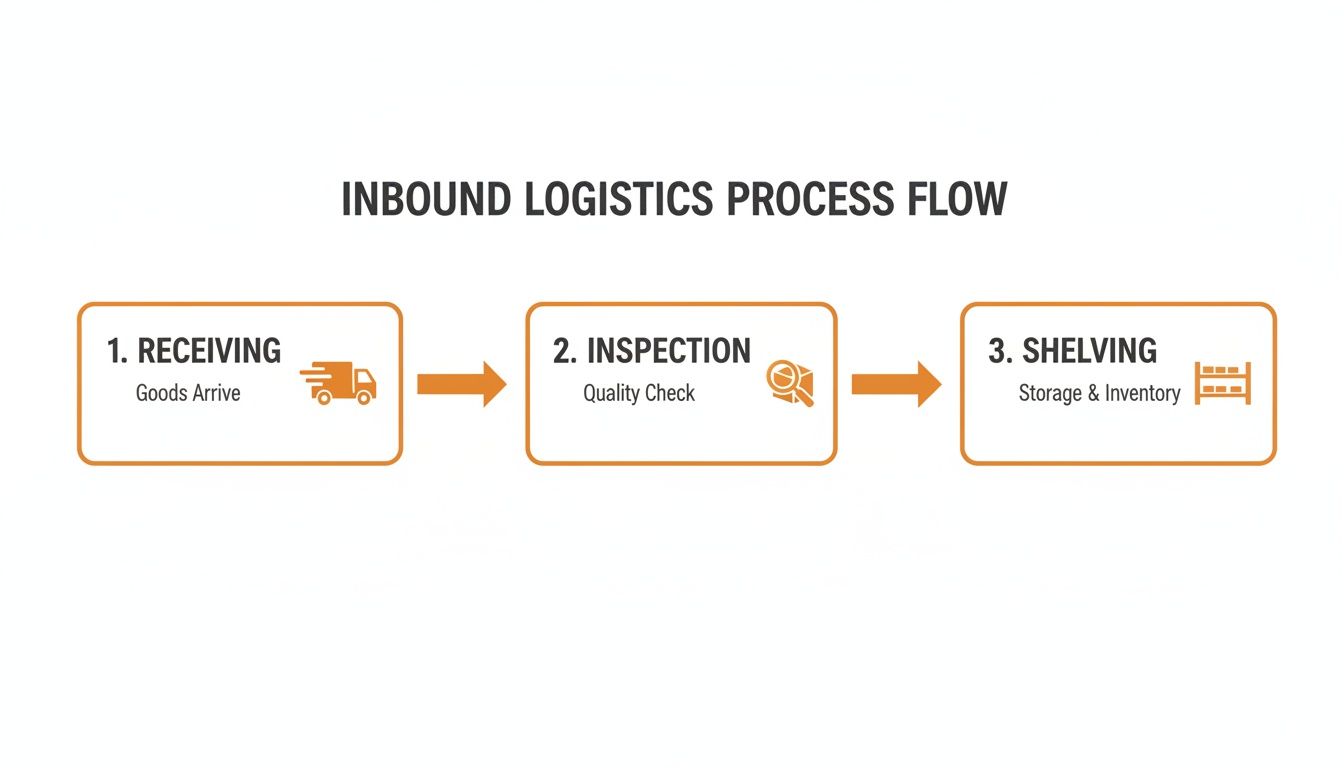
They’ll store all your branding materials right alongside your products and use them exactly how you specify for every order. It ensures your customers get that memorable "wow" moment when their package arrives, without you having to manage a single roll of tape.

What’s the Difference Between a 3PL and a Fulfillment Center?

This is a really common point of confusion, but the distinction is simple. Think of it this way: the fulfillment center is the building, but the 3PL is the brain and the muscle running the whole operation inside it.

A fulfillment center is just a warehouse with shelves and workers. A 3PL, on the other hand, is the complete service partner providing the strategy, the software, and the expertise to manage your entire logistics chain—from receiving and inventory management to picking, packing, and shipping. One is just a place; the other is a growth partner.


Ready to stop packing boxes and start scaling your brand? The team at Snappycrate can provide a clear, transparent quote and show you how a dedicated fulfillment partner can fuel your growth. Learn more and get in touch with a logistics expert at Snappycrate today.

0 Continue Reading →

Finding the Best 3PL for Small Business a Complete Guide

Finding the best 3PL for a small business is a balancing act. You're juggling cost, flexibility, and the quality of service you can expect. Big players like ShipBob are great if you need a massive warehouse network for lightning-fast shipping. But specialists like Snappycrate shine when you need meticulous Amazon FBA prep and a more personal touch. The right partner for you is the one that gets your specific products, your order volume, and where you're trying to take your brand.

A smiling man in a denim shirt and apron scans a package in a warehouse, surrounded by boxes.

Your Guide to Finding the Right Fulfillment Partner

There's a moment every e-commerce founder hits. It's when you realize you're spending more time wrestling with packing tape than you are actually growing your business. That's the turning point. Picking a Third-Party Logistics (3PL) partner isn't just about outsourcing shipping—it's about bringing on a co-pilot for your growth. This guide was built for that exact moment when your garage can no longer contain your success.

Going from a DIY setup to a real, scalable fulfillment machine feels like a huge leap, but it’s the single best move you can make to get your time back. A good 3PL becomes the engine room for your store, handling all the complex, time-sucking tasks that are holding you back.

The Challenge for Small E-commerce Brands

Let's be honest: the logistics world wasn't built for the little guy. Traditional providers were designed for huge companies with predictable, high-volume orders, which left small brands with a lot of bad options.

You've probably run into some of these roadblocks:

  • High Minimums: Some 3PLs demand a minimum number of orders per month, which just doesn't work for startups or businesses with seasonal peaks.
  • Rigid Contracts: Getting locked into a long-term commitment is a huge risk when you need to stay nimble and react to the market.
  • Hidden Fees: You look at a rate sheet, and it seems simple enough. Then the invoice comes, loaded with surprise fees that kill your margins.
  • Lack of Personalization: When you're a small fish in a big pond, your unique needs—like custom packaging or special handling—get ignored.

A Roadmap for Making the Right Choice

This guide is your roadmap to get around those challenges. We're going to break down what a 3PL actually does, from the moment your inventory arrives at their door to how they handle a customer return. From there, we'll dive deep into the must-have criteria for evaluating them, covering everything from pricing models and tech integrations to the nitty-gritty of Amazon FBA prep.

Think of this as your playbook for finding a true extension of your team. The goal is to find a partner who will protect your profit margins, master the operational details, and make your customers happy with every single delivery. As you start your search, remember that great fulfillment is just one piece of the puzzle. For a broader look at e-commerce business strategies, it's always smart to check out other expert resources. The right 3PL frees you up to do what only you can do: build your empire.

What a 3PL Actually Does for Your Business

Think of a third-party logistics (3PL) provider as the engine room of your e-commerce store. While you’re up on the bridge steering the ship—handling marketing, dreaming up new products, and talking to customers—the 3PL is below deck, managing all the complex machinery that keeps you moving forward.

It’s way more than just a warehouse. A good 3PL is a true operational partner that takes on the four core pillars of fulfillment. They’re the ones who turn a customer's click into a package showing up on their doorstep. Let's break down what that really means.

Warehouse worker performing inventory control with a laptop showing logistics software and stacked boxes.

Receiving and Warehousing

This is ground zero. When your inventory arrives at the 3PL, it’s not just tossed onto a shelf. The receiving team gets to work, carefully inspecting every shipment to make sure the products and quantities match what you ordered from your supplier.

They check for damages, count every item, and log it all into their warehouse management system (WMS). This first step is absolutely critical for inventory accuracy later on. Once everything checks out, your products are assigned a specific home—a bin, shelf, or pallet—so they can be found in a flash when an order comes in.

This isn't your garage. Professional warehousing keeps your products safe, organized, and ready for lightning-fast picking.

Inventory Management

A great 3PL doesn’t just give you physical space; they provide the tech backbone for your entire inventory. Their WMS plugs directly into your e-commerce platform, whether it's Shopify, Walmart, or another marketplace. That connection creates a single, reliable source of truth for your stock levels.

When a customer buys something, the order zips over to the 3PL, and their system automatically deducts that item from your inventory count. That update is instantly pushed back to your storefront, which stops you from overselling and having to send that dreaded "oops, it's out of stock" email.

Key Takeaway: Solid inventory management is the heart of what a great 3PL does for a small business. It prevents costly stockouts that kill your reputation and keeps you from tying up cash in products that aren't moving.

This digital oversight gives you a live, bird's-eye view of your assets without you ever having to count a single box. To get a closer look at the nuts and bolts, check out our guide on what a 3PL warehouse does.

Pick, Pack, and Ship

This is the part of the process everyone pictures. As soon as an order hits the system, it generates a "picking list," sending a warehouse team member to the exact spot where your product is stored.

  • Picking: They grab the correct items for the order. Accuracy is everything here—the best 3PLs hit 99% accuracy or better.
  • Packing: The items head to a packing station. They're securely packed in the right box or mailer with the right amount of padding to keep them safe on their journey. Many 3PLs can even use your custom-branded packaging to keep the customer experience consistent.
  • Shipping: Finally, the 3PL slaps on a shipping label—often using their high-volume discounts to get you cheaper rates—and hands the package off to the carrier.

The whole sequence is a well-oiled machine, built for speed and precision.

Returns Management (Reverse Logistics)

The customer journey doesn’t always end when the package arrives. Handling returns is a huge, and often painful, part of running an e-commerce business. A good 3PL makes this "reverse logistics" process totally seamless.

When a customer sends an item back, it lands at the 3PL's warehouse. The team inspects it and, based on the rules you’ve set, will:

  1. Restock it: If the item is in perfect, sellable condition, it goes right back into your inventory.
  2. Quarantine it: If it's damaged or needs a new box, it gets set aside for you to decide what to do.
  3. Dispose of it: If it’s a total loss, they’ll get rid of it according to your instructions.

Managing returns well protects your profit margins and keeps customers happy, even when a product wasn't the right fit. By nailing these four jobs, a 3PL becomes a true extension of your brand.

Key Criteria for Choosing Your Fulfillment Partner

Picking the right 3PL partner is one of the most critical decisions you'll make for your small business. Get it right, and you've got a powerful engine for growth. Get it wrong, and you're in for a world of headaches, hidden fees, and unhappy customers.

This guide breaks down exactly what you need to look at, from someone who's seen it all.

Cost Structures

First things first: let's talk about money. You need to get under the hood of a 3PL’s cost structures to make sure you won't be blindsided by surprise fees that chip away at your profits.

Don't just look at the shipping rate. You need a complete picture of all the essential charges:

  • Receiving: What do they charge to unload your inventory, count it, and put it away?
  • Storage: How is this calculated? Per pallet, per bin, per cubic foot?
  • Pick and Pack: Is it a flat fee per order, a fee per item, or a combination?
  • Shipping: How competitive are their rates with major carriers?

And be on the lookout for the hidden fees. Ask about account management charges, minimum monthly spending, and what they charge to handle returns. These can add up fast.

Technology and Integrations

Next, you have to see how their technology plays with yours. A 3PL’s software should feel like a natural extension of your e-commerce store, not a clunky add-on.

Seamless integration with platforms like Shopify or Amazon is non-negotiable. It’s what stops overselling, stock mismatches, and the soul-crushing task of manual order entry.

  • API Connectivity: This is the gold standard for syncing orders and inventory in real time.
  • EDI Support: If you sell to big-box retailers (B2B), this is a must-have for automated order processing.
  • Reporting Dashboard: You need clear visibility into your order volume, inventory levels, and fulfillment trends without having to ask for it.

When it works right, you'll see inventory levels on your website update the second an item is scanned in the warehouse. That’s the kind of automation that lets you focus on growing your business.

Pricing Models and Volume Discounts

As you grow, your costs should get better, not just bigger. Many 3PLs use tiered pricing, rewarding you with lower rates as your order volume increases.

Ask for specific price breaks at milestones like 100, 500, and 1,000 orders per month.

  • You can often see pick and pack fees drop by 5-15% as you hit higher volumes.
  • Some providers even offer seasonal perks, like waiving storage fees during your peak months to help with cash flow.

Before you sign anything, run the numbers. Do a cost projection for a typical 500-order month to see what you’d actually pay and how that compares to other quotes.

Fulfillment Accuracy and Speed

Nothing kills customer loyalty faster than a wrong order or a slow delivery. This is where the promises meet the pavement.

You should be looking for a fulfillment accuracy rate of 99% or higher. Anything less is a red flag. For shipping, you need the ability to get orders to most U.S. customers in under two days.

“A single order mistake can cost you a loyal customer and profit.”

When you're looking at fulfillment partners, don't forget to compare their capabilities against other options like the Amazon FBA program.

Scalability and Specialized Services

A good partner for today might not be the right partner for tomorrow. Scalability means the 3PL can handle your growth from 100 orders a month to 5,000 without breaking a sweat. Ask them how they manage peak season and what their capacity looks like.

You also need a partner who can handle the nitty-gritty details specific to your business.

  • Amazon FBA Prep: Essential if you sell on Amazon. This includes FNSKU labeling, poly bagging, bundling, and case packing to meet Amazon's strict rules.
  • Custom Kitting: Assembling multiple products into a single, ready-to-ship set for promotions or subscriptions.
  • Freight Handling: Can they receive a full container, break down pallets, and inspect your goods upon arrival?

At Snappycrate, we’re built to support every stage of an e-commerce brand's journey. Learn more about our e-commerce order fulfillment services to see how we help businesses scale.

A Tool to Keep You Organized

Comparing 3PLs can feel overwhelming, with different pricing sheets and feature lists. Use this simple scorecard to keep your evaluation objective and organized. Rate each provider on a scale of 1 to 5 to see who truly comes out on top for your business.

3PL Provider Evaluation Scorecard

Evaluation Criteria What to Look For Provider A Score (1-5) Provider B Score (1-5) Notes
Cost Transparency Clear, simple rates with no hidden fees.
Tech Integration Seamless connection to your sales channels.
Fulfillment Accuracy A guaranteed rate of 99% or higher.
Shipping Speed Options for 1-2 day delivery nationwide.
Scalability Can easily handle your projected growth.
FBA Prep Services Full-service prep for Amazon sellers.
Customer Support A dedicated, responsive point of contact.

Once you've filled it out, the right choice often becomes much clearer. The goal is to find a partner who scores high across the board, not just on one or two metrics.

Final Evaluation Checklist

Before you make your final call, run through this one last time.

  • Pricing: Compare quotes for your average order volume.
  • Integrations: Confirm they connect to every sales channel you use.
  • Accuracy: Ask about their accuracy guarantee and what happens if they make a mistake.
  • Speed: Check average delivery times to your key customer locations.
  • Scalability: Make sure they can handle your Black Friday rush.
  • FBA Prep: If you sell on Amazon, confirm they know the rules inside and out.
  • Support: Do you have a dedicated person you can call when something goes wrong?
  • Contracts: Review the terms, exit clauses, and service level agreements (SLAs).

Choosing a 3PL is about finding a partner, not just a vendor. A careful comparison of their costs, tech, accuracy, and services will set you up for sustainable growth. With the right team handling your logistics, you can finally get back to focusing on what you do best: building your brand.

Comparing Top 3PL Providers for Small Businesses

Alright, enough with the theory. The leap from planning to picking a 3PL gets a whole lot easier when you look at real-world examples.

We're going to walk through a few well-known 3PLs, each with different strengths. This will show you exactly how to match a provider's specific skills to what your small business actually needs.

Every 3PL has its specialty—some have massive warehouse networks, others excel at tech, and a few are masters of niche services. By comparing things like their costs, delivery speed, and software, you can start putting our evaluation framework to work with real names and numbers.

Provider Profiles and Network

Take ShipBob, for example. They operate over 50 fulfillment centers scattered across North America, Europe, and Australia. Their whole model is built on "distributed inventory," which just means they store your products closer to your customers. This simple trick slashes both shipping times and costs.

Then you have a company like Red Stag Fulfillment. They carved out a niche handling heavy, bulky, and oversized items from two strategically placed U.S. warehouses. Their big promise? A staggering 99.997% order accuracy, which is a lifesaver if you're selling high-value goods like furniture or fitness equipment.

“Choosing the right network footprint can shave days off delivery times and dollars off your invoices.”

This decision tree helps visualize how to start narrowing down your options based on what you care about most: cost, speed, or tech.

A decision tree diagram illustrating the selection process for 3PL providers based on costs, speed, and technology.

As you can see, if cost is your main driver, you'll naturally gravitate toward providers who offer clear, tiered pricing and don't bury you in hidden fees.

Real-World Performance Metrics

Let's talk concrete numbers. ShipBob hits a 97% on-time delivery rate and makes 2-day shipping a reality for most orders across the U.S. Why does that matter? Research shows a whopping 69% of customers will ditch a brand after just one late delivery. Reliability isn't just a bonus; it's how you keep customers coming back.

In fact, early-stage sellers on Shopify who partner with ShipBob have reported cutting their shipping costs by up to 25% just by using their inventory placement programs. You can dive deeper into the research on top 3PL performance to see more.

  • Cost Savings: This is the direct result of smart inventory placement. Less distance equals lower shipping fees.
  • Delivery Speed: Having a distributed network means packages have a shorter journey to the customer's doorstep.
  • Accuracy: This tracks how often they get the order right, which is fundamental to building trust.

Red Stag’s focus on heavy goods means they're pros at handling pallets and breaking down bulk shipments with minimal damage—a huge plus for anyone selling bulky items. And that 99.997% accuracy rate? It’s backed by a guarantee that pays you for their mistakes, which seriously reduces your financial risk.

Additional Cost Factors

The price you're quoted is rarely the final price. Keep an eye out for sneaky surcharges for things like long-term storage, dedicated account management, or penalties if you don't meet order minimums. Digging into these details early on prevents nasty budget surprises down the road.

Holiday rushes and big promotions can also trigger peak season fees. Ask every potential 3PL how they handle these surges. Do they have fee caps? Do they offer flexible plans to ease the pressure during your busiest times?

Finally, don't overlook the quality of their customer support. How quickly do they respond? How transparent is their reporting? A responsive team can be the difference between a minor hiccup and a full-blown crisis that damages your brand's reputation.

How to Compare Providers

Here's a simple, four-step process to get you started:

  1. Know your numbers. Get a handle on your monthly order volume and what your peak demand looks like.
  2. Project your costs. Compare their fees for receiving, storage, and pick and pack against your growth forecasts.
  3. Test the tech. Ask for a demo of their software to make sure it syncs smoothly with your e-commerce platform. No glitches allowed.
  4. Read the fine print. Understand their Service Level Agreements (SLAs) and exit clauses. You need to know what happens if they mess up and what it takes to end the contract.

A great way to gut-check a provider is to run a small pilot batch of orders with your top contenders. See how they perform in the real world and what kind of feedback you get from actual customers.

Remember, the data on their website only tells you part of the story. You have to filter those numbers through the lens of your own business—your specific product SKUs, how complex your orders are, and your seasonal sales patterns.

For example, a small apparel brand with lightweight, fast-moving items would probably prioritize a 3PL with volume discounts and speedy pick times. On the other hand, a business selling electronics might need a partner like Red Stag who offers specialized handling and strict quality control.

Use the scorecard you built earlier to assign weights to each criterion based on your strategy, not some generic template. This approach makes your final decision transparent and easy to justify.

Key Takeaways

  • Focus on the big three: network reach, cost, and technology integration. Get these right, and you're most of the way there.
  • Drill down into their on-time delivery rates and pricing tiers for your specific order volume.
  • Always validate their SLAs and, if possible, test a small batch of orders to see how they really perform under pressure.

Choosing the right 3PL partner starts with knowing your priorities and ends with real-world testing. With a structured comparison, you can turn an overwhelming list of vendors into the perfect partner to help your brand grow.

Next up, we’ll explore exactly how Snappycrate’s services align with these needs to support growing businesses.

How Snappycrate Delivers as a Growth-Focused 3PL

All the checklists and scorecards are great, but the final decision really boils down to one question: which partner is actually built to help you grow? This is where theory meets reality, and it's where Snappycrate’s model is designed to click with an ambitious small business. We’re not just another vendor; we’re an operational partner built to clear logistical hurdles so you can get back to scaling your brand.

We get it. Finding the best 3PL for a small business means finding a team that understands the tiny details of your sales channels. It’s about more than just storing boxes and shipping orders. It’s about having a partner who can expertly manage the things that protect your profit margins and your hard-earned brand reputation.

A logistics worker places a package on a conveyor belt in a modern 3PL warehouse.

Amazon FBA Prep Perfected

For so many Amazon sellers, FBA prep is a constant headache. One missed FNSKU label or one incorrectly bundled product can lead to rejected shipments, painful chargebacks, and weeks of lost sales. It’s a high-stakes game where precision is absolutely everything.

Snappycrate was built with exactly this challenge in mind. Our team is deeply familiar with Amazon's always-changing rulebook.

  • Labeling and Poly Bagging: We make sure every single unit has the correct FNSKU label and is poly-bagged according to Amazon’s strict guidelines. No exceptions.
  • Kitting and Bundling: Creating multi-packs or gift sets? We assemble them precisely to your specs so they arrive at Amazon’s fulfillment centers ready for sale, not ready for a problem ticket.
  • Inbound Compliance: From how we pack the cases to how we build the pallets, every shipment we prepare is designed to sail right through Amazon’s receiving process without a single hiccup.

This obsessive approach means you can send inventory to Amazon with confidence, knowing it will be checked in quickly and become sellable faster.

Seamless Multi-Channel Integrations

Modern e-commerce brands don't just sell on one platform. You’re on Shopify, you’re on Walmart, and you’re probably eyeing other marketplaces. Trying to manage inventory and orders across all those channels can turn into a tangled mess without the right tech.

Our platform is made for this multi-channel world. We offer direct, reliable integrations with the major e-commerce platforms, creating a single source of truth for your entire operation.

When an order comes through on Shopify, our system grabs it instantly. When we ship it, tracking information is pushed back to your store automatically. This automation gets rid of manual data entry, prevents overselling, and keeps your customers in the loop every step of the way.

This connected system is the backbone of scalable growth. It lets you add new sales channels without adding a bunch of operational chaos.

A Partner That Scales With You

Let’s be honest: what works for a business shipping 100 orders a month completely falls apart at 1,000 orders. True scalability isn’t just about having more warehouse space. It’s about having processes, systems, and a team that can handle more complexity without dropping the ball.

At Snappycrate, we’ve built our operations to grow right alongside you. Our workflows are designed to handle volume spikes during peak seasons like Black Friday just as smoothly as a slow Tuesday in February. We don’t lock you into the rigid contracts or high monthly minimums that can cripple a growing business. Instead, we offer a flexible partnership that adapts as you do.

Our hands-on approach means you always have a direct line to a team that knows your business inside and out. We take pride in our clear communication and consistent turnaround times—something our clients often say is a key reason they can scale with confidence. To see how our infrastructure supports this, you can learn more about our state-of-the-art facility and what it can do. We handle the logistical headaches so you can stay focused on building your brand.

Frequently Asked Questions About Choosing a 3PL

Jumping into the world of third-party logistics always brings up a ton of questions. As a small business owner, you don't have time for vague answers—you need clear, practical advice to make the right call for your brand's future.

This section gets right to the point, tackling the most common concerns we hear from entrepreneurs just like you. We've designed these answers to be straightforward, cutting through the industry noise so you can move forward with total confidence.

When Is the Right Time for My Small Business to Switch to a 3PL?

The real tipping point isn't a magic number. It’s that moment you realize you're spending more time tangled up in logistics than you are on marketing, developing new products, or actually talking to your customers.

Here are a few tell-tale signs that it’s time to find a fulfillment partner:

  • Order Volume: You're consistently shipping over 100 orders a month, and the daily grind of taping up boxes is completely taking over your life.
  • Storage Issues: Your garage, spare bedroom, or current storage unit is overflowing. You can't find anything, and your inventory is a disorganized mess.
  • Shipping Speed: You just can't keep up with customer demands for fast, cheap shipping. You know you're losing sales to competitors who can deliver quicker.

Think of it this way: switching to a 3PL isn't just another expense. It's a strategic move to trade operational headaches for the freedom to actually grow your business. You're buying back your time.

How Much Does a 3PL Cost for a Small Business?

There’s no one-size-fits-all price tag here. 3PL pricing is based on your specific needs, but the costs usually fall into four main buckets. Getting a handle on these is the key to comparing providers on an apples-to-apples basis.

As a ballpark figure, a small business shipping around 300 orders per month could expect their total monthly fees to land somewhere between $1,000 and $2,500. This doesn't include the actual postage costs from carriers like UPS or FedEx. Always, always ask for a detailed quote based on your average order size, how much inventory you store, and your monthly volume.

Can a 3PL Handle Custom Packaging and Kitting?

Absolutely. Any modern 3PL that's serious about serving growing e-commerce brands knows how important the unboxing experience is. These value-added services are critical.

  • Custom Packaging: A good partner should have no problem using your branded boxes, custom mailers, and unique inserts. Every package should feel like it came directly from you.
  • Kitting: This is the service of assembling multiple items into a single, ready-to-ship unit, like building a holiday gift set or a monthly subscription box.

You have to confirm these capabilities upfront. Ask potential partners about their process and any extra fees involved, because not all 3PLs are equipped to handle this level of customization. A provider who nails this is a true extension of your brand.

What Happens if a 3PL Makes a Mistake with My Order?

A reliable 3PL will have a formal Service Level Agreement (SLA) that spells out its accuracy guarantees and exactly what happens when an error occurs. This document is your safety net.

Key Takeaway: The best 3PLs stand behind their work with financial guarantees. If they ship the wrong item, they should cover all the costs to make it right—including the return shipping, the new shipping fees, and the cost of the replacement product.

Top-tier providers often boast accuracy rates of 99% or higher and will put their money where their mouth is. Before you sign any contract, comb through the SLA. Look for their policies on order accuracy, what happens if inventory goes missing (shrinkage), and how they handle damage claims. This tells you everything you need to know about how much they believe in their own service.


At Snappycrate, we get these questions because we’ve built our entire business to be the answer. We deliver the transparent pricing, custom solutions, and guaranteed accuracy that growing businesses need to scale without the logistical nightmares. Learn how Snappycrate can become the fulfillment partner that fuels your growth.

0 Continue Reading →

Dispatching and Logistics: Your Guide to Streamlined E-commerce Fulfillment

Let's get one thing straight: dispatching and logistics are not the same thing. Mistaking one for the other is a classic rookie mistake that can quietly sabotage an e-commerce operation.

Think of it like this: Logistics is the entire game plan—it's the strategy, the playbook, and all the behind-the-scenes work that sets your team up to win. Dispatching is the final, game-winning play—the single action that sends the product out the door and into your customer's hands.

Your E-Commerce Operations Playbook

A person uses a tablet displaying an operations management system in a modern warehouse setting.

For any e-commerce seller, nailing the difference is absolutely critical.

Logistics is the big-picture thinking. It’s all about making sure your products are in the right place, at the right time, and in perfect condition. It’s the unglamorous but essential work of inventory planning, warehousing, and carrier negotiations that makes fulfillment even possible.

Dispatching, on the other hand, is the moment of truth. It’s the tactical, real-time execution that kicks into gear the second a customer clicks “Buy.” That single click triggers a rapid-fire sequence of events: picking the item from the shelf, packing it securely, and handing it off to the carrier.

Why This Distinction Matters

When you don't treat these as two separate but connected functions, things start to break. A weak logistics plan leads to painful stockouts or, just as bad, cash tied up in excess inventory. Sloppy dispatching creates shipping bottlenecks, fulfillment errors, and unhappy customers.

A truly seamless operation ensures the strategy (logistics) perfectly fuels the execution (dispatching).

Mastering both is how you scale, especially on demanding marketplaces like Amazon or Shopify where customer expectations are sky-high. For example, a flawless logistics plan makes sure your products are prepped and stored correctly for FBA. Sharp dispatching guarantees they actually ship out on time, every single time. If you're deep in the weeds of FBA, you might want to check out our guide on effective warehouse management for e-commerce.

Dispatching vs Logistics At a Glance

To make it even clearer, here’s a quick breakdown of where each function's responsibilities begin and end.

Aspect Logistics (The Big Picture) Dispatching (The Final Action)
Timeframe Long-term planning (weeks, months, quarters) Real-time and immediate (minutes, hours)
Core Focus Strategy, planning, and optimization Execution, action, and movement
Key Activities Inventory forecasting, warehouse layout, carrier selection, supply chain management Picking orders, packing boxes, generating shipping labels, coordinating carrier pickups
Main Goal Ensure resources are available and processes are efficient Get the correct order to the right customer on time

Think of it this way: Logistics makes sure the players are on the field and know the playbook. Dispatching is the quarterback calling the specific play at the line of scrimmage. You absolutely cannot have one without the other.

This powerful synergy is what’s fueling massive industry growth. The global logistics market hit a mind-boggling USD 5.65 trillion and is on track to climb to USD 8.07 trillion by 2033. This explosion is a direct result of e-commerce demand, highlighting just how critical sharp dispatching is to handling the non-stop flood of online orders. Building a resilient business starts with getting this fundamental relationship right.

The Inbound Journey from Dock to Shelf

Before a single product can be picked, packed, and shipped out, it has to complete its inbound journey. This is the foundation of your entire fulfillment operation, and getting it wrong is a guarantee for chaos down the road—think inaccurate inventory counts, shipping the wrong items, and hours wasted chasing mistakes. The whole process kicks off the second a truck backs into the loading dock.

This first step is called receiving, but it's way more than just unloading boxes. It’s a crucial checkpoint where every single incoming shipment is checked against its purchase order. Our team confirms the right number of cartons arrived, gives them a quick once-over for any obvious damage, and starts logging everything into the system.

From Pallets to Bins

Once the freight is off the truck, we move on to the pallet breakdown. A single pallet can hold dozens of boxes, and each of those boxes is filled with individual products. Teams carefully break down these pallets, sorting everything by its SKU (Stock Keeping Unit).

This sorting stage is all about accuracy. Each item is then individually scanned, officially entering it into our Warehouse Management System (WMS). It's like a digital handshake that creates a record for every unit now in our care. This is what gives you the real-time data you need for smart dispatching and logistics.

A single mistake during receiving—like miscounting one carton or not flagging a damaged box—doesn't just affect that one item. It creates a ripple effect that can lead to overselling stock you don't actually have, sending damaged goods to customers, and burning hours trying to figure out where things went wrong.

After an item is scanned, it gets assigned a specific home in the warehouse, usually called a bin. This isn't random. The WMS strategically assigns spots to make the picking process faster later on. For example, your best-selling products are often stored in the easiest-to-reach locations to speed up fulfillment.

Meeting Strict Marketplace Demands

If you’re selling on a platform like Amazon, this whole inbound process becomes even more critical. Amazon has incredibly strict compliance requirements for FBA (Fulfillment by Amazon), and one mistake can get your entire shipment rejected, costing you fees and serious delays.

A few non-negotiable FBA prep steps include:

  • FNSKU Labeling: Every single unit needs a unique Amazon barcode that completely covers any old manufacturer barcodes.
  • Poly Bagging: Certain products, like t-shirts or items with small parts, need to be put in a protective poly bag that has a suffocation warning printed on it.
  • Case Pack Creation: Your products often need to be bundled into specific case quantities with the correct labels before we can send them off to Amazon’s warehouses.

Each of these steps is a hard-and-fast rule. For instance, if a clothing brand’s shipment shows up at Amazon without the right poly bags, Amazon will either turn it away or charge you expensive fees to fix it themselves. This makes a detail-obsessed inbound process not just a good idea, but an absolute must for staying profitable on the world’s biggest marketplace.

The Outbound Engine: Fulfilling Customer Promises

This is it—the moment of truth. Outbound logistics is where your brand's promise shifts from a digital click to a physical reality. It's the fast-paced, high-stakes sprint that gets a product from your warehouse shelf to a customer's front door. Everything you've planned around dispatching and logistics comes together here with one critical mission: fulfill the order, perfectly.

The whole dance starts the second an order notification hits your system. That digital ping is the starting gun for the first physical action in the warehouse: order picking. This isn't just someone wandering the aisles and grabbing items. Smart warehouses use specific strategies to move fast and keep errors close to zero.

Think of it this way: a smooth outbound process is only possible because of a solid inbound one. The infographic below shows how products are received, checked, and put away correctly.

An infographic illustrating the inbound logistics process flow: receiving, inspection, and shelving steps.

Getting that first step right—receiving and shelving—is the foundation. If your inventory isn't where it's supposed to be, the whole outbound engine grinds to a halt.

From Picking to Packing

Picking strategies are all about minimizing wasted steps and saving time. Two of the most common methods are absolute game-changers:

  • Batch Picking: A picker grabs items for a bunch of different orders all in one trip. This is a huge time-saver for businesses that get a lot of single-item orders.
  • Zone Picking: Each worker owns a specific "zone" in the warehouse and only picks items from their area. Orders get passed from zone to zone, almost like a factory assembly line, until they're complete.

Once every item for an order is gathered, it's off to the packing station. Here, everything gets a final quality check before being placed in the right-sized box with the right amount of protective dunnage. This is also your chance to add branded touches—like custom tape or a thank-you insert—to create that memorable unboxing experience.

Every single step in your outbound process is a chance to either build or destroy customer trust. One wrong item or a shipment that’s a day late can completely undo all the hard work your marketing team did to win that customer.

The Final Handoff and Dispatch

Finally, the packed box is weighed, measured, and matched with the correct shipping label. The order is now officially ready for dispatching—that crucial final handoff to a carrier like FedEx, UPS, or USPS. This step has to be seamless, especially since most packages will be hitting the road.

Road transport owns a massive 38.7% market share in global logistics, making it the undisputed king of flexible, cost-effective last-mile delivery. With the entire logistics market expected to more than double by 2032, making that final handoff efficient is more critical than ever. You can dig into more of these logistics industry trends on Infosys.com.

This finely tuned engine of picking, packing, and dispatching is what lets an e-commerce brand grow from ten orders a day to ten thousand, all while delivering the speed and accuracy that turns one-time buyers into loyal fans.

Measuring What Matters in Your Supply Chain

You can’t improve what you don’t measure. It’s an old saying, but it’s the absolute truth in e-commerce fulfillment. To really understand how your operation is performing, you need to look at the numbers—the Key Performance Indicators (KPIs) that tell the true story of your dispatching and logistics health.

These aren't just vanity metrics for a dashboard. Think of them as the vital signs of your business. Tracking the right KPIs is how you spot hidden bottlenecks, find opportunities to get better, and ultimately prove that your fulfillment system is a well-oiled machine. This data-driven mindset is critical, whether you run your own warehouse or partner with a 3PL.

Core Metrics for E-Commerce Success

For any e-commerce seller, a few key metrics paint a clear picture of your effectiveness, from the moment an order is placed to when it lands on the customer's doorstep. If you want to turn your supply chain into a competitive advantage, start by mastering these.

  • Order Accuracy Rate: This is as simple as it sounds: what percentage of your orders go out perfectly, with no wrong items, incorrect quantities, or damages? A high rate means happy customers and fewer expensive returns. The gold standard is 99.5% or higher.

  • On-Time Shipping Rate: This tracks the percentage of orders you ship out on or before the promised date. It's a direct reflection of your dispatching speed and a massive factor in customer satisfaction and repeat business. You should be aiming for 99% or better.

An On-Time Shipping Rate of 98% might not sound like a disaster, but for a business shipping 1,000 orders a month, that means at least 20 customers are getting a late shipment notification. Over a year, that's 240 negative experiences that could have been avoided.

Financial and Inventory Health KPIs

Beyond keeping customers happy, you have to make sure your operations are profitable. These next KPIs dig into the financial efficiency of your inventory and fulfillment, ensuring you’re not just fast, but also smart with your money.

  • Inventory Turnover: How many times do you sell and replace your entire stock over a certain period? A higher number is a great sign—it means your products are selling well and you aren't tying up precious cash in dusty, slow-moving inventory. The ideal rate varies, but a healthy range is often between 4 and 6.

  • Cost Per Order: This is the all-in cost to get an order out the door, divided by the total number of orders. It should include everything from labor and packing materials to shipping fees. Keeping a close eye on this number helps you manage expenses and price your products for real profit.

By consistently monitoring these KPIs, you gain the clarity needed to make smart decisions. You'll know exactly where to focus your energy to speed things up, slash error rates, and cut unnecessary costs.

To give you a quick reference, here’s a breakdown of the essential KPIs every e-commerce seller should be tracking.

Essential E-Commerce Logistics KPIs

KPI What It Measures Industry Benchmark
Order Accuracy Rate The percentage of orders fulfilled without errors (wrong item, quantity, damage). 99.5%+
On-Time Shipping Rate The percentage of orders dispatched on or before the promised ship date. 99%+
Inventory Turnover The number of times inventory is sold and replaced within a specific period. 4-6 (Varies by industry)
Cost Per Order The total fulfillment cost (labor, packing, shipping) divided by the total orders. Varies greatly by product
Order Cycle Time The total time from when a customer places an order to when they receive it. 2-5 days for standard shipping

Tracking these numbers is the first step. The next is using that information to make meaningful improvements. A deeper dive into analytics in logistics can reveal even more powerful ways to optimize your entire operation.

How Technology Drives Modern Fulfillment

A warehouse desk with a computer displaying fulfillment data, a barcode scanner, and a box, highlighting automated logistics.

Let's be clear: modern fulfillment centers don't run on clipboards and manpower anymore. They run on data and precision. Technology is the invisible engine that turns a chaotic warehouse into a finely tuned machine, making fast and accurate dispatching and logistics possible at scale. This isn't just a fancy upgrade—it's a competitive necessity.

At the heart of it all is the Warehouse Management System (WMS). Think of the WMS as the central brain of the entire operation. It tracks every single item from the moment it hits the loading dock to the second it’s handed off to a carrier.

This system gives everyone a single source of truth, killing the guesswork that plagues manual operations. It knows exactly where each SKU is located, how many units are in stock, and which orders need to be picked next. No more "I think it's over here."

From Manual Chaos to Automated Precision

Before systems like a WMS became standard, inventory management was a nightmare of manual counts and messy spreadsheets. An employee could waste hours hunting for a product, only to find it was out of stock—after the customer already bought it. This error-prone approach leads directly to overselling, shipping delays, and furious customers.

Now, real-time inventory tracking, powered by barcode scanners and the WMS, guarantees accuracy.

  • Before: A worker physically eyeballs shelves, risking miscounts that lead to surprise stockouts and lost sales.
  • After: A simple scan updates inventory levels instantly across all your sales channels, preventing overselling before it happens.

This leap from manual guesswork to automated precision is the key to scaling your business without pulling your hair out. It ensures the data driving your fulfillment decisions is always accurate and up-to-the-minute.

For an ambitious e-commerce seller, partnering with a tech-forward 3PL is no longer just an option—it's a core growth strategy. Relying on outdated, manual fulfillment methods in today's market is like trying to win a car race on a bicycle.

The Rise of AI and Intelligent Automation

Beyond the WMS, even more powerful tools are changing the game. AI-powered algorithms now optimize picking routes, telling warehouse staff the most efficient path to take to gather items for multiple orders at once. This drastically cuts down on wasted steps and shaves precious time off the entire fulfillment cycle.

The impact here is huge. The global market for logistics automation is exploding, driven by the nonstop demand for greater efficiency and accuracy. This trend is a clear signal: investing in a technologically advanced fulfillment partner is essential for any brand that wants to not just compete, but win. You can learn more about the future of logistics market size on Grandviewresearch.com.

Finding the Right Fulfillment Partner

Deciding to hand over your fulfillment is a massive step for any e-commerce brand. It’s not just about getting boxes out the door; you’re entrusting a partner with your inventory, your customer experience, and a huge chunk of your reputation. Making the right choice requires a clear, methodical approach—not just a few frantic Google searches.

The process starts with an honest look in the mirror. Before you even think about talking to a 3PL, you need a crystal-clear picture of what fulfillment costs you right now. Get granular. Calculate your true cost per order, factoring in everything from boxes and tape to the value of your own time spent at the packing station.

Define Your Operational Needs

Once you have that baseline cost, it’s time to build your wishlist. Not all 3PLs are created equal, and the goal is to find one whose services perfectly align with your business model. Be specific here, and think about where you're headed, not just where you are today.

Drill down into these critical areas:

  • Specialized Services: Do you need a partner who lives and breathes Amazon FBA prep, handling everything from FNSKU labeling to poly bagging? Or maybe you sell subscription boxes and need custom kitting and bundling.
  • Order Volume: How many orders are you shipping each month? What’s a realistic projection for the next 12-24 months? You need a partner who can handle your current flow and scale with you without breaking a sweat.
  • Product Requirements: Are your products fragile, oversized, or temperature-sensitive? Make sure any potential 3PL has the right facilities and, more importantly, the experience to handle them properly.

Vet Your Potential Partners

With a shortlist in hand, the real vetting begins. This is where you separate the true partners from the basic vendors. You’re not just hiring a service; you’re looking for a team that feels like a genuine extension of your own.

A great fulfillment partner doesn't just ship boxes; they solve problems. Their expertise in dispatching and logistics should feel like a competitive advantage, freeing you up to focus on growing your brand, not managing its operations.

Get straight to the point and ask about their technology. How does their software plug into your e-commerce platform, like Shopify or Walmart? Can you see your inventory levels in real-time? A clunky or disconnected tech stack is a non-starter—it’s the fastest way to stockouts and data headaches.

For a closer look at what goes on inside a fulfillment center, you can learn more about the role of a 3PL warehouse on our blog. Following this roadmap ensures you choose a partner that doesn’t just ship your orders, but actually fuels your growth.

Common Questions About Logistics and Fulfillment

Stepping into the world of e-commerce fulfillment brings a wave of new terms and tough decisions. Here are some clear, straightforward answers to the questions we hear most often from sellers about dispatching and logistics. Our goal is to help you make smarter moves as your brand grows.

3PL vs. Freight Forwarder: What’s the Difference?

It’s easy to mix these two up, but a 3PL and a freight forwarder have completely different jobs in your supply chain.

Think of a freight forwarder as a travel agent for your cargo. Their only job is to book transportation to get your goods from Point A to Point B, usually for big international or domestic freight shipments. They handle the carrier booking and paperwork but never actually touch or store your inventory.

A 3PL, on the other hand, is your hands-on operations partner. A third-party logistics provider goes way beyond just arranging a ride for your products. They manage your entire fulfillment ecosystem—receiving your inventory, storing it in their warehouse, and then picking, packing, and shipping individual orders directly to your customers.

Understanding Common 3PL Costs

Outsourcing fulfillment is an investment, so getting a handle on the costs is a must. Pricing can vary between providers, but most 3PLs build their fees around a few core services. The key is to find a partner with a transparent pricing model that fits what you actually need.

You can usually expect to see these charges:

  • Receiving: This is a fee for the labor it takes to unload, count, inspect, and put away your incoming inventory. It's often charged by the hour, per pallet, or per carton.
  • Storage: A monthly fee for the physical space your products take up in the warehouse. This is typically calculated per pallet or by cubic foot.
  • Fulfillment: A per-order fee that covers the entire pick, pack, and ship process. Many 3PLs charge a base fee for the first item in an order, plus a small charge for each additional item.

On top of these, you might find fees for add-on services like special kitting projects, custom packaging, or getting products prepped for Amazon FBA.

Knowing When to Outsource Your Fulfillment

Deciding to stop shipping orders yourself is a huge turning point for any e-commerce brand. Sure, packing boxes in your garage works when you're just starting out, but it quickly becomes the biggest thing holding your business back.

If fulfillment has become your main job instead of growing your business, it’s time to outsource. The hours you spend taping boxes and printing labels are hours you're not spending on marketing, product development, or talking to your customers.

A few key triggers will tell you it's time to make the switch. If you're consistently shipping 50-100+ orders a month, you’re probably starting to feel the pressure. Other obvious signs? Running out of storage space in your home or office, or falling behind on getting orders out the door on time because you’re just swamped.


Ready to reclaim your time and scale your business without the fulfillment headaches? The team at Snappycrate specializes in transparent, reliable 3PL services designed for growth-minded sellers. Learn how Snappycrate can streamline your operations.

0 Continue Reading →