A lot of sellers hit the same wall right after their first serious import. The container is booked, customs is moving, the freight forwarder says delivery is scheduled, and everyone assumes inventory is almost ready to sell.
It usually isn't.
What shows up at the dock may be a floor-loaded container packed tight with cartons, mixed SKUs, inconsistent carton markings, and no pallet configuration that works for Amazon FBA, retail routing guides, or your own pick-and-pack workflow. The freight has arrived in the country. That doesn't mean it's operationally usable. The gap between those two things is where costs pile up fast.
That gap is break of bulk. For e-commerce sellers, it's one of the least understood parts of inbound logistics and one of the easiest places to lose margin through delays, relabeling, miscounts, chargebacks, and avoidable warehouse labor.
Your First Container Has Arrived Now What
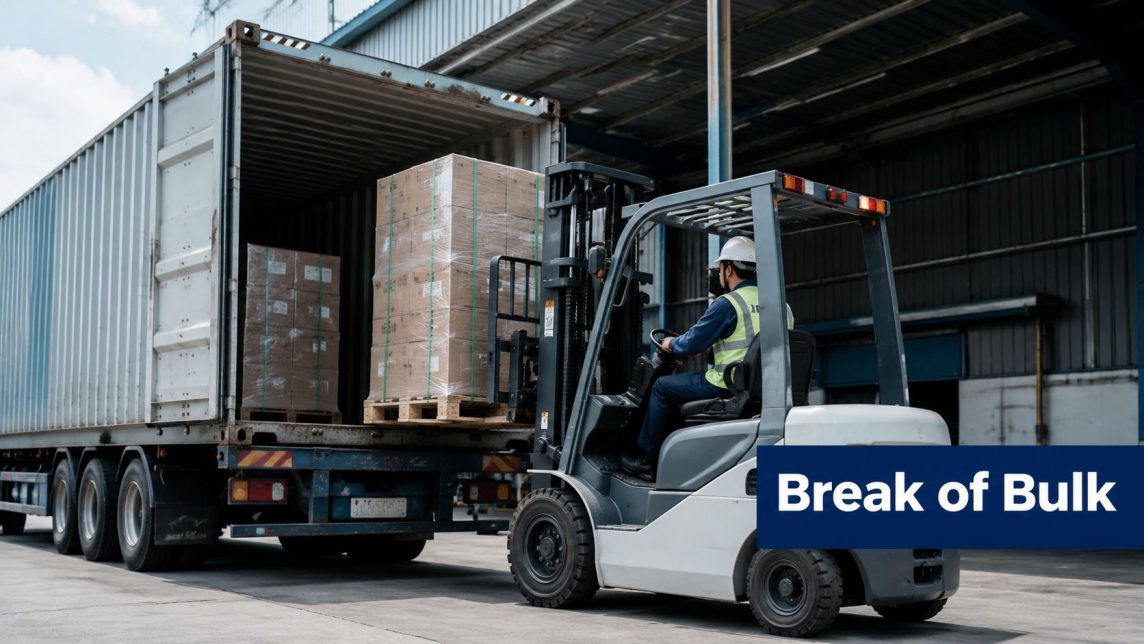
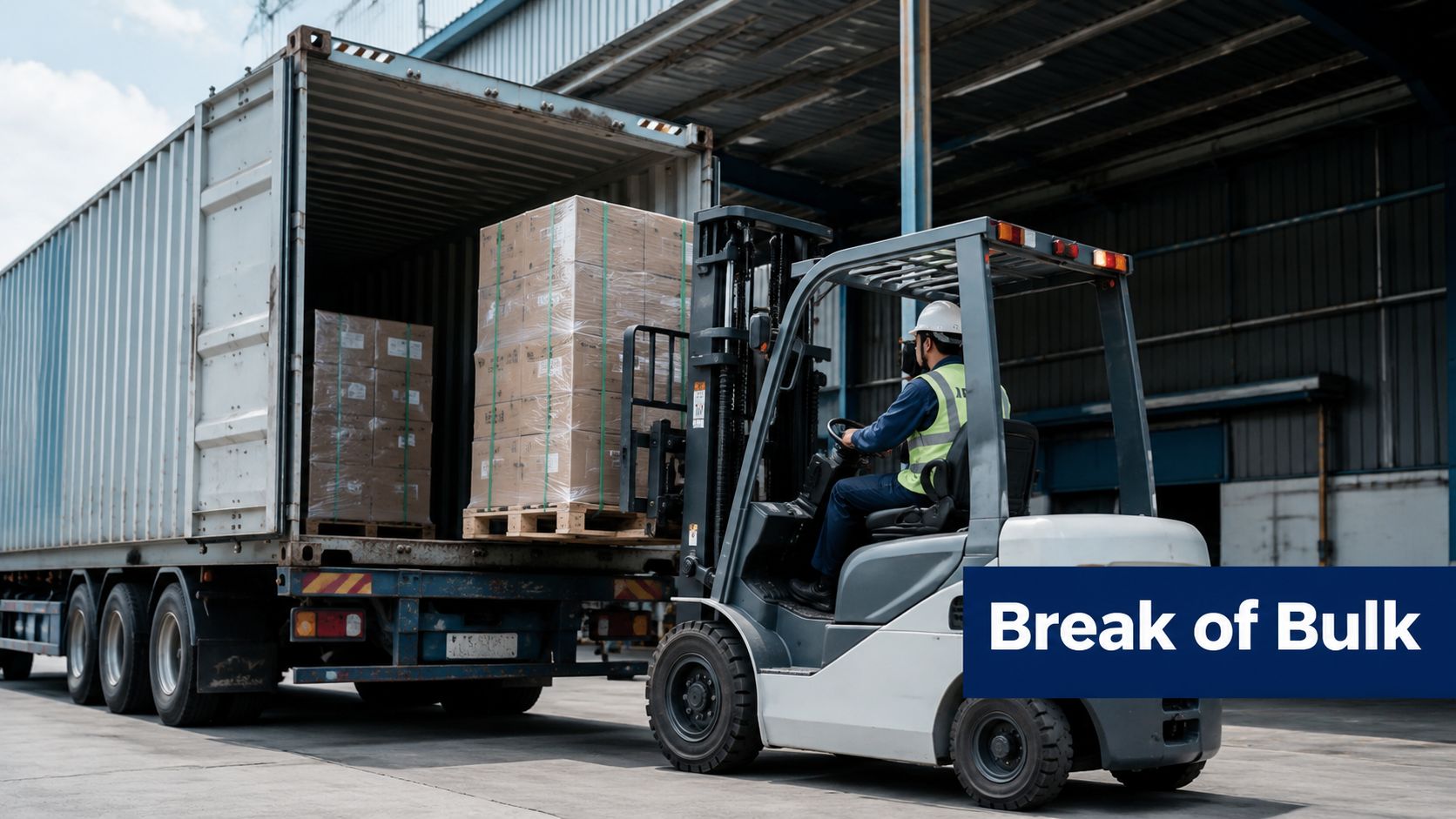
Your trucker checks in with a delivery window. The container gets backed to the dock. The doors open, and the first thing you notice is that nothing is ready for the next step.
The cartons may be floor-loaded instead of palletized. Different SKUs may be mixed in the same row. Carton labels may reflect factory references instead of your Amazon workflow. If you're sending part of the inventory to FBA, part to your own fulfillment stock, and part to a retail customer, you can't just unload and store it. Someone has to break it down, count it, inspect it, sort it, relabel it, and rebuild it into usable inventory.
That's the point where newer importers realize freight movement and inventory readiness are two separate jobs.
A lot of sellers spend weeks negotiating ocean rates and almost no time planning receiving. Then the container lands and the bottleneck starts. If you're still refining your inbound process for Amazon, this guide for FBA sellers with AI agents is useful because it connects freight planning with the compliance decisions that hit after arrival.
What the dock team sees first
At warehouse level, the first questions are simple:
- Can we unload it safely
- Can we identify every SKU quickly
- Can we confirm counts before the driver clock becomes a problem
- Can we convert this load into inventory that matches the next destination
If the answer to any of those is shaky, costs start showing up in labor, storage, rescheduling, and exception handling.
Practical rule: If your supplier's packing method doesn't match your downstream sales channels, your break of bulk process is where you either protect margin or lose it.
Sellers who handle this well usually standardize receiving instructions before freight arrives. They define carton marks, SKU separation rules, labeling requirements, and inspection priorities. A clean receiving checklist helps too. This receiving and inspection guide is a useful reference because it focuses on what should happen between dock arrival and available inventory.
What Break of Bulk Means in Modern E-commerce
Break of bulk sounds like an old shipping term because it is. But in e-commerce, it shows up in a very current form.
A break-of-bulk point is where cargo moves from one transportation mode to another. Historically, that meant ports or rail yards. In e-commerce, it's often a 3PL warehouse where goods move from an ocean container or truckload into a palletized state for fulfillment, and the cargo itself consists of individual pieces like boxes or crates handled one by one rather than in a standardized container, as outlined in the Port Economics, Management and Policy break bulk reference.
Imagine unloading a packed car after a warehouse club run. The car is the bulk shipment. The pantry, fridge, and storage shelves are your sales channels. Nothing is useful until someone sorts what goes where.

What sellers usually confuse
Many sellers lump several different activities together:
- Bulk freight movement means getting a large shipment from origin to destination.
- Palletized freight means cartons are already organized into handling units.
- Parcel fulfillment means units are ready to ship to end customers or marketplace destinations.
- Break of bulk sits in the middle. It's the physical conversion from inbound mass to usable inventory.
That distinction matters because each stage needs different labor, equipment, timing, and data accuracy.
What it looks like on the warehouse floor
For an e-commerce operation, break of bulk usually includes tasks like these:
Unload the inbound shipment
That may mean devanning a floor-loaded container or receiving a truckload that isn't ready for storage.Separate inventory by SKU or destination
Mixed cartons are staged into a configuration the team can work with.Inspect and document exceptions
Damage, count mismatches, bad carton labels, and prep issues need to be caught here, not after inventory is checked in downstream.Convert inventory into the next usable form
That may be FBA-ready cartons, storage-ready pallets, kitted sets, or cross-dock freight.
Break of bulk is where imported freight stops being "cargo" and starts becoming inventory.
Why the modern version matters more
Modern logistics runs on both freight movement and information flow. One source estimates the world created, captured, copied, and consumed about 149 zettabytes of data in 2024, with a projection of 181 zettabytes by the end of 2025, and roughly 402.74 million terabytes per day in 2024, according to these big data statistics compiled by Rivery. For sellers, the practical takeaway isn't abstract. Every extra handoff only works if the data around SKUs, counts, labels, destinations, and status updates stays clean.
If the physical breakdown is messy, your system data becomes messy right behind it.
Why This Process Is a Strategic Advantage
Most sellers treat break of bulk as a warehouse chore. The smarter view is operational advantage.
If you source internationally, you usually want the lower unit economics of moving larger inbound loads. But your outbound reality rarely matches that format. Amazon wants one configuration. Shopify orders need another. Retail customers may have their own carton and pallet rules. Break of bulk is the bridge between low-cost inbound freight and flexible domestic distribution.
Where sellers gain flexibility
The strongest setups don't always break freight down at the first coastal stop. Common break-of-bulk points also include airports, rail stations, container yards, and FTZ warehouses, and firms can compare transport and node-handling costs across those points to choose cheaper routes, as noted in this overview of break-of-bulk points and inland logistics nodes.
That matters because the best handoff location isn't always the biggest port. Sometimes it's an inland node closer to your final customer mix. Sometimes it's a warehouse that can receive containers, sort inventory by channel, and push stock onward without extra storage touches.
What works and what doesn't
What works:
Using one inbound load for multiple channels
One container can feed FBA replenishment, direct-to-consumer inventory, and wholesale stock if the breakdown plan is clear before arrival.Choosing the handoff point based on total workflow
The right node depends on labor availability, drayage timing, labeling needs, and final destinations.Treating prep as part of receiving
If labeling, carton relabeling, poly bagging, bundling, or pallet rebuilds happen in the same controlled workflow, error rates usually stay lower.
What doesn't:
Sending everything to storage first and sorting later
That creates duplicate handling. Every extra touch usually adds labor and another chance to miscount inventory.Using a warehouse that can unload freight but can't manage compliance work
You end up paying once for receiving and again for correction.Letting channel decisions wait until the freight is already on the dock
That's when teams start staging pallets in temporary locations and burning time.
Sellers usually don't lose control on the ocean leg. They lose it at the first domestic handoff where nobody has a clear plan for how inventory should leave the building.
The real advantage
A disciplined break of bulk process gives you options. You can buy in larger volumes, route inventory by need instead of guesswork, and keep each channel supplied without turning every inbound into a fire drill.
For growing brands, that flexibility becomes more valuable than any single freight rate win. A cheaper container doesn't help much if the inventory sits in a corner waiting to be sorted.
The Inbound Break of Bulk Workflow Explained
At warehouse level, break of bulk is physical work tied closely to timing, documentation, and channel rules. When sellers understand the actual sequence, they ask better questions and avoid vague receiving instructions that create expensive cleanup later.

Step 1 through Step 3 at the dock
The first phase is about control.
Scheduling and arrival
The warehouse needs the appointment, container details, SKU expectations, carton counts if available, and any channel-specific notes before the truck arrives. If the delivery lands without paperwork alignment, labor stops while someone hunts for answers.Unload or devanning
A floor-loaded container takes more coordination than a clean palletized load. The team unloads carton by carton, protects aisles for safe movement, and stages product in a way that preserves count accuracy. Breakbulk handling is essential for freight that is too large, heavy, or irregularly shaped to fit standard shipping containers, and it can involve individual loading methods like crates, barrels, or roll-on handling that avoid unnecessary disassembly and allow access to smaller ports, as described in Crowley's breakbulk shipping overview.Initial inspection and count verification
Before inventory gets mixed into storage or prep queues, the team checks visible damage, packaging integrity, and quantity against expected receiving data.
Step 4 through Step 5 in the staging area
At this stage, raw inbound becomes channel-ready inventory.
SKU segregation and staging
Mixed loads get split by SKU, lot, bundle, or destination. If part of the shipment is for FBA and part is for direct fulfillment, the physical separation needs to happen early.Prep and relabeling
This can include FNSKU labeling, carton label application, poly bagging, bundling, warning labels, and case-pack corrections. Sellers often underestimate how much delay comes from incomplete labeling instructions.
If your inbound process also includes product content updates after receipt, it's worth tightening that workflow too. Teams that manage large catalogs often run into the same operational drag when editing images in batches, so this seller's guide to bulk photo editing is relevant for the merchandising side of scale.
The fastest receiving operation isn't the one that moves cartons quickest. It's the one that prevents rework.
Step 6 through Step 7 before inventory is usable
The final phase decides whether inventory is ready.
Pallet build and compliance
Cartons get palletized to fit storage rules, FBA routing requirements, or outbound freight specs. Bad pallet build causes trouble later. Overhang, mixed labeling, unstable stacks, and missing shipment identifiers all create avoidable exceptions.
System update and disposition
The warehouse records final counts, exceptions, and status. Then inventory moves to one of three places:
- Available storage
- Cross-dock outbound
- A hold location for discrepancy review
For sellers trying to improve the time between physical receipt and sellable inventory, this dock-to-stock guide for e-commerce growth gives a useful operational frame.
One provider that handles this type of workflow is Snappycrate, which accepts inbound freight by container, truckload, or parcel and performs storage, FBA prep, kitting, relabeling, and outbound fulfillment as part of the same operational chain.
Managing the Costs and Timelines of Bulk Breakdown
Sellers usually ask the wrong first question. They ask, "What's the receiving rate?" The better question is, "What events create extra labor, extra storage, or extra delay inside this receiving window?"
Break of bulk costs rarely come from one line item. They come from how many touches your freight requires before it becomes usable.

Where costs actually show up
Pricing models vary by warehouse, but the cost drivers usually fall into a few buckets:
Labor-intensive unloading
Floor-loaded containers, mixed cartons, and poor carton markings take longer to unload and sort than clean palletized freight.SKU fragmentation
More SKU variation means more staging, more counting, more relabeling, and more opportunities for a mismatch between paperwork and what arrived.Compliance prep
Amazon prep, retail prep, and custom kitting all add handling steps. Those steps may be necessary, but they should be planned in advance.Dwell time
If inventory sits while someone approves discrepancies or sends missing labels, storage and congestion problems follow.
Why timelines slip
The more a supply chain depends on breaking bulk and transshipment, the more it depends on labor, equipment, and coordination at the node, which can amplify delays, damage risk, and compliance friction, as summarized in the breakbulk cargo reference on Wikipedia.
That sounds obvious, but it's easy to miss in practice. Sellers often assume the hard part was getting freight across the ocean. In reality, the first domestic receiving window can be the most fragile part of the chain because so many decisions converge there at once.
Common causes of delay
No receiving plan by destination
If nobody knows which cartons are for FBA, wholesale, or direct fulfillment, the warehouse has to stop and ask.Inconsistent carton labeling
When carton marks don't match the ASN, packing list, or internal SKU references, count verification slows down.Supplier packing that ignores downstream operations
Factories often optimize for loading density, not for your receiving labor.Exception handling bottlenecks
Damage, shortages, overages, or non-compliant prep can hold inventory in a limbo state.
A container can arrive on time and still miss your replenishment window if the breakdown plan is weak.
How experienced teams keep this under control
Good operators don't try to eliminate all friction. They remove preventable friction.
A tighter break of bulk process usually includes:
- Pre-arrival documentation review so the warehouse knows expected SKUs, carton structure, and labeling requirements.
- Decision rules for discrepancies so the team knows what to photograph, what to quarantine, and what can keep moving.
- Channel-ready instructions that tell the warehouse how each SKU should leave receiving.
- Fast communication loops between the seller, freight provider, and receiving team.
The big mistake is treating bulk breakdown like generic unloading. It isn't. It's receiving, quality control, inventory control, compliance prep, and distribution planning happening in one compressed operating window.
Your Checklist for Choosing a 3PL Partner
Most 3PL sales conversations sound fine until you ask detailed receiving questions. That's where the difference shows between a warehouse that stores pallets and one that can manage break of bulk for an e-commerce importer.
If you're evaluating providers, don't ask whether they "handle containers." Ask how they handle your container when it arrives imperfectly packed, partially mislabeled, and split across multiple outbound channels. If you need a basic frame for what a third-party logistics operation covers, this overview of what a 3PL warehouse does is a useful primer.
The evaluation table
| Evaluation Area | Key Questions to Ask | What a Good Answer Looks Like |
|---|---|---|
| Container receiving | Can you receive floor-loaded containers and truckloads? How are appointments scheduled and checked in? | They describe a clear appointment process, dock workflow, and how they handle different inbound formats. |
| Labor visibility | How do you bill unloading, sorting, relabeling, palletizing, and exception handling? | They explain the charging logic clearly and identify where non-standard work creates extra cost. |
| SKU segregation | How do you separate mixed-SKU inbound freight? | They can describe staging methods, count verification, and how they prevent inventory from getting blended incorrectly. |
| FBA prep capability | Can you handle labeling, bundling, poly bagging, carton relabeling, and pallet compliance? | They answer with specific prep tasks, not broad claims about "Amazon support." |
| Exception management | What happens if counts are off or cartons arrive damaged? | They have a documented process for photos, quarantine, approvals, and inventory status updates. |
| WMS visibility | What can I see after receiving starts? | They can explain what inventory status, notes, and exceptions are visible and when updates happen. |
| Turnaround communication | Who contacts us when something is wrong, and how fast? | They define an owner, a communication method, and an escalation path. |
| Multi-channel handling | Can one inbound shipment be split for FBA, DTC, and wholesale? | They can explain destination-based workflows without sounding like it's a special favor. |
Questions worth pushing harder on
Some answers sound good until you ask for specifics.
"We do FBA prep"
Ask what prep tasks are done in-house, how labeling files are handled, and what happens when inbound cartons don't match the shipment plan."We can receive containers"
Ask whether they mean palletized containers only, or whether they routinely devan floor-loaded freight."We provide inventory visibility"
Ask when inventory becomes visible, how holds are marked, and whether discrepancies are separated from available stock.
Green flags and warning signs
A strong partner usually talks in process language. They mention staging, receiving status, exception photos, carton counts, pallet configuration, and outbound disposition.
A weak partner talks mostly in generic warehouse language. They say yes to everything but don't describe how the work flows from dock to inventory availability.
Ask how they handle the ugly shipment, not the clean one. That's the shipment that tells you whether the partnership will hold up.
Making Break of Bulk Your Scalable Advantage
For a growing seller, break of bulk isn't just a warehouse term. It's the operating layer that turns imported freight into inventory you can sell.
When that layer is planned well, you can source in larger volumes, route stock to multiple channels, stay compliant with FBA requirements, and avoid turning every inbound delivery into a manual rescue job. When it's planned poorly, the same shipment creates delays, rework, damage exposure, and stock that technically arrived but still isn't usable.
The sellers who scale smoothly usually stop thinking of receiving as unloading. They treat it as a controlled conversion process.
If your inbound freight is getting more complex, the fix usually isn't another spreadsheet. It's a tighter break of bulk workflow, clearer receiving rules, and a 3PL partner that can handle the messy middle between import arrival and sellable inventory.
If you need help with container receiving, pallet breakdowns, FBA prep, relabeling, kitting, or multi-channel fulfillment, Snappycrate provides those services as part of an e-commerce 3PL workflow designed for inbound-to-outbound operations.