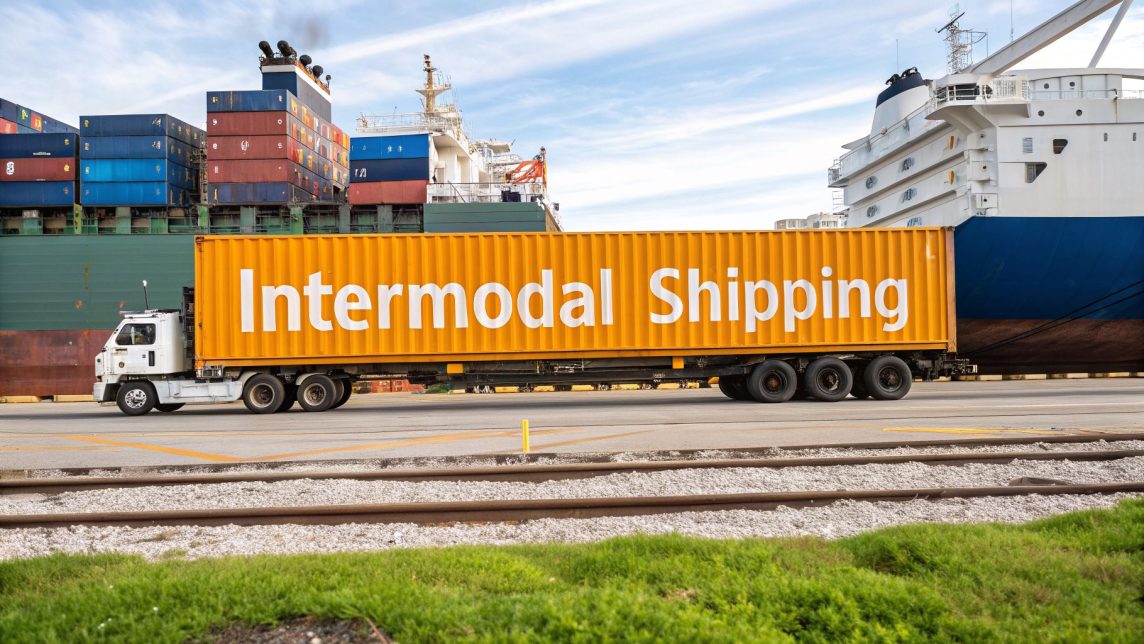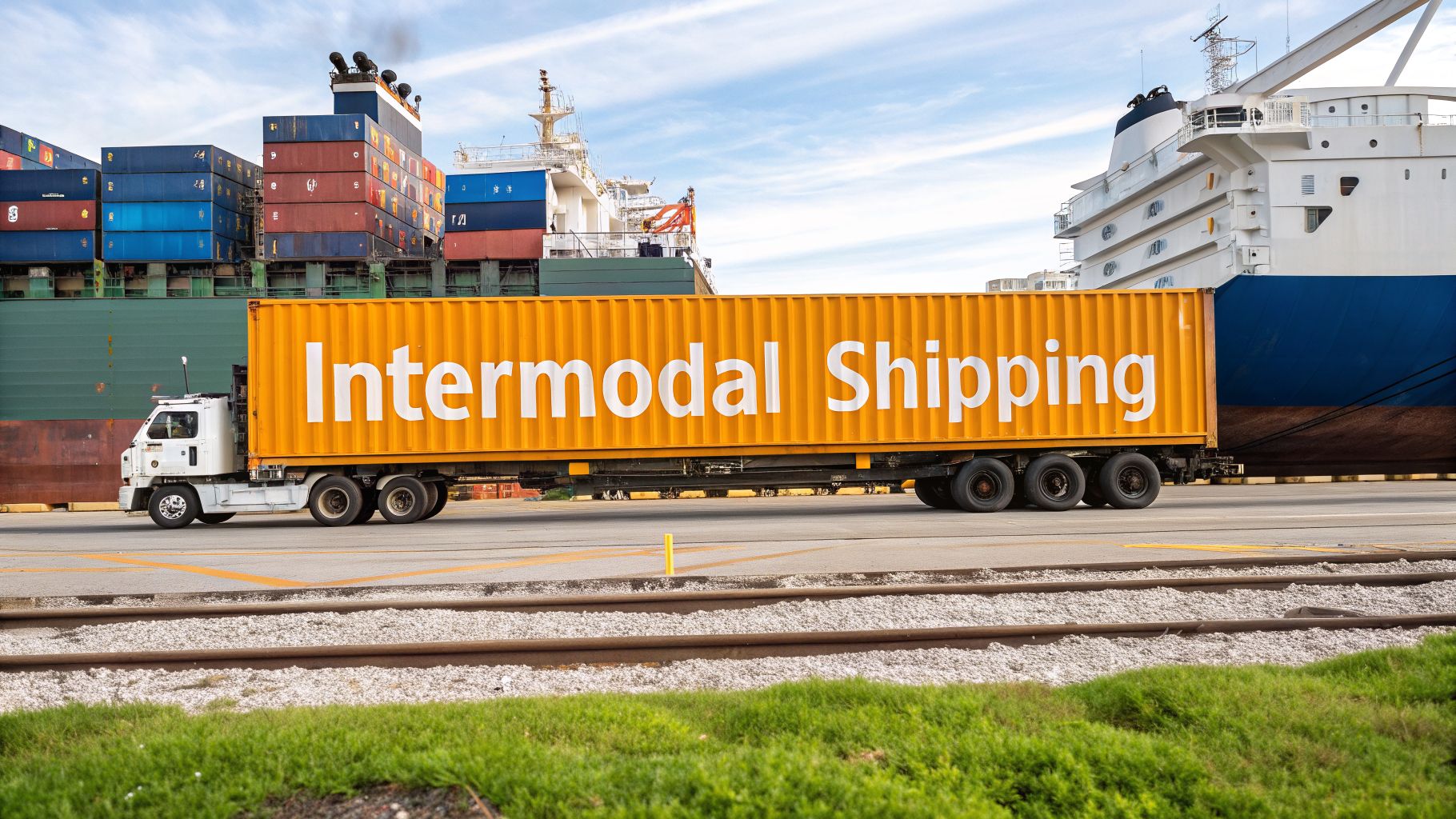
So, what exactly is intermodal trucking? Think of it like a relay race for your products, but instead of a baton, the handoff is an entire shipping container. The best part? The container is never opened from start to finish.
Your goods stay sealed and secure inside the same steel box as they move across different types of transportation—usually a combination of ship, rail, and truck.
What Is Intermodal Trucking Explained
It all starts when your container arrives at a port on a massive cargo ship. Instead of a crew unloading thousands of individual boxes, a giant crane simply lifts the entire container off the ship and places it onto a special truck trailer called a chassis.
This first truck leg of the journey is handled by a drayage truck. These aren't your typical long-haul drivers; they specialize in short, quick trips, shuttling containers between the port and a nearby rail yard.
Once at the rail yard, another crane lifts the container off the truck and onto a train. This truck-to-rail handoff is the secret sauce that makes intermodal so powerful for cross-country shipping.
Key Elements of the Process
The whole system works because of a few key pieces that fit together perfectly:
- Standardized Containers: These are the unsung heroes of global trade. The familiar 20ft and 40ft steel boxes are designed to lock seamlessly onto ships, trains, and truck chassis anywhere in the world.
- Drayage Trucking: This is the critical connector. Drayage is all about moving containers over short distances—from the port to the rail terminal, or from the rail terminal to a final destination warehouse like ours.
- Rail Transport: For any trip over 500 miles, rail is the clear winner for cost and fuel efficiency. It’s the workhorse of the intermodal network, handling the long-haul portion of the journey.
The genius of this system is that the cargo itself is never handled. By keeping your products sealed inside the container from the port all the way to the final warehouse, the risk of damage, loss, or theft drops significantly. It's a huge boost for supply chain security.
This whole concept, pioneered by Malcolm McLean with his standardized containers in the 1950s, has completely reshaped global logistics. The global intermodal freight market is still growing like crazy, which is why it's a strategy we use all the time for our e-commerce and import clients.
To get a deeper look into how these systems move freight, you can check out our guide on what is intermodal freight. Understanding this process helps you build a smarter, more resilient, and cost-effective supply chain. You can read the full research about the growth of the intermodal freight market to see just how big this trend is becoming.
Mapping the Journey of an Intermodal Shipment
To really understand intermodal trucking, you have to follow the container. Let’s imagine your inventory has just sailed across the ocean and is about to hit a busy U.S. port. This is where the clock starts ticking and the real logistics begin.
The first move isn't a long-haul truck. Instead, it’s a specialized service called drayage. A drayage driver shows up at the port with a truck chassis, a massive crane lifts your container off the ship, and places it right on top.
The First and Last Mile Connections
This first truck move is the critical "first mile." The drayage driver navigates the crowded port—a complex dance of trucks, cranes, and containers—to get your cargo over to a nearby rail terminal. These trips are usually short, often under 50 miles, but they’re the essential link between sea and rail.
Once at the railyard, the process happens in reverse. Another giant crane lifts the container off the truck’s chassis and onto a train car. Now your container is set for the most efficient part of its trip: the long-haul by rail.
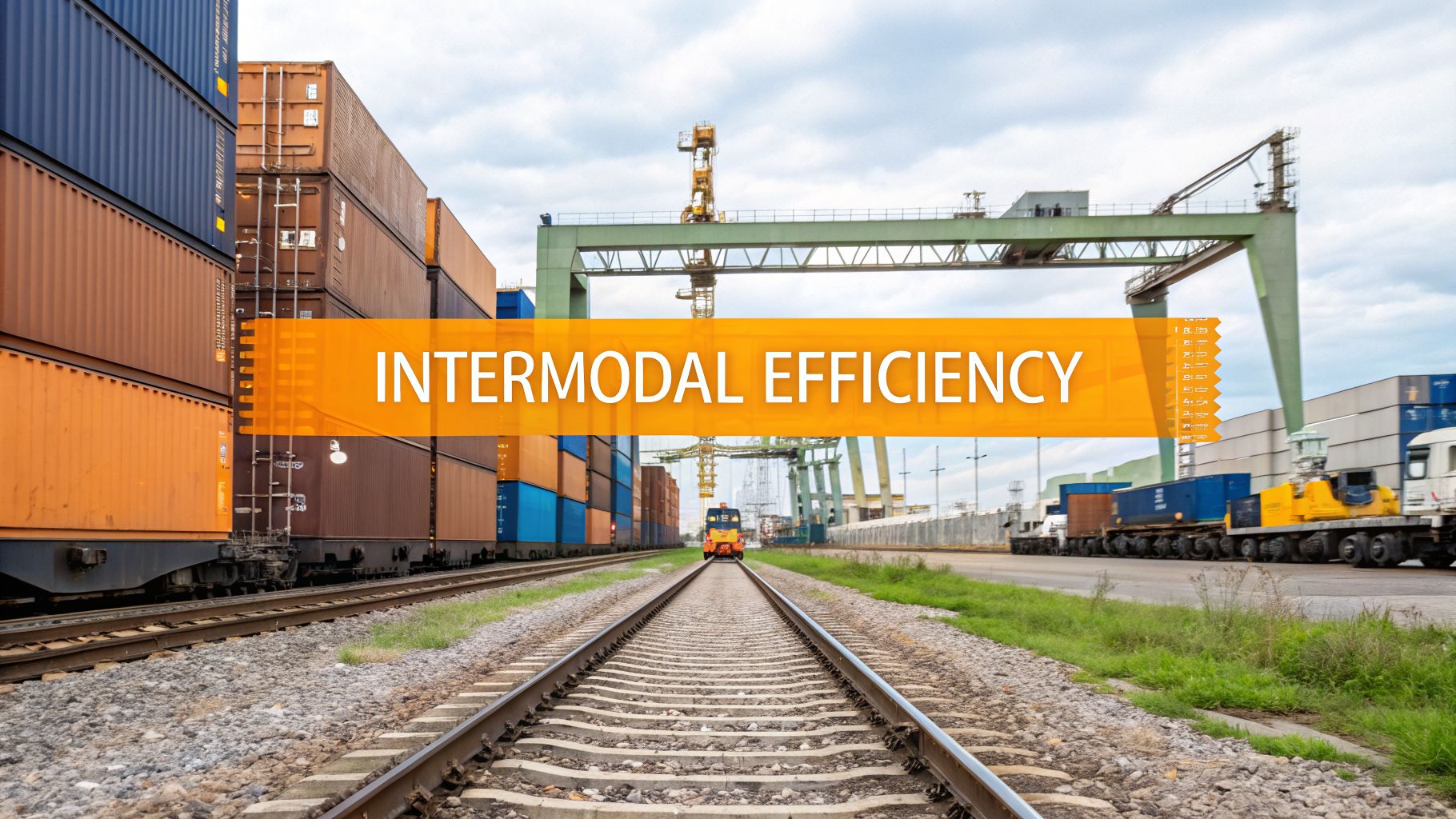
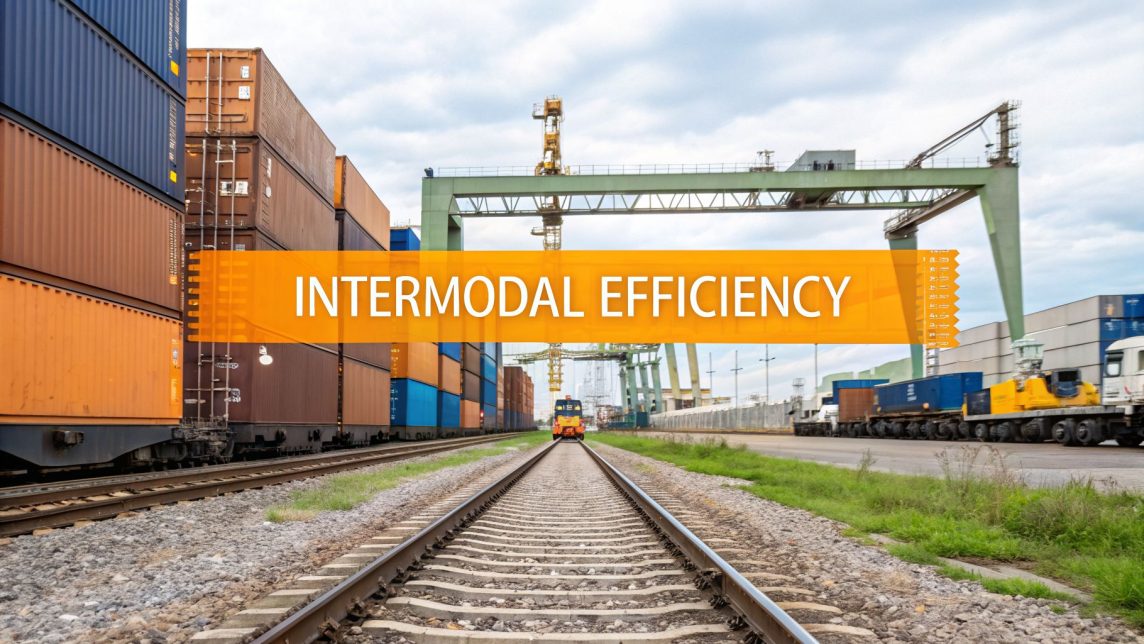
This infographic breaks down the handoffs between the ship, train, and truck.

As you can see, the container stays sealed the entire time. The freight inside is never touched. This single-unit approach dramatically cuts down on handling, which means far less risk of damaged products.
The Cross-Country Rail Leg
When it comes to moving freight long-distance, trains are the undefeated champions. A single train can haul the cargo of hundreds of trucks while burning significantly less fuel per ton-mile. This is where you see the huge cost and environmental savings of intermodal shipping.
It’s on these long routes where intermodal really shines. For any shipment traveling over 500 miles, the efficiency of rail delivers savings that traditional over-the-road trucking just can't compete with.
Rail is also getting faster. Some major rail lines can now get a container from Los Angeles to New Jersey in under 130 hours—rivaling truck transit times but at a lower cost.
Arrival and Final Delivery
After its cross-country trip, your container arrives at an inland rail terminal near its final destination. Here, the process reverses one last time. A second drayage truck hooks up to the container for the "last mile" delivery to a warehouse or 3PL like SnappyCrate.
This final step completes the journey. The container is delivered, the seal is broken for the first time since it was loaded at the factory, and your inventory is ready to be unloaded and prepped for customers.
Want to learn more about the specifics? Check out our complete guide to intermodal freight shipping.
The Essential Hardware of Intermodal Logistics

For an intermodal shipment to move seamlessly, a few key pieces of hardware have to work together like a well-oiled machine. It’s easy to think of it as just trucks and trains, but the reality is much more specialized. To really get what intermodal trucking is all about, you have to understand the physical tools that make it happen.
Three pieces of the puzzle are absolutely critical: the drayage trucks, the chassis they pull, and the intermodal terminals where everything connects. Each one has a specific job, and if any of them fails, the whole system grinds to a halt.
What is a Drayage Truck and a Chassis?
Drayage is the industry term for the specialized, short-haul trucking that moves containers to and from ports and rail yards. Think of drayage drivers as the special ops of trucking—they’re experts at navigating the chaotic, highly regulated world of terminals and railyards. Their job isn’t to drive across the country; it's to make precise, quick moves that link the long-haul journey to the local roads.
But the truck is only half the story. To move a container, a drayage truck has to pull a chassis—that’s the wheeled steel frame you see a container locked onto. A shipping container has no wheels of its own, so it’s useless on the road until it’s secured to a chassis, which effectively turns it into a road-legal trailer.
Here’s a pro tip: chassis availability is one of the biggest bottlenecks in the supply chain. If there’s a shortage at the terminal, your container is stuck sitting there, racking up fees until a chassis becomes available.
The Role of the Intermodal Terminal
Intermodal terminals are the beating heart of the entire operation. These massive, sprawling yards are where the handoff between ship, rail, and truck happens. When your container gets lifted off a train, it’s placed in a designated slot, ready for a drayage truck to hook up and haul it away.
An intermodal terminal is much more than just a giant parking lot for containers. It's a high-tech logistics hub where every box is tracked, and every move is scheduled down to the minute. A slowdown here can cause a ripple effect that snarls supply chains for days.
The final leg of the journey begins when the drayage truck leaves the terminal and heads to a warehouse or distribution center. This last step is often complicated by its own set of last-mile delivery challenges that the driver has to navigate. Getting a handle on these three components—drayage, chassis, and terminals—is the key to understanding how your products really move from port to door.
Weighing the Pros and Cons of Intermodal Shipping
So, is intermodal the right move for your business? It’s a powerful tool in your logistics arsenal, but it’s definitely not a one-size-fits-all solution.
Making the right call means understanding the trade-offs. You need to know when to pull the trigger on intermodal and when to stick with traditional trucking. Let's break down the good, the bad, and what it means for your bottom line.
The Upside: Why E-commerce Sellers Love Intermodal
The biggest draw, without a doubt, is cost savings. It’s simple math. For any shipment traveling long distances—we’re typically talking over 500 miles—the economics of rail are tough to beat.
A single train can haul the equivalent of hundreds of trucks, and it does so with far greater fuel efficiency. Once your container is on the rails, that per-mile cost drops in a big way.
Beyond the savings, intermodal brings a few other key advantages to the table, especially for importers and e-commerce brands:
- Better Security: Your products stay sealed inside a single container from the port all the way to the final warehouse. With far fewer touchpoints and less manual handling, the risk of damage, loss, or theft plummets.
- A Greener Supply Chain: If sustainability is part of your brand identity, intermodal is a clear win. Rail is dramatically more fuel-efficient than over-the-road trucking, which helps shrink your supply chain's carbon footprint.
- Access to Capacity: When trucking capacity gets tight during peak season or market disruptions, the rail network often provides a reliable alternative. It can keep your inventory moving when everyone else is scrambling to find an available truck.
This is exactly why learning the ins and outs of intermodal can be a game-changer for businesses looking to scale.
The Downsides You Can't Ignore
Of course, it’s not all smooth sailing. Intermodal comes with its own set of challenges, and the most significant one is slower transit times.
The journey through a port, the drayage move to a rail terminal, and the time spent waiting for the train to be loaded all add up. A direct truck can often get from A to B a day or two faster.
Intermodal is a game of trade-offs. You are often trading a bit of speed for significant cost savings and increased security. It's a strategic choice, not just a logistical one.
Another headache you might run into is terminal congestion. Ports and rail yards are incredibly complex operations. A sudden chassis shortage, a labor slowdown, or just a massive influx of containers can create bottlenecks that leave your shipment sitting for days. These delays are unpredictable, which is why having an experienced 3PL partner to navigate them is a must.
Finally, intermodal just doesn't make sense for short-haul or time-sensitive shipments. The costs and time burned during those terminal handoffs make it totally inefficient for distances under 500 miles. If you have urgent cargo, the speed and directness of traditional trucking is still the king.
Intermodal Decision Matrix: When to Use It
To make it even simpler, here’s a quick-reference table. Use this to gut-check whether intermodal is the right fit for a specific shipment.
| Consideration | Choose Intermodal When… | Stick to Traditional Trucking When… |
|---|---|---|
| Distance | Your shipment is traveling 500+ miles across the country. | The destination is less than 500 miles away. |
| Cost | Your top priority is reducing freight spend and you have some flexibility on delivery dates. | You need to meet a tight delivery window and are willing to pay a premium for speed. |
| Speed | You have 3-5+ extra days in your transit timeline and can plan inventory accordingly. | Your shipment is urgent, time-sensitive, or for a "just-in-time" delivery. |
| Freight Type | You are shipping full container loads (FCL) of standard, non-perishable goods. | You are shipping small parcels (SPD), less-than-truckload (LTL), or perishable items. |
By weighing these factors, you can make a strategic call that aligns with your budget, timeline, and inventory needs. For many sellers, a blended approach—using intermodal for planned stock replenishment and trucking for urgent restocks—offers the best of both worlds.
How E-commerce Brands Use Intermodal Trucking

For online sellers and importers, figuring out what is intermodal trucking isn't just a logistics lesson—it's a real-world strategy that can directly boost your profit margins. This is where the complicated world of freight meets the practical needs of your e-commerce business.
Let's say you're an Amazon FBA seller. Your container packed with your hottest new product just landed at the Port of Long Beach. You could pay for a truck to haul it all the way to your inland prep center in Dallas, but that's expensive. This is where you use intermodal.
From Port to Prep Center
Your container's journey starts with a short trip called first-mile drayage. A special truck picks up your container right at the port and drives it just a few miles to a nearby rail yard.
From there, it’s loaded onto a train for the long-haul journey to Dallas. This is the secret sauce. Moving goods by rail over long distances is drastically cheaper and more fuel-efficient than sending a truck across the country.
Once the train pulls into the Dallas rail terminal, the whole process happens in reverse. Another drayage truck handles the last-mile delivery, grabbing your container and taking it straight to your third-party logistics (3PL) partner, like SnappyCrate. This keeps your freight costs stable and predictable, which is huge for any e-commerce brand.
The real win for e-commerce sellers? Intermodal effectively turns the entire country into your local delivery zone. By using affordable rail for the long-haul, you can place your inventory with a 3PL that's perfectly located for nationwide shipping—even if it's a thousand miles from the coast.
This gives you incredible freedom. You're no longer stuck with expensive warehouses near the port. Instead, you can pick a fulfillment partner based on their service, skills, and ability to get products to your customers fast.
Integrating Intermodal with E-commerce Fulfillment
But the journey isn't over when the container hits the warehouse dock. For an e-commerce seller, this is where the real work begins, and it’s all part of a single, smooth workflow managed by your 3PL.
As soon as your container arrives, your 3PL partner kicks off a series of essential services that turn that bulk shipment into inventory that's ready to sell.
Common Post-Intermodal Services:
- Live Unload: A team is on standby to empty the container the moment it backs up to the dock. A standard 40ft container can be packed with thousands of units, so speed is everything.
- Pallet Breakdown: Your products are likely "floor-loaded" (stacked from floor to ceiling) to save space. The 3PL team carefully unloads every box and organizes them onto pallets for storage.
- Inventory Inspection: This is your first line of defense for quality control. The team inspects for any damage from the long journey and makes sure the box count matches your packing list.
- FBA Prep Services: If you sell on Amazon, this step is non-negotiable. Your 3PL will handle all the prep to meet Amazon’s strict rules, like applying FNSKU labels, poly bagging, bundling items, or building case packs.
When you pair the cost savings of intermodal with the hands-on services of a smart e-commerce 3PL, you get a seamless logistics machine. It's a system designed to move your goods from a factory overseas to your customer’s front door with precision and without breaking the bank.
Common Questions We Hear About Intermodal
Even after getting the basics down, you probably have some practical questions about whether intermodal is the right move for your business. We get it.
Let's cut through the noise and tackle the questions we hear most often from importers and e-commerce sellers. This is the real-world stuff you need to know to make a smart call.
How Far Does My Shipment Need to Go for Intermodal to Make Sense?
This is the big one, and it all boils down to distance and cost. As a rule of thumb, the intermodal "sweet spot" really starts on hauls of 500-750 miles or more.
For anything shorter, the costs of the short-haul truck moves at both ends (the drayage) plus the terminal fees usually make a traditional truckload shipment cheaper. But once you cross that mileage threshold, the incredible fuel efficiency of rail kicks in, and the savings start to add up fast. The longer the haul, the more you save.
What’s the Real Difference Between Drayage and Regular Trucking?
While both use a truck, their jobs are worlds apart. Drayage is a highly specialized, short-distance service focused entirely on moving containers between a port, a rail yard, and a local warehouse.
Drayage drivers are masters of their domain. They know how to navigate packed terminals, handle complex gate procedures, and get containers moved quickly and precisely. Regular over-the-road (OTR) trucking, on the other hand, is all about the long haul, moving freight directly from shipper to receiver over the highway and skipping the rail part completely.
Think of it this way: A drayage driver is like a specialized port pilot who knows every current and channel in the harbor. An OTR driver is the captain of an ocean liner, focused on the long, open-water journey between ports.
Can I Track My Shipment During an Intermodal Move?
Absolutely. Modern 3PLs give you full visibility. The container number is your single source of truth from start to finish.
You can track every key step: when the container is offloaded from the ship, when it "gates in" at the rail yard, its journey across the country by train, and its final arrival for last-mile delivery. This kind of tracking is crucial for planning your warehouse receiving schedule. For those shipping internationally, it's also helpful to learn more about key shipping terms, and you can explore our guide on what FOB means in shipping.
Is Intermodal Bad for Fragile Goods?
Not at all—in fact, it can be a safer ride when done right. While a train journey might have more general vibration than a truck with an air-ride suspension, the key is that your products are handled far less.
Once your goods are loaded and secured inside that steel container, they aren’t touched again until they reach the final warehouse. This dramatically cuts down on the risk of damage from being loaded and unloaded multiple times. The secret weapon here is proper blocking and bracing inside the container. If it's packed tight, your fragile goods will be just fine.
Ready to see how intermodal trucking can streamline your e-commerce operations? SnappyCrate specializes in creating efficient supply chains for importers and online sellers. We manage everything from container receiving and FBA prep to fast and accurate order fulfillment. Let us handle the logistics so you can focus on growing your brand. Get a quote and scale smarter today.