It's time to stop thinking of your inventory as just a list of items and start treating it like the strategic asset it is. The whole game is about having exactly the right amount of product, in the right place, at the right time.
When you nail this, you stop wasting money and start maximizing every single sales opportunity. It's that simple.
Why Smart Inventory Management Is Your E-commerce Engine
Picture your inventory as the engine that powers your e-commerce store. When it’s running smoothly, you’re flying down the road with seamless order fulfillment and customers who can't stop smiling. But if that engine starts sputtering from stockouts or gets clogged up with overstock, your whole business can grind to a screeching halt.
Poor inventory control isn't just about losing a few dollars here and there—it actively damages your brand's reputation with every delayed shipment or frustrating "out of stock" message.
Good inventory management is way more than just counting boxes on a shelf. It's a proactive game of balancing supply and demand, freeing up cash flow that was tied up in dusty products, and making your entire operation more nimble. For so many sellers, especially those juggling Amazon FBA or a DTC store on Shopify, logistics can quickly turn into the bottleneck that chokes off growth.
The Real Cost of Letting Inventory Slide
The fallout from a disorganized inventory system is serious, and the consequences ripple through every part of your business, from your bank account to your marketing campaigns.
Here are the biggest pain points we see every day:
- Lost Sales: Stockouts are the most obvious gut punch to your revenue. If a customer wants something and you don't have it, they're gone. In fact, 70% of shoppers will just buy from a competitor instead of waiting for you to restock.
- Sky-High Carrying Costs: Overstocking is like a cash bonfire. You're tying up valuable capital in products that are just sitting there, collecting dust. Meanwhile, you're paying for storage space, insurance, and labor for items that are losing value by the day.
- Shrinking Profit Margins: When you're forced to slash prices on slow-moving products just to free up space, your profits take a nosedive. This doesn't even count the money you lose on expired or damaged goods.
- Operational Chaos: A messy warehouse leads to slower fulfillment, higher labor costs as your team wastes time searching for items, and a much higher chance of shipping the wrong thing to the wrong person.
The goal isn't just to have inventory—it's to make your inventory work for you. A well-oiled inventory system is a massive competitive advantage that directly improves customer happiness and beefs up your bottom line.
By putting proven inventory management practices into place, you can transform this core function from a constant headache into a powerful engine for growth.
The table below breaks down some of the most fundamental practices and what they actually achieve for your business.
Core Inventory Management Practices at a Glance
This table summarizes the foundational strategies every e-commerce seller should know. Each one tackles a specific challenge and delivers a clear benefit that strengthens your business.
| Best Practice | Primary Goal | Key Benefit |
|---|---|---|
| ABC Analysis | Prioritize control over high-value items | Focuses your time and resources on the products that actually make you the most money. |
| Demand Forecasting | Predict future sales accurately | Prevents both stockouts and costly overstock by helping you buy what your customers will actually want. |
| Safety Stock Setting | Buffer against supply chain surprises | Ensures you can still fulfill orders during unexpected supplier delays or sudden spikes in demand. |
| Regular Audits | Maintain dead-on data accuracy | Keeps your digital records perfectly synced with your physical stock, killing fulfillment errors before they happen. |
Mastering these basics is the first step toward building a resilient and profitable e-commerce operation.
Building Your Inventory Rulebook From The Ground Up
Great inventory management isn't about winging it—it's about having a clear, repeatable playbook. Think of it like the air traffic control system for your warehouse. Without documented policies and standard operating procedures (SOPs), you're basically inviting chaos, which leads to shipping delays and expensive mistakes. Building this rulebook is the absolute first step to bringing predictable order to your stock.
It all starts the second a shipment hits your loading dock. A solid receiving process ensures every single item is checked against purchase orders for accuracy and inspected for damage. From there, a defined putaway procedure tells your team exactly where each item belongs. No more wandering the aisles looking for misplaced products. Get these two steps right, and you’ve built a strong foundation.
Structuring Your Inventory Flow
Once products are on the shelves, you need a system for how they flow back out. This is where you get into some core inventory management principles, mainly focused on how you value and move your stock. The two most common methods are FIFO and LIFO, and they have very different impacts on your operations and your books.
- First-In, First-Out (FIFO): This one is simple: the first products you received are the first ones you sell. It’s the only way to go for perishable goods or anything with a shelf life, as it cuts down on spoilage and keeps products from becoming obsolete.
- Last-In, First-Out (LIFO): The opposite of FIFO, this method assumes your newest inventory is sold first. You don’t see this much in e-commerce fulfillment, but some businesses use it for non-perishable goods to gain tax advantages when costs are rising.
For pretty much any e-commerce brand, FIFO is the gold standard. It keeps your stock rotating properly, reduces waste, and makes sure your customers are always getting fresh products. Making a strict FIFO policy a non-negotiable part of your rulebook is a must.
This flow chart nails the core problems of weak inventory control—bouncing from stockouts to overstock before you can even think about smooth fulfillment.
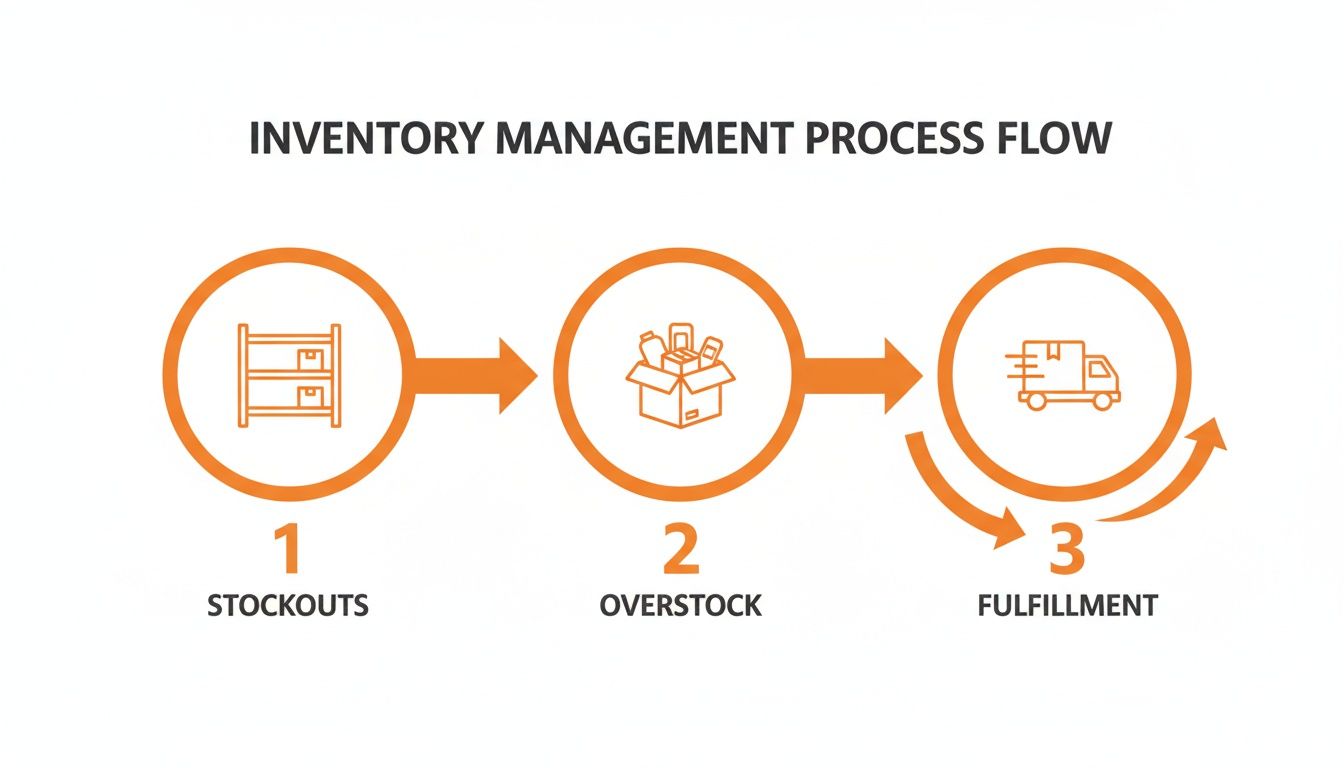
This visual drives home a key point: without a playbook, you'll always be swinging between having too much or too little, and both extremes kill your profits.
Prioritizing Your Products With ABC Analysis
Let's be honest, not all of your inventory is created equal. Some products are your superstars, and others are just benchwarmers. ABC analysis is a powerful technique that helps you categorize items based on how much value they bring to your business. It lets you focus your energy where it'll have the biggest impact.
ABC analysis is just the 80/20 rule applied to your stock. It recognizes that a small chunk of your items (around 20%) brings in the vast majority of your revenue (around 80%), so those are the ones you need to watch like a hawk.
Here’s the typical breakdown:
- A-Items: These are your best-sellers, the products that fly off the shelves. They only make up about 10-20% of your total SKUs but generate a massive 70-80% of your revenue. They need constant monitoring and precise demand forecasting.
- B-Items: This is your middle group. They account for around 30% of your SKUs and bring in 15-25% of your revenue. They're important, but you don't need to babysit them like your A-items.
- C-Items: These are your slow-movers—the low-value, high-quantity products. They can make up 50% or more of your SKUs but only contribute about 5% of your revenue. You can afford to be more relaxed with managing these.
Once you've sorted your inventory this way, you can build smarter management strategies. For example, you might run daily or weekly cycle counts on your A-items but only count your C-items a couple of times a year. This targeted approach saves a ton of labor and helps ensure your most profitable products are never out of stock.
Using Technology For Precision Inventory Control
Relying on manual spreadsheets to run a modern e-commerce business is like trying to navigate a busy highway blindfolded. It’s a recipe for disaster. While documented processes give you a solid game plan, technology is what actually brings it all to life with speed, precision, and real-time smarts.
Think of it as the central nervous system connecting your sales channels, your warehouse, and any fulfillment partners into one cohesive unit.
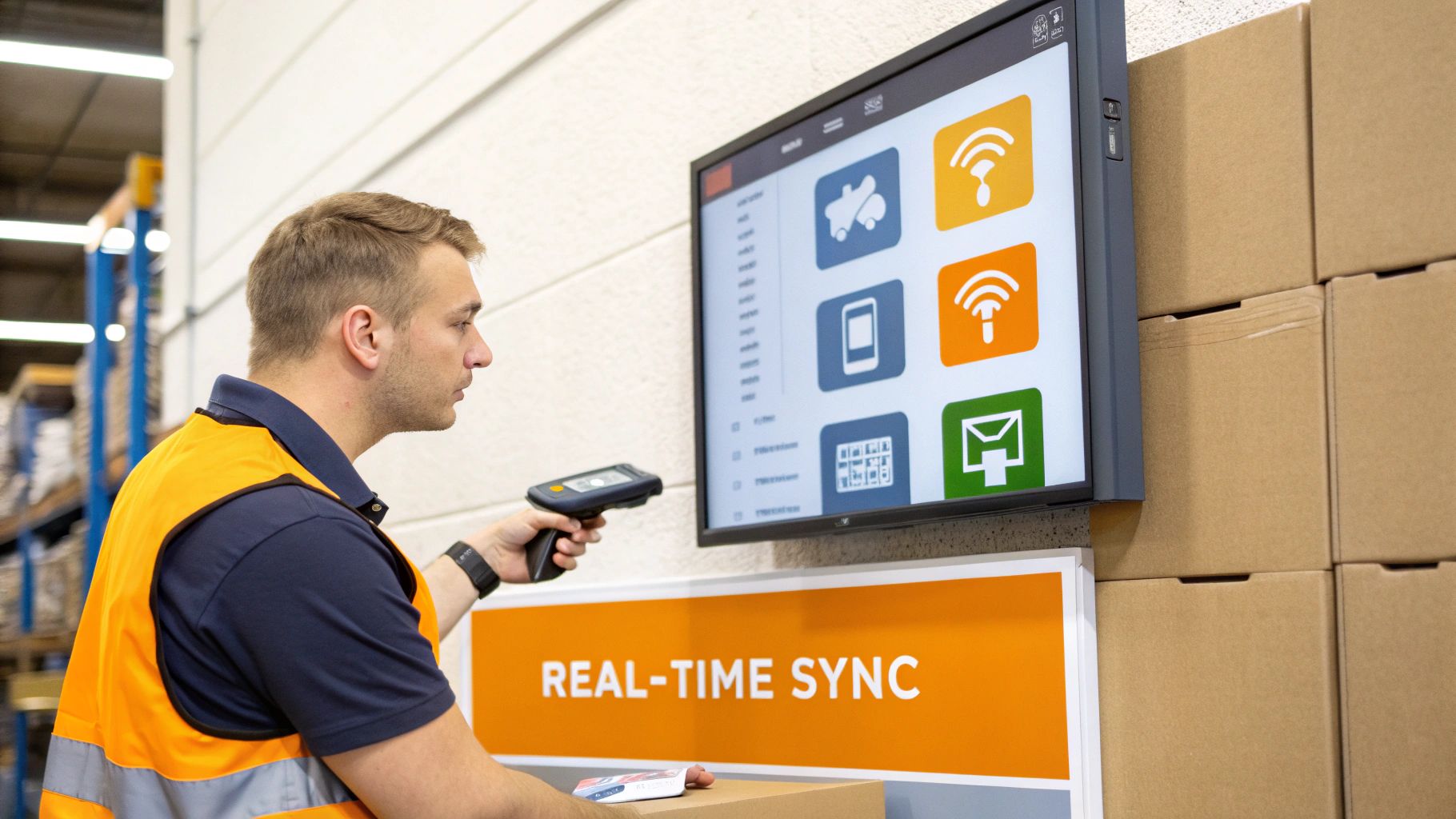
The right tech stack turns inventory management from a reactive chore into a proactive strategy. It gives you the power to make smarter decisions, faster, ensuring you have the right products ready to ship without tying up all your cash in overstock.
The Role Of Inventory Management Software
An Inventory Management System (IMS) is the digital brain of your entire operation. Its job is simple but critical: to be the single source of truth for your stock levels, syncing data across every single place you sell. That means your Shopify store, your Amazon listings, your Walmart account—all of it.
This automatic sync prevents the dreaded oversell and kills the frantic, error-prone manual updates that plague growing brands.
For Amazon FBA sellers and Shopify merchants trying to scale, good inventory software is no longer a "nice-to-have." It's non-negotiable. The market shows it, too, with these platforms expected to grab a 67.6% market share by 2025. This explosion is driven by the software's ability to use smart algorithms for demand forecasting, tackling the costly headaches of overstocking and stockouts.
The inventory optimization market is valued at USD 5.87 billion in 2025 and is projected to more than double by 2032—a clear sign of how vital this technology has become.
Key features you should absolutely look for in an IMS include:
- Real-Time Tracking: Get an accurate stock count across all locations—your own warehouse, your 3PL, and any retail stores.
- Multi-Channel Syncing: The moment a sale happens on Amazon, your Shopify inventory should update automatically. No exceptions.
- Automated Reorder Points: Set minimum stock levels that automatically trigger purchase orders when you're running low. This is how you prevent stockouts.
- Reporting and Analytics: You need insights into sales velocity, inventory turnover, and profitability by SKU to make data-driven buying decisions, not just guesses.
Enhancing Accuracy With Barcoding And RFID
While software handles the data, you still need tools to manage the physical goods accurately. This is where barcode scanners and RFID tech become your best friends on the warehouse floor.
Think of barcode scanning as giving every single product a unique fingerprint. It eliminates guesswork and speeds up every warehouse task, from receiving new stock to picking orders and doing cycle counts.
Putting a barcode system in place drastically cuts down on picking errors, which are a quiet killer of both profits and customer satisfaction. Instead of hunting for an item on a shelf, your team just scans a location and a product to confirm they’ve grabbed the right one. It brings a new level of precision to your whole fulfillment process.
RFID technology takes things a step further. Instead of scanning one barcode at a time, RFID readers can scan dozens of tags at once without even needing a direct line of sight. This makes cycle counts incredibly fast—what used to take hours can now be done in minutes, giving you a constantly accurate picture of what you actually have on hand.
For a deeper dive into making your warehouse run like a well-oiled machine, check out our guide on e-commerce warehouse management.
Integrating this hardware is a cornerstone of any serious inventory management strategy. It gets rid of the guesswork, lowers your labor costs, and builds a foundation that can actually support your brand as it grows. When you combine a powerful IMS with physical tracking tools, you finally get the complete visibility and control needed to run a lean, profitable, and customer-focused business.
Mastering The Metrics That Measure Inventory Health
You can't fix what you don't measure. It's an old saying, but it's the absolute truth in e-commerce. You can have the best processes and the slickest software, but if you aren't tracking the right numbers, you're just flying blind.
Key Performance Indicators (KPIs) are the instruments on your dashboard. They give you a real-time health check on your inventory, cutting through the noise to show you what’s really happening. Tracking these metrics turns guesswork into a data-driven strategy, letting you make smart, profitable decisions.
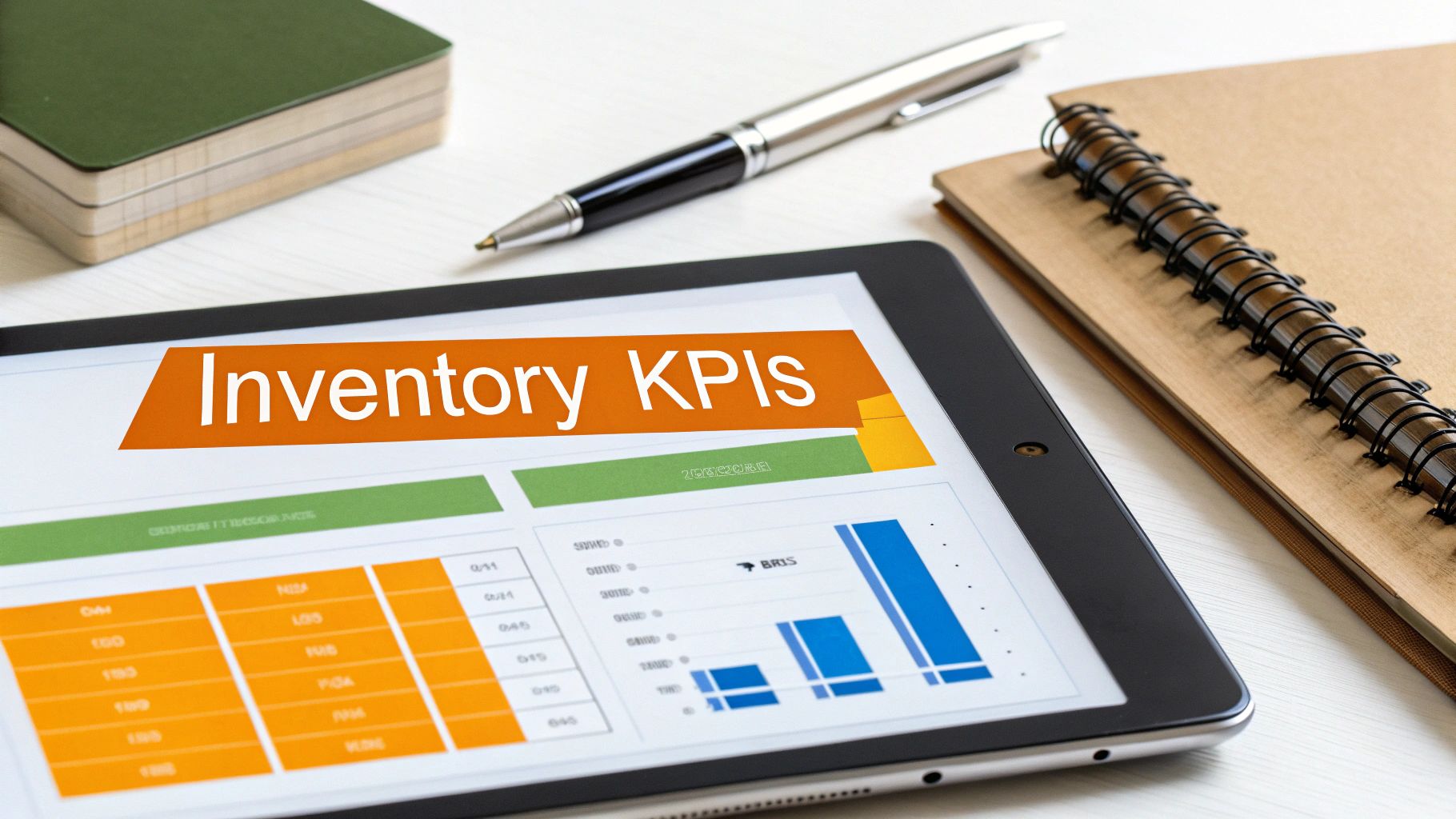
Let's break down the essential KPIs every seller needs to know.
Essential Inventory Management KPIs Explained
To get a clear picture of your inventory's performance, you need to look at a few core metrics. This table breaks down the most important ones, explaining what they are, how to calculate them, and what they reveal about your business.
| KPI | Formula | What It Measures |
|---|---|---|
| Inventory Turnover Rate | Cost of Goods Sold / Average Inventory | The number of times you sell and replace your entire stock in a given period. It's the ultimate measure of how fast your products are moving. |
| Days Sales of Inventory (DSI) | (Average Inventory / COGS) x 365 | The average number of days it takes for you to sell through your entire inventory. A lower number means your cash converts back to revenue faster. |
| Stockout Rate | (Number of Items Out of Stock / Total Items Offered) x 100 | The percentage of time a customer tries to buy a product that isn't available. This is a direct measure of lost sales and customer frustration. |
| Order Accuracy Rate | (Number of Orders Shipped Without Error / Total Orders Shipped) x 100 | The percentage of orders you fulfill perfectly—no wrong items, quantities, or damage. This directly impacts customer satisfaction and return rates. |
| Carrying Costs | (Sum of Capital, Storage, Service, and Risk Costs / Total Inventory Value) x 100 | The total cost of holding unsold inventory, expressed as a percentage of its value. It reveals the true cost of overstocking. |
By regularly monitoring these numbers, you can spot problems before they escalate and identify opportunities to improve efficiency and profitability.
Unpacking Your Inventory Turnover Rate
First up is the Inventory Turnover Rate, which is arguably the king of all inventory metrics. It tells you how many times your business sells and replaces its entire inventory over a specific period, usually a year. Simply put, it measures how fast your stuff is selling.
A high turnover rate is almost always a great sign. It means you’re running a lean operation, your products are in demand, and your marketing is hitting the mark. A low rate, on the other hand, is a red flag that your capital is tied up in products that are just collecting dust.
Think of it like a restaurant's table turnover. A busy, profitable restaurant wants to serve as many customers as possible each night. The faster they can turn tables, the more money they make. Your inventory works the same way.
Calculating Days Sales Of Inventory
Closely related to turnover is Days Sales of Inventory (DSI). This metric takes your turnover rate and makes it a bit more tangible by telling you the average number of days it takes to sell your stock.
For example, a DSI of 30 days means your cash is locked up in inventory for an entire month before it turns back into revenue. The goal here is to drive this number as low as you can without running into stockouts. A low DSI means a healthy, cash-flow-positive business.
Keeping Track Of Stockouts And Accuracy
Moving products quickly is great, but not if you’re constantly running out of your best-sellers. The Stockout Rate measures how often customers are met with an "out of stock" message. This is a critical metric because a high stockout rate is a direct hit to your revenue and brand reputation—after all, 70% of shoppers will just go buy from a competitor.
On the flip side, you need to be sure the orders you do have in stock are fulfilled correctly. The Order Accuracy Rate tracks the percentage of orders shipped perfectly, with no errors. This number is a direct reflection of your warehouse team's performance and is vital for keeping customers happy and avoiding the high cost of returns.
Understanding Your Carrying Costs
Finally, you absolutely have to know your Carrying Costs, sometimes called holding costs. These are all the expenses that come with storing unsold inventory. This isn't just your warehouse rent; it's a collection of often-hidden expenses that can eat away at your profits.
Here’s a quick breakdown of what goes into this number:
- Capital Costs: The opportunity cost of the money tied up in your inventory.
- Storage Costs: Rent for your warehouse or 3PL fees, plus utilities and climate control.
- Service Costs: The software you use to manage your inventory and the insurance that protects it.
- Risk Costs: The money you lose from inventory becoming damaged, obsolete, or lost to theft (shrinkage).
Most brands find that their annual carrying costs are somewhere between 20-30% of their total inventory's value. Understanding this figure is the key to making smarter buying decisions and truly appreciating the hidden cost of overstocking.
Advanced Strategies For Forecasting And Optimization
As your business scales, the simple inventory methods that got you off the ground will eventually start holding you back. Relying on gut feelings and basic reorder points just doesn’t cut it anymore, especially when you’re dealing with volatile supply chains and climbing operational costs.To truly grow, you have to shift from being reactive to being predictive. It's about building an operation that can handle surprises and optimize every single dollar tied up in your stock. This is how you build a resilient business that thrives even when the market gets shaky.
Harnessing AI For Smarter Demand Forecasting
The foundation of any advanced inventory strategy is dead-on demand forecasting. Sure, historical sales data is a decent starting point, but it only tells you where you’ve been—not where you're going. This is exactly where Artificial Intelligence (AI) changes the game.
AI-powered forecasting tools don't just look at your past sales. They analyze that data alongside a ton of external factors—market trends, competitor pricing, seasonality, even upcoming holidays. By spotting complex patterns that are impossible for a human to see, these systems can predict future demand with shocking accuracy.
This kind of precision is no longer a "nice-to-have." With inventory costs hitting a high of 78.4 in the May 2025 Logistics Manager's Index, smart forecasting is critical. That same index showed a massive 26.8-point gap over inventory levels, which means goods are sitting on shelves longer and driving up warehousing expenses. For anyone scaling their business, this data screams one thing: you need better strategies to cut down on stockouts and keep your customers happy. You can find more on these inventory management trends on effectiveinventory.com.
Implementing Dynamic Safety Stock
Safety stock is your insurance policy against the unexpected—a sudden sales spike or a supplier delay. The problem is, too many businesses just set a static number and forget about it. A much smarter approach is using dynamic safety stock.
This method automatically adjusts your buffer inventory based on real-time variables:
- Lead Time Variability: If a supplier's delivery times are all over the place, your safety stock should automatically increase to cover potential delays.
- Sales Velocity: Is a product suddenly flying off the shelves? Your safety stock needs to rise to prevent a stockout.
- Seasonality: Your safety stock for a winter coat should be way higher in October than it is in May.
Think of dynamic safety stock like a thermostat for your inventory. It doesn't just keep the temperature constant; it actively adjusts to what's happening outside to maintain the perfect environment inside. This stops you from being overstocked during slow periods and running out of inventory during a rush.
Adopting Lean Inventory Methodologies
Beyond just forecasting, advanced inventory management is about running a leaner operation. Two of the most powerful models are Just-In-Time (JIT) and Vendor-Managed Inventory (VMI). They aren't a fit for every single business, but they offer a clear blueprint for peak efficiency.
1. Just-In-Time (JIT) Inventory
JIT is a strategy where you order and receive goods only as you need them to fulfill customer orders. The goal is to slash carrying costs and waste down to almost zero. It demands incredibly tight coordination with suppliers and rock-solid forecasts, but the payoff is a hyper-efficient operation with fantastic cash flow. To get more tips on preparing for peak seasons, check out this guide on smart inventory management for Amazon sellers.
2. Vendor-Managed Inventory (VMI)
With a VMI model, you essentially hand over the responsibility of managing and restocking your inventory to your suppliers. You give them access to your sales data, and they figure out when to send more products and exactly how much. This creates a true partnership that streamlines purchasing, cuts down your admin work, and leverages your supplier’s expertise to prevent stockouts.
Partnering With a 3PL For Flawless Fulfillment
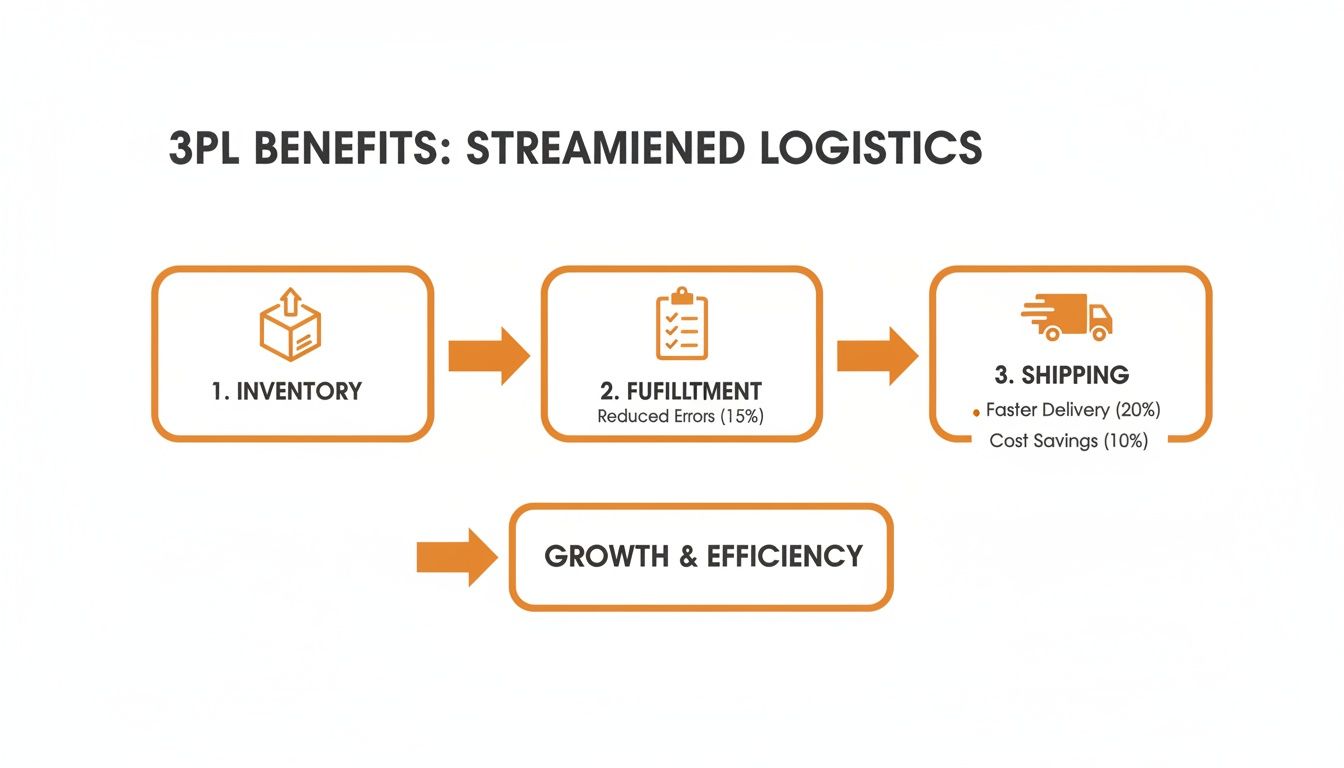
For most growing e-commerce brands, there's a tipping point. The day comes when packing boxes in your garage goes from a sign of hustle to a serious roadblock. This is the moment a Third-Party Logistics (3PL) partner stops being a cost and becomes a strategic investment.
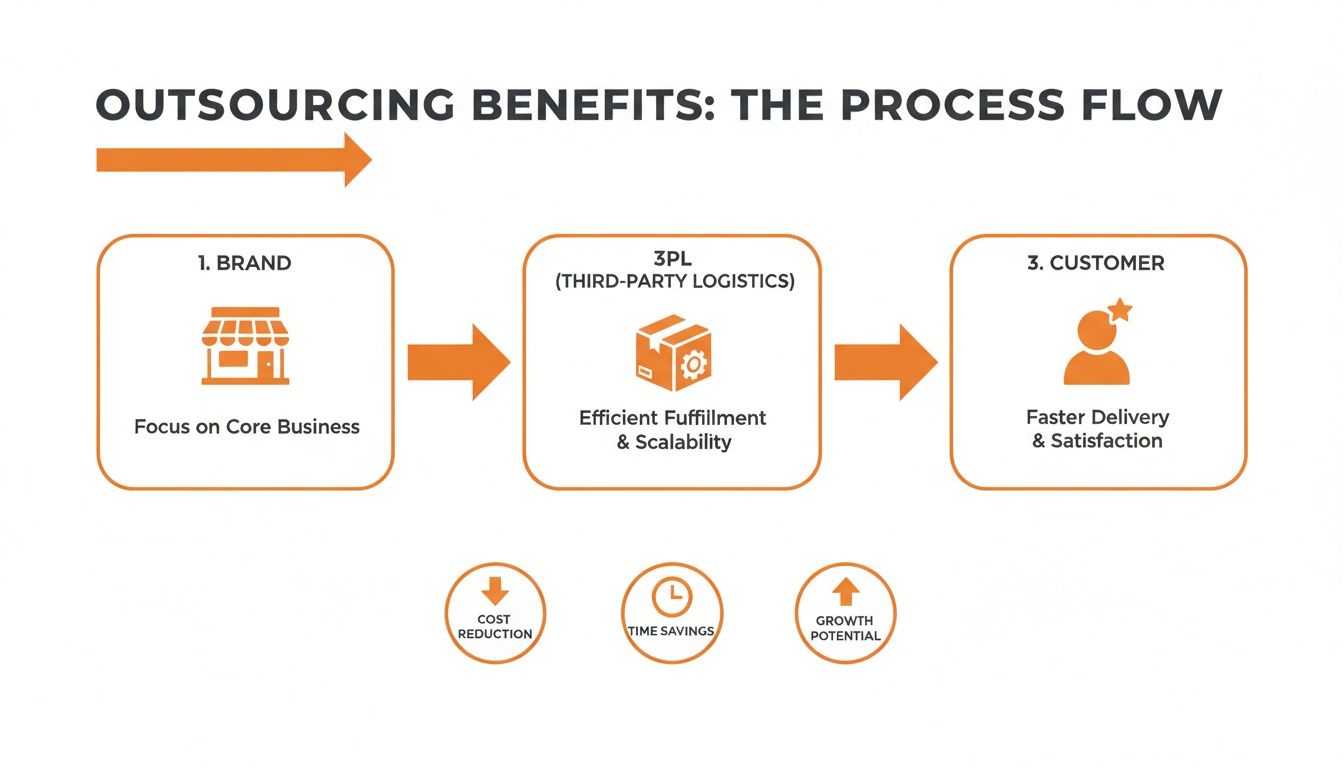
When you hand over your storage, fulfillment, and specialized prep, you get back your most valuable asset: time. Time to focus on what you're actually good at—building your brand, marketing, and creating great products. But it's not just about offloading work. It’s about building a seamless extension of your own team. Think of your 3PL as your off-site operations department; their success is your success.
Establishing Clear Communication and System Integration
The foundation of any solid 3PL relationship is built on two things: clear communication and connected technology. Without them, your inventory becomes a black box, and you’re left guessing. That’s a recipe for errors, delays, and unhappy customers. The goal is a single source of truth that both you and your partner can trust.
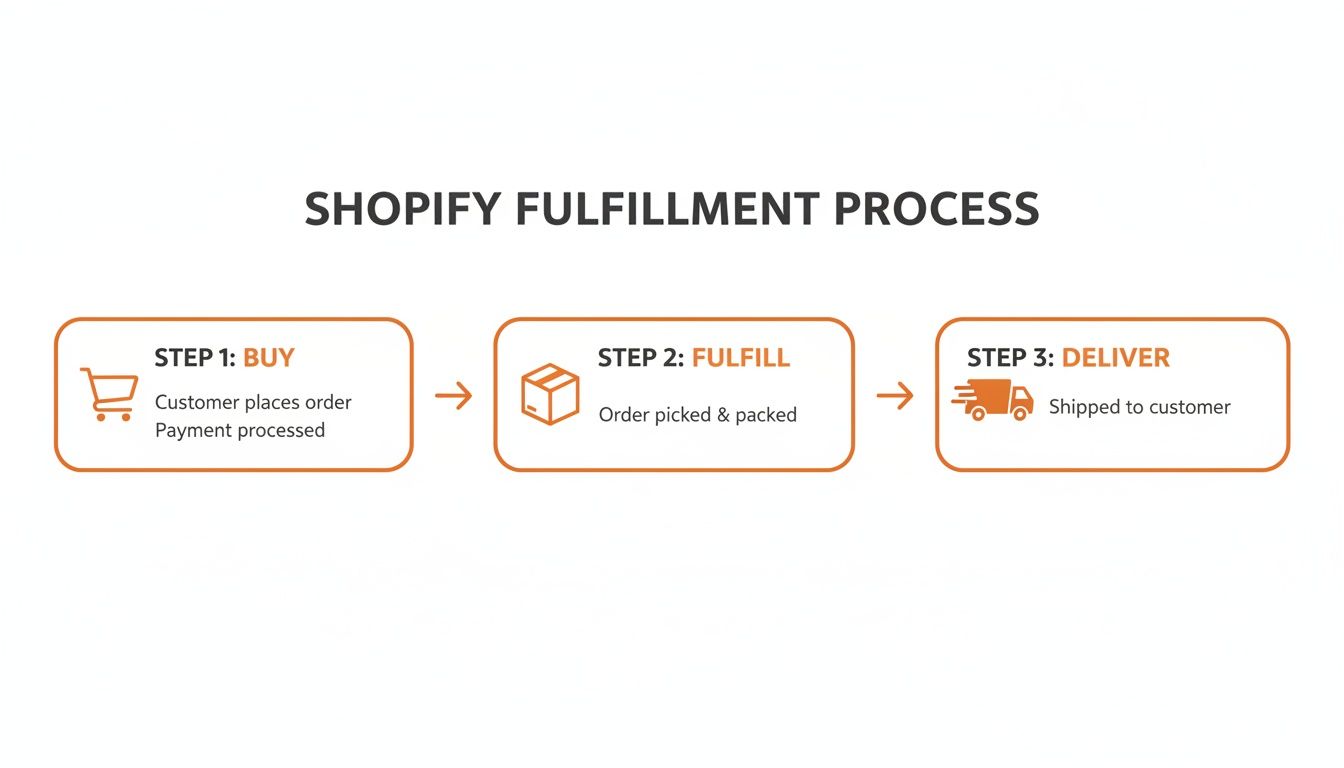
This starts by plugging your inventory management software directly into their Warehouse Management System (WMS). This digital handshake means that when an order hits your Shopify store or Amazon account, the info flows straight to the warehouse floor. No delays, no manual entry. This gives you the real-time visibility you need to track stock levels, check order status, and handle returns without a dozen back-and-forth emails.
Beyond the tech, you need to set clear ground rules for communication:
- Designated Contacts: Who’s your day-to-day person? Who do you call when something is on fire? Get names and numbers.
- Reporting Cadence: Set up regular check-ins—weekly or bi-weekly works well—to review KPIs and talk about upcoming promotions or big product launches.
- Inbound Shipment Notices: Create a simple, standard process for telling your 3PL what’s coming their way. Every notice should include PO numbers, expected arrival dates, and SKU details.
Defining Service-Level Agreements That Drive Accountability
A Service-Level Agreement (SLA) is your rulebook for the partnership. It’s a formal document that lays out exactly what’s expected, who’s responsible for what, and how performance will be measured. It takes all the guesswork out of the relationship and makes sure everyone is on the same page.
An SLA isn’t about micromanaging your partner. It’s about creating mutual understanding and a clear benchmark for performance. It defines the promises you can confidently make to your own customers regarding shipping and delivery.
A strong SLA needs to define the key metrics that matter, like:
- Receiving Turnaround Time: How fast will new inventory be checked in and ready to sell? A good target is within 24-48 hours of arrival.
- Order Fulfillment Speed: What's the cutoff for same-day shipping? How quickly will orders be picked, packed, and out the door?
- Order Accuracy Rate: What’s the target for getting orders right? Aim for 99.8% or higher.
- Inventory Accuracy: How accurate will the stock counts be? This should be verified with regular cycle counts.
Mastering FBA Prep and Compliance
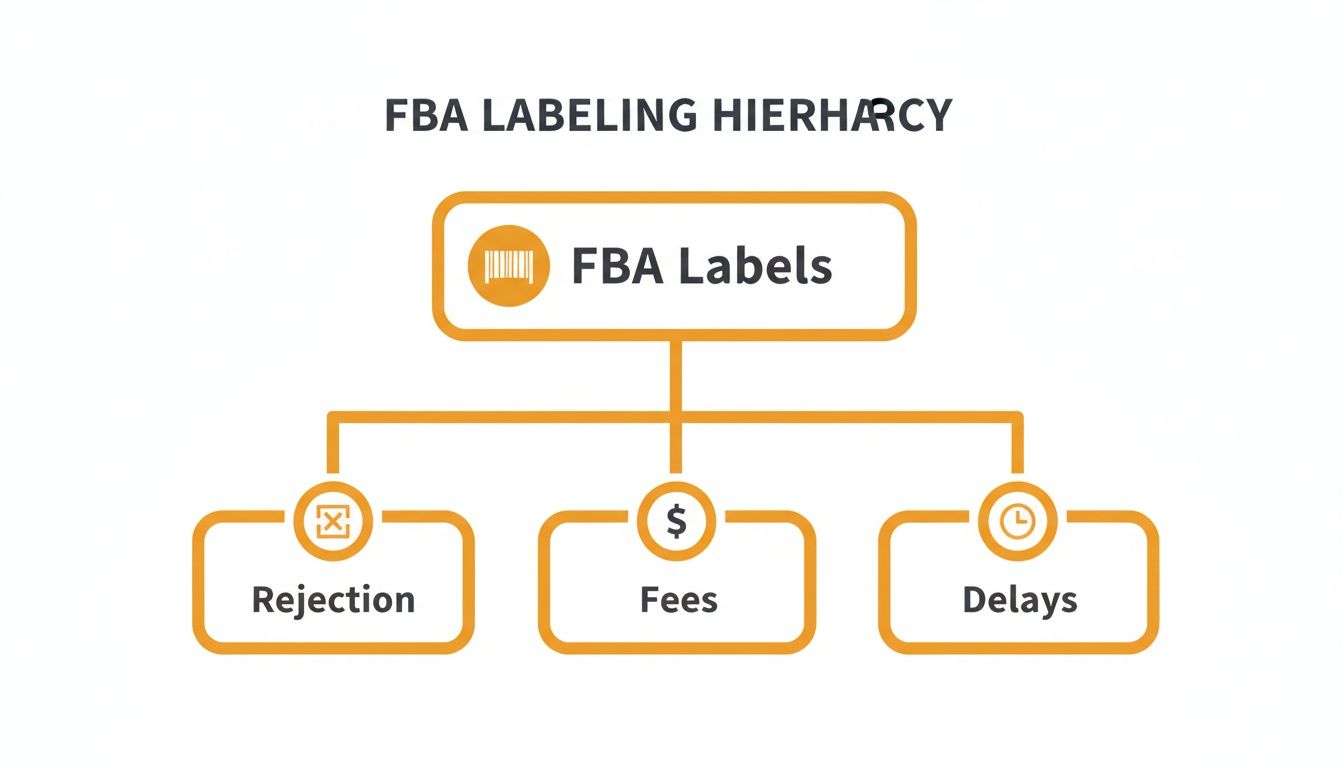
If you're an Amazon seller, one of the most valuable things a 3PL can do is handle your FBA preparation. Amazon’s receiving rules are notoriously rigid. One tiny mistake can get your shipment rejected, trigger expensive fees, and leave your products sitting on a dock for weeks. A 3PL that specializes in FBA prep is your best defense against these headaches. To get a better sense of how these operations work, you can explore the fundamentals of a 3PL warehouse on Snappycrate.
Proper FBA prep covers a few critical tasks that are easy to get wrong:
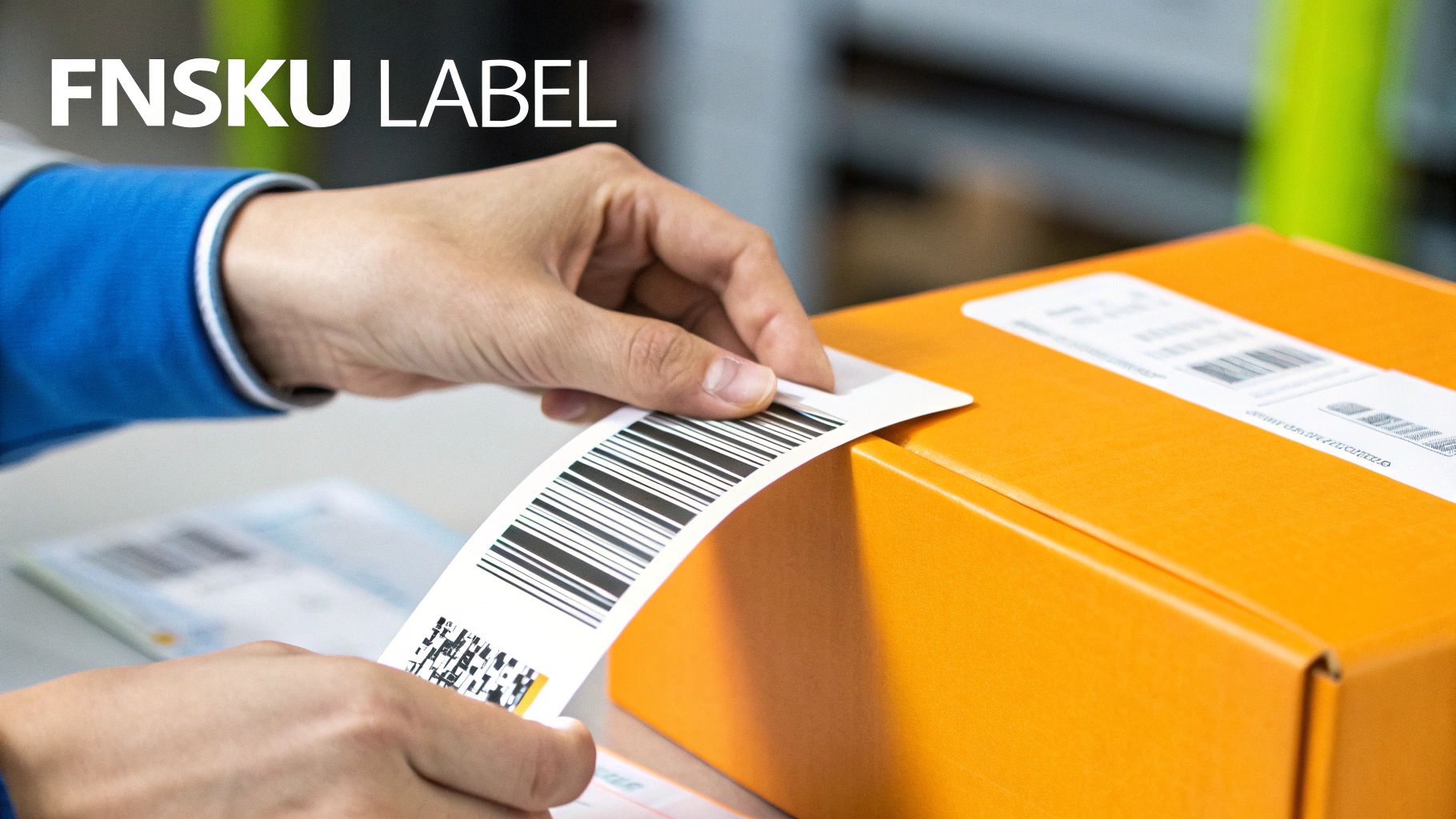
- FNSKU Labeling: Making sure every single unit has the correct, scannable Amazon barcode slapped on it.
- Poly Bagging and Suffocation Warnings: Protecting items like apparel or plush toys while meeting Amazon’s safety rules.
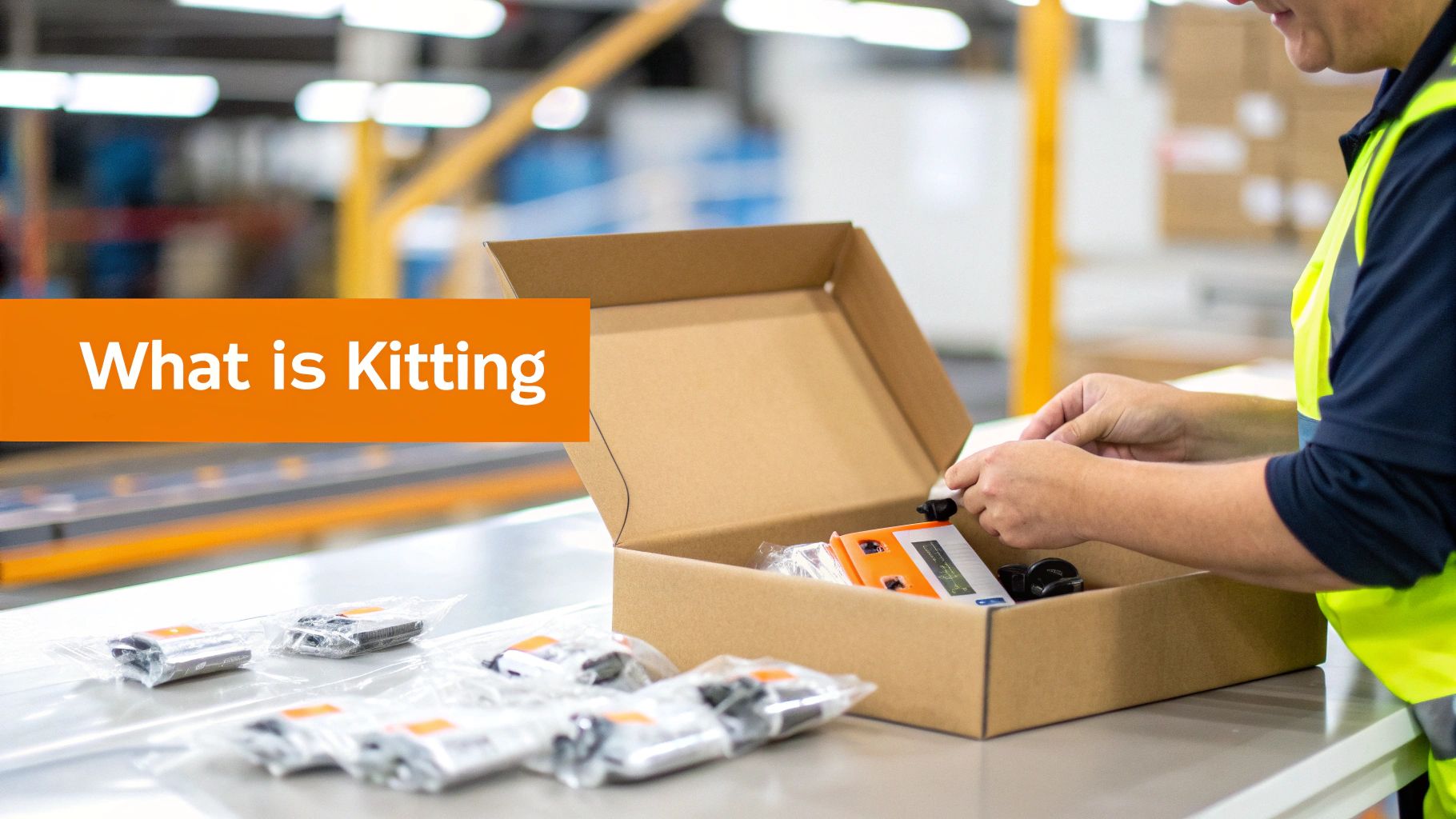
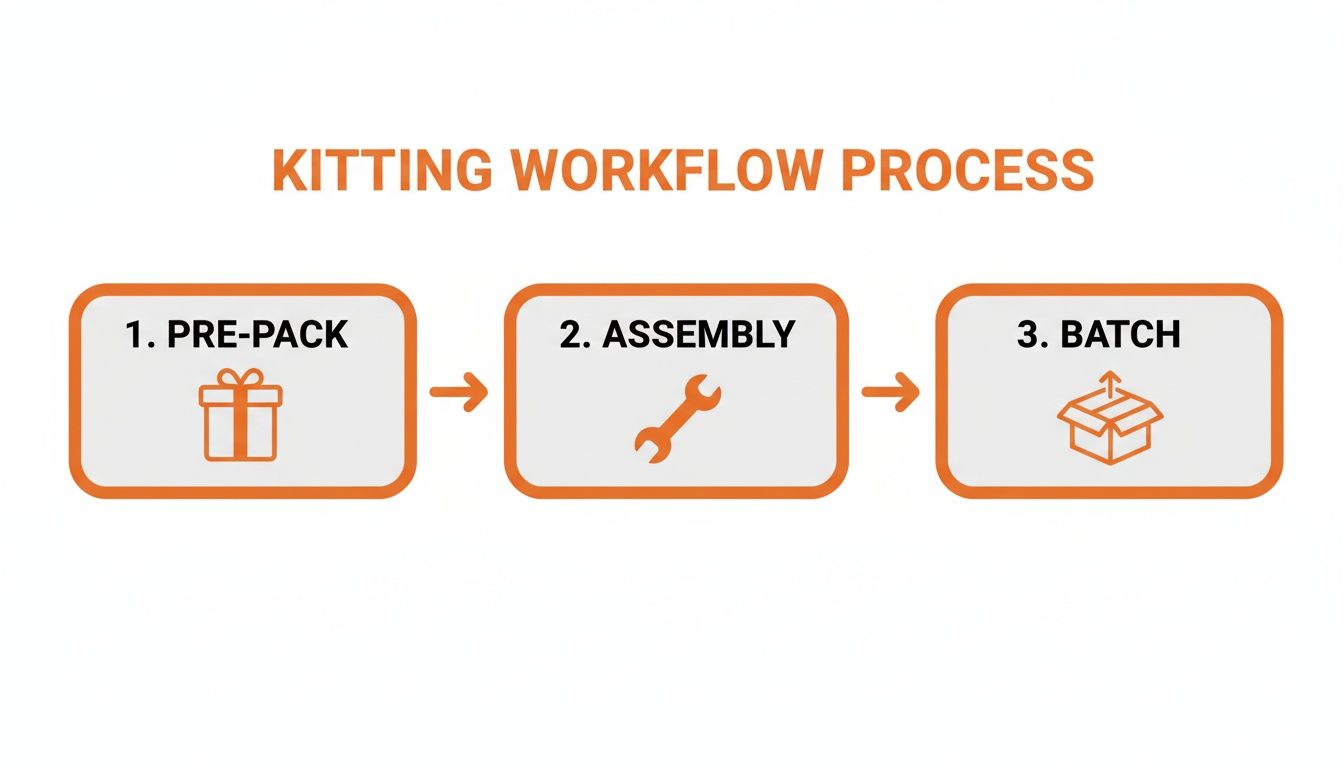
- Kitting and Bundling: Assembling multi-packs or promotional bundles exactly to your specs before they go to Amazon.
- Dunnage and Packaging: Using the right packing materials to make sure nothing gets crushed on its way to Amazon's fulfillment centers.
By handing this off to your 3PL, you ensure your inventory sails through Amazon's receiving process without a single snag. That means your products stay in stock, and your sales keep rolling in.
Common Questions About Inventory Management
Even with a solid game plan, you're bound to run into specific questions as you start putting these practices into action. Here are a few of the most common ones we hear from e-commerce owners and ops managers, along with our straightforward answers.
What’s The First Step to Improving My Inventory Management?
Before you do anything else, you need a full physical inventory audit. This means you (or your team) needs to count every single item you have on hand and compare it, line by line, to what your software or spreadsheet says you have. This is your ground truth.
This first count is incredibly revealing. It immediately exposes all the cracks in your current system—discrepancies from theft, shipping errors, damaged goods, you name it. Once you know exactly where you stand, you can start tackling the most urgent problems, whether that’s tightening up your receiving process or finally investing in proper software.
How Often Should I Be Doing a Stock Count?
Forget the massive, once-a-year count that forces you to shut down for a week. The smarter approach is cycle counting. This just means you're continuously counting small, specific sections of your inventory on a rotating schedule all year long.
An ABC analysis is the perfect guide for how often to count what:
- A-Items: These are your fast-moving, high-value products. Count them often—maybe monthly or even weekly.
- B-Items: Your mid-range items can be checked quarterly.
- C-Items: For the slow-moving, low-value stuff, a physical count once or twice a year is plenty.
This keeps your data accurate year-round without the massive operational headache of a full shutdown.
When Is It Time to Partner With a 3PL?
The signs are usually pretty clear. You're ready for a 3PL when you're tripping over boxes in your garage, spending more time taping up packages than marketing your brand, or getting emails from customers asking why their orders are late.
If fulfillment and logistics are actively slowing down your growth, it’s time to call in an expert. A good 3PL provides the warehouse space, team, and technology to help you scale without getting buried in the day-to-day grind.
What's The Difference Between Inventory Management And Warehouse Management?
Think of it this way: inventory management is the what and why. It’s the strategic side of things—forecasting demand, deciding which products to stock up on, and figuring out when to reorder.
Warehouse management is the where and how. It’s all about the physical movement of those goods inside your building: receiving shipments, slotting products onto shelves, picking and packing orders, and getting them out the door. They’re two sides of the same coin, and you need to get both right to run a smooth operation.
Ready to stop letting logistics slow you down? Snappycrate offers expert 3PL services, from flawless FBA prep to fast, accurate order fulfillment, so you can focus on scaling your brand. Learn how Snappycrate can streamline your operations.