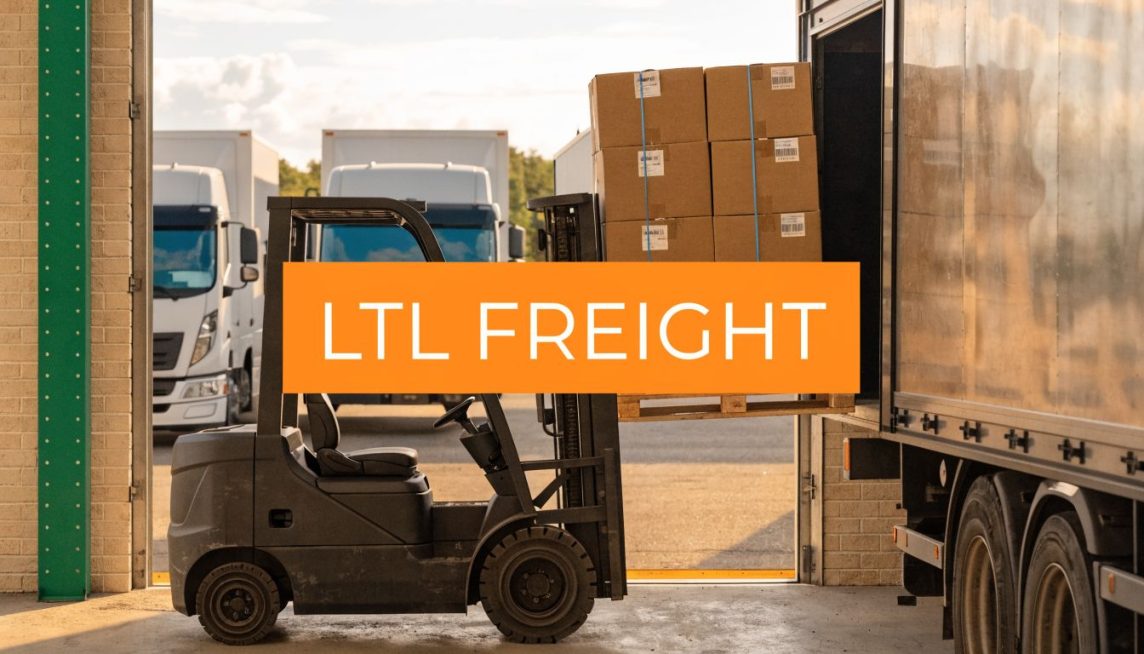
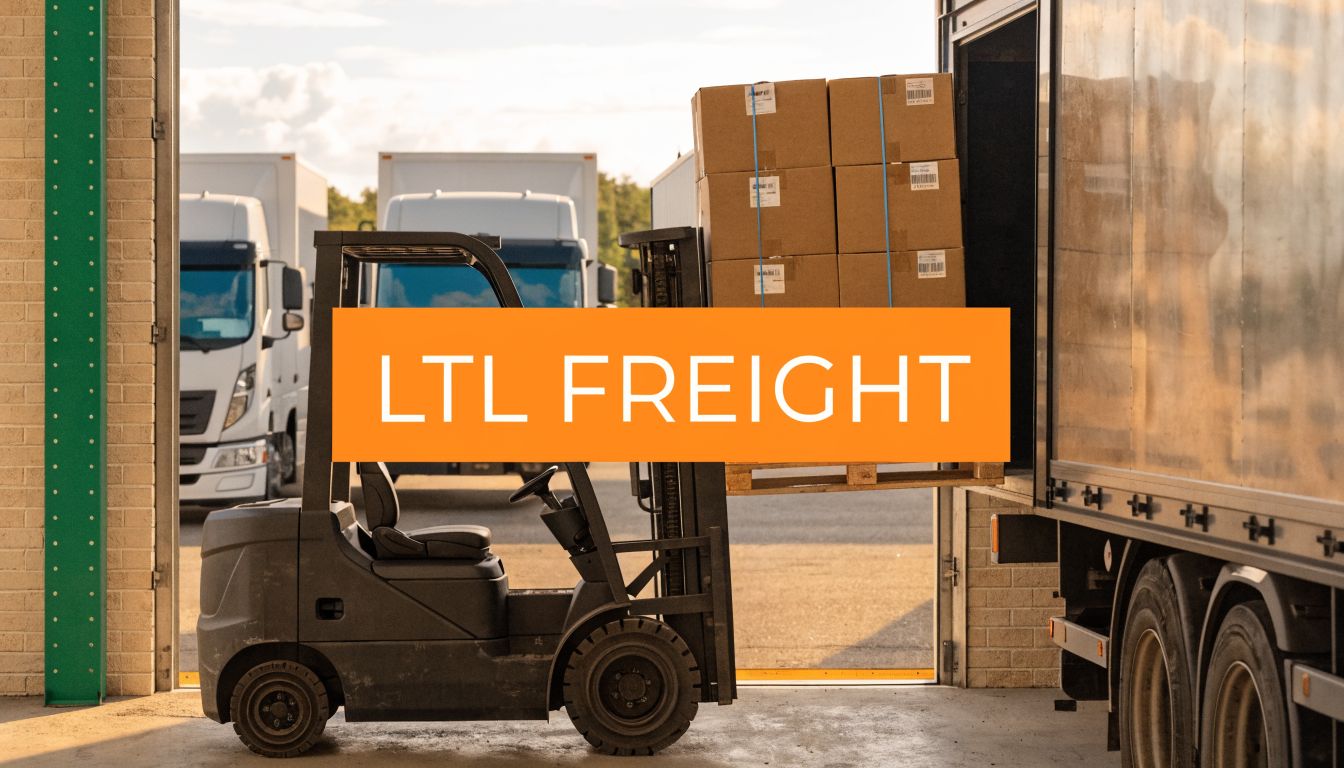
LTL freight shipping is like a carpool for your inventory. It lets you ship pallets without paying for a full truck, and it's typically used for freight between 150 and 15,000 pounds.
If you're sending more than a few cartons at a time, parcel shipping starts to get clumsy fast. Boxes get split across multiple labels, receiving gets messy, and one delayed carton can hold up an Amazon check-in or a 3PL intake. That's usually the point where sellers start asking what is ltl freight shipping, not as a logistics theory question, but because their current process is breaking under growth.
For online sellers and importers, LTL is often the middle lane between parcel and full truckload. It's the mode that makes sense when your inventory is too big for UPS or FedEx parcel, but nowhere near enough to justify reserving an entire trailer. Used well, it lowers inbound cost, simplifies receiving, and gives you a cleaner path into Amazon FBA prep, pallet breakdown, and warehouse processing.
When Your Business Outgrows Parcel Shipping
A lot of brands hit the same wall. What used to be a manageable stream of cartons turns into stacked labels, missed delivery windows, and receiving teams trying to reconcile partial inbound shipments.

The point where parcel stops making sense
Parcel works well when you're shipping individual cartons under standard package limits. But once inventory starts moving in bulk, parcel becomes expensive in a different way. You're not just paying shipping charges. You're paying in labor, check-in delays, and exception handling.
Common signs you've outgrown parcel:
- Too many boxes per shipment: Your supplier sends dozens of cartons for one PO, and receiving has to hunt for missing pieces.
- Cartons are too heavy or bulky: The freight is technically movable, but it's awkward, inefficient, and more likely to get mishandled.
- Inbound timing matters: Amazon appointments, 3PL receiving windows, and launch dates don't pair well with scattered package deliveries.
- You're already palletizing anyway: If the goods are being stacked on pallets at origin, parcel is usually the wrong tool.
If you need a baseline on where parcel fits, this breakdown of what parcel shipping means in practice helps clarify the cutoff.
What LTL actually means for an e-commerce seller
LTL stands for less-than-truckload. The carrier combines freight from multiple shippers into one trailer, which is why the rideshare analogy fits. You share truck space with other businesses moving freight in the same general direction.
According to Transport Topics' overview of LTL shipping, LTL typically covers shipments from 150 to 15,000 pounds, represents about 10% to 15% of U.S. trucking volume, and the global LTL market was valued at USD 227 billion in 2024. That tells you two things. LTL is a smaller slice of trucking than full truckload, but it's a major operating mode for the kinds of fragmented shipments e-commerce brands create every day.
Practical rule: If your inbound is too big for parcel but too small to fill a trailer, LTL is usually the first mode worth pricing.
For growing brands, that matters because LTL isn't just a shipping definition. It's often the first logistics upgrade that brings order back to inbound operations.
The Journey of an LTL Shipment
The easiest way to understand LTL is to follow one pallet from supplier dock to final delivery. Once you see the path, the packaging rules and damage risks make a lot more sense.

What happens after pickup
A local driver picks up your pallet and takes it to the carrier's origin terminal. That terminal is a sorting point, not the final destination. Workers unload the freight, scan it, and group it with other shipments headed in a similar direction.
From there, your pallet gets loaded onto a larger linehaul truck. It may move to another terminal, get sorted again, and continue through the network until it reaches the destination terminal. Then a local truck handles final delivery to the warehouse, retailer, or fulfillment center.
This hub-and-spoke model is what makes LTL affordable. It's also why LTL requires better prep than direct truckload freight.
The documents that matter
Three items matter most during the trip:
- Bill of Lading: This is the shipment's core document. It identifies the shipper, consignee, freight details, and service instructions.
- PRO number: This is the carrier tracking number used inside the LTL network.
- Terminal scans: These status updates show when freight was received, transferred, and delivered.
If one of these is wrong, the shipment can still move, but the chance of delay goes up quickly. In practice, most avoidable freight issues start with bad paperwork, weak palletization, or both.
A clean Bill of Lading won't save a poorly built pallet. A perfect pallet won't fix bad shipment data. LTL needs both.
Why handling matters so much
According to MyCarrier's breakdown of the LTL shipping journey, an LTL shipment goes through a minimum of six forklift moves and travels across at least three different trucks. Each touch point adds 0.5% to 2% damage risk.
That's the operational reality behind LTL. Your pallet isn't staying on one truck from origin to destination. It's being moved, sorted, staged, and reloaded several times by people who don't know your SKU mix or your packaging weak spots.
For e-commerce brands, that has real consequences:
- Cosmetic damage becomes sell-through damage. Crushed retail packaging can turn good inventory into problem inventory.
- Loose cartons create receiving exceptions. A shifted pallet often arrives as a pile of separate handling units.
- Amazon compliance gets harder after impact. Torn labels, split master cartons, and exposed units can trigger rework or rejection.
The operational takeaway
LTL works best when you build for terminal handling, not just for the first truck pickup. That means stable pallets, visible labels, and packaging that can survive repeated forklift contact.
If you treat LTL like oversized parcel, it usually gets expensive in the warehouse instead of on the freight quote.
Choosing Between LTL FTL and Parcel
Picking the wrong mode creates problems before the freight even ships. Sellers usually don't choose between parcel, LTL, and FTL based on theory. They choose based on pallet count, urgency, receiving requirements, and how much damage risk they can tolerate.
The fast decision filter
Parcel is for small cartons. LTL is for shared pallet freight. FTL is for shipments large enough, urgent enough, or sensitive enough to justify a dedicated trailer.
The trade-off is simple. Parcel is flexible but messy at scale. LTL is cost-efficient for palletized freight, but it gets touched more often. FTL is cleaner and more direct, but you pay for the whole trailer whether you use all of it or not.
If you want a broader framework for mode selection, this guide to different types of freight shipping is a useful reference.
Shipping mode comparison
| Factor | Parcel (e.g., UPS, FedEx) | LTL (Less-Than-Truckload) | FTL (Full Truckload) |
|---|---|---|---|
| Best fit | Individual cartons and smaller shipments | Palletized freight that doesn't fill a trailer | Large shipments needing dedicated space |
| Typical shipment profile | Box-by-box movement | Shared truck space for pallet freight | One shipper uses the full trailer |
| Cost logic | Works for lighter, simpler shipments | Often makes more sense once freight is palletized | Best when volume or urgency justifies exclusivity |
| Transit pattern | Package network | Hub-and-spoke terminal network | More direct route |
| Damage exposure | Lower than poorly managed freight moves, but carton count can create exceptions | Higher handling exposure because freight is transferred through terminals | Lower handling because the shipment stays together |
| Receiving experience | Many labels and many cartons | Fewer handling units if palletized correctly | Simplest receiving flow for large loads |
| Good use case | Samples, replenishment cartons, light orders | Inbound inventory to a 3PL or FBA prep operation | Large restocks, fragile loads, or time-sensitive freight |
Where most e-commerce brands make the switch
A seller usually moves from parcel to LTL when inbound starts arriving as multiple heavy cartons for the same destination. At that point, a single pallet is easier to track, easier to receive, and easier to inspect.
The main caution is damage exposure. According to ATS's explanation of LTL shipping, LTL's multiple touchpoints can increase damage risk by 2 to 3 times compared to FTL, with LTL claims averaging 1% to 2% of shipment value versus 0.5% for FTL. That doesn't mean LTL is the wrong choice. It means packaging, pallet stability, and inbound inspection matter more.
If the freight is fragile, high-value, or packed in retail-ready boxes that scuff easily, FTL often buys you less handling and fewer surprises.
For most growing brands, the practical decision looks like this:
- Use parcel when you're sending manageable carton counts and speed matters more than warehouse efficiency.
- Use LTL when you're shipping palletized inventory to a 3PL, prep center, or Amazon-related workflow.
- Use FTL when the load is big enough or sensitive enough that sharing trailer space stops being worth it.
How LTL Freight Costs Are Calculated
Most first-time shippers think LTL pricing is mainly about weight. It isn't. Weight matters, but the bill is really driven by how your freight is classified, how much space it takes up, and how far it has to move.
The three pricing levers
According to Covenant Logistics' explanation of LTL pricing, LTL cost is driven by freight class, distance, and dimensional weight, with dimensional weight calculated as (L x W x H) / 166.
Here's what that means in plain English:
- Freight class: This reflects how the carrier views the freight from a handling and density perspective.
- Distance: Longer lanes generally cost more because the shipment moves through more network miles.
- Dimensional weight: If the shipment is bulky but light, the carrier may bill the space it consumes rather than the scale weight.
That's why two pallets with the same actual weight can price very differently.
Why packaging changes the bill
A lot of e-commerce goods are light for their size. Apparel, bundled consumer products, and void-filled cartons can take up more trailer space than their weight suggests. That's where sellers get surprised.
Covenant notes that inefficient packaging can inflate billable weight by 40% to 80%, and gives an example of a 1,000 lb shipment using 15 linear feet of trailer space being billed as if it weighed 1,800 lbs. That's not a minor adjustment. That's a packaging decision turning into a freight charge.
A few practical examples:
- A tightly built pallet of dense goods usually prices more cleanly.
- A wide, overhung pallet with lots of empty air tends to get punished.
- Retail cartons packed for shelf presentation, not transport density, often cost more than sellers expect.
The hidden charges sellers miss
Beyond the linehaul quote, LTL invoices can change when shipment details don't match reality. The common triggers are avoidable:
- Wrong dimensions: A pallet that measures larger than declared can be rebilled.
- Incorrect freight class: If the carrier reclassifies the load, the invoice usually increases.
- Extra services: Liftgate, appointment delivery, limited access, and similar add-ons can change the final bill.
- Oversized footprint: Freight that eats too much trailer length can move into a different pricing category.
If you need a practical breakdown of freight billing language, this explainer on how freight charges are defined is worth keeping handy.
The cheapest quote on screen isn't the cheapest shipment in real life. The real number is what survives reweigh, reclass, and accessorial review.
What works in practice
The most reliable cost control move is boring. Measure accurately, build compact pallets, and avoid shipping air. Sellers who focus only on rate shopping usually miss the larger savings sitting in packaging and consolidation.
If you're asking what is ltl freight shipping from a cost angle, the answer is this: you're buying shared trailer space inside a pricing system that rewards dense, stable, well-documented freight and punishes sloppy prep.
How to Pack and Label Pallets for Safe Arrival
A good LTL shipment starts on the floor, not in the rate tool. If the pallet is unstable, overhung, or mislabeled, the carrier network will expose that weakness quickly.

Build the pallet like it will be touched repeatedly
Start with a sound pallet. Standard pallet dimensions are 48″ x 40″ x 48″, as noted in the earlier pricing discussion from Covenant, and staying close to that footprint makes freight easier to handle in the LTL network.
Then build for stability:
- Put the heaviest cartons on the bottom: That keeps the load from getting top-heavy.
- Keep edges flush: Overhang is one of the fastest ways to crush cartons during transfer.
- Use consistent layers when possible: Random stacking creates pressure points and leaning.
- Wrap the full unit, not just the middle: The wrap should secure boxes to the pallet, not just to each other.
If your team needs a visual reference, this guide on how to efficiently stack a pallet for transport is a practical companion to carrier rules.
Protect the freight, not just the outer box
In LTL, the pallet is the shipping unit. That means the whole load has to hold together through repeated moves. Corner protection, top sheets, and strapping can make the difference between a clean arrival and a collapsed stack.
The earlier ATS data matters here too. LTL sees more claims than FTL because the network handles freight more often. For e-commerce sellers sending inventory to FBA or a 3PL, the problem isn't only breakage. It's also receiving delays caused by torn cartons, mixed labels, and exposed sellable units.
Use this checklist before release:
- Check pallet condition first. Broken deck boards and weak runners cause avoidable failures.
- Tighten the load at the base. Start shrink wrap low so the cartons bind to the pallet.
- Add straps if the stack is tall or heavy. Wrap alone isn't always enough.
- Avoid loose inserts and protrusions. Anything sticking out tends to get hit.
Freight that looks “good enough” on the dock often looks very different after terminal handling.
A short packing demonstration helps teams standardize the process:
Label for warehouse reality
Labels need to be visible when the pallet is sitting next to other pallets, not just when it's standing alone on your dock. Put shipment labels on multiple sides. Make sure barcodes are flat and scannable. Keep destination info easy to spot.
For inbound to Amazon-related prep or warehouse receiving, include the paperwork your destination needs. A carrier can deliver a pallet successfully, and the receiving team can still reject or delay it because the labels don't match the appointment, PO, or intake instructions.
The practical standard is simple:
- Place labels on at least two sides
- Keep the Bill of Lading accessible
- Match carton counts and pallet counts to your paperwork
- Remove or cover old labels if you're reusing pallets or cartons
What doesn't work
A few habits create the same problems over and over:
- Tall, narrow stacks: They tip.
- Overwrapped labels: Scanners struggle to read them.
- Retail packaging as outer protection: It usually isn't enough for LTL handling.
- Mixed SKUs thrown together without logic: Receiving slows down and miscounts go up.
For sellers asking what is ltl freight shipping in practical terms, this is the actual answer on the warehouse side. It's a mode that rewards disciplined pallet prep and punishes shortcuts.
How to Get Quotes and Reduce Your LTL Costs
The easiest way to overspend on LTL is to treat the quote as the strategy. The quote is just the starting point. Cost control happens before booking, when you decide how the freight is packed, combined, scheduled, and routed.
Where to get quotes
You have three common options:
- Direct with a carrier: Good if you already have steady freight volume and know which lanes you ship regularly.
- Through a freight broker: Useful when you want rate comparisons across multiple carriers.
- Through a 3PL partner: Practical when the same partner is also receiving, inspecting, breaking down pallets, or prepping freight for FBA workflows.
For brands that need freight intake tied to warehouse operations, Snappycrate is one option because it handles storage, fulfillment, Amazon FBA prep, pallet breakdowns, and freight receiving as part of the same operating flow.
The cost moves that usually work
According to Schneider's LTL overview, as of 2026, carrier dimensional weight rules are projected to drive 60% of rates for low-density e-commerce goods, inflating costs by 20% to 30%. The same source notes that for inbound shipments over 300 lbs, LTL can still save over 25% compared to parcel services.
That points to a simple playbook.
- Consolidate when possible: Fewer, denser shipments usually price better than many scattered cartons.
- Shrink the footprint: Right-sizing packaging matters more than many sellers think.
- Be precise with dimensions and weight: Bad data creates reweighs, reclassifications, and invoice creep.
- Avoid unnecessary accessorials: If the pickup or delivery location has a dock, use it. If appointments are required, set them correctly the first time.
- Match the service to the cargo: Don't pay for premium handling if standard transit works for the inventory plan.
What quote shopping misses
A seller can collect five rates and still choose badly. That happens when the focus stays on linehaul price while ignoring receiving cost, repack cost, or damage exposure.
The stronger question is not “Who is cheapest today?” It's “Which option gets this freight into inventory cleanly, on time, and without invoice surprises?”
Low-density freight punishes lazy packaging. Dense, accurate, well-planned freight usually gives you room to negotiate.
If you're moving repeated lanes from the same suppliers, build a repeatable inbound standard. Use the same pallet rules, the same labeling format, and the same shipment data requirements every time. That consistency helps brokers, carriers, and warehouses do their part without cleaning up preventable mistakes.
If your brand is moving beyond parcel and needs a cleaner inbound process for pallet freight, Snappycrate can support freight receiving, pallet breakdowns, Amazon FBA prep, kitting, and fulfillment in one workflow. That's useful when the primary challenge isn't just booking LTL, but getting inventory from truck to sellable stock without delays.