Skip to Content

Blog Archives

What Is Roll On Roll Off Shipping? A 2026 Guide

Freight quotes can get confusing fast. One forwarder sends an FCL option, another pushes LCL, and suddenly you're sorting through port fees, cut-off dates, demurrage exposure, and warehouse timing before you've even decided how the cargo should move.

That’s where a lot of importers first ask what is roll on roll off shipping, and whether it’s only for cars. The short answer is no. RoRo started as the obvious fit for vehicles and heavy equipment, but it also matters to modern importers who need a cleaner inbound flow for awkward, oversized, wheeled, towable, or platform-loaded freight.

If you sell on Amazon, Shopify, or Walmart, this matters most at the handoff points. The vessel may be efficient, but your real cost shows up later in receiving, sorting, prep, and compliance. RoRo can simplify the ocean portion. It can also create avoidable problems if your inland carrier, warehouse, and prep workflow aren’t lined up before the vessel arrives.

Introduction Beyond the Container Box

Most first-time importers compare everything against the container box because that’s what they know. If freight moves overseas, they assume it has to go into FCL or LCL. That works for a lot of shipments, but it’s not the only model.

A stressed man looking at a laptop displaying shipment quotes next to a large pile of paperwork.

Roll-on/roll-off shipping, usually shortened to RoRo, uses vessels built so cargo can roll directly on and off using ramps. Instead of lifting cargo in and out with cranes, the terminal moves it aboard by driving it, towing it, or placing it on wheeled equipment that can be rolled into the ship.

That sounds simple because it is simple. For the right cargo, that simplicity is the point.

What makes RoRo relevant now

RoRo isn’t a niche side method. The global RoRo ship market was valued at US$26.9 billion in 2024 and is projected to reach US$33.8 billion by 2030, according to Global Industry Analysts' RoRo market outlook. That growth reflects how important these vessels are for moving vehicles and heavy equipment through international trade.

For e-commerce importers, the practical question isn’t whether RoRo is big. It’s whether your cargo can use the model without creating extra handling after discharge.

The part most guides miss

Most explanations stop at cars, tractors, and buses. That leaves out a useful middle ground.

If your supplier ships freight that can be staged on wheeled platforms, or if your cargo is bulky, awkward, or sensitive to repeated handling, RoRo may be worth looking at. The value isn’t just on the water. It’s in fewer touchpoints before the freight reaches your warehouse for pallet breakdown, inspection, labeling, and channel-specific prep.

Practical rule: RoRo works best when the ocean leg, port pickup, and warehouse receiving plan were designed together, not booked separately by different parties.

If you're trying to reduce surprises, that’s the lens to use. Don’t ask only, “Can this move by RoRo?” Ask, “Will RoRo make the full inbound process cleaner from vessel discharge to sellable inventory?”

How RoRo Vessels and Terminals Actually Work

A RoRo ship is easier to understand if you stop thinking of it as a cargo box and think of it as a multi-level floating vehicle deck system.

A line of various cars and a large orange truck parked on a shipping deck, ready for transport.

The vessel has built-in ramps at the stern, bow, or side. Cargo enters through those ramps and moves onto internal decks. Terminal teams then park, lash, and secure the cargo in designated positions.

Inside the vessel

Modern RoRo vessels are engineered to handle very different cargo heights and weights. A Wikipedia overview of roll-on/roll-off vessels notes that a 6,500-unit car ship with 12 decks can dedicate three specialized decks for high-and-heavy cargo, with liftable panels that increase vertical clearance from 1.7 to 6.7 meters. The same source notes that premium ramps can support up to 500 tonnes per movement, compared with an industry standard of about 150 tonnes.

Those specs matter because they explain why RoRo can take more than passenger vehicles. The ship can be configured around cargo height and axle load in ways that a standard box container can’t.

What the loading process looks like

At a RoRo terminal, cargo usually moves through a marshalling yard instead of a container stack. The flow is more like controlled staging than crane sequencing.

A typical move looks like this:

  1. Cargo arrives at the terminal and is checked against booking and document records.
  2. Terminal staff inspect condition and confirm whether it is self-propelled, towable, or static cargo on equipment.
  3. The cargo is staged in the yard until the vessel is ready for loading.
  4. Drivers or terminal tractors move the cargo aboard through the vessel ramp.
  5. Deck crews secure the cargo using lashing points and vessel-specific stow plans.

That last step matters more than new importers expect. Good lashing protects cargo during ocean transit. Bad lashing creates damage claims and receiving headaches later.

Here’s a visual look at RoRo handling in motion:

Why terminals feel different from container ports

Container terminals revolve around crane availability, box stacks, and container positioning. RoRo terminals revolve around access, yard flow, vehicle movement, and stow sequencing.

That usually means fewer handling steps for suitable cargo.

The fewer times your freight is lifted, shifted, re-stacked, and reworked, the fewer chances you create for damage, delay, or receiving confusion.

For an importer, that difference shows up in predictability. You’re not paying for a giant steel box if your freight doesn’t need one. You’re paying for a rolling movement system built around direct access.

RoRo vs Container Shipping A Head-to-Head Comparison

Importers often compare RoRo to container shipping as if one is modern and the other is specialized. That’s the wrong frame. They solve different problems.

A comparison chart outlining the key differences between RoRo shipping and container shipping methods for logistics.

The real decision criteria

The first decision is cargo fit. If your goods are dense, stackable, cartonized, and easy to palletize into a standard container, container shipping usually stays in the conversation. If your goods are wheeled, oversized, awkward, or better handled on rolling equipment, RoRo starts to look stronger.

The second decision is handling tolerance. Some freight can survive multiple touches. Some can’t.

A Lotus Containers guide to RoRo vessels explains that RoRo reduces port dwell time because cargo is self-propelled onto the vessel and doesn’t require crane operations. The same guide notes that RoRo pricing is based on weight/measure (w/m), using cubic meters or actual weight, whichever is higher. That structure can work well for lightweight but bulky freight.

RoRo vs. Container Shipping at a Glance

Factor Roll-on/Roll-off (RoRo) Container Shipping (FCL/LCL)
Best cargo fit Vehicles, towable units, oversized freight, and static cargo loaded on rolling platforms Palletized consumer goods, cartons, mixed SKUs, and standard boxed freight
Port handling Cargo rolls on and off through ramps Containers are lifted by cranes and then de-stuffed or delivered intact
Touchpoints Fewer for suitable cargo More handoffs, especially in LCL
Pricing logic Weight/measure based Container space or consolidation based
Warehouse impact Cleaner for freight that benefits from direct movement Stronger for standard carton and pallet programs

Where RoRo usually wins

RoRo tends to win when your shipment falls into one of these categories:

  • Oversized cargo: Equipment that doesn’t fit comfortably into a standard container.
  • Bulky but lighter freight: Goods where cubic footprint matters more than raw weight.
  • Handling-sensitive items: Freight that you don’t want lifted repeatedly through multiple transfer points.

Where containers still make more sense

Container shipping still wins plenty of jobs.

  • Mixed SKU replenishment: If you're sending many small carton lines into Amazon or DTC inventory.
  • Sealed movement: If you want freight loaded once at origin and opened later at the destination warehouse.
  • Broad lane access: Container networks support a huge range of lanes and routing options.

If your cargo needs a box to stay organized, choose the box. If your cargo suffers because of the box, stop forcing it into one.

If you're comparing all your options, it helps to understand the broader freight menu, not just RoRo versus ocean containers. This overview of types of freights is a useful starting point when you're matching cargo profile to transport mode.

The practical verdict

There isn’t a universal winner. RoRo is not a replacement for container shipping. It’s a better fit when the cargo and handling plan match the vessel design.

A lot of expensive mistakes happen because importers choose the freight mode first and think about warehouse receiving second. Reverse that order. Start with what the cargo needs when it lands.

What Cargo Can You Ship with RoRo

Hearing RoRo often brings to mind cars only. That’s too narrow.

Various vehicles including trucks, cars, and heavy machinery parked near a large roll on roll off cargo ship.

Self-propelled cargo

This is the most obvious category. If it can drive under its own power, it’s a natural RoRo candidate.

Examples include cars, vans, buses, tractors, excavators, loaders, and some categories of construction or agricultural equipment. If you work around large machinery moves, this primer on heavy haul transportation is useful because it helps you think through the inland side, not just the ocean leg.

Towable cargo

Some freight doesn’t drive itself but can still roll.

Trailers are the classic example. The terminal uses tug equipment or terminal tractors to position them. This can also include some chassis-based or wheeled units that are designed to be moved without self-propulsion.

Static cargo on rolling equipment

In this context, RoRo becomes relevant to more e-commerce importers.

Static cargo includes palletized freight, crated goods, and non-wheeled items that are loaded onto specialized equipment such as Mafi trailers. A Mafi trailer is a low-profile wheeled platform used inside port and RoRo environments. Your goods don’t need to drive. The platform does the rolling.

That creates a practical bridge between traditional vehicle shipping and modern inbound freight handling.

When static cargo is a fit

Static cargo can work well for importers shipping:

  • Bulky retail goods that are awkward inside standard container configurations
  • Fragile assembled units that you’d rather not break down for a boxed load
  • Promotional fixtures or display equipment headed to retail, event, or warehouse destinations
  • Pre-palletized freight that can be secured well on a rolling platform

What doesn’t work well

RoRo usually isn’t the best answer for loose cartons, unstable pallets, or freight that depends on dense stacking efficiency. If the cargo needs heavy consolidation, repeated sorting, or a sealed box environment from origin to destination, container shipping is often cleaner.

RoRo can carry more than vehicles, but it still rewards cargo that is stable, secure, and easy to stage as a single handling unit.

That’s the line many importers miss. RoRo isn’t “anything that isn’t in a container.” It’s cargo that can move safely through a rolling terminal workflow.

Navigating RoRo Documentation and Port Procedures

RoRo is simpler on the dock than many first-time importers expect, but it still punishes sloppy paperwork.

The basic document set

The exact document stack depends on the cargo type and route, but most RoRo moves revolve around a few core records:

  • Bill of lading: The shipment contract and transport record. If you need a refresher on how this works, this guide to the master bill lading is helpful.
  • Dock receipt: Confirms the terminal received the cargo.
  • Ownership or title documents: Common for vehicle moves and equipment shipments where proof of ownership matters.
  • Commercial invoice and packing details: Important when static cargo or palletized goods are involved.
  • Customs filing support: Usually coordinated through your broker or forwarder.

If a trucker or interchange partner is handling pickup or port transfer, insurance and interchange compliance can become part of the handoff risk. This overview of UIIA insurance requirements is worth reviewing before your first port-side move.

What happens at the port

The cargo is delivered to the marshalling yard, checked in, inspected, and queued for vessel loading. The workflow is usually cleaner than container terminal operations because the terminal doesn’t need to manage the same crane and stack complexity for that freight type.

That doesn’t mean you can wing it.

A missing title, bad cargo description, unclear consignee record, or late gate delivery can still delay the move. RoRo is operationally direct, but the admin side still has to be exact.

Why lane planning matters

RoRo is closely tied to major trade corridors. A PubMed-indexed study on the global RoRo shipping network found that the network’s nodes grew by 22% from 2020 to 2023, with notable expansion in African countries. The same source found that, in 2023, a primary route community connecting Europe and Asia handled 39% of global RoRo traffic.

That matters because lane strength affects schedule options, terminal familiarity, and carrier availability. A route with established RoRo volume is easier to plan than a lane where you’re forcing a niche move.

An Actionable RoRo Strategy for E-commerce Importers

A lot of e-commerce importers look at RoRo too late. They consider it only after a supplier says, “This won’t fit well in a container,” or after a warehouse receives freight that’s damaged, badly sorted, or hard to process.

The smarter move is earlier evaluation.

When RoRo deserves a serious look

RoRo is worth evaluating when your inbound freight has one or more of these traits:

  • It’s bulky but not especially heavy
  • It’s awkward to load efficiently into standard containers
  • It loses value when handled too many times
  • It arrives as a stable unit that can be secured on rolling equipment
  • It needs a cleaner handoff into warehouse receiving

For some importers, that includes assembled fixtures, retail equipment, display units, or platform-loaded pallet freight that doesn't behave well in a conventional LCL program.

The hidden risk after discharge

This is the part operators learn the hard way. A vessel can arrive cleanly and still create chaos at the warehouse.

According to ATS's RoRo transportation overview, e-commerce operations leaders report up to a 25% error rate in post-RoRo inventory sorting without a specialized 3PL. That’s the break point between marine transport and inventory readiness.

If your goods arrive on a platform and nobody has a disciplined receiving process for SKU separation, count verification, inspection, relabeling, and routing, the speed benefit disappears.

Fast port discharge doesn’t help if your warehouse turns the next two days into a manual sorting project.

What works in practice

The importers who get RoRo right usually do three things before booking:

First, they define the receiving unit clearly. They know whether freight is arriving as vehicles, trailers, platform-loaded pallets, or static cargo units.

Second, they map the post-port workflow. They know who retrieves the cargo, where it goes first, who breaks it down, and what compliance work happens before inventory is available.

Third, they decide in advance whether the freight is headed into Amazon FBA prep, wholesale redistribution, or direct fulfillment stock. Those are not the same receiving job.

What does not work

RoRo becomes a bad experience when importers treat it like a shortcut. It isn't a shortcut. It’s a transport model with a different handling profile.

Don’t book RoRo just because the ocean quote looks clean. Book it when the cargo profile, terminal process, inland transfer, and warehouse plan all match.

How Snappycrate Streamlines Your RoRo Inbound Freight

RoRo solves one major piece of the problem. It gets freight across the water with a handling model that can be cleaner than a traditional container move for the right cargo.

The next problem is operational. Somebody still has to receive that freight and turn it into inventory you can sell.

Where the warehouse work starts

For e-commerce brands, the pressure starts the moment freight leaves the port. Cargo may arrive on rolling equipment or in a format that isn’t ready for shelf storage, FBA prep, or order fulfillment. It needs breakdown, verification, inspection, and routing.

That’s where a specialized e-commerce warehouse matters more than a general storage provider.

What a good receiving partner should handle

A receiving team should be able to manage:

  • Pallet breakdown: Separating inbound freight into usable inventory units
  • SKU verification: Matching physical goods to purchase records and shipment plans
  • Prep work: Applying FNSKU labels, poly bagging, bundling, or case pack configuration
  • Channel routing: Directing goods into Amazon, Shopify, Walmart, or reserve storage workflows
  • Exception handling: Flagging shortages, damage, labeling problems, and mixed-carton issues quickly

If you’re evaluating that kind of partner, it helps to understand what an e-commerce-focused warehouse does day to day. This overview of what is a 3 PL warehouse gives the right baseline.

Why this closes the RoRo gap

RoRo can reduce port-side handling. It does not automatically produce compliant inventory.

That final conversion is where importers either protect the benefit of the shipping method or lose it. A warehouse team that understands inbound freight, pallet breakdown, prep standards, and marketplace requirements keeps the freight move connected to the sales channel it was meant to support.

If that handoff is weak, the vessel efficiency doesn’t matter much.


If your freight is arriving by RoRo and you need it broken down, inspected, prepped, and routed into Amazon FBA or direct fulfillment without receiving chaos, Snappycrate can help you turn inbound freight into sales-ready inventory.

0 Continue Reading →

Types of Freights: An E-commerce Seller’s Shipping Guide

Your supplier has loaded the first serious inventory order. The commercial invoice says FCL. The forwarder mentions drayage. Your warehouse asks for a delivery appointment. Amazon deadlines are staring at you, and suddenly freight feels less like shipping and more like risk management.

That moment catches a lot of growing brands off guard. Selling online teaches you catalog, ads, and conversion first. Freight shows up later, right when order volume gets large enough that bad logistics decisions start eating margin.

The hard part is that types of freights are not just labels. They change what you pay, how fast inventory becomes sellable, how much warehouse labor gets burned on receiving, and whether your stock arrives in clean, compliant condition or as a dock-side problem. A pallet that comes in through parcel behaves differently from an LTL shipment. A floor-loaded container creates a different receiving workflow than a palletized truckload. Air freight can save a launch, but it can also punish your landed cost if you use it for the wrong products.

For e-commerce sellers, freight decisions sit right in the middle of three business pressures:

  • Cash flow: Bigger, cheaper freight moves often require larger buys and more upfront commitment.
  • Inventory availability: Slow inbound planning creates stockouts, missed launch dates, and channel penalties.
  • Operational strain: The wrong shipment type can turn receiving into a labor-heavy sorting job.

A lot of sellers treat freight as something to outsource and forget. That is a mistake. You do not need to become a freight broker, but you do need to understand the basic modes well enough to ask the right questions, read a quote, and see the true source of cost.

Your First Big Shipment and the Freight Puzzle

The first big shipment looks clean on paper. Goods are packed. Factory photos look fine. The booking is confirmed. Then important questions emerge.

Is this load moving as a full container or a shared one. Will it hit the port and wait. Does the receiving warehouse want pallets, floor-loaded cartons, or labels in a certain format. Who handles the handoff from vessel to truck. If the product is going to Amazon, do units need relabeling, poly bagging, bundling, or case-pack work before they can move again.

That is where freight stops being a transport problem and becomes an operations problem.

What sellers usually underestimate

Most new importers focus on the overseas leg. That matters, but the warehouse impact matters just as much.

A container arriving at a 3PL is not the same as inventory being available for sale. Someone still has to unload it, count it, inspect it, sort SKUs, separate damaged cartons, match what arrived against the PO, and convert that inbound freight into sellable inventory. If the shipment comes in mixed, unlabeled, or packed inefficiently, every downstream step gets slower.

Tip: The cheapest freight quote is often the one that creates the most work after arrival.

A growing Shopify or Amazon seller feels this quickly. One delayed inbound can throw off replenishment, ad pacing, launch timing, and marketplace availability. If the wrong freight mode forces extra touchpoints, the warehouse spends labor fixing packaging and sorting issues instead of getting product live.

Freight strategy is really margin strategy

The reason experienced operators care about freight mode is simple. Freight choices reshape total landed cost.

A full truckload may cost more upfront than a shared move, but it can reduce handling and reduce the odds of transfer damage. A shared container may lower transport cost, but the deconsolidation process can add delays and complexity. Parcel feels easy, until you realize you are shipping too many heavy cartons individually and paying for convenience over efficiency.

The right approach depends on order size, packaging, urgency, and what the receiving team needs to do next. If the inbound destination is a 3PL handling pallet breakdowns, FBA prep, and parcel dispatch, freight should be chosen with that whole workflow in mind, not just the port-to-door segment.

Decoding the Core Freight Modes Parcel LTL and FTL

A lot of inbound problems start here. A brand sends what looks like a simple domestic shipment, then the warehouse gets 42 loose cartons on different parcel scans, or two damaged LTL pallets, or a half-empty truck that should not have been booked as FTL. The freight mode was wrong before the truck even backed into the dock.

A visual comparison of Less-Than-Truckload (LTL) and Full-Truckload (FTL) shipping methods against a shipping background.

Domestic inbound often comes down to three choices. Parcel, LTL, and FTL. Trucking handles the majority of U.S. freight movement, so even brands importing by ocean or air often finish the job on a truck at some point, as shown in the American Trucking Associations' trucking industry data.

The practical difference is simple. Parcel moves box by box. LTL moves pallet space on a shared truck. FTL gives one shipment the whole trailer. Each option changes cost, transit reliability, claims risk, and how much work your 3PL has to do once the freight arrives.

Parcel for carton-level moves

Parcel is the right tool for small shipments. Samples, replacement stock, test orders, and low-volume replenishment fit parcel well. If you need a quick operational breakdown, this guide to parcel shipping for e-commerce brands covers the basics.

The trouble starts when sellers keep using parcel after the shipment has outgrown it. Ten cartons can be manageable. Sixty cartons heading to a 3PL receiving dock is a different job entirely. Now the warehouse has to receive each box separately, chase missing cartons, and sort a pile of labels and tracking numbers before anyone can start pallet breakdown or FBA prep.

Parcel also gets expensive fast with heavy cartons, oversized boxes, or multi-carton POs. It feels easy on the front end because booking is familiar. It creates more labor on the back end.

LTL works when the pallet is built right

Less-Than-Truckload, or LTL, is for freight that is too large for parcel but does not justify a dedicated trailer. Your pallets share trailer space with other shipments. That often lowers linehaul cost, but it also means more handling. Freight may move through terminals, get transferred between trailers, and sit in a queue for delivery appointments.

This handling represents a significant trade-off. Strong pallets with tight wrap, uniform cartons, and clear labels survive LTL well. Weak pallets, overhang, mixed-SKU stacks, and loose cartons are where claims and receiving delays show up.

LTL pricing depends on freight class. The National Motor Freight Classification system uses classes based on density, handling, stowability, and liability, as explained in FedEx's freight classification overview. If your product is light for its size, awkward to stack, or more likely to be damaged, the rate often climbs.

For e-commerce sellers, that matters beyond the freight quote. A bad pallet does not just cost more to move. It can arrive leaning, crushed, or mixed, which means your 3PL is now rebuilding pallets before receiving can continue. If those units were supposed to go straight into FBA prep or reserve storage, the delay hits labor and inventory availability at the same time.

LTL works best when

  • The shipment is pallet-ready: solid pallets, no carton overhang, consistent labeling, and freight that can handle terminal touches
  • The order is scheduled, not urgent: LTL works for planned replenishment better than deadline-sensitive inventory
  • You need a middle option: it fills the gap between parcel cartons and a full trailer commitment

A quick visual helps if you are comparing these domestic modes in a more general way.

FTL gives you control

Full Truckload, or FTL, means one shipper uses the truck. There are fewer transfer points, fewer chances for another shipment to affect yours, and more control over pickup and delivery timing.

That control has warehouse value. If a 3PL is planning labor around a specific dock window, a dedicated truck is easier to receive than freight bouncing through a shared terminal network. FTL can be the better call for fragile product, high-volume replenishment, floor-loaded imports that need careful unload planning, or shipments with launch dates that cannot slip.

It also matters when packaging is less forgiving. If the load would struggle through multiple terminal touches, paying more for FTL can save money overall.

Remember this rule. If LTL saves money on the quote but creates claims, missed appointments, and pallet rebuilds at the warehouse, it was the wrong savings.

A simple decision rule

Use this quick filter:

| Mode | Best fit | Common downside |
|—|—|
| Parcel | Small carton shipments | Too many cartons become expensive and hard to receive cleanly |
| LTL | Palletized freight that does not fill a truck | More handling, more classification exposure, more claims risk |
| FTL | Large, sensitive, or time-specific shipments | You pay for trailer space you may not fully use |

One more practical check helps. Look at the physical footprint before you book. If you are not sure whether the load is creeping toward container-scale planning, the dimensions of a 20-foot shipping container give a useful reference point for how quickly cartons and pallets consume space.

For most growing brands, the right question is not "Which quote is lowest?" It is "What shows up at the dock, and how much work will that create?" That is the question that protects margin.

Global Sourcing with Ocean and Air Freight

International freight comes down to a blunt trade-off. Ocean saves money. Air saves time. Most brands eventually use both, but not for the same reasons.

A cargo ship and an airplane traveling across the sky and ocean representing global shipping and logistics.

Ocean is the backbone of global inventory movement. It carries 80% of international goods by volume, and ports handled 811 million TEUs in 2019 worldwide, according to the Approved Forwarders summary of industry freight statistics (ocean freight logistics statistics). That scale is why most established e-commerce replenishment runs move by sea, not by air.

Ocean freight for planned inventory

Ocean freight is what most sellers use when they are bringing in meaningful purchase orders and trying to protect margin. It works best for inventory that is planned early, packaged well, and not tied to a last-minute launch window.

There are two common ocean setups:

  • FCL, or Full Container Load. You book the whole container.
  • LCL, or Less-than-Container Load. Your cargo shares container space with other shippers.

FCL gives you more control. Your cartons are loaded together, stay together, and move through fewer handling points. LCL lowers the entry point for smaller orders, but shared containers introduce more coordination, more deconsolidation steps, and more chances for delays at unpack facilities.

If you are still trying to visualize container capacity, a practical reference on the dimensions of a 20-foot shipping container helps when you are estimating carton count, pallet plans, and unloading space at the warehouse.

Air freight for speed and damage control

Air is for urgency. It is the mode you use when a launch date cannot move, a stockout costs more than premium freight, or you need a smaller quantity in market while the ocean shipment follows behind.

The best air freight use cases include:

  1. Samples and approvals
  2. Bridge inventory for a hot seller
  3. High-value products where speed matters more than transport cost
  4. Emergency corrections after a planning miss

Air solves timing problems. It does not solve bad forecasting. If a brand depends on air to cover normal replenishment, the freight mode is exposing a planning issue upstream.

Tip: Use air to protect revenue, not to hide weak inventory planning.

What the handoff looks like at the warehouse

The international leg is only half the move. Once ocean or air freight lands, the domestic handoff starts. Ocean freight might move from port by drayage, then by truck, then into a receiving appointment. Air freight reaches the warehouse faster, but it still needs intake, inspection, count verification, and any prep work required before inventory is available for sale.

That handoff matters because each international mode creates a different receiving profile:

| Mode | Strength | Warehouse impact |
|—|—|
| FCL ocean | Better control for larger orders | Big unload, often more concentrated labor |
| LCL ocean | Lower commitment for smaller imports | More shared handling and sorting risk |
| Air freight | Fastest replenishment option | Smaller inbound volume, but higher urgency |

A product launch is a good example. If your full order goes by ocean, the cost structure is often healthier. If production runs late and launch inventory must arrive immediately, air can save the date. The strong operators decide that intentionally. The weak ones discover it after the stockout has already started.

Specialized Freight Intermodal Drayage and Expedited

Not every shipment fits the basic parcel, LTL, FTL, ocean, or air playbook. Some moves need a more specific tool. That is where specialized freight types become useful.

These are the modes that solve awkward, high-friction situations. A container is stuck at the port and needs a short move to a nearby warehouse. Inventory has to cross the country without using a long truck-only lane. A launch needs product moved faster than the normal schedule. The names can sound technical, but the use cases are straightforward.

Intermodal for long domestic moves

Intermodal means one shipment uses more than one transport mode, typically rail plus truck. Rail handles the long-haul segment. Trucks handle pickup and final delivery.

For e-commerce brands, intermodal often makes sense when inventory is moving a long domestic distance and timing is important, but not emergency-level urgent. It can be a practical middle ground between speed and cost. It also reduces dependence on one continuous over-the-road move.

If you want a clearer breakdown of where this fits operationally, https://snappycrate.com/intermodal-freight-shipping/ gives a practical overview of intermodal freight shipping in plain language.

Intermodal tends to work best when:

  • The route is long enough to justify rail
  • The freight is stable and container-friendly
  • Your receiving plan can tolerate a little less flexibility than a pure truck move

Drayage is short distance but high importance

Drayage is one of the most misunderstood freight terms because the move itself is short. It typically refers to moving a container over a short distance, frequently from a port to a rail yard, transload site, or warehouse.

That short leg matters a lot. If drayage is not coordinated properly, the whole inbound plan starts slipping. Port pickup timing, container availability, chassis availability, appointment scheduling, and warehouse labor all start colliding.

A seller may think the ocean shipment has “arrived,” but from an operations standpoint, the job is not done until the container is physically at the receiving dock and ready to unload.

Expedited freight for urgent restocks

Expedited freight is the paid answer to a time problem. It is used when normal routing is too slow and the business needs inventory moved on a compressed timeline.

This can involve team drivers, direct routing, priority handling, or premium service levels. It is not something to use without careful consideration. The cost can make sense when a stockout would damage revenue, channel ranking, or a planned promotion. It makes less sense when the urgency comes from a preventable delay inside your own planning process.

The hidden line item most sellers miss

A lot of freight guides stop at mode definitions. They do not spend enough time on accessorials, which is a mistake. Xcel Delivery notes that these additional charges can increase costs by 20% to 50% for e-commerce sellers handling inbound freight (freight accessorials and how to avoid them).

These charges frequently show up around the edges:

  • Appointment issues: Missed windows or limited dock access
  • Equipment needs: Liftgates, special trailers, or unplanned handling
  • Paperwork errors: Bad BOL details, wrong counts, or incorrect addresses
  • Site limitations: Residential delivery, restricted access, or detention

Key takeaway: Freight mode is only part of the quote. Accessorial exposure frequently determines the true cost.

If you ship hazmat or dangerous goods, the same principle gets sharper. Specialized documentation, labeling, and carrier acceptance rules can narrow your options. The move is still possible, but there is less room for loose paperwork or informal packaging decisions.

The Inbound Workflow From Port to Warehouse Prep

Your container lands on schedule. The factory packed everything. The carrier made the appointment. You still do not have sellable inventory.

That gap is where inbound operations either protect margin or burn it.

Warehouse workers in high-visibility vests managing an inbound workflow of freight shipments from a delivery truck

Step one is receiving, not storage

At the warehouse, freight enters a control process before it ever reaches a rack. The team confirms the appointment, unloads the shipment, matches physical counts to the paperwork, and records visible damage, short counts, or packaging issues.

The quality of the inbound becomes apparent. Clean freight arrives with readable carton labels, consistent counts, stable pallets, and paperwork that matches the ASN or booking details. Problem freight arrives floor-loaded with no unload plan, mixed by SKU, crushed in transit, or labeled in a way the WMS cannot recognize. That difference hits labor in the first hour.

At a 3PL, this matters because receiving labor is scheduled. If one inbound takes twice the expected time, other appointments start slipping too.

Pallet breakdown is where labor costs show up

A lot of import freight reaches the warehouse in a format that works for transportation but not for fulfillment. Ocean containers are frequently floor-loaded to maximize cube. Supplier pallets may be built for export, not for downstream picking. Amazon inventory may need to be split into exact case packs before it can move to FBA prep.

So the warehouse has to break it down.

That means unloading cartons by hand, sorting by SKU, checking quantities, rebuilding pallets, and relabeling where needed. If the freight arrived as mixed pallets, each touch adds time. If it arrived sorted by SKU and labeled correctly, the same shipment can move through receiving with far less friction.

The same principle applies to LTL pallet design, as noted earlier. Dense, square, well-wrapped pallets often move cheaper and receive faster than loose, oversized, awkward freight. Rate structure is only part of the story. Warehouse handling is the other half.

FBA prep starts after the freight becomes usable

For Amazon sellers, "delivered" does not mean "ready." It only means the inventory reached the building.

Units may still need:

  • FNSKU labeling
  • Poly bagging
  • Bundling
  • Case-pack creation
  • Inspection and exception handling

Freight mode influences the speed at which that work can start. A floor-loaded container full of mixed cartons creates a long setup before prep begins. A palletized inbound with clear SKU separation lets the team move into compliance work.

I see this decision pay off all the time. Brands that ask the factory to palletize by SKU and label cartons to the receiving plan often spend less on warehouse touches, clear appointments, and get inventory live sooner.

The questions that prevent inbound bottlenecks

Before the freight leaves port, or before the domestic leg is booked, get clear answers to these:

  1. Will the shipment arrive palletized or floor-loaded?
  2. Are SKUs separated cleanly, or mixed across cartons and pallets?
  3. Do carton labels match the receiving plan and system setup?
  4. What prep work has to happen before Amazon or retail routing?
  5. Does the warehouse require a delivery appointment, pallet standard, or unload instructions?

These questions sound basic. They are not. They determine labor planning, dock scheduling, putaway speed, and whether the warehouse can process the freight in one pass or has to stage it for rework.

A good inbound plan also ties to purchasing and replenishment. If you are mastering Amazon inventory management, connect that forecast to the inbound format, not just the ship date. The warehouse should know which SKUs need priority prep, which can wait, and which loads need extra hands before the truck checks in.

How to Choose the Right Freight Mode for Your Business

Most freight decisions get easier when you stop asking, “What is the cheapest quote?” and start asking, “What is the cheapest workable outcome?” Those are not the same thing.

Infographic

The right mode depends on five things. Speed, cost, volume, distance, and product risk. If one of those gets ignored, the freight plan usually fails somewhere else.

Start with volume and shipment shape

Volume is usually the first filter. In e-commerce freight, FTL, LTL, FCL, and LCL each fit different scales. FTL and FCL are usually the better match for bulk inbound, and a 40-foot container can hold 40 to 50 pallets. The same source notes that FTL can minimize per-unit costs because the trailer is dedicated, with benchmark pricing frequently described as $2 to $4 per mile for FTL versus $0.50 to $1 per pound for LTL (freight types guide).

That does not mean dedicated capacity is always the answer. It means larger, cleaner loads often reward consolidation.

Use this shorthand:

Shipment profile Usually points toward
Small cartons, low complexity Parcel
Palletized freight, not enough for a full trailer LTL
Large domestic shipment with direct handling preference FTL
Full import order with enough volume for a container FCL
Smaller import order sharing space LCL

Then check the true urgency

A lot of brands say every shipment is urgent. Often it is not. One SKU is often urgent, one is forecasted poorly, and the rest can move as planned.

Ask these questions instead:

  • Will a slower mode create a stockout
  • Is the launch date fixed
  • Can part of the order move fast while the rest moves economically
  • Will faster shipping reduce total business loss

If speed only provides emotional satisfaction, do not pay for it. If speed protects revenue or keeps a marketplace listing alive, premium freight can be rational.

Product characteristics can override everything

Some products are easy to move. Others are expensive to mishandle.

Fragility, product value, packaging quality, and any handling restrictions all matter. A durable, tightly packed SKU may tolerate LTL well. A fragile or presentation-sensitive product may justify more direct handling. High-value electronics, liquids, or odd-shaped cartons frequently need a mode choice driven by risk reduction, not just freight cost.

A practical decision sequence

When choosing between the main types of freights, use this sequence:

First, decide whether the order is domestic or international.
Second, judge whether the shipment is small, palletized, or container-scale.
Third, identify the true deadline.
Fourth, ask what the warehouse must do on arrival.
Fifth, check whether the freight packaging supports that plan.

Key takeaway: Choose the mode that supports the full inbound workflow, not just the transportation leg.

What works and what usually fails

What works:

  • Booking FCL or FTL when volume and packaging justify direct handling
  • Using LTL for stable palletized replenishment
  • Reserving air or expedited moves for specific high-stakes situations
  • Aligning factory packaging with warehouse prep requirements

What frequently fails:

  • Sending mixed, poorly labeled freight and expecting fast receiving
  • Choosing LCL or LTL on price alone without accounting for extra handling
  • Using air repeatedly to compensate for weak planning
  • Treating freight and warehouse operations as separate decisions

If you want a simple rule, use this one. The best freight mode is the one that arrives in the form your warehouse can process with the fewest corrective steps.

Simplifying Your Supply Chain with a 3PL Partner

Freight gets complicated quickly because every leg has its own constraints. The booking may look fine, but then the port handoff slips. The truck arrives without the right details. The warehouse appointment is tight. The cartons need relabeling. Amazon wants prep done a certain way. None of those are unusual. They are standard operating reality.

That is why many growing brands stop trying to coordinate every moving piece themselves. The cost is not only in freight mistakes. It is in management attention. Every hour spent chasing a handoff, correcting paperwork, or solving a receiving issue is an hour not spent on product, pricing, or channel growth.

What a good 3PL changes

A capable e-commerce 3PL reduces friction by handling the inbound as one connected process instead of a string of disconnected vendors. That includes receiving different freight types, scheduling dock intake, breaking down pallets or containers, and preparing inventory for the next channel.

If you need a plain-English overview, https://snappycrate.com/what-is-a-3-pl-warehouse/ explains what a 3PL warehouse does in day-to-day operations.

The practical value is simple:

  • One receiving workflow: Freight, storage, prep, and outbound operate together.
  • Fewer handoff errors: The warehouse team works from the same inbound plan.
  • Better channel readiness: Inventory can be labeled, bundled, inspected, and routed without extra transfers.

One option in this category is Snappycrate, which handles container receiving, pallet breakdowns, warehousing, fulfillment, and Amazon FBA prep for e-commerce sellers. That kind of setup is useful when a brand wants one operation to manage the freight-to-inventory transition instead of splitting it across multiple providers.

Where owners usually get the most relief

The biggest relief is not only cost control. It is predictability.

When freight mode, receiving requirements, and prep rules are coordinated in one place, you get fewer surprises at the dock. That means fewer reactive decisions, fewer rushed shipments, and a cleaner path from inbound arrival to inventory availability.

For a growing seller, that is a significant win. Freight becomes a managed process instead of a recurring fire drill.


If your brand is juggling containers, pallet deliveries, Amazon prep requirements, and daily fulfillment, Snappycrate can serve as a single operational hub for inbound receiving, warehouse prep, storage, and outbound shipping. That gives your team a simpler path from freight arrival to sellable inventory, so you can spend more time growing the business and less time untangling logistics.

0 Continue Reading →

What is intermodal transportation: A smarter, cost-cutting logistics guide

Let's cut through the logistics jargon. At its heart, intermodal transportation is simply moving freight inside a single container using two or more types of transport—like a truck, a train, and a ship—without ever unpacking the goods inside.

Think of it like a relay race. Your products are the baton, passed seamlessly from a truck to a train and then back to a truck, all while staying sealed in the same container.

What Is Intermodal Transportation Explained Simply

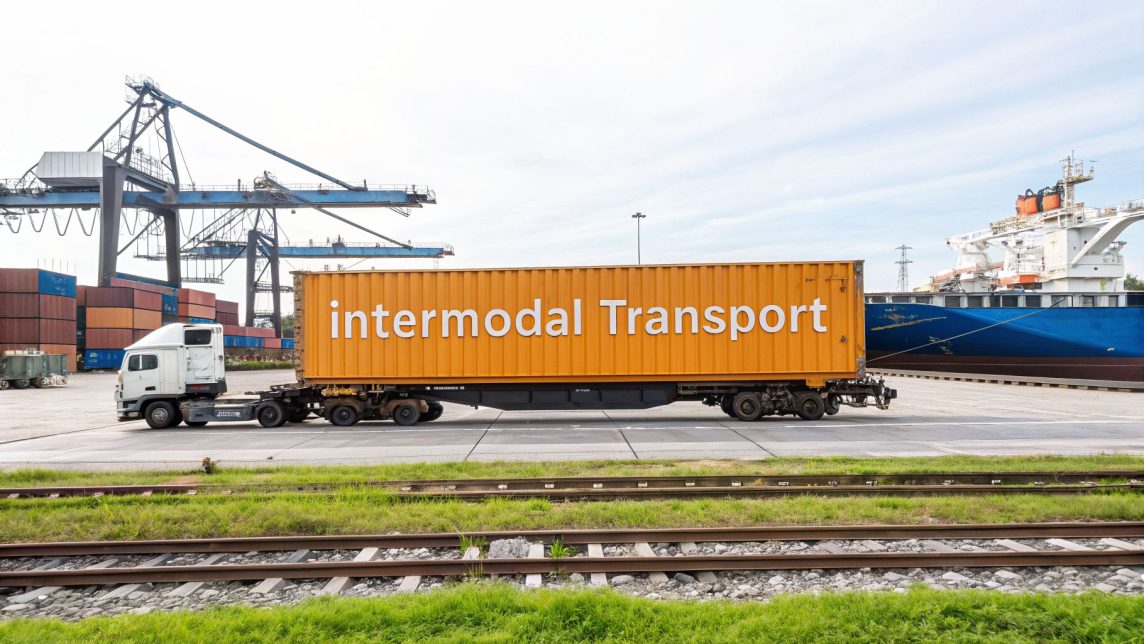
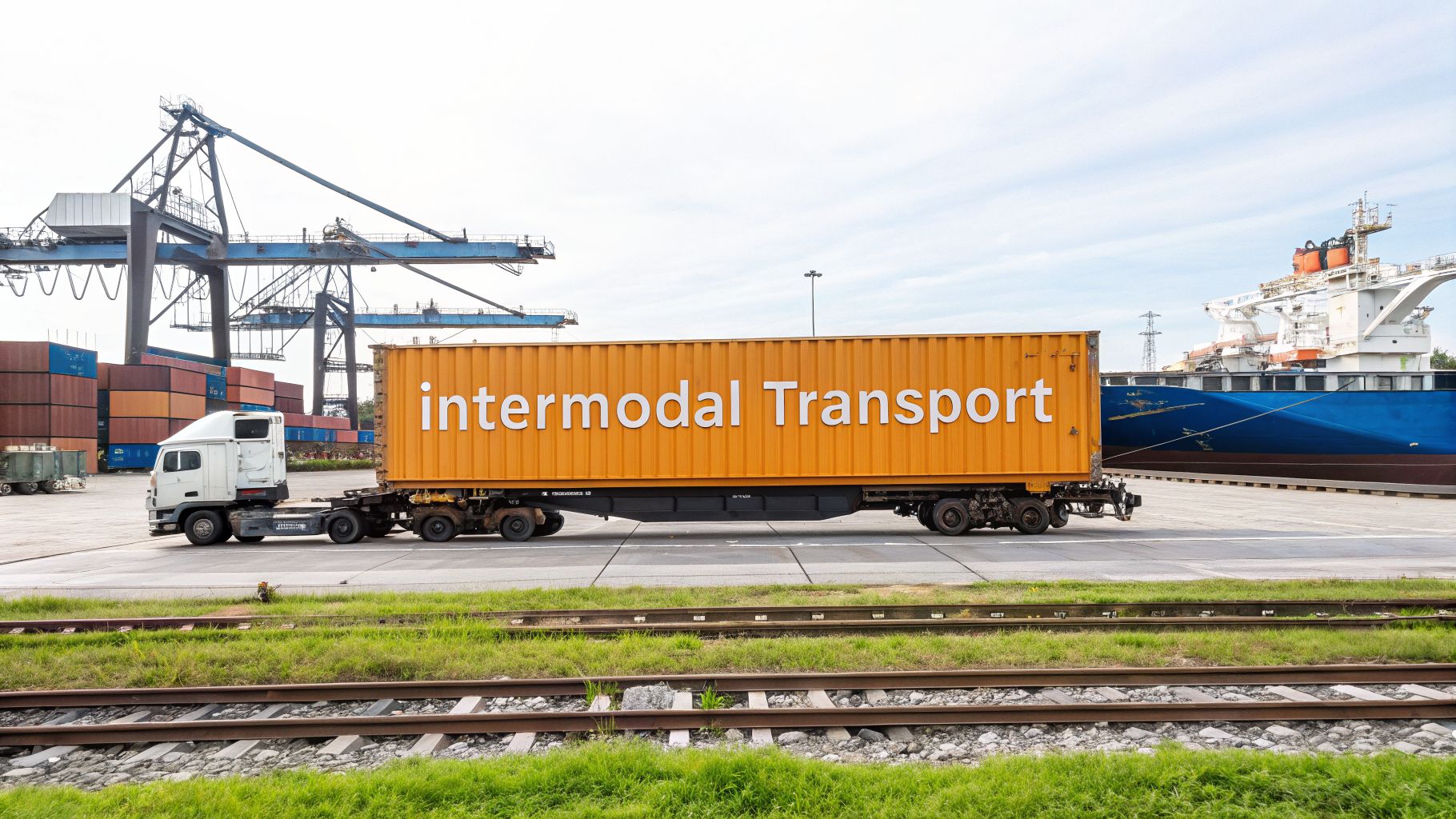
A blue semi-truck with an orange shipping container drives near railroad tracks and a port, showing intermodal transfer.

The whole system is built around one brilliant piece of equipment: the standardized shipping container. This simple steel box is the key that unlocks a more efficient and cost-effective journey for your inventory.

Instead of relying on a single, expensive method like long-haul trucking for the entire trip, intermodal creates a smarter supply chain. A container is loaded at an overseas factory, trucked to a port, lifted onto a massive container ship, and sailed across the ocean. Once it arrives, it's transferred onto a train for the long inland haul, and finally, it's placed back on a truck for the "last mile" delivery to your 3PL or fulfillment center.

The best part? Your products remain untouched and secure from the moment the container is sealed until it arrives at its final destination.

The Intermodal Playbook: How It Works

This team-based approach works by letting each mode of transport do what it does best:

  • Trucks: They handle the flexible first-mile pickup and last-mile delivery, getting your container to and from virtually any factory or warehouse.
  • Trains: For long cross-country distances, nothing beats rail. It’s incredibly fuel-efficient and far more cost-effective for moving heavy freight over land.
  • Ships: The undisputed champions of global trade, container ships move enormous volumes between continents at an unbeatable per-unit cost.

This combination of strengths is exactly why intermodal has become a pillar of modern e-commerce logistics.

The global intermodal shipping market has grown to $250 billion, with North America owning a massive 45% market share thanks to its vast rail networks. The scale is huge, and you can explore more data on the intermodal market to see just how big it's become.

The Intermodal Transportation Relay Race

Here’s a quick look at how the different modes work together in a typical intermodal journey.

Transportation Mode Role in the Journey Best For
Truck (Drayage) First-mile pickup from the factory and last-mile delivery to the warehouse. Short-haul flexibility, door-to-door access.
Ocean Ship The long-haul ocean voyage, connecting continents. Moving massive volumes of containers internationally.
Train (Rail) The long-haul land bridge, moving containers across the country. Cost-effective, fuel-efficient transport for heavy loads over 750+ miles.
Truck (Drayage) Final delivery from the rail yard to the destination fulfillment center. Covering the final few miles of the journey quickly.

Ultimately, intermodal isn't just about moving a box. It’s a powerful strategy for building a supply chain that's more affordable, reliable, and sustainable. For e-commerce sellers importing goods, it’s one of the best tools for managing the flow of inventory from a factory floor to your customer’s door.

How an Intermodal Shipment Moves From Start to Finish

To really get a feel for intermodal transportation, let's walk through a typical shipment of e-commerce goods. Picture this: your brand-new products are sitting at a factory in Asia, ready to go. The entire process works like a perfectly choreographed relay race, where the shipping container is the baton—and your products never leave its protective shell.

This journey kicks off with what's called first-mile drayage. A local truck pulls up to the factory, and your products are loaded into an empty container. Once it’s packed, the container is sealed. This is a critical step for security. That truck then hauls the container a relatively short distance to a nearby port.

The Ocean Voyage and Port Arrival

At the port, a massive crane lifts the container right off the truck's chassis and stacks it onto a colossal container ship. This vessel, which carries thousands of other containers, then starts its long journey across the ocean, which can take several weeks. All the while, your inventory is safely stowed away, crossing the sea at an incredibly low cost per unit.

When the ship arrives at its destination port, say the Port of Los Angeles, the whole process happens in reverse. Another crane plucks your container off the ship and sets it down in the terminal yard. It waits here for the next leg of its journey, which is where the true power of intermodal really shines.

This is where coordination is everything. A container can easily sit at a busy port for several days waiting for its next move. That's why having a logistics partner who can expertly manage port operations and rail schedules is so crucial for avoiding expensive delays and demurrage fees.

The Inland Journey by Rail and Truck

Instead of getting loaded onto a truck for a long and pricey cross-country drive, your container is transferred onto a train. For long-haul land routes, rail is the workhorse of intermodal transport, delivering big savings on fuel and costs. The train will then travel hundreds or even thousands of miles inland to a rail terminal located near your final destination.

Once it pulls into the inland rail yard, the container's journey is almost over. A final last-mile drayage truck shows up to grab the container and take it to its final stop. This is often where your 3PL, like SnappyCrate, steps in to coordinate the final delivery to their warehouse. You can learn more about this crucial final step by reading our guide to what is intermodal trucking and its role in the supply chain.

The truck delivers the sealed container right to the 3PL's receiving dock. Only then is the seal broken and the container finally unloaded. Your products, having traveled across the world by truck, ship, and train, are now ready to be inventoried and prepped for fulfillment.

The Real-World Benefits for Your E-Commerce Business

Okay, so you get the mechanics of intermodal. But how does it actually help your e-commerce business? The answer comes down to your bottom line. For any growing brand, the advantages are very real, starting with serious cost savings.

When you strategically move long-haul freight off the road and onto the rails, you start to insulate your business from some of the most volatile costs in logistics. We're talking about fuel surcharges, driver shortages, and peak season congestion on the highways.

More Than Just Cost Savings

By swapping trucks for trains on those long cross-country routes, businesses can often cut their freight expenses by up to 20-30%. For a direct-to-consumer brand or marketplace seller trying to scale, that’s a game-changer.

Beyond the direct cash savings, intermodal introduces something just as valuable: predictability. While it might not always be the absolute fastest method, rail schedules are far more consistent than over-the-road trucking. Trains aren't stuck in rush hour traffic, and they aren't limited by driver hours-of-service rules.

A more predictable supply chain means you can manage inventory with confidence. You can shrink your safety stock, tie up less cash in the warehouse, and dramatically lower your risk of stockouts. That kind of stability is a huge competitive edge.

This simple graphic shows how all the pieces fit together in a typical intermodal journey.

Diagram illustrating the intermodal shipment process: origin truck, ocean ship, rail, and delivery truck, highlighting benefits.

It’s all about those seamless handoffs between the first-mile truck, the ship, the train, and the final delivery truck. When done right, it's a well-oiled machine.

Sustainability and Security Gains

Let’s be honest, customers today care about where their products come from and how they get there. The green benefits of intermodal are a great story to tell. Trains are incredibly fuel-efficient, moving one ton of freight nearly 500 miles on a single gallon of fuel. That's a massive reduction in your carbon footprint compared to trucking.

Security gets a major boost, too. Your products are sealed inside a container when they leave the factory and aren't opened again until they arrive at the destination. This single-unit approach all but eliminates opportunities for damage or theft along the way. For anyone shipping high-value goods, that peace of mind is priceless.

Looking for more ways to get your logistics spending under control? Check out our guide on how to reduce shipping costs.

Of course. Here is the rewritten section, adopting the expert, direct, and practical voice from the provided examples.


What Are the Downsides? When Intermodal Isn't the Right Fit

Let's be real—while intermodal is a powerhouse for cost savings, it’s not a magic bullet for every shipment. Before you jump in, you need to know the trade-offs. Knowing when to use it (and when not to) is what separates the pros from the rookies.

First and foremost, you have to consider transit time. Intermodal is reliable, but it’s almost always slower than sending a truck straight across the country. A cross-country rail trip can easily add a few days compared to a dedicated truck team. If you’re dealing with a hot, time-sensitive shipment, this is not the move.

Another big factor is geography. The whole system depends on having good access to ports and rail terminals. If your warehouse or your destination is in the middle of nowhere, the truck trips to and from the rail yard (called drayage) can get long and expensive. Those extra trucking miles can quickly eat up any money you thought you were saving.

More Handoffs, More Problems?

Every time your container gets moved—from a truck to a ship, from a ship to a train, from a train back to a truck—there’s a chance for something to go wrong. More moving parts mean more potential for delays if the timing isn't perfect. Each transfer point is a potential bottleneck.

A missed connection at a busy rail yard or a holdup waiting for a chassis at the port can throw your entire timeline off track. This is exactly why having a logistics partner who lives and breathes this stuff is so important—they manage the handoffs so you don't have to.

Finally, think about your cargo. While your goods stay sealed in the container, they still get lifted and moved multiple times. For most products, this is no big deal. But if you’re shipping something extremely fragile or high-value, that extra handling might be a risk you’re not willing to take.

These points aren't meant to scare you off intermodal. They're just the reality of logistics. For businesses that can build a little flex into their schedules and are located near major freight hubs, the cost and environmental perks are hard to beat.

How Technology Is Making Intermodal Smarter

White real-time tracking sensor on an orange shipping container with trucks in a logistics yard.

The old image of intermodal shipping—a black box where containers disappear for weeks—is being completely overhauled by technology. That complex dance of handoffs between ships, trains, and trucks is finally becoming a transparent, predictable system. For e-commerce sellers, this means getting unprecedented control over your inventory while it's in motion.

This shift is all about digitalization. Once-dumb containers are now becoming intelligent assets. Major carriers like Maersk and CMA CGM are outfitting their fleets with Internet of Things (IoT) sensors, which provide a live feed of data on location, temperature, humidity, and even if a container's doors have been opened.

For your e-commerce brand, this means you’re no longer in the dark. You can track your shipment’s precise location, confirm that your temperature-sensitive products are safe, and get instant alerts for potential security issues. This level of visibility turns inventory forecasting from a guessing game into a data-driven science.

The Rise of AI and Machine Learning

Beyond just tracking, Artificial Intelligence (AI) and machine learning are now optimizing the actual routes your containers take. Logistics giants like UPS and FedEx use sophisticated AI algorithms to analyze everything from weather patterns and port congestion to real-time traffic, all to find the most efficient path for a shipment.

This delivers two huge wins for sellers:

  • More Accurate ETAs: AI-powered predictions give you a much clearer, more reliable picture of when your inventory will arrive. This helps you manage customer expectations and plan your fulfillment operations down to the day.
  • Lower Fuel Costs: By finding the smartest routes, these AI systems help carriers burn less fuel. That translates to lower shipping costs for you and a smaller carbon footprint for your supply chain.

The global intermodal transport market is projected to more than double in value to $109.5 billion by 2032, growing at a 10.4% annual rate. A huge part of that growth is being fueled by exactly these kinds of technological breakthroughs. You can discover more about the future of intermodal growth and its impact on modern supply chains.

From Long-Haul to the Final Mile

These smart technologies are knitting together the entire supply chain, from the factory to the customer’s doorstep. While intermodal optimizes the long-haul journey across oceans and continents, advanced last-mile logistics software takes over to ensure the final leg of the delivery is just as efficient and transparent.

Ultimately, this wave of innovation makes what is intermodal transportation an even more powerful strategy for any modern e-commerce business. It’s no longer just a cheap way to move goods—it’s a highly visible, predictable, and intelligent system for managing your global inventory flow.

Working with Your 3PL to Receive Intermodal Shipments

Your products have traveled thousands of miles across oceans and railways. But the final, most critical step is the handoff from the container to your fulfillment partner's warehouse. This is where a smooth operation really proves its worth—or where things can get messy, fast.

Getting this right boils down to great communication between you and your Third-Party Logistics (3PL) partner. Your job is to make sure your 3PL has all the key documents ahead of time. Think of the Bill of Lading (BOL), container number, and ETA as your freight's passport. Without them, your 3PL can't schedule the delivery with the drayage carrier, and your container ends up stuck in limbo.

Scheduling and Unloading the Container

Once you’ve provided the paperwork, a good 3PL takes charge. They’ll work directly with the trucking company to book a specific delivery appointment at their receiving dock. This is a huge deal—it prevents a free-for-all at the warehouse and makes sure the right team and equipment are ready the second your container arrives. It helps to understand the carrier's side of things, too; concepts like factoring for truckers shed light on the financial gears that keep freight moving.

When the container is finally backed into the dock, your 3PL’s crew gets to work on the heavy lifting—a process called “devanning.”

  • Floor-Loaded Containers: This is all hands on deck, with the team manually unloading every single box by hand.
  • Palletized Containers: This is much faster, with forklifts efficiently pulling out entire pallets of your product.

This is where you see the real value of an experienced fulfillment partner. They aren't just moving boxes. They're breaking down pallets, inspecting goods for shipping damage, and counting everything against your packing list. If there’s a problem, you’ll know immediately.

From Container to Ready-to-Ship Inventory

Getting the boxes off the truck is only half the battle. Now, your 3PL shifts gears to turn that bulk inventory into products ready for customer orders. This is the "prep" phase, where they might apply SKU labels, build kits, or poly-bag items to meet specific marketplace rules, like Amazon FBA requirements.

This is a core part of what a fulfillment partner does. To see the full range of services, check out our guide on what is a 3PL warehouse.

Intermodal Shipment Receiving Checklist

To ensure your container handoff goes off without a hitch, a little prep goes a long way. This checklist outlines the key steps and clarifies who is responsible for what.

Checklist Item Why It's Important Who Is Responsible (Seller/3PL)
Provide BOL & Container # The 3PL needs this to identify your specific container and schedule its arrival. Seller
Confirm Estimated Arrival Date Gives your 3PL a heads-up to prepare dock space and labor. Seller
Share Packing List/Manifest Essential for the 3PL to verify counts and check for damages or discrepancies. Seller
Schedule Drayage Delivery The 3PL coordinates with the final-mile trucking company for a specific dock time. 3PL
Prepare Dock and Staff Ensures the team and equipment (forklifts, etc.) are ready for unloading. 3PL
Unload Container (Devan) The physical work of emptying the container, either by hand or forklift. 3PL
Count and Inspect Inventory The 3PL verifies product quantities and checks for damage against the packing list. 3PL
Report Discrepancies If counts are off or items are damaged, the 3PL immediately notifies you. 3PL

By handling all these inbound steps, your 3PL transforms a massive, messy container of goods into perfectly organized, sellable inventory—letting you focus on growing your business instead of worrying about logistics.

Common Questions About Intermodal Transportation

Even with a good handle on the basics, you probably still have some real-world questions about how intermodal actually works for your business. It's one thing to understand the concept, but another to see if it fits your brand.

Let's clear up a few of the most common questions we hear from sellers.

Is Intermodal a Good Fit for My Small Business?

Absolutely. There's a common myth that intermodal is only for massive brands moving dozens of containers. That’s just not true anymore, especially for businesses that import products.

You don't need to fill an entire container to get started. With Less-than-Container Load (LCL) shipping, you can share container space—and the cost—with other shippers. A good 3PL will handle the consolidation, making intermodal a smart, scalable option even if you're just starting out.

What Is the Difference Between Intermodal and Multimodal?

This is a big point of confusion, and the answer comes down to who holds the contracts. It's a simple but important difference.

  • Intermodal Transportation: You (or your 3PL) have separate agreements for each leg of the trip. You'll have a contract with the ocean carrier, another with the railroad, and a third with the drayage company. This gives you more control and lets you shop around for the best rates on each leg.

  • Multimodal Transportation: You sign one contract with a single company that takes full responsibility for the entire journey from start to finish. They manage all the handoffs behind the scenes.

The physical journey your products take is identical. The only difference is in the paperwork, liability, and who's coordinating the moves.

The key takeaway is this: With intermodal, you’re the general contractor piecing together the best specialists for the job. With multimodal, you’re hiring a project manager to handle everything for you.

How Do I Track My Shipment During an Intermodal Journey?

Gone are the days of black-box shipping where your inventory disappeared for weeks. Modern tracking is surprisingly seamless.

Your logistics partner should provide a single tracking portal that pulls data from every carrier involved—the ocean line, the railroad, and the final trucking company. By using your container number, you get one unified, real-time view of your shipment's progress.

Many containers are now also equipped with IoT sensors, giving you a live GPS location and even alerts for things like temperature changes or if the doors are opened. You’ll know exactly where your products are, every step of the way.


At SnappyCrate, we simplify the entire inbound process for e-commerce sellers, from coordinating container arrivals to providing FBA prep and fast order fulfillment. Learn how we can streamline your logistics today!

0 Continue Reading →