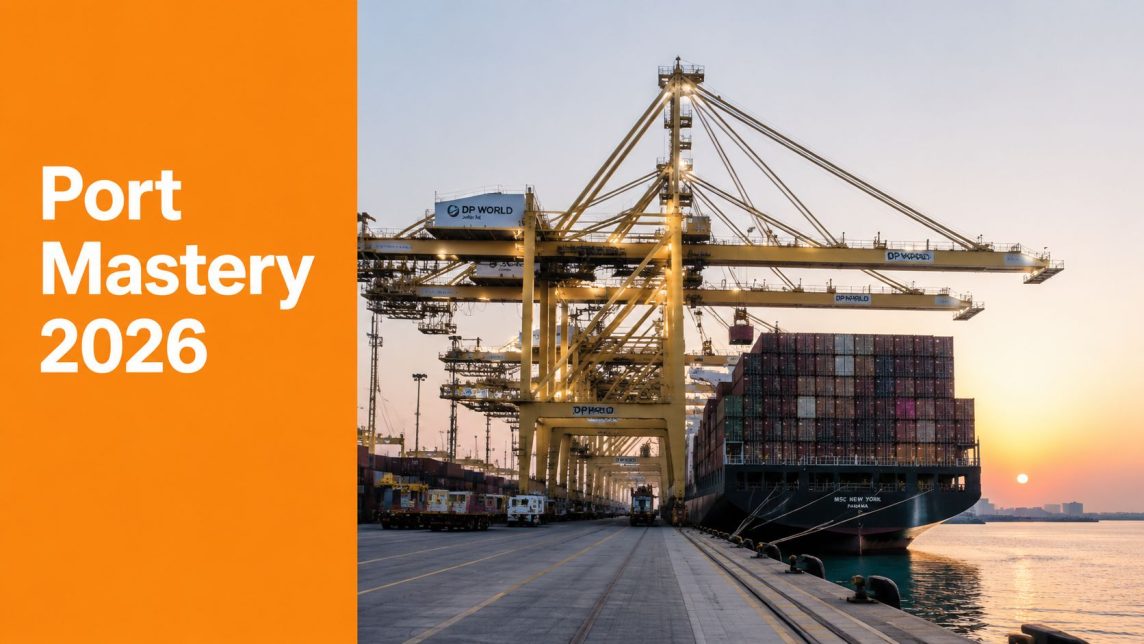
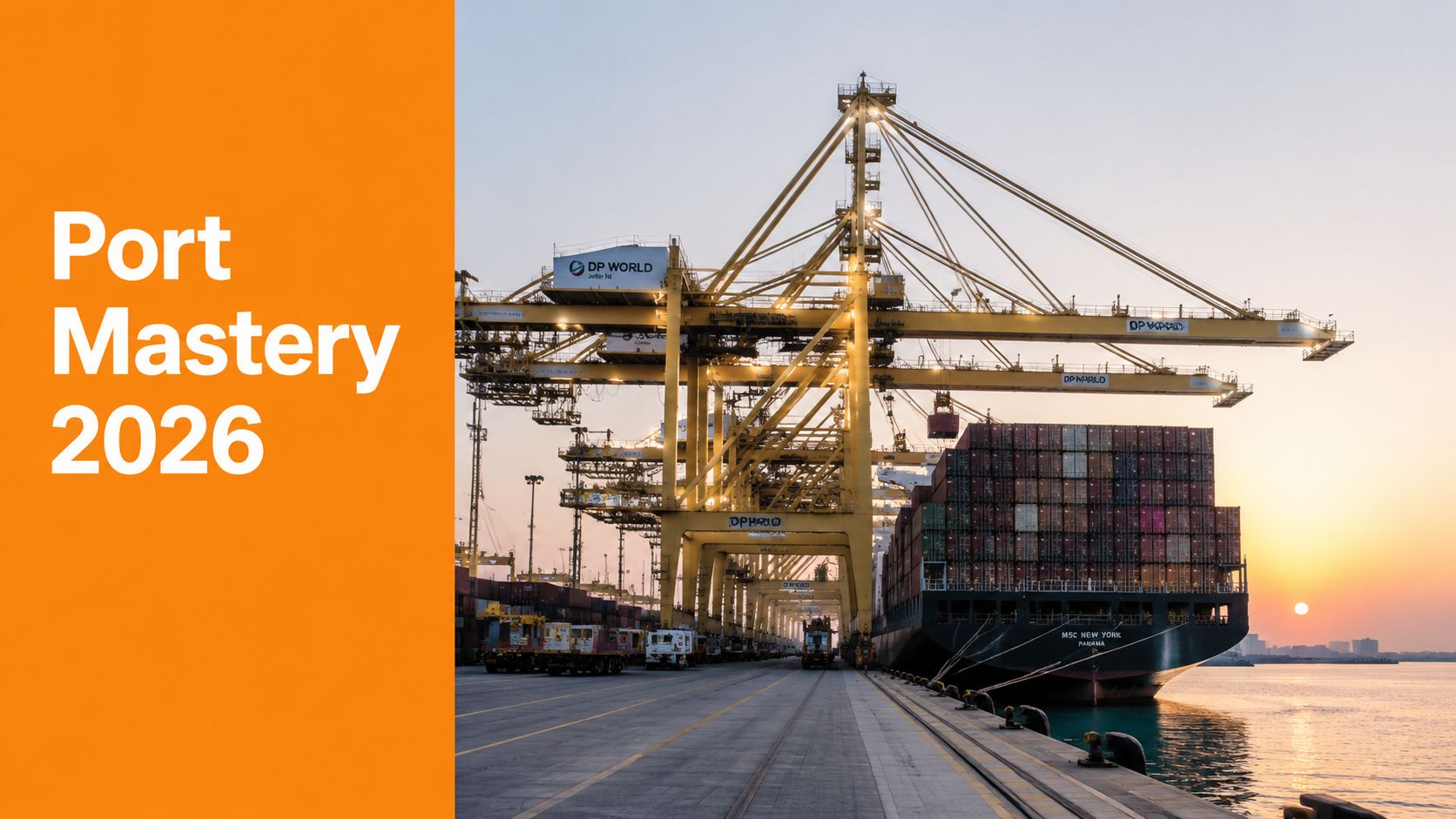
Your goods are on the water, the supplier says everything shipped on time, and the tracking finally shows Dubai as the destination. That's usually the moment importers relax too early.
The hard part often starts when the container gets close to the Port of Dubai UAE. Ocean transit feels visible. Port handling, customs, release, trucking, warehouse booking, labeling fixes, and receiving delays feel much less visible. If you sell on Amazon FBA, Shopify, or Walmart, those blind spots turn into stockouts, rushed prep work, and avoidable storage charges fast.
Dubai is a serious trade gateway, but that reputation can create a false sense of simplicity. The UAE's ports handle over 61% of all GCC cargo flows, and around 23,000 vessels called at Dubai ports in 2023, according to the U.S. Commercial Service overview of the UAE blue economy. High volume is good for connectivity. It also means your shipment enters a fast-moving system that rewards clean documents, good timing, and disciplined handoffs.
If you're importing inventory for e-commerce, the goal isn't just getting cargo to Dubai. The goal is getting saleable inventory from vessel arrival to shelf, pallet, or FBA-ready staging without losing days to preventable mistakes.
Your Container Is Arriving in Dubai Now What
A common scenario looks like this. Your supplier loaded a 40-foot container, your freight forwarder booked the vessel, and everyone treated “Dubai” as the finish line. Then the ship arrives, and suddenly you're dealing with terminal status updates, release conditions, customs paperwork, truck coordination, and warehouse receiving slots all at once.
That's where many importers realize they know the sailing schedule, but not the operational chain after arrival.
What happens first after arrival
Once the vessel reaches Dubai, the container still has to move through several gatekeeping steps before your goods are usable:
- Vessel discharge. The container has to be unloaded from the ship into the terminal stack.
- Manifest and document alignment. The shipment data must match what customs, the terminal, and your consignee records expect.
- Customs clearance. If paperwork is incomplete or values are inconsistent, the shipment stalls here.
- Container release and pickup coordination. A truck can't collect what isn't properly released.
- Warehouse intake. Your 3PL or receiving warehouse has to be ready for live unload, pallet breakdown, inspection, and putaway.
If one of those handoffs slips, the whole chain slows down.
Practical rule: The vessel arrival date is not your inventory availability date. Treat it as the start of port operations, not the end of transit.
Where importers get caught out
The biggest problem isn't usually one dramatic failure. It's small disconnects between parties. The supplier spelled the consignee name one way, the invoice shows product descriptions that don't match the packing list, the truck booking wasn't made early enough, or the warehouse didn't get the ASN and carton counts in time.
A lot of this traces back to role confusion. If you're still fuzzy on who handles booking, documentation, and handoffs, it helps to review what a freight forwarder does in this breakdown of what a forwarder is.
What a clean arrival looks like
A smooth Dubai import usually comes down to basic discipline:
- Documents match. Bill of lading, invoice, packing list, and SKU details align.
- Receiving is pre-booked. Your warehouse knows container size, ETA, pallet count, and any prep requirements.
- Your importer setup is ready. No scrambling for registrations or authority to clear cargo.
- You plan for exceptions. Inspection, hold, and traffic delays are possible, so your launch date needs some cushion.
The Port of Dubai UAE works well for prepared importers. It punishes assumptions. If your team treats arrival as “someone else's problem,” costs start accumulating before the container even leaves the terminal.
Decoding the Dubai Port System Jebel Ali and Beyond
When importers say “the Port of Dubai UAE,” they usually mean Jebel Ali Port. That distinction matters because Dubai's cargo ecosystem is more concentrated than many people assume.

Why Jebel Ali is the gateway that matters
Jebel Ali is Dubai's primary deep-sea port. Sources describe it as the world's ninth busiest port, and the tendency to speak about “Dubai ports” in the plural often hides how much import activity depends on this single gateway, as summarized in the Port of Jebel Ali reference.
For practical planning, that means most importers aren't choosing among several interchangeable Dubai cargo ports. They're routing through one dominant hub with its own terminal routines, release process, yard conditions, and drayage realities.
The principle is similar to air freight. One airport handles the bulk of long-haul international traffic, while another facility in the same city serves a narrower role. If you send freight to the wrong place operationally, being “in the same city” doesn't help.
Jebel Ali versus Mina Rashid
Mina Rashid matters historically, but it isn't the port most container importers should build their operating plan around. If your goods are standard ocean freight for commerce, Jebel Ali is the working assumption unless your routing is set up differently for a specific reason.
That's why casual language causes mistakes. Teams say “send it to Dubai,” but operationally you need to know:
- Which terminal flow applies
- Who controls release
- Where the trucker is collecting
- Whether your warehouse is positioned for that routing
If those answers aren't clear, you don't really have an import plan.
Why concentration creates risk
Jebel Ali's scale is an advantage. It's also a concentration point. If yard pressure increases, vessel rotations shift, or a disruption affects normal flow, importers feel it immediately because so much cargo funnels through the same system.
A large port can be highly capable and still be the wrong place to improvise.
That's the trade-off many glossy summaries miss. Prestige rankings don't move your cartons to a warehouse. Operational control does.
What to ask before cargo sails
Before your supplier loads, confirm these points with your forwarder and receiving team:
- Arrival path. Is the shipment definitely routing through Jebel Ali?
- Cargo profile. Any special handling, inspection sensitivity, or labeling risk?
- Release party. Who controls original documents, telex release, or local handover requirements?
- Fallback plan. If timing slips, where will the container, pallets, or cartons go next?
If you get those answers before departure, the Port of Dubai UAE becomes manageable. If you wait until arrival, you're paying to learn in real time.
Jebel Ali Port Capabilities and Throughput
Most importers hear the big numbers about Jebel Ali and assume that scale automatically means speed. It doesn't. Scale means the port can handle huge volume. Your result depends on how well your shipment fits into that machine.

Jebel Ali is described as the world's ninth busiest port, the largest man-made harbor, and a facility with container handling capacity of around 19.3 million TEUs annually, according to this Jebel Ali port profile from Datalastic. Another industry overview describes Jebel Ali as a deep-sea port with annual container capacity exceeding 22 million TEUs and more than 67 berths, while noting that yard planning and berth productivity often matter more than raw quay length for import performance, per UNISCO's Dubai port summary.
What those numbers mean for an importer
Big capacity helps carriers schedule large services into Dubai. It also means you're operating inside a dense, high-velocity terminal environment. In that setting, your delay usually won't come from the port being “small.” It comes from one of these issues:
- Your container is available, but your trucking window is poorly timed
- The shipment is discharged, but customs or release documentation isn't ready
- Your warehouse can receive later than the terminal can release
- The cargo needs palletizing, relabeling, or inspection before final handoff
Those are coordination problems, not headline-capacity problems.
Throughput doesn't remove bottlenecks
Importers often focus on vessel arrival and ignore yard reality. That's a mistake. A port can handle immense annual volume while still forcing you to work carefully around stack positioning, truck access timing, and receiving cutoffs on the inland side.
This visual gives useful context on the port's operating scale.
What works in practice
The importers who move cleanly through Jebel Ali usually do three things well:
| Focus area | What works | What fails |
|---|---|---|
| Schedule control | Align vessel ETA, clearance prep, truck booking, and warehouse receiving | Waiting for discharge before starting inland planning |
| Cargo readiness | Send carton counts, SKU list, and handling notes before arrival | Treating all containers as standard unloads |
| Port-to-warehouse flow | Match drayage timing with actual receiving capacity | Pulling the container with no unload slot confirmed |
Operations note: At Jebel Ali, size is the backdrop. Synchronization is what actually gets inventory moving.
If you import regularly, think less about whether Jebel Ali is “big enough.” It is. Think more about whether your inland plan is tight enough to keep up with it.
Navigating Customs and Clearance Procedures
Most Dubai customs problems don't start at customs. They start when the supplier creates weak paperwork at origin and nobody catches it before the vessel sails.
Dubai's systems are digitized and efficient when your file is clean. When your file is messy, the same system becomes very unforgiving. Product descriptions that are too generic, invoice values that don't make commercial sense, mismatched carton counts, or missing authority to clear can stop the shipment cold.

The sequence that usually matters
A practical customs workflow looks like this:
Gather the core file early
You'll typically need the bill of lading, commercial invoice, packing list, and product-level detail that supports classification and valuation.Check product descriptions before submission
“Accessories,” “consumer goods,” or “general merchandise” won't help. Customs needs enough specificity to understand what the goods are.Confirm HS classification
HS code errors create downstream problems because duty treatment, admissibility, and inspection decisions all depend on classification. If your team needs a straightforward reference point, Smart Classic's HS code guide is a useful starting resource.Submit through the local customs process
Digital filing helps, but only if the data is internally consistent.Prepare for inspection or questions
Even compliant cargo can be reviewed. If your labels, invoice details, or quantities create doubt, expect friction.
The mistakes that cost importers time
The most expensive customs delays are usually boring ones:
- Undervaluation signals. If the commercial value appears inconsistent with the goods, expect scrutiny.
- Mismatched paperwork. Packing list says one thing, invoice says another, cartons show something else.
- Bad product naming. Vague descriptions trigger questions that specific descriptions avoid.
- Seller-channel confusion. Amazon labels, retail cartons, and customs descriptions don't always use the same language. They need to reconcile.
A related issue is legal responsibility. If your structure for local import compliance isn't settled, review what an importer of record is before your next shipment lands.
Why risk matters beyond paperwork
The Port of Dubai UAE isn't just an efficiency story. For importers, its location near the Strait of Hormuz means you have to think in terms of risk-adjusted reliability, not just prestige. The geopolitical context can affect rerouting, security posture, and policy-driven friction, as noted in this discussion of Jebel Ali's strategic location near the Strait of Hormuz and its supply chain implications.
If your business depends on predictable replenishment, “the vessel arrived” is only one part of the risk picture. Clearance readiness matters just as much.
A practical customs checklist
Before cargo arrival, verify these items internally:
- Commercial invoice is specific. Product names identify the item clearly enough for customs review.
- Packing list is usable. Carton counts, weights, and pack structure are easy to reconcile.
- HS code logic is documented. Your team can explain why the goods fall under that classification.
- Consignee and importer details match. Names and entities are consistent across the file.
- Post-clearance handling is arranged. Once released, the goods need somewhere to go immediately.
Customs in Dubai rewards preparation. It doesn't reward optimism.
The Final Mile of Your Freight From Port to Warehouse
Customs release feels like the finish line. It isn't. It's the handoff point where port storage risk turns into inland execution risk.
Once your container is cleared, you still need to pull it from the terminal, move it by truck, deliver it to the receiving warehouse, unload it correctly, and return equipment within the required window. During this stage, many importers lose margin through avoidable accessorial charges and rushed labor.
What happens after release
The next move is usually drayage, which is the short-haul trucking leg from the port to the warehouse or transload site.

That sounds simple until real constraints show up. Your trucker needs a valid pickup, your warehouse needs a booking slot, and your unloading plan has to match the cargo. Floor-loaded cartons, mixed-SKU pallets, Amazon prep inventory, and fragile retail packaging all unload differently.
The final mile decisions that matter
You usually have a few operational choices:
Live unload
The truck arrives, waits, and your team unloads on schedule. Good when the warehouse is ready and labor is booked.Drop and pick
Useful when a warehouse can't unload immediately, though it depends on equipment and local operating options.Transload
Best when you need to shift goods from the ocean container into another vehicle format, sort mixed cargo, or separate channel-specific inventory before final delivery.
For e-commerce inventory, transload is often the smart choice when one container includes FBA cartons, DTC stock, and wholesale cases that need different handling.
Don't pull a container unless the receiving site is operationally ready. A “released” container can still become an expensive problem.
Hidden warehouse-side issues
The port-to-warehouse leg also exposes packaging weaknesses. Cartons that survived ocean transit may still collapse during pallet breakdown, re-stacking, or local delivery if stretch-wrapping is poor. When teams need to improve pallet security before onward transport, a practical benchmark is this guide to heavy-duty pallet film, especially for loads that will be handled more than once.
What good handoff looks like
A disciplined final mile usually includes:
- Pickup only after release is confirmed
- A scheduled receiving slot with labor assigned
- Instructions for floor-load, pallet unload, or sort by SKU
- Immediate exception reporting for damage, shortages, or labeling issues
- A plan for returns, empty equipment, and proof of delivery
The final mile of your freight is where a clean import becomes usable inventory. If this stage is improvised, everything upstream loses value.
Estimating Timelines Costs and E-commerce Compliance
Ocean freight is only one line on the cost sheet. Importers get into trouble when they budget for the booking but not for the chain of charges that follows arrival.
The Port of Dubai UAE can be cost-effective for the right flow, but only if you forecast port-related handling, local transport, customs-related expense, and warehouse work as one landed-cost model. If you split those into separate conversations, someone always says “that wasn't included.”
The port-related costs importers usually miss
You should expect several cost layers beyond the ocean quote. Exact amounts vary by shipment, carrier, handling profile, and local service provider, so it's safer to budget by category first and validate charges before cargo arrival.
Here's the structure I recommend using internally:
| Fee Type | Typical Cost Range (USD per Container) | What It Covers |
|---|---|---|
| Terminal Handling Charges | Varies by carrier, terminal, and container profile | Discharge and terminal-side handling tied to the container move |
| Bill of Lading and documentation fees | Varies by carrier and release method | Document processing, release handling, and related shipping line admin |
| Customs duties and clearance-related charges | Varies by product classification and declared value | Import duty exposure, customs processing, and broker or filing support where applicable |
| Drayage and port pickup transport | Varies by distance, equipment, waiting time, and truck availability | Port pickup, trucking to warehouse, and driver or time-related accessorials |
| Warehouse receiving and unload fees | Varies by unload type and SKU complexity | Container unload, pallet breakdown, sorting, inspection, and putaway |
| Storage and exception charges | Varies by delay and cargo condition | Charges triggered by late pickup, missed appointments, or cargo issues |
That table is intentionally qualitative. In practice, the right way to estimate is to get all local parties to price the same scope. If one quote includes unloading and another doesn't, your cost model is already wrong.
Timeline planning that actually works
Importers often ask for one universal transit timeline from arrival to availability. There isn't one. A clean, standard shipment can move fast. A shipment with classification questions, retailer prep issues, or receiving delays can slow down quickly.
Use a staging model instead:
- Arrival and discharge stage. Depends on vessel operations and terminal flow.
- Customs and release stage. Fast when paperwork is clean. Slow when values, descriptions, or authority are unclear.
- Port pickup and drayage stage. Depends on truck timing and appointment availability.
- Warehouse processing stage. Depends on whether goods need relabeling, bundling, inspection, or channel-specific prep.
If your launch date is tight, don't plan backward from the vessel ETA alone. Plan backward from the date inventory must be saleable.
Compliance details e-commerce sellers overlook
Amazon FBA and direct-to-consumer inventory often need different handling after import. Common issues include:
- Channel-specific labels. Cartons may be customs-compliant but still not ready for Amazon receiving.
- Packaging condition. Retail-ready doesn't always mean warehouse-ready.
- Case pack logic. Wholesale cases, inner packs, and FBA unit prep often conflict.
- Pallet planning. If you're trying to estimate storage density or receiving flow, this practical reference on how many pallets fit in a 40ft container helps frame warehouse-side planning.
Budget labor for compliance corrections before the container arrives. Relabeling and repacking are common. Emergency relabeling is what gets expensive.
A better landed-cost habit
Build your estimate in one sheet with these columns:
- Ocean freight
- Port and terminal charges
- Customs and clearance
- Trucking and delivery
- Warehouse receiving
- Prep and compliance work
- Contingency for exceptions
That's the model that tells you whether a Dubai import lane is profitable for your SKU mix. A freight quote by itself won't.
Your Next Step Partnering with a 3PL for Dubai Imports
Importing through Dubai looks straightforward from a distance. In practice, it's a chain of handoffs where each weak link creates cost. The vessel can arrive on time and you can still miss your sales window because documents weren't clean, trucking wasn't booked properly, or the warehouse wasn't ready to receive mixed inventory.
That's why serious e-commerce importers stop managing inbound as a collection of separate vendors. They need one operating rhythm from port release through warehouse intake, prep, storage, and outbound readiness.
What a strong 3PL relationship changes
A capable 3PL doesn't just store boxes. It helps control the moments where importers usually lose time:
- Before arrival. Receiving plans, carton data, unload readiness, and exception planning are set early.
- At handoff. Port pickup and warehouse booking are coordinated so the container doesn't float between parties.
- At intake. Teams inspect, count, sort, relabel, bundle, and stage inventory based on channel needs.
- After receiving. Inventory becomes usable for FBA, DTC fulfillment, or wholesale allocation without another scramble.
If you're still evaluating the model itself, this overview of what a 3PL warehouse is is a good baseline.
When importers should stop doing it themselves
You probably need a 3PL-led process if any of these sound familiar:
- Your supplier ships, but your local team improvises after arrival
- You rely on screenshots and chat messages instead of a receiving workflow
- Your inventory needs prep work before sale
- You sell across Amazon, Shopify, Walmart, or wholesale and each channel has different packaging rules
- Your team spends more time chasing freight handoffs than managing stock and demand
At that point, the issue isn't effort. It's system design.
What works versus what doesn't
A fragmented model often fails because no one owns the full chain. The forwarder handles the booking. A broker handles filing. A trucker handles pickup. A warehouse handles unloading. When something goes wrong, each party can explain their part without fixing the outcome.
A 3PL-centered model works better because the receiving operation starts before the truck reaches the dock. That's what keeps imports from turning into fire drills.
The Port of Dubai UAE gives you access to a major trade gateway. It does not remove the need for disciplined execution. If your business depends on predictable replenishment, the smartest next step is tightening the operational chain after arrival, not admiring the port's scale.
If you want a partner that understands container receiving, inventory handling, Amazon FBA prep, and e-commerce fulfillment from the ground up, Snappycrate can help you turn Dubai imports into a repeatable process instead of a recurring scramble.