Skip to Content

Blog Archives

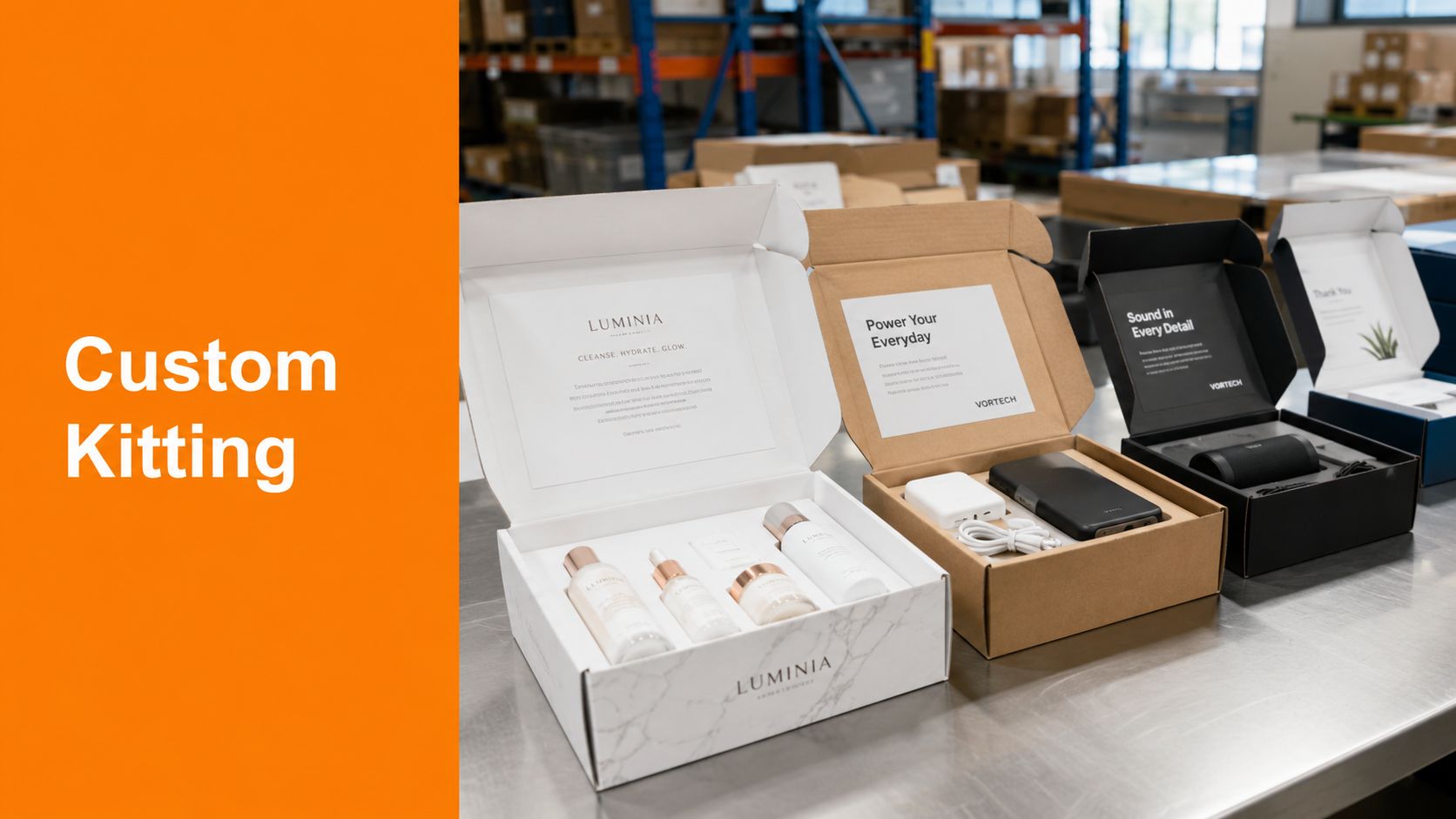
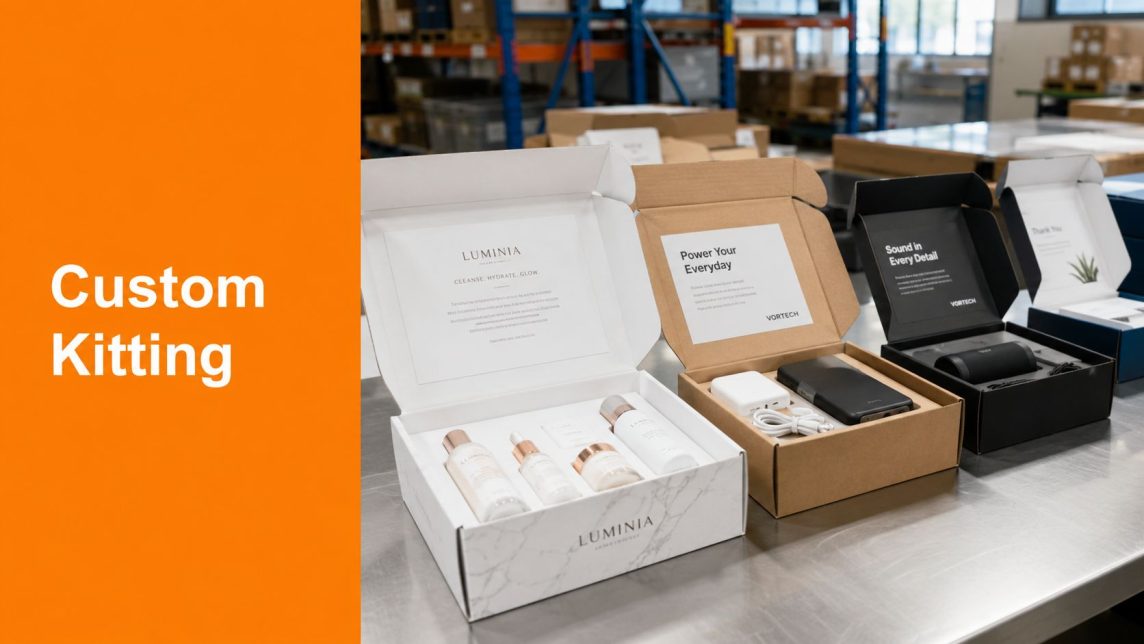
Custom Kitting for Brands: Boost AOV & Customer Experience

If you're selling bundles, gift sets, launch kits, influencer mailers, or Amazon-ready multi-item packs, you've probably felt the pain already. Orders look simple on the storefront, but inside the warehouse they turn into extra picks, more hand assembly, more labels, and more chances to ship the wrong combination.

That's usually when brands realize custom kitting isn't just a packaging choice. It's an operations decision. It affects labor, order speed, inventory visibility, channel compliance, and the way the customer experiences your brand when the box lands on their doorstep.

For growing e-commerce brands, the biggest mistake is treating kitting as a creative project first and a fulfillment workflow second. The strongest kitting programs do both. They present the product well, and they move through the warehouse cleanly.

What Is Custom Kitting for Brands?

A brand usually starts thinking about kitting when single-SKU fulfillment stops matching the way customers buy. Maybe you sell a skincare routine as three separate products, but shoppers want the full set. Maybe your holiday promotion combines a candle, match jar, and insert card. Maybe Amazon needs a bundled unit that arrives labeled and sealed as one sellable product.

Custom kitting for brands is the process of taking multiple individual items and turning them into one predefined fulfillment unit. That unit gets built to a specific configuration and is typically managed as its own SKU. Instead of a picker grabbing three or four separate products every time an order comes in, the warehouse can pull one ready kit.

A simple way to think about it is this. Individual SKUs are ingredients. The kit is the finished meal.

A diagram illustrating five key benefits of custom kitting services for brand product fulfillment and packaging.

That shift matters operationally. As ShipBob's explanation of inventory kitting notes, kitting converts multiple related SKUs into one pre-defined fulfillment unit with a unique SKU, which reduces pick-path complexity and packing variability at the warehouse. In practice, that changes the labor model from multi-line order assembly to a single-line kit pull for recurring bundles.

What problem it solves

The main problem is repeated manual assembly under order pressure. If every order requires someone to build the same bundle from scratch, small inefficiencies multiply fast.

Common friction points look like this:

  • Too many touches: Staff pick each component separately, then stage, verify, and repack them.
  • More room for errors: One missing insert, one wrong color variant, or one extra item can turn into a return or marketplace issue.
  • Inconsistent presentation: Branded sets don't always arrive with the same fold, insert placement, seal, or outer packaging.
  • Slower release times: Orders can't move until the final combination is assembled.

For brands that are newer to the concept, this overview of kitting in logistics is useful because it frames kitting as a warehouse control method, not just a merchandising tactic.

Practical rule: If the same product combination is selling again and again, assembling it one order at a time usually isn't the cleanest way to run fulfillment.

What counts as a custom kit

Not every kit looks like a gift box. In practice, custom kitting can include:

  • Retail bundles: A shampoo, conditioner, and treatment mask sold as one set
  • Marketplace prep packs: Two or more units packaged together for Amazon FBA
  • Subscription configurations: Monthly assortments built to one bill of materials
  • Promo kits: Product plus sample, insert, coupon, or branded material
  • Channel-specific packs: One version for Shopify, another for wholesale, another for Amazon

The important point is consistency. A true kit isn't just “items in the same carton.” It's a repeatable configuration with a defined build standard.

Unlocking Growth with Strategic Kitting

Brands often approach kitting as a fulfillment fix. That's only part of the picture. The better use case is broader: kitting can support revenue strategy, labor efficiency, and brand presentation at the same time.

Workers in a modern warehouse packing custom apparel boxes into shipping containers for efficient distribution.

A bundle changes what the customer buys. A prebuilt kit changes how the warehouse fulfills it. When those two parts line up, the program works.

Growth through assortment design

The easiest commercial win is packaging products in a way that makes the offer clearer. A customer may hesitate to buy three separate accessories, but the same three items presented as a starter kit, travel set, or gift-ready bundle can feel like a complete purchase.

Kitting benefits merchandising teams:

  • It supports bundle selling: A camera body paired with a bag and cleaning cloth is easier to understand as a set than as three separate add-ons.
  • It gives slow movers a job: Components that don't sell well on their own can still move when they belong in a stronger bundle.
  • It helps protect presentation: Premium packaging and inserts can turn a set into a more intentional product, not just a grouped order.

If you're building marketplace offers around bundles, this guide for Amazon sellers on AOV is worth reading because it focuses on how kits and bundles can support basket value in Amazon environments.

Efficiency that compounds in the warehouse

The warehouse payoff is less visible to customers, but it's usually where margin gets protected. NetSuite notes that kitting can increase revenue and reduce costs by cutting picking and packing time, reducing errors, and raising average order value through bundled sales. In the same discussion, it cites Folio3 reporting that kitted parts can be retrieved in 1.86 seconds versus 3.29 seconds from racks, a 43% reduction in average parts-fetching time in that manufacturing example, as covered in NetSuite's inventory kitting benchmark.

That kind of improvement matters most when a brand has recurring order patterns. One-off custom assortments don't benefit the same way. But if the same set ships every day, reducing touches adds up fast.

A kit earns its keep when it removes repeat labor, not when it creates a prettier version of the same manual work.

Better customer experience without extra chaos

A good kit also protects the last impression. The customer doesn't see your pick path or bin layout. They see whether the order feels intentional.

That can mean:

  • a gift set arriving in the right branded box
  • inserts placed consistently
  • no loose items rolling around in void fill
  • retailer-specific packs that look shelf-ready
  • a subscription experience that feels curated instead of rushed

The strongest kitting programs don't force a trade-off between operations and brand. They treat customer experience as something designed upstream, then repeated cleanly at scale.

The Kitting Workflow and Marketplace Compliance

A lot of brands underestimate where kitting goes wrong. It usually isn't the idea of the kit. It's the handoff between inventory, assembly, labeling, and channel rules.

If a set is built beautifully but arrives at Amazon with inconsistent barcoding, unclear unit designation, or missing prep, the inbound can still fail. That's why operational workflow and compliance have to be designed together.

A diagram illustrating the seven-step custom kitting process for product assembly and fulfillment services.

How the physical workflow usually runs

On the floor, a clean kitting process tends to follow a predictable path.

  1. Components are received and inspected. The warehouse checks quantities, packaging condition, labeling status, and whether every component matches the approved bill of materials.

  2. Inventory is stored by component. Before assembly starts, each item needs a controlled location and count. That prevents short builds and guesswork.

  3. A kitting station is set. This includes the assembly instructions, packaging materials, inserts, barcodes, and sample unit for reference.

  4. The kit is assembled. Staff pull components in the required sequence, place them into the final packaging, and apply any branded materials.

  5. Quality control happens before storage or shipment. The team verifies count, orientation, packaging integrity, and labeling.

  6. The completed kit is assigned or confirmed as a finished unit. At that point, the warehouse can store it as a ready-to-ship item or route it directly to outbound.

One thing that helps is documenting build instructions like a production recipe. “Include three units” isn't enough. Teams need exact SKUs, packaging order, barcode placement, seal method, and channel notes.

Where marketplace compliance changes the workflow

For Amazon and similar marketplaces, the kit has to be classified correctly before anyone starts sealing cartons. Norscot points out that the primary issue for sellers is whether a kit is treated as a single sellable unit, a multi-pack, or a virtual bundle, because that changes prep steps and inbound rejection risk, as explained in Norscot's corporate kitting guidance.

That affects practical decisions such as:

  • Barcode strategy: Which barcode identifies the final sellable unit
  • Outer packaging: Whether the items must stay physically joined as one unit
  • Label language: Whether the package needs “Sold as a Set” or similar set-identification handling
  • Prep method: Poly bagging, suffocation warnings, sealing, and visibility of the final label
  • Case consistency: Whether inbound cartons contain uniform kit configurations

Marketplace enforcement has tightened, so aesthetics can't come before documentation and scan accuracy.

Here's a useful visual walkthrough of the assembly side before you add marketplace-specific SOPs:

The details that prevent inbound problems

Most inbound problems come from simple mismatches between what the brand intends and what the marketplace receives.

A few examples:

  • The bundle isn't physically secured. Components separate during handling, so the receiver doesn't treat it as one unit.
  • The wrong barcode is exposed. Amazon scans an internal component instead of the finished kit.
  • Case packs vary. One carton has one version of the kit, the next has another.
  • The build sheet is loose. Assembly teams improvise because the instructions don't show the final approved unit.

If you sell on Amazon FBA, don't approve a kit based only on appearance. Approve the barcode map, prep method, and final sellable-unit definition first.

A practical standard for brands

Before launching a new kit, brands should confirm four things in writing:

Workflow area What needs to be defined
Unit definition Is this a single sellable set, multi-pack, or another marketplace-approved configuration?
Build instructions Which exact SKUs, quantities, inserts, and packaging steps are required?
Label placement Which barcode must be scannable on the outside of the final packaged unit?
QA signoff What must be checked before the kit can enter storage or ship inbound?

That level of discipline sounds basic, but it's what keeps a branded kit from turning into a receiving exception.

Implementing Your Custom Kitting Strategy

The question that matters isn't whether kitting sounds efficient. It's whether a specific kit reduces total handling and supports predictable demand. That's where many brands overreach.

A bundle that sells well every week is a very different candidate than a seasonal promotion with shifting components. Hanzo Logistics makes the point well: the key question is not what kitting is, but when it reduces total cost versus adding hidden complexity, and over-kitting is a real risk if demand is volatile or the bill of materials changes often, as noted in Hanzo Logistics' customized kitting strategy discussion.

Which products are worth kitting

Strong candidates usually share a few traits:

  • Stable configuration: The same items go together repeatedly, with limited variation.
  • Predictable demand: The kit sells often enough to justify pre-assembly.
  • Repeat channel use: Amazon, Shopify, Walmart, retail, or subscription orders call for the same format again and again.
  • Clear presentation value: The set looks better and arrives better when assembled in advance.

Poor candidates usually involve frequent swaps, uncertain promotions, or too many variant combinations. If the customer can choose any scent, size, or accessory mix, prebuilding inventory can create rework fast.

Pre-kitted versus assembled on demand

This is usually the fork in the road.

Pre-kitting works best when the bundle is stable and volume is repeatable. You take the labor hit upfront, gain faster outbound handling, and create a ready unit for inventory control.

On-demand assembly makes more sense when the order mix is less predictable. It protects flexibility, even though each order takes more labor.

A simple decision lens:

  • Choose pre-kitting when speed, consistency, and repeatability matter more than flexibility.
  • Choose on-demand assembly when customization matters more than throughput.
  • Use a hybrid model when a core version sells constantly but add-on options vary.

Floor reality: The more often your team has to break open finished kits to swap components, the less likely that kit should have been prebuilt in the first place.

A launch checklist that catches expensive mistakes

Before a brand starts a kitting program, it helps to pressure-test the plan against real operations.

Ask these questions:

  1. Will this exact configuration still be valid a month from now?
  2. Can purchasing keep every component in stock without starving the kit line?
  3. Does the warehouse know whether the kit should be stored, cross-docked, or assembled to order?
  4. Will this create stranded components or dead stock if demand shifts?
  5. Does every marketplace version need the same packaging and label flow?

Brands usually get the best results by starting with a small number of high-confidence kits. Prove the process on the obvious winners first. Then expand once inventory planning, QA, and compliance routines are steady.

Choosing the Right 3PL Kitting Partner

Most brands don't fail at kitting because the concept is wrong. They fail because the operating partner treats it like a light-value add service without enough process behind it. A real kitting partner needs assembly discipline, inventory control, quality checks, and channel-specific prep knowledge.

If you're comparing providers, broad market overviews can help frame the context. This guide to logistics companies from Peak Transport is useful as a starting point when you're looking at the different types of providers in the market. After that, the screening needs to get much more specific.

What to verify before you hand over inventory

A solid 3PL should be able to answer detailed operational questions without hand-waving.

Look for evidence in these areas:

  • Component tracking: Can they track both raw components and finished kits accurately?
  • Assembly control: Do they use build instructions, sample units, and QA checkpoints?
  • Compliance fluency: Can they handle Amazon FBA prep requirements alongside direct-to-consumer fulfillment?
  • Scalability: Can the process hold up when your order count or SKU count rises?
  • Communication: Will they flag shortages, packaging defects, or mismatched inbound before it turns into a fulfillment problem?

This overview of what a 3PL warehouse does is a good internal reference if your team is still aligning on what services should sit inside the partner's scope.

3PL Kitting Partner Evaluation Checklist

Evaluation Area Key Questions to Ask
Product fit Have you handled products like ours before, including fragile items, apparel, cosmetics, inserts, or retailer-specific packs?
Build process How do you document kit assembly instructions, revisions, and approved samples?
QA standards What gets checked before a finished kit is stored or shipped? How are errors logged and corrected?
Amazon readiness How do you handle labeling, poly bagging, bundling, case-pack consistency, and final inspection for FBA?
Inventory visibility Can we see counts for components and completed kits separately?
Change management What happens when we update packaging, swap an insert, or retire one component?
Throughput planning How do you schedule large kit runs versus daily order fulfillment?
Exception handling How do you communicate shortages, damaged inbound, or nonconforming components?
Pricing structure Are charges based on setup, per-unit assembly, storage, rework, or all of the above?
Reporting What operational data will we receive on kit inventory, assembly status, and order flow?

What good partners do differently

The best conversations usually happen when a provider pushes back a little. If a 3PL asks whether your bundle should really be prebuilt, whether Amazon will treat it as one unit, or whether your insert versioning is under control, that's a good sign.

A provider that says yes to every kit request can create expensive downstream issues.

One option in this category is Snappycrate, which handles storage, order fulfillment, Amazon FBA prep, and custom kitting for e-commerce sellers. The useful part for brands is having kitting, labeling, bundling, inspection, and channel prep managed in one workflow rather than split across separate vendors.

Red flags worth taking seriously

If a prospective partner can't clearly explain their process, assume the process isn't mature.

Watch for these warning signs:

  • No distinction between components and finished goods in inventory
  • No written QA or assembly SOPs
  • Weak answers around Amazon prep requirements
  • Pricing that sounds simple because key rework charges aren't discussed
  • No clear owner for exceptions and communication

Kitting adds value when the warehouse treats it like controlled light manufacturing. It creates headaches when the provider treats it like gift wrapping.

Understanding Kitting Pricing and Technology

Kitting costs are rarely complicated in theory. They get complicated when brands only price the assembly step and ignore everything around it.

A realistic budget usually includes setup, labor, packaging materials, storage, and rework risk. If the kit changes often, or if components arrive inconsistently, the hidden costs show up quickly in extra handling and rebuilds.

What you're usually paying for

Most 3PL kitting pricing falls into a few categories:

  • Project setup: Building the SKU, documenting instructions, creating the bill of materials, and preparing the workflow
  • Per-kit assembly: The labor to combine components into the finished unit
  • Packaging materials: Branded boxes, inserts, sleeves, labels, poly bags, seals, or void fill
  • Storage: Space used by raw components and by completed kits
  • Rework or change fees: Costs that appear when packaging, inserts, or component lists change after setup

The trap is focusing only on the per-kit rate. A cheap assembly fee doesn't help if your provider can't control versioning, barcode accuracy, or inventory visibility.

Why the WMS matters

Technology decides whether a kitting program stays clean after launch. The warehouse management system needs to track inventory in two layers: component stock and finished kit stock.

That matters because a kit can and should have its own SKU. As Buske's article on kitting and assembly services explains, assigning a kit its own SKU supports cleaner demand tracking and replenishment planning. It also notes that pre-assembled kits can reduce dimensional weight and parcel cost while improving the unboxing experience.

If the system can't separate component availability from finished-unit availability, you run into familiar problems:

  • selling kits that can't be built
  • storing finished kits without clear counts
  • consuming components without accurate replenishment signals
  • struggling to report what's available for Shopify versus Amazon

For teams trying to model the storage side of the equation, this warehouse storage cost calculator can help frame how inventory footprint affects total cost.

The integrations that matter

At minimum, the tech stack should support clean order flow from storefront or marketplace into the warehouse, then back out with inventory updates. That doesn't need to sound fancy. It just needs to work consistently.

For kitting, the essentials are simple:

Tech need Why it matters
Component-level inventory Prevents stockouts and false assembly capacity
Finished kit SKU tracking Keeps bundles sellable and reportable as their own unit
Order channel integration Syncs Shopify, Amazon, Walmart, or other channels accurately
Revision control Helps the warehouse build the current approved version, not an outdated one

Without that foundation, kitting becomes a spreadsheet project. That's when mistakes start showing up in fulfillment.

Frequently Asked Questions About Custom Kitting

What's the difference between kitting, bundling, and assembly

They overlap, but they aren't always identical.

Kitting usually refers to creating a predefined unit from multiple components for fulfillment. Bundling is more of a selling concept, where multiple items are offered together commercially. Assembly can be broader and may involve putting together products or packaging that requires more than simple grouping.

In practice, e-commerce brands often use the terms loosely. What matters operationally is whether the warehouse is building one repeatable finished unit with a defined process.

Can I use my own branded boxes, inserts, and packaging materials

Yes, as long as the packaging works for storage, handling, and shipping. A nice-looking box that crushes easily or exposes the wrong barcode can create more problems than it solves.

The best approach is to test the full packaged unit, not just the design proof. That includes labeling, seal method, fit, durability, and how the finished kit moves through inbound, storage, and outbound handling.

Should every bundle be pre-kitted

No. Some bundles should be assembled on demand.

If the product mix changes often, if demand is uncertain, or if customers choose too many variants, prebuilding can create dead stock and rework. Repeating kits with stable demand are usually the stronger fit for pre-assembly.

How long does a kitting project take

It depends on component readiness, packaging availability, approval speed, and whether the workflow is already documented. A simple recurring kit moves much faster than a new launch with custom packaging, multiple inserts, and channel-specific compliance requirements.

The biggest delays usually come from unclear build instructions or missing components, not from the physical act of assembly.

What should I send a 3PL before launching a kit

Send the full bill of materials, packaging specs, label requirements, a visual pack-out reference, and channel rules for each version of the kit. If Amazon is involved, include the exact prep and barcode expectations for the final sellable unit.

That upfront detail prevents the warehouse from making judgment calls your brand should have made earlier.


If you're evaluating custom kitting for bundles, FBA prep, retailer packs, or branded subscription builds, Snappycrate offers e-commerce warehousing, kitting, bundling, labeling, and channel-compliant fulfillment support for Amazon, Shopify, and Walmart sellers.
0 Continue Reading →

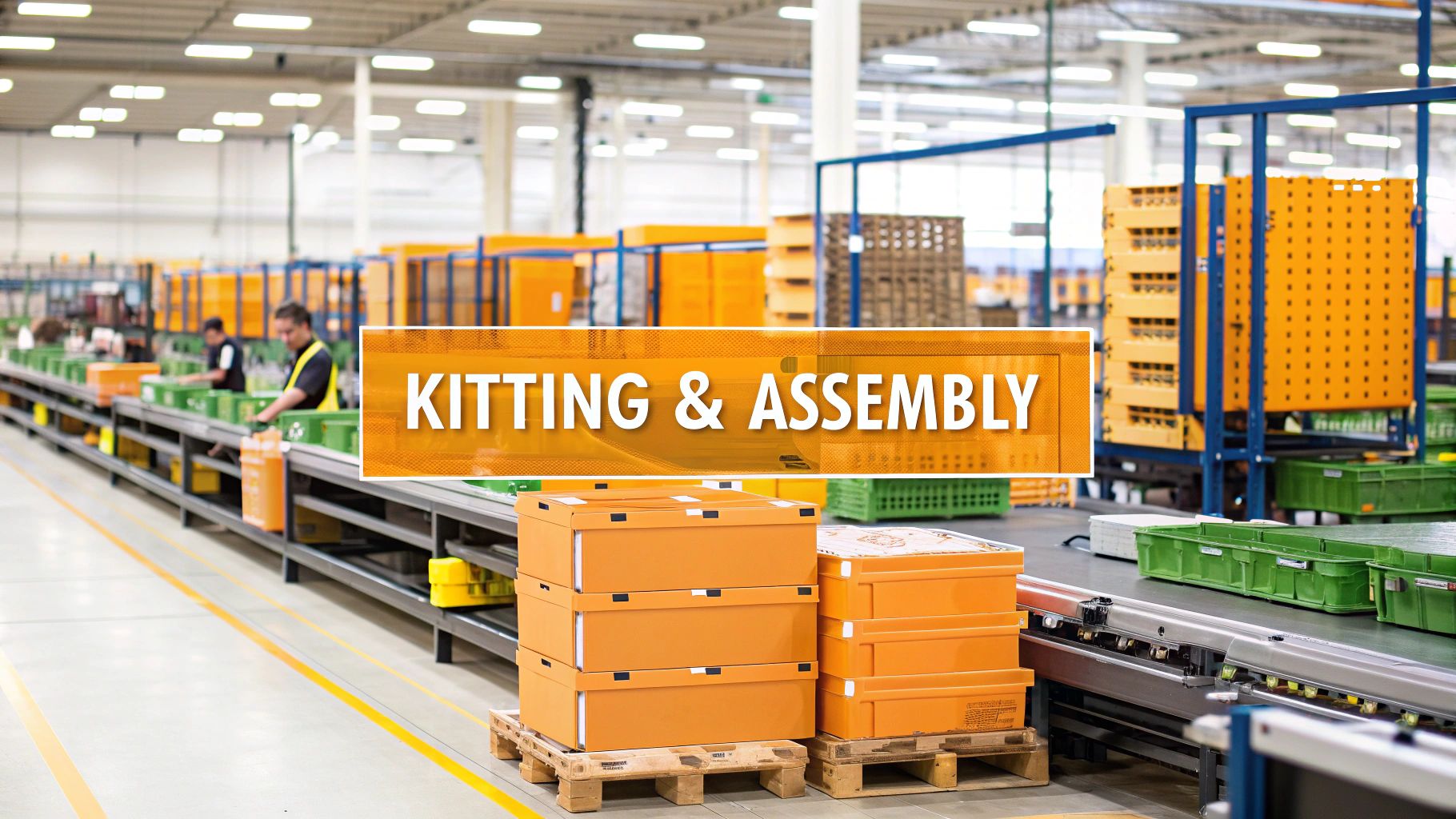
A Guide to Kitting and Assembly Services for Ecommerce

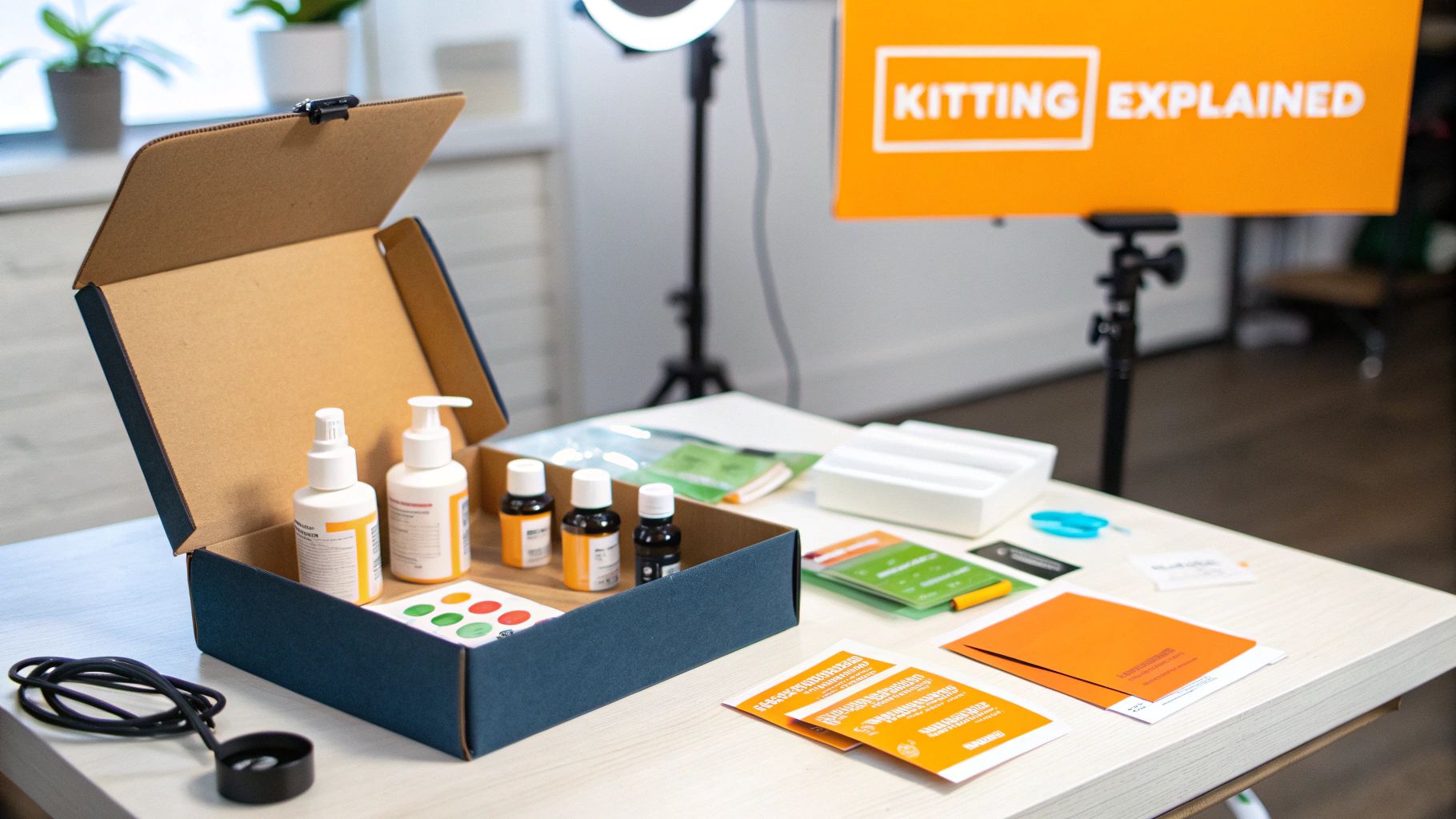
When you hear "kitting and assembly," you might picture a factory floor, but for e-commerce sellers, it’s a powerhouse strategy that happens right in the fulfillment center. At its core, it's about taking individual items and grouping them together to be sold as a single unit. This simple act turns a pile of separate products into one ready-to-ship bundle, like a curated skincare gift set or a monthly subscription box.

The real magic is how this simplifies your backend operations and speeds up the entire fulfillment process.

Unpacking Kitting and Assembly Services

An open kitting box filled with product bottles, papers, and accessories on a table.

Think of kitting like a meal-prep service for your products. Instead of a customer (or your warehouse team) having to pick out a tomato, an onion, and a packet of spices individually, your fulfillment partner acts as the chef. They gather everything needed for the "recipe" ahead of time and package it into one convenient box.

This has a massive impact on your inventory. It takes multiple individual SKUs (Stock Keeping Units) and transforms them into one new, easy-to-manage master SKU. For anyone selling on platforms like Amazon, Shopify, or Walmart, this is a total game-changer. Instead of your pickers hunting down five different items for a holiday gift set, they just grab one pre-made box. This cuts down on labor, virtually eliminates picking errors, and gets orders flying out the door.

It's no surprise the demand for these services is exploding. The global market for kitting and assembly has skyrocketed from USD 8.4 billion and is projected to hit USD 17.0 billion by 2034. This boom is driven by brands just like yours, looking to create special promotions, subscription boxes, and value-added multi-packs. You can learn more about these kitting market growth projections and see what's fueling the trend.

Kitting vs. Assembly: What’s the Real Difference?

The terms "kitting" and "assembly" are often thrown around together, but they’re two distinct processes. Nailing down the difference is critical when you’re talking to a fulfillment partner, as it defines the entire scope of your project.

Simply put: kitting is about grouping, while assembly is about building.

Let’s break it down further. The table below gives a quick side-by-side look at how these two services differ in practice.

Kitting vs Assembly At a Glance

Aspect Kitting Services Assembly Services
Core Function Grouping separate, finished items into a single package. Combining multiple parts to create a new, single product.
Product State Individual items remain unchanged. Individual parts are altered or combined; light manufacturing.
Example A "Welcome Kit" with a water bottle, towel, and keychain. Screwing together parts of a chair before boxing it.
Complexity Lower; primarily a pick-and-pack process. Higher; requires instructions, tools, and quality checks.
Labor Skill Basic warehouse skills. Requires training and sometimes specialized tools.

As you can see, kitting is more about curation, while assembly is about creation. One gathers existing items, and the other builds a new one from scratch.

Here's an easy way to remember it: Kitting creates a collection of items. Assembly creates a single, new item from multiple parts.

In many fulfillment projects, these two services actually go hand-in-hand. A 3PL might first perform assembly—like putting together an electronic device—and then kit it with accessories like a charger and manual before creating the final retail-ready package.

The key takeaway is that both services streamline your operations by doing the heavy lifting before a customer ever clicks "buy."

Strategic Benefits of Outsourcing Kitting to a 3PL

Partnering with a third-party logistics (3PL) provider for your kitting and assembly services does way more than just free up your time—it’s a strategic move that directly boosts your bottom line, protects your brand, and lets you grow. Trying to manage kitting in-house might feel like you have more control, but it often brings a ton of hidden costs and operational headaches that can actually hold you back.

When you outsource, you turn a complex, often messy process into a smooth, efficient engine for your business. It lets you swap fixed costs, like warehouse rent and employee salaries, for variable costs that scale up or down with your sales. That kind of financial flexibility is a game-changer, especially for brands with seasonal peaks or those growing like crazy.

Driving Down Operational Costs

One of the first things you'll notice is a serious drop in your expenses. When you handle kitting yourself, you’re not just paying for labor. You're also on the hook for dedicated workspace, packing supplies, costly mistakes, and the lost opportunity of what your team could be doing instead. A 3PL just absorbs all of that.

A specialized fulfillment partner operates at a massive scale, which means they get better prices on things like boxes and packing materials—savings they can pass right on to you. It's a proven fact that direct-to-consumer (DTC) brands can see cost savings of 20-25% on labor and materials alone by outsourcing kitting. For sellers on tough marketplaces like Amazon and Shopify, that financial edge can be the difference between thriving and just getting by.

Enhancing Order Accuracy and Customer Experience

Fulfillment mistakes are expensive. Sending a customer a kit with the wrong item doesn't just mean a costly return; it chips away at the trust you've built with them. A single bad review can scare off countless future customers. Professional 3PLs, on the other hand, build their entire business on getting it right.

They use multi-step verification, like barcode scanning and weight checks, at every single point on the assembly line. This systematic approach pretty much eliminates human error.

By outsourcing, you’re not just handing off a task—you’re investing in a system built for near-perfect accuracy. This precision means the awesome unboxing experience you designed is the one your customer actually gets, every single time.

This focus on quality is also critical for staying compliant with marketplaces. For Amazon FBA sellers, a bad kitting job can get your inbound shipments rejected, a problem that hits an estimated 15-20% of shipments from sellers who aren't prepared. A good 3PL knows Amazon's strict rules inside and out—from FNSKU labeling to poly bagging—so your inventory gets checked in smoothly without any penalties. If you want to get a better handle on what a fulfillment partner does, our guide on what a 3PL warehouse does is a great place to start.

Unlocking Scalability and Business Focus

Picture this: you launch a new subscription box or a huge holiday sale. Can your current setup handle a sudden jump from 100 orders a day to 1,000? For most brands, that kind of spike would cause total chaos, shipping delays, and a lot of unhappy customers.

This is where a 3PL partner becomes your secret weapon for growth. They already have the warehouse space, technology, and trained staff to handle massive swings in order volume without breaking a sweat.

Here’s how a 3PL helps you scale:

  • Elastic Workforce: They can throw more staff at your project during peak season and scale back when things quiet down.
  • Optimized Space: You get access to a massive warehouse without signing a long-term lease, and you only pay for the space you actually use.
  • Expert Processes: They’ve already perfected workflows for high-volume kitting and assembly services, so there’s no learning curve.

By handing off all these logistical headaches, you and your team can finally stop packing boxes and get back to what you're best at: creating amazing products, marketing your brand, and talking to your customers. That shift in focus is the real strategic advantage.

A Look Inside the Kitting and Assembly Workflow

Ever wonder what actually happens when you hand off a kitting project to a 3PL? It’s not just a matter of tossing items into a box. It's a finely tuned process built for speed and, most importantly, accuracy.

Getting a peek behind the curtain helps you understand where the real value is created. Let's walk through the entire journey, from creating your kit’s “recipe” to getting it stocked and ready to ship at a moment's notice.

Step 1: Defining the Project Scope

Everything starts with a detailed consultation. Think of this as you and your 3PL partner acting as architects, drawing up the exact blueprint for your finished kit. You’ll define the bill of materials—a precise list of every single component SKU that goes into the final product.

This isn’t just a simple checklist; it's a complete set of instructions. You’ll specify everything from how items should be placed inside the box to where to put that marketing insert or special sticker. The goal is to create a crystal-clear, repeatable process that guarantees every single kit looks and feels identical.

Step 2: Receiving and Inspecting Components

Once the plan is locked in, your 3PL is ready to receive all the individual parts at their warehouse. As items arrive, each one is carefully inspected to make sure it matches the specs and hasn't been damaged in transit. This initial quality check is absolutely critical.

A single scuffed item can ruin the unboxing experience, and catching these issues upfront saves you from major headaches and costs later on. Every component is counted and its SKU is logged into the Warehouse Management System (WMS), giving you total inventory visibility from day one.

Step 3: Workstation Setup and Assembly

With all the components checked in and ready, the 3PL sets up a dedicated assembly line. Picture a professional kitchen, where every ingredient and tool is perfectly placed to make the workflow as efficient as possible. These stations are designed to minimize wasted movement and shave precious seconds off each kit's build time.

Then, the assembly begins. Trained staff follow the blueprint from step one to the letter. Every action is standardized, from folding the box just right to applying the final sealing tape. For Amazon sellers, this is also the moment when crucial FNSKU labels are applied—a step that demands total precision to avoid frustrating FBA check-in problems. You can learn more about these strict guidelines in our guide to Amazon FBA labeling requirements.

Step 4: Quality Control and SKU Creation

Throughout the assembly process, there are multiple quality control checkpoints. Supervisors will spot-check kits, while tools like barcode scanners and digital scales can instantly verify that each kit contains the correct items and weighs exactly what it should. This layered approach is how high accuracy rates are maintained.

After a kit is fully assembled and passes its final inspection, it's assigned a brand new, single master SKU. This new SKU is created in the WMS, officially turning a pile of separate parts into one unified, sellable product.

This master SKU is the key to simplifying your inventory. Instead of tracking five different components for a gift set, your ecommerce platform now only needs to track one—the finished kit.

Step 5: Storage and Fulfillment Readiness

The last step is to move the completed kits to their designated storage spot in the warehouse. They're no longer treated as individual parts but as finished goods, ready for immediate picking. So, when a customer orders that kit from your Shopify or Walmart store, there's no frantic scramble to find and pick multiple items.

Your fulfillment team just picks one box with the master SKU, packs it for shipping, and sends it on its way. This is how you drastically cut down on order processing time.

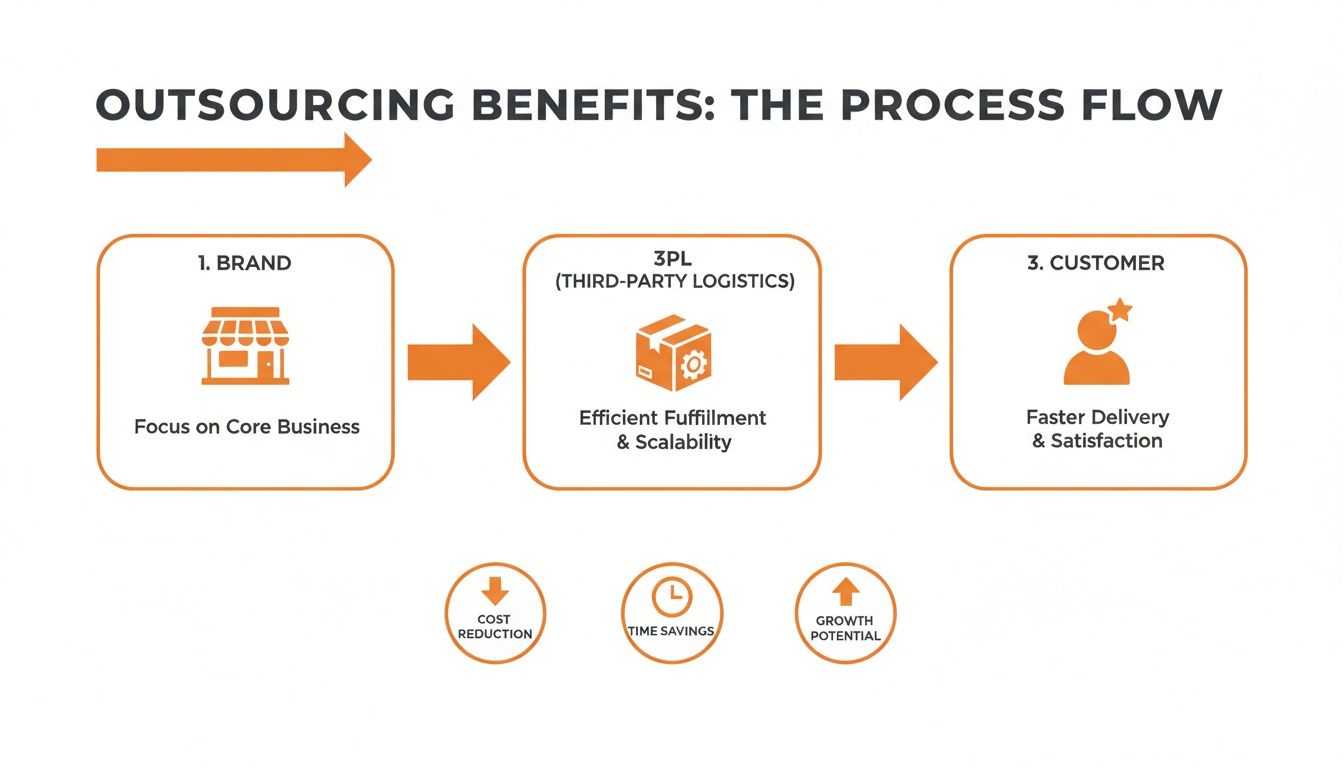
This visual shows how outsourcing connects your brand, your fulfillment partner, and your end customer into a seamless operation.

Infographic showing the outsourcing benefits process flow from brand to customer with key advantages.

This workflow turns what could be a chaotic internal project into a predictable, scalable, and highly accurate operation run by pros.

How Technology is Actually Changing Modern Kitting

If you think kitting and assembly is still just about people carefully packing boxes by hand, you’re missing the bigger picture. The entire process has been overhauled by technology, turning it into a high-precision, data-driven operation.

For e-commerce sellers and ops leaders, this shift is a game-changer. It’s the difference between hoping your orders are right and knowing they are. Modern 3PLs now deliver a level of speed, accuracy, and transparency that was simply impossible a decade ago. It means you get more than just bundled products—you get a fulfillment partner you can actually rely on.

The Warehouse Management System: Your Kitting Command Center

At the core of any tech-forward fulfillment center is its Warehouse Management System (WMS). Think of it as the brain of the entire kitting operation. It’s not just counting inventory; it's orchestrating every single step with digital precision.

This system is your single source of truth. It knows exactly how many screws, widgets, and instruction manuals you have in stock. It knows how many finished kits are ready to ship. And it knows which components are currently being assembled into new kits. That level of detail is non-negotiable for running a smooth operation.

A solid WMS lets a 3PL:

  • Keep Inventory Separate: It digitally tags your raw component SKUs and your finished, ready-to-sell master SKUs. No more accidental shipments of loose parts.
  • Give You Real-Time Updates: You can log into a portal anytime and see exactly what’s happening with your inventory. This is huge for making smart forecasting and purchasing decisions.
  • Set Automatic Reorder Points: The system can ping you when a specific component is running low, so a single missing part doesn’t bring your entire production to a halt.

This digital oversight takes the guesswork out of inventory management, ensuring the parts for your kitting and assembly services are always on hand when you need them.

Barcode Scanning: The Simple Fix for Human Error

Let’s be honest—human error is the biggest killer of kitting accuracy. A warehouse picker grabs the blue shirt instead of the black one, and suddenly you’re dealing with an unhappy customer and a costly return. This is where barcode scanning becomes your best friend. It’s a simple, foolproof check at every single step.

When your components first arrive at the warehouse, they’re scanned into the WMS. During assembly, each item is scanned again to confirm it matches the kit’s “recipe.” This forces a digital handshake, catching mistakes before they ever get inside a box.

By integrating barcode scanning, a 3PL can all but eliminate picking errors. It’s a simple but incredibly powerful layer of quality control that guarantees what you designed is what your customer actually gets.

Automation and Robotics: Kitting at Scale

The next big leap is automation. Robots and other automated systems are now handling the repetitive tasks, allowing 3PLs to scale up to massive volumes without compromising on quality. And this isn't just for massive corporations anymore—it’s becoming a must-have for successful e-commerce brands dealing with high order volumes.

Automation is already making a huge impact. The global market for kitting automation is valued at USD 2.10 billion and is projected to hit USD 7.15 billion by 2033. In North America, advanced robotics are cutting picking errors by 50% and boosting how many orders can get out the door. For high-volume sellers, this translates to a 15-30% drop in operational costs while hitting 99%+ accuracy. You can dive deeper into how automation is reshaping the kitting industry on snsinsider.com.

When you combine a powerful WMS, mandatory scanning, and smart automation, a modern 3PL truly becomes an extension of your business—one that’s built to be reliable, transparent, and ready to handle your growth.

Finding the Right Kitting and Assembly Partner

Picking a 3PL partner is one of the biggest calls you’ll make for your e-commerce brand. This isn’t just about renting warehouse space or finding someone to slap a label on a box. It’s about trusting another company with your inventory and, ultimately, your customer's happiness.

A great partner feels like an extension of your own team, proactively solving problems and helping you scale. The wrong one? They become a source of constant headaches, creating costly bottlenecks and damaging the reputation you’ve worked so hard to build.

Evaluating Core Competencies and Experience

Let's be clear: not all 3PLs are created equal, especially when it comes to the detailed work of kitting and assembly services. A warehouse that's great at basic pick-and-pack for simple t-shirt orders might completely fall apart when faced with a complex subscription box with ten different components.

Your first job is to find out if they have real, hands-on experience with businesses like yours. Do they live and breathe the strict compliance rules for Amazon FBA, or is their sweet spot direct-to-consumer fulfillment for Shopify brands? Deep experience with your primary sales channels is non-negotiable. A 3PL that already knows FBA prep inside and out will save you from the painful—and expensive—reality of rejected inbound shipments.

Don't just take their word for it. Ask for case studies or, even better, a few client references who sell similar products and have a comparable order volume. This is how you get undeniable proof of their skills.

Key Questions for Potential Partners

The best way to cut through the slick sales pitch is to come prepared with sharp, specific questions. Vague, hand-wavy answers are a major red flag. You want a partner who can confidently walk you through their exact processes, step-by-step.

Here are a few essential questions to get the conversation started:

  • Technology and Inventory: "Show me how your WMS tracks component parts versus finished kits. Can I see a live demo of your client portal and how I can view my stock levels for both?"
  • Quality Control: "Walk me through your QC process for a typical kitting project. What happens when your team finds a damaged component? What’s the communication process back to me?"
  • Scalability: "Tell me about a time you handled a sudden, massive spike in kitting volume for a client during a promotion. How did your team manage it, and what was the outcome?"
  • Billing and Transparency: "Can you provide a sample invoice for a kitting project? I want to see every potential line item and fee so there are no surprises."

How they answer these questions tells you everything you need to know about their operational maturity and their commitment to transparency. A great partner will welcome this level of detail.

A 3PL’s ability to clearly articulate their quality control and inventory management procedures is a direct indicator of their operational maturity. If they can't explain it simply, they likely can't execute it reliably.

A Quick Checklist for Vetting Partners

To keep your evaluation process organized, it helps to use a checklist. This ensures you're comparing each potential 3PL using the same objective criteria, making the final decision much clearer.

Use this checklist to systematically compare potential kitting and assembly partners on the factors that matter most for your business.

3PL Partner Evaluation Checklist

Evaluation Criteria Key Questions to Ask Ideal Answer/Capability
Relevant Experience "Can you share case studies or references from clients in my industry (e.g., subscription boxes, cosmetics, supplements)?" Demonstrates a portfolio of successful clients with similar needs and compliance requirements (e.g., FBA, Walmart).
Technology & WMS "How does your system manage component vs. finished kit inventory? Can I see real-time levels? Does it integrate with my platforms?" The WMS provides real-time, segregated visibility. Offers seamless integrations with Shopify, Amazon, etc.
Quality Control "What is your documented process for QA checks during assembly? How are errors tracked and corrected?" Has a multi-step, documented QC process with clear protocols for handling damaged items and reporting errors.
Scalability "How do you handle sudden volume spikes? Do you have dedicated kitting lines or cross-trained staff?" Has a proven plan for flexing labor and resources to meet demand without sacrificing quality or speed.
Pricing Transparency "Can I see a full fee schedule, including receiving, storage, assembly, and outbound shipping? Are there hidden fees?" Provides a clear, all-inclusive quote with no vague "miscellaneous" charges. Explains all potential costs upfront.
Communication "Who will be my dedicated point of contact? What are your standard response times for support inquiries?" Offers a dedicated account manager and a clear Service Level Agreement (SLA) for communication.

Treat this process like you're hiring a key employee, because you are. A thorough vetting process now prevents massive operational fires later.

Finalizing Your Decision

Once you’ve narrowed it down to a few top contenders, the final choice comes down to a balance of cost, capability, and culture. While it’s tempting to go with the lowest price, the cheapest 3PL is almost never the best value. A partner who invests in solid technology and bulletproof quality control might have a slightly higher per-kit fee, but they’ll save you thousands in the long run by preventing costly errors.

For brands with big growth plans, it's also smart to look at a provider's full range of e-commerce order fulfillment services to understand their long-term potential. Can they handle your freight, returns, and FBA replenishment down the road?

Ultimately, you need to feel confident that the 3PL truly gets your brand and has a clear plan to help you hit your goals. This decision isn't just a line item on your P&L; it's a long-term investment in your brand’s operational backbone.

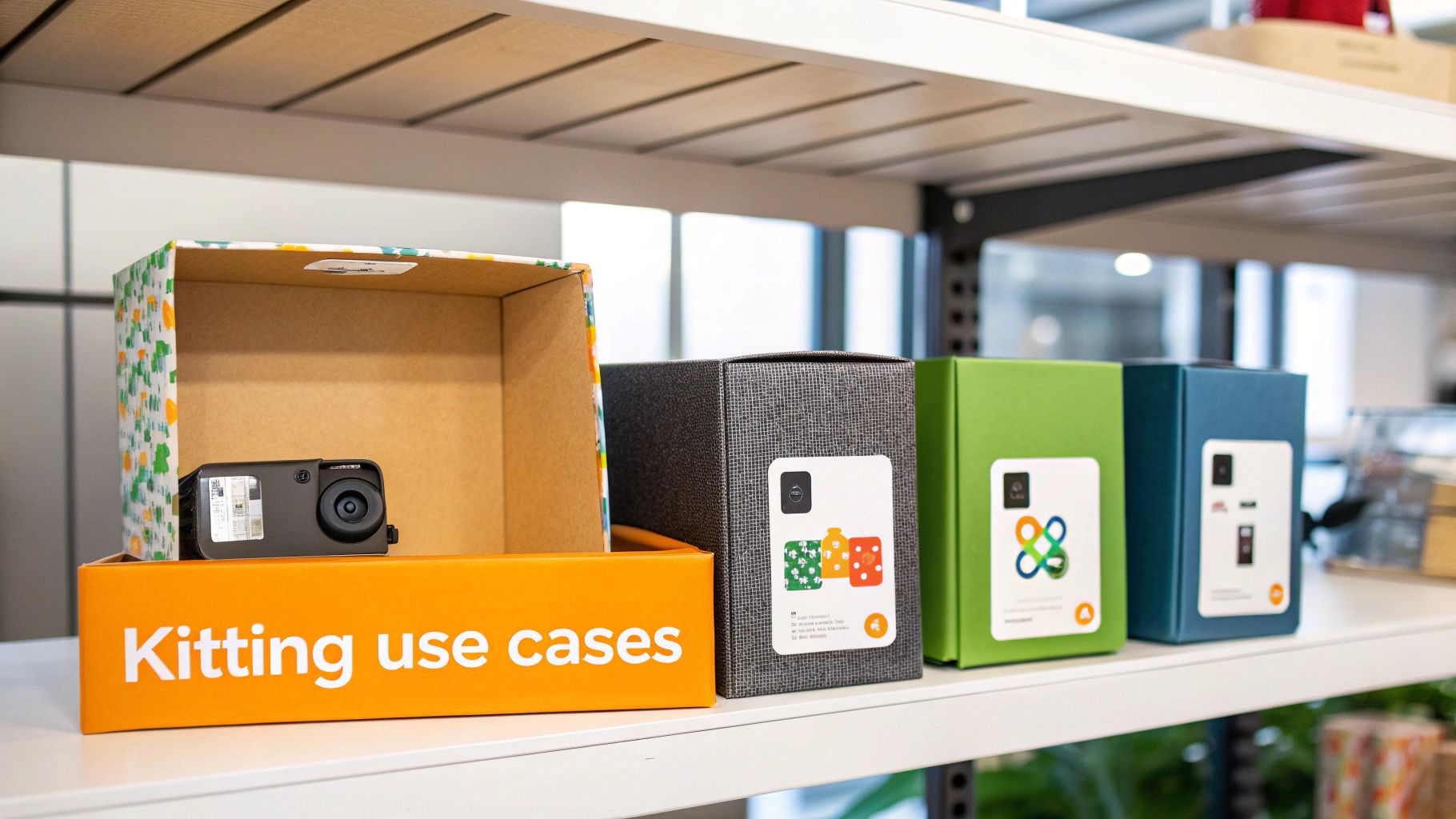
Common Kitting Use Cases for Ecommerce Brands

Various product kitting boxes displayed on a white shelf, with one open box revealing a camera.

The real power of kitting and assembly services clicks when you see how smart ecommerce brands put them to work. This isn’t just some back-end operational task; it's a core strategy for driving sales, making customers happier, and taming logistical headaches.

From subscription boxes to Black Friday promotions, kitting gives brands a framework to create unique product offers that would be an absolute nightmare to manage in-house. Let’s walk through a few common scenarios where this strategy really delivers.

The Subscription Box Model

Subscription box companies are built on one thing: delivering a fresh, curated experience month after month. The problem? The contents are always changing, which means you're constantly juggling dozens of different items for every single shipment cycle.

A 3PL partner cuts right through that chaos. Each month is a new kitting project. They receive all the different products, follow that month's specific "recipe" to assemble the boxes, and get them ready for a massive, coordinated shipment. It turns a messy, unpredictable process into a smooth, repeatable workflow.

Boosting Sales with Bundles and Multi-Packs

If you're selling on a competitive marketplace like Amazon, bumping up your average order value (AOV) is the name of the game. Kitting is the perfect play here. Instead of just selling one bottle of shampoo, you can create a bundled "Hair Care Kit" with shampoo, conditioner, and a styling cream.

This one move accomplishes several goals at once:

  • Higher AOV: Customers spend more in one go.
  • Increased Sell-Through: It’s a great way to move slower-selling items by pairing them with your bestsellers.
  • Simplified Listings: One product page is much easier for a customer to navigate and buy than three separate ones.

Your fulfillment partner can crank out these multi-packs, apply the right FNSKU labels for FBA, and make sure every bundle meets Amazon’s strict packaging rules. This saves you from the pain of costly rejections at the fulfillment center.

By bundling products, you transform individual items into a high-value solution. The customer gets a convenient package, and you get a healthier bottom line with a stronger competitive position on the marketplace.

Creating Memorable Holiday and Gift Sets

Seasonal sales events are a huge opportunity for ecommerce brands. A beautifully packaged gift set can become a massive revenue driver, but trying to assemble thousands of them in-house during your busiest season is a recipe for disaster. This is a classic use case for outsourced kitting and assembly services.

Picture a beauty brand launching a special holiday gift box. They ship their custom-branded boxes, tissue paper, and products to their 3PL. The fulfillment team then carefully assembles each gift set exactly to the brand’s specs, creating that premium unboxing experience that customers love and rave about in reviews. By outsourcing, the brand can focus on marketing the big promotion instead of getting buried in packing tape and crinkle paper.

Kitting Services: Your Questions Answered

Even after getting the big picture, you probably still have questions about how kitting and assembly services actually work day-to-day. We get it. Here are the most common questions we hear from ecommerce brands just like yours.

What's the Real Cost of Kitting Services?

Kitting is almost always priced on a simple, per-kit basis. The fee depends on a few things: how many items go into each kit, how tricky the assembly is, and the total number of kits you need.

Sure, it’s a line item on your invoice, but it's often a fraction of the cost of doing it yourself. Once you add up your team's labor, the warehouse space you're using, all the packing materials, and the steep cost of a single fulfillment mistake, outsourcing starts to look like a bargain.

How Will Kitting Mess With My Inventory Management?

It actually does the opposite—it makes it way simpler. Your 3PL partner handles tracking all the individual component SKUs as they arrive and get assembled. Once a kit is built, it gets a brand new "master" SKU in their system.

What does this mean for you? Your ecommerce store, whether it’s on Shopify or Amazon, only has to track one final, sellable product. This single SKU dramatically cuts down on picking errors, makes sales forecasting easier, and gives you a much clearer, real-time view of your ready-to-ship stock.

Can a 3PL Use My Custom Branded Packaging?

Absolutely. This is one of the best parts of working with a pro 3PL—they bring your unboxing experience to life. You just send them your custom boxes, branded tissue paper, logo stickers, or any little marketing cards you want to include.

The kitting team will follow your directions to a T, making sure every single package looks exactly how you envisioned it. It's a small touch that goes a long way in building brand loyalty and getting those five-star reviews.

What Are the Minimum Order Quantities for Kitting?

This really varies from one 3PL to another. Some of the giant logistics companies are built for enterprise-level clients and have pretty high minimum order quantities (MOQs).

But plenty of others, like us, are set up to help growing ecommerce brands. A good partner will be flexible enough to handle a small test run for a new product launch and then easily scale up with you as your orders start pouring in.


Ready to stop worrying about logistics and start scaling your brand? Snappycrate offers expert kitting and assembly services designed for growth-minded sellers. Let us handle the details so you can focus on your business. Learn more and get a quote from SnappyCrate.

0 Continue Reading →