A customer says the order shows delivered, but nothing is on the porch. Amazon says the inbound carton arrived short. Your carrier says the shipment was dropped off on time. Your warehouse team is digging through emails, screenshots, and signed papers trying to piece together what happened.
That's where pod in logistics stops being a background document and starts acting like a control system.
For growing e-commerce brands, Proof of Delivery is the record that tells finance when to invoice, tells support how to answer a dispute, and tells operations whether a handoff really happened the way it was supposed to. If you sell through Shopify, Amazon, Walmart, or a mix of all three, weak POD handling creates the same pattern every time. Payment slows down, claims get messy, and customer trust drops.
Modern POD also goes beyond a signature on paper. A strong process can include timestamps, delivery photos, scanned shipment references, and location verification. That matters when you're sending parcels to consumers, receiving freight into a prep warehouse, or proving that FBA-bound inventory was handled correctly before it moved to Amazon.
Your Guide to Proof of Delivery in Modern E-commerce
If you're dealing with more orders, more channels, and more carrier touchpoints, POD becomes the cleanest answer to one operational question: what happened at handoff?
In simple terms, Proof of Delivery is the record confirming that a shipment reached the intended destination and was received. In practice, it's the file your team relies on when a carrier invoice hits your desk, a customer opens a dispute, or Amazon questions an inbound shipment.
For e-commerce operators, POD isn't just for the last mile. It matters across the full chain:
- Customer deliveries: Support needs evidence when shoppers say an order didn't arrive.
- Freight receipts: Warehouse teams need confirmation on pallets, cartons, and condition at arrival.
- Marketplace compliance: FBA prep requires a clear trail when labels, poly bags, bundles, and case packs are involved.
- Cash flow: Finance needs complete delivery records before approving invoices and closing claims.
The brands that scale cleanly usually treat POD as part of daily operations, not a paperwork chore. They define what must be captured, where it's stored, and who reviews exceptions.
A missing POD rarely creates one problem. It creates three at once: an operations delay, a finance delay, and a customer service problem.
That's also why delivery documentation should sit beside your broader risk controls. If you sell direct, chargeback prevention tools matter too. Teams reviewing delivery disputes often pair POD records with order, tracking, and fraud controls such as Shopify payment dispute safeguards, because a delivery event doesn't exist in isolation from payment risk.
The shift from paper to digital changed the speed of this work. Instead of waiting for paper copies, scanned signatures, or emailed attachments, operations teams can pull delivery proof from a system, match it to an order, and act. That speed is what protects margins when volume rises.
What is POD and Why It Is Your Financial Safety Net
Proof of Delivery is the receipt for your supply chain. It confirms that a shipment was received, by whom, when, and often in what condition.

At minimum, a useful POD record should clearly tie the shipment to the handoff event. In government logistics, the standard is explicit. The Defense Logistics Agency states that POD serves as carrier tracking documentation verifying material reached its final destination, and it requires details such as the receiving party's signature, recipient organization name and address, contract number, CLIN information, NSN, delivery date, origin and destination, weight, pieces shipped, and unit or extended prices when applicable. The same DLA guidance also requires vendors to retain POD records for at least four years and provide them within 10 calendar days of a request to support payment processing and claims (DLA guidance on POD requirements).
What a strong POD record includes
For commercial e-commerce work, the fields may differ by carrier or system, but the logic is the same:
- Recipient confirmation: Signature, printed name, or confirmed delivery acceptance.
- Delivery timing: Date and timestamp, so nobody argues over whether the handoff happened before a cutoff or appointment window.
- Location detail: Delivery address, dock, storefront, or final destination.
- Shipment reference: Tracking number, BOL, PO number, or order ID.
- Condition evidence: Notes or photos if cartons arrived damaged, wet, short, or incorrectly stacked.
If any one of those is missing, the record gets weaker fast. A signature without a shipment reference isn't very useful. A timestamp without recipient confirmation leaves room for dispute.
Why finance cares as much as operations
POD affects billing, claims, and vendor accountability. Many teams think of it as a warehouse or carrier concern until an invoice is held, a chargeback comes in, or a customer demands a refund.
For marketplaces and retailers, POD is often the difference between “we think it arrived” and “we can prove what happened.” That distinction matters in customer service, but it matters even more in receivables.
A short explainer is helpful here:
Practical rule: If a delivery can trigger payment, dispute resolution, or compliance review, it needs a retrievable POD record tied to the shipment record.
Paper POD vs Electronic POD A Clear Comparison
The difference between paper and electronic POD usually shows up on a bad day.
With paper, the driver gets a signature, someone scans it later, the image is blurry, the file name is inconsistent, and your team spends time matching it back to the right order or load. With ePOD, the signature, time, and shipment references are captured in the same workflow and pushed into the system while the delivery is still fresh.

Where paper still works and where it breaks
Paper POD isn't useless. It can still work in small operations, one-off freight handoffs, or environments with poor device access. But the trade-off is delay. Paper depends on people handling the document correctly at every step: signing it, carrying it, scanning it, naming it, storing it, and retrieving it later.
That chain breaks often.
By contrast, digital POD turns the delivery event into structured data. Track-POD reports that predictive analytics using real-time and historical POD data can enable up to 20% reductions in delivery delays, and the same source says digital POD supports route planning and operational visibility that lowers friction in day-to-day logistics (Track-POD on predictive analytics and POD).
The operational comparison
| Metric | Paper POD | Electronic POD (ePOD) |
|---|---|---|
| Speed of access | Retrieval depends on scanning, filing, and manual search | Delivery data is available quickly inside the workflow |
| Accuracy | Handwriting, missing fields, and scan quality create errors | Structured capture improves legibility and consistency |
| Cost profile | Ongoing printing, storage, and manual entry overhead | System setup is required, but daily handling is leaner |
| Risk | Documents can be lost, damaged, or separated from shipment records | Digital records are easier to store, search, and audit |
| Customer response | Support often waits on documents before replying | Teams can respond faster with delivery evidence |
| Reporting | Hard to aggregate across carriers and facilities | Easier to analyze exceptions and recurring issues |
What the switch really changes
The biggest gain isn't just speed. It's control.
When teams rely on paper, they often discover issues after the fact. When teams use ePOD, they can route exceptions sooner, review photos before a claim escalates, and connect delivery proof to finance and support.
Paper POD records events. Electronic POD helps teams manage them.
That distinction matters when your order count grows and every unresolved delivery starts to stack against cash flow, labor time, and marketplace performance.
Key Technologies Powering Modern ePOD Systems
Most operators don't need to know the software architecture behind ePOD. They do need to know which features solve real problems.

Signature capture, photos, and scanning
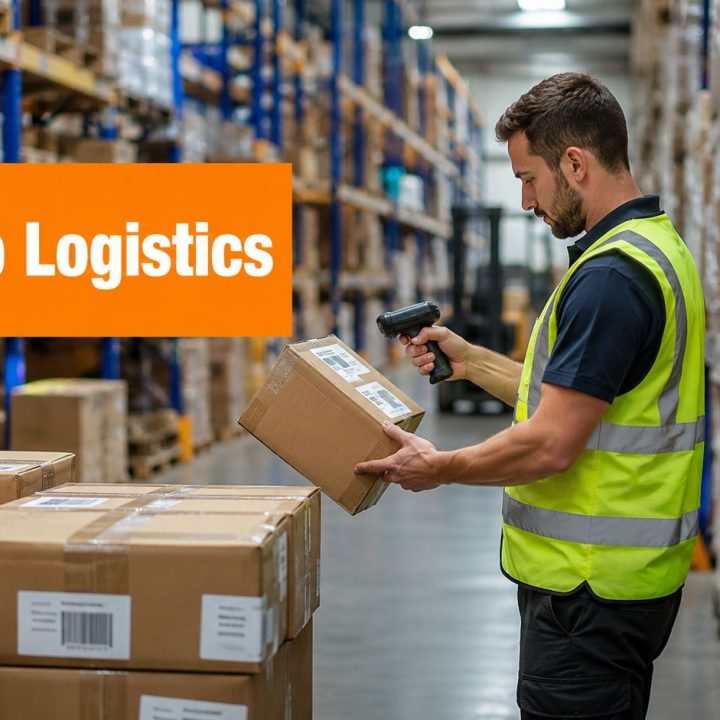
A modern ePOD app usually starts with the basics: signature capture on a phone or tablet, photo capture at delivery, and barcode scanning tied to the shipment record.
Each tool fixes a specific failure point:
- Digital signature capture: Removes illegible handwriting and keeps the signature tied to the order or load.
- Photo documentation: Helps prove carton condition, placement, seal status, or special handling at handoff.
- Barcode scanning: Reduces the chance that the wrong carton, pallet, or order gets marked delivered.
For FBA prep and multi-channel fulfillment, photo evidence becomes more valuable than many teams expect. If your warehouse receives freight that arrives crushed, short, or relabeled incorrectly, photos taken at receipt are often the difference between a clean claim and a long argument.
GPS, geofencing, and timestamp logic
Location verification matters when the shipment is high value, time sensitive, or going into a compliance-heavy chain. Advanced systems can pair timestamp data with GPS or geofencing so the delivery event is tied to a verified location rather than just a manual status update.
That's useful in two situations that come up constantly. First, residential disputes where the order was marked delivered but the address is questioned. Second, dock deliveries where the shipment hit the site but not necessarily the right receiving point.
OCR-AI and the cleanup of messy documents
Even strong operations still deal with paper. Freight drivers bring handwritten receipts. A supplier sends a scan. Someone uploads a signed sheet from a receiving dock.
That's where OCR and AI earn their keep. According to Vector's analysis of digital POD, digital POD systems use OCR-AI to convert paper documents into structured data instantly. The same analysis says this reduces errors by 70% compared to paper and can cut the 40-50% delays in freight invoice approval caused by manual POD handling.
If you're already investing in warehouse systems, this capability should sit next to your broader automation roadmap. The same data discipline that improves POD usually supports receiving, putaway, and order accuracy too. A useful starting point is this guide to warehouse automation technologies for ecommerce.
Clean delivery data isn't a nice-to-have. It's what lets operations, finance, and support work from the same record instead of three conflicting versions.
Sample POD Workflows for Your E-commerce Business
POD becomes easier to value when you look at actual handoffs instead of abstract process maps.
Workflow one for a DTC Shopify order
A customer places an order on your store. The order drops into your fulfillment queue, gets picked, packed, labeled, and handed to the parcel carrier. From there, tracking is often considered sufficient. It usually isn't.
A stronger flow looks like this:
Order packed and labeled
The warehouse confirms the right SKU, quantity, and shipping label before handoff.Carrier acceptance recorded
The parcel carrier scans the shipment into its network. That event confirms possession changed hands.Out-for-delivery status monitored
If the shipment stalls, support can act before the customer reaches out.Final delivery proof captured
The carrier records the delivery event, which may include signature, timestamp, or photo confirmation.Dispute handling uses a single record
Support reviews the POD record beside the order, tracking history, and customer claim.
Many small brands lose time at this stage. They have tracking, but not organized proof. POD closes that gap. It gives support a documentable answer when a buyer says the package never arrived.
If support has to ask three teams for delivery evidence, your POD process is too loose.
For operators tightening the full flow from order import through ship confirmation, this overview of the ecommerce order fulfillment process gives the right context for where POD should sit.
Workflow two for Amazon FBA inbound prep
Inbound FBA work is a different animal because the critical handoff often starts before inventory ever reaches Amazon.
A practical FBA-oriented POD chain looks like this:
Freight arrives at your prep warehouse
Receiving checks pallet count, carton count, visible damage, and shipment references against the expected inbound.Warehouse captures receipt evidence
Photos document pallet condition, labels, and any shortage or damage before unloading gets far enough to blur responsibility.Prep work is completed
Units are labeled, poly bagged, bundled, inspected, or case-packed to Amazon's rules.Internal proof is retained
Teams keep photos and task records showing prep standards were completed before outbound transfer.Outbound handoff is documented
When cartons or pallets move toward the FBA destination, the carrier handoff and delivery record complete the chain.
The weak version of this process depends on memory and scattered images. The better version ties each proof point to the shipment file. That's what helps when Amazon reports a discrepancy and your team needs to show what arrived, what was prepped, and what left the facility.
Integrating POD with WMS TMS and Amazon FBA
POD gets much more valuable when it stops living in a carrier portal by itself.
If your proof of delivery sits in one system, shipment planning in another, and inventory records somewhere else, your team spends too much time stitching together the story of a shipment. Integrating ePOD with a WMS and TMS turns those separate records into one operational view.

What integration changes day to day
At the warehouse level, integration means receiving, picking, shipping, and delivery confirmation all reference the same shipment identity. At the transportation level, it means dispatch events and delivery events can feed finance and customer support without extra rekeying.
According to LogiNext on POD and last-mile operations, integrating POD systems with a WMS can reduce invoice processing time by up to 65% by eliminating manual data entry. The same source notes that advanced systems use geofencing and automatic data capture to create end-to-end visibility.
For Amazon FBA, that integration does something even more important. It creates a defensible chain from inbound receipt through prep completion to outbound handoff. If there's a labeling issue, carton discrepancy, or delivery question, operations can review one record set instead of chasing separate screenshots and spreadsheets.
The contract side matters too
Systems don't solve vague expectations. Your carrier agreements, prep scopes, and service definitions should state what POD must include, how fast it must be available, and who owns exception handling.
That's where legal process meets operations discipline. If you're reviewing vendor responsibilities or updating transportation terms, these insights into managing logistics agreements are worth reading alongside your workflow design.
You also need the warehouse system itself set up to support this. Different operations need different levels of scan logic, receiving controls, and integration depth. This guide on choosing your type of warehouse management system is a useful reference when you're evaluating the stack behind your POD process.
One source of truth doesn't happen by accident. Someone has to decide which system owns the delivery record and how every team accesses it.
A practical option in this category is Snappycrate, which handles storage, fulfillment, and Amazon FBA prep while working across parcel and freight handoffs. The key point isn't the provider name. It's that your 3PL and your delivery proof workflow need to operate as one system, not two parallel processes.
Best Practices for a Bulletproof POD Strategy
The strongest POD strategy is boring in the best possible way. Everyone knows what to capture, where it goes, and what happens when something is missing.
The rules that actually prevent problems
Define required fields by shipment type
A parcel to a consumer doesn't need the same proof package as an FBA freight inbound. Set separate standards for DTC, wholesale, retail, and Amazon flows.Write POD expectations into carrier and 3PL agreements
Don't leave signatures, photos, timing, or exception reporting to habit. Put them in writing.Train receiving and shipping teams on exception evidence
Damage, shortages, relabeling issues, and refused deliveries should trigger photos and notes immediately.Audit retrieval, not just capture
A record that exists but can't be found quickly is operationally weak.
Watch the integration layer closely
Many teams stumble at this stage. Workflow looks fine during implementation, then exceptions start piling up because systems don't sync cleanly across order data, shipment records, and marketplace requirements.
According to NetworkON's summary of POD integration issues, 62% of e-commerce 3PLs report integration failures causing 15-20% delays, while recent pilot programs show AI-powered POD tools can reduce these integration errors by 40%. For brands scaling FBA prep or multi-channel fulfillment, that's a serious operational issue, not a software nuisance.
If your stack includes disconnected apps, manual exports, or custom handoffs between commerce, inventory, and logistics tools, it's worth looking at infrastructure options like NanoPIM's integration solution to reduce the amount of human glue holding the process together.
Use POD as a management signal
Don't treat POD as archive material. Review it for patterns.
Ask questions like these:
- Which carriers produce the cleanest delivery records?
- Which inbound lanes create the most shortages or damage notes?
- Where do signatures go missing?
- Which customers, docks, or regions produce repeated disputes?
Those answers tell you where process needs work. They also tell you which partners are making your cash flow harder than it needs to be.
A good POD process won't remove every dispute. It will make disputes shorter, cleaner, and less expensive to resolve.
If your team needs a 3PL that can connect receiving, prep, fulfillment, and delivery documentation into one operational workflow, Snappycrate supports storage, inventory management, multi-channel fulfillment, and Amazon FBA preparation for growing e-commerce brands.