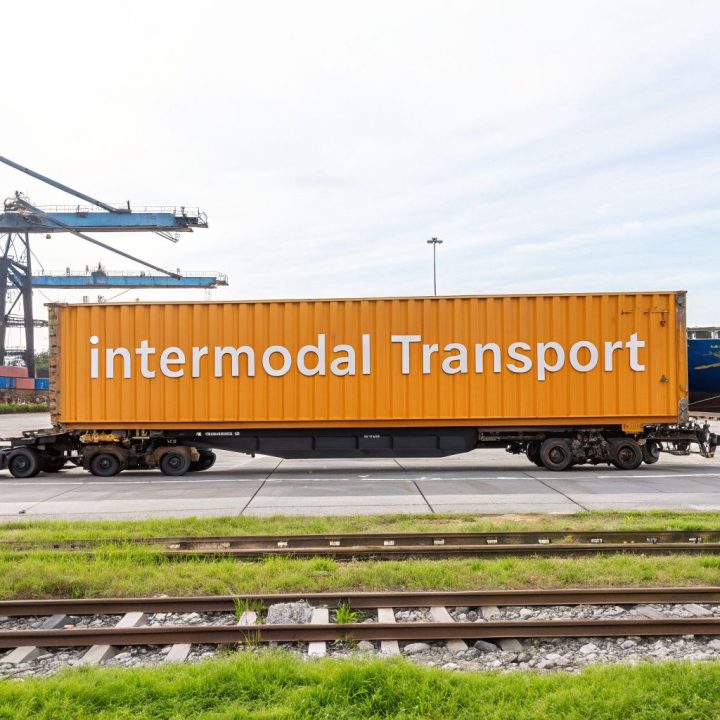
Cartage is the short-distance transport of goods, often within a single city or nearby region, and it's different from long-haul freight because it handles the local handoff instead of the line-haul move. In practice, it's often the truck move that gets your inventory from a port, terminal, or freight station to your warehouse, 3PL, retail location, or next delivery point.
If you've ever reviewed an import invoice and paused at a line item labeled cartage, you're not alone. A lot of growing e-commerce brands know their ocean freight cost, their parcel cost, and maybe their customs cost. Then cartage shows up and creates confusion because it can mean the physical service, the fee for that service, or both.
That confusion matters more than it seems. For sellers trying to get stock into Amazon FBA, into a 3PL, or into sellable inventory fast, cartage isn't background admin. It affects receiving speed, appointment compliance, and whether inbound freight moves cleanly or sits waiting for the next handoff.
What Cartage Means on Your Invoice
When cartage appears on an invoice, it usually means one of two things. It can mean the local transportation service itself, or it can mean the charge for transporting, loading, and unloading goods.
That split causes real problems for importers and online sellers. Merriam-Webster's definition of cartage frames the term as “the action of or rate charged for carting,” while logistics usage often points to the short-distance movement of freight. If you don't know which meaning your vendor is using, it's easy to misunderstand what you're paying for.
The two meanings sellers run into
- Cartage as a service: Your freight gets moved locally from a container freight station, port area, terminal, or nearby hub to a warehouse or fulfillment site.
- Cartage as a fee: The invoice line reflects the cost tied to that local move, and sometimes related handling at pickup or delivery.
- Cartage as a catch-all term: Some vendors use the word loosely, which is where disputes start. One party thinks it covers trucking only. Another assumes it includes unloading, waiting time, or appointment coordination.
Practical rule: If you see “cartage” on a quote or invoice, ask what physical move it covers, what handling is included, and where responsibility starts and stops.
For e-commerce brands, inadequate management of cartage often leads to margin leaks. A vague cartage line makes budgeting harder, and it also makes vendor comparison harder. If one quote includes the local move from a port-area facility to your 3PL and another doesn't, the lower quote may not ultimately be cheaper.
A clean operation treats cartage as a defined handoff. You want the pickup point, delivery point, appointment expectations, and included services spelled out before freight lands.
The Core Concept of Cartage Explained
What is cartage? It's a logistics term for short-distance transport of goods, usually within the same city, metropolitan area, or nearby region. DHL Freight Connections explains cartage as local transport by road or rail over relatively short distances, and notes the term traces back to the 15th century, when goods were moved by horses and carts.

The easiest way to think about it is this. If long-haul freight is the flight across the country, cartage is the ride from the airport to the hotel. It isn't the biggest leg of the journey, but if that last connection breaks, your trip still fails.
Where cartage shows up in the real world
Cartage usually happens at the points where freight changes hands:
- Port to warehouse: Imported goods get picked up from a nearby facility and taken to storage or prep.
- Terminal to store: Freight leaves a local terminal and moves to a retail destination.
- Warehouse to final local node: Inventory gets repositioned inside a metro area to support fulfillment.
The point isn't distance for its own sake. The point is getting freight through a local transfer quickly enough that the next operation can happen on time.
Common operating types
A practical way to think about cartage is by environment:
| Type | What it usually involves | Why it matters |
|---|---|---|
| Local cartage | Short moves within a city or metro area | Keeps inventory flowing between nearby business locations |
| Terminal cartage | Pickup or delivery tied to a freight terminal | Prevents dwell time between line-haul and local receipt |
| Pier cartage | Short movement connected to port activity | Helps freight leave congested port environments and reach inland storage |
These categories are widely used in logistics operations. They matter because each one creates different scheduling pressure. Port pickups are usually different from warehouse transfers. Terminal work is different from retail delivery. A seller who treats all local trucking as the same usually gets surprised by timing and handling issues.
Cartage looks simple from the outside. In operations, it's the handoff leg that decides whether the rest of the inbound plan stays on track.
Cartage vs Drayage vs Haulage The Key Differences
Most sellers don't need a dictionary answer here. They need to know who is moving what, in which form, and at what stage of the shipment.
A useful operational distinction comes from Flexport's cartage glossary. It describes cartage as truck transport to and from a CFS for LCL shipments, while drayage is commonly used for moving whole containers from ports or rail yards. In plain terms, drayage usually moves the container, while cartage often moves the freight after it has been broken down locally.
Cartage vs Drayage vs Haulage at a Glance
| Term | Typical Cargo | Typical Distance | Primary Use Case |
|---|---|---|---|
| Cartage | Unpacked freight, palletized goods, LCL cargo | Local or metro-area move | Moving freight between CFS, warehouse, store, or customer |
| Drayage | Full containers | Port or rail-yard connected short move | Pulling containers from a port or intermodal terminal |
| Haulage | Broad road freight, often larger road transport movements | Often broader than local cartage | General road transport, including longer road legs |
What the difference looks like in practice
Say your shipment arrives as LCL. The goods are deconsolidated at a container freight station. At that point, a local truck picks up your pallets and takes them to your 3PL. That's cartage.
Now change the scenario. Your goods arrive in a full container. A carrier pulls that container from the port and moves it to a warehouse yard. That's drayage.
Haulage is broader. In many conversations it means road transport, often with a wider range than local cartage. If you're working with UK or EU partners, the term comes up a lot. If your team is learning the transport side of road freight, HGV Learning's licence support gives useful context on the haulage side of the industry.
Why sellers should care
This isn't semantic cleanup. It affects who owns the next step and what gets billed.
- If the container is still sealed, you're usually dealing with drayage-type responsibility.
- If the freight has been stripped and sorted, you're often in cartage territory.
- If the quote just says “trucking,” you need to ask which leg is included.
That's also why it helps to understand the broader types of freight movement used in supply chains. Once you know whether your shipment is moving as FCL, LCL, parcel, or palletized freight, the local leg becomes much easier to plan and price correctly.
A lot of invoice disputes start because one side priced a container move and the other expected pallet delivery.
How Cartage Fees Are Calculated
Cartage pricing doesn't behave like long-haul freight pricing. Motive's cartage company explainer notes that cartage is often charged on a per-trip basis, while freight is commonly charged by weight or volume. That's the first thing brand owners need to understand when a local move looks expensive for a short distance.

A local move can cost more than expected because the truck isn't being paid just for miles. It's being paid for a job window, equipment commitment, dispatch effort, and the risk of delay at pickup or receiving.
The main cost drivers
- Trip structure: Many carriers price cartage as a dedicated local run instead of a weight-based freight movement.
- Vehicle requirement: A van, straight truck, or larger truck changes the operating cost.
- Delivery conditions: Tight receiving windows, specific appointment times, and after-hours handling usually make the move harder to execute.
- Handling complexity: Freight that needs special treatment, multiple touches, or unusual unloading conditions often costs more.
What to look for on the invoice
A good invoice answers these questions:
| Question | Why it matters |
|---|---|
| What was the exact pickup and drop location? | Confirms the leg you're being billed for |
| Was the fee per trip or tied to another pricing method? | Helps you compare quotes accurately |
| Were extra handling conditions involved? | Explains why a short move may still be costly |
If you're trying to build cleaner landed-cost models, it helps to separate cartage from your broader freight charge categories. Local trucking often gets buried inside a larger invoice bundle. When that happens, brands lose visibility into which handoff is creating avoidable cost.
The operators who keep cartage under control don't just ask for a rate. They ask what conditions trigger extra charges and what appointment standards the carrier is pricing around.
Why Cartage Matters for Importers and E-Commerce Brands
Cartage becomes important the moment your product is physically close but still not available to sell. That's the frustrating zone where inventory has technically arrived, but hasn't reached the warehouse slot, FBA prep table, or pickable location that turns it into revenue.

FreightAmigo's cartage overview makes a point that experienced operators already know: cartage is defined by transfer efficiency rather than distance alone. Cargo is loaded, moved, and offloaded within a compressed service window, often to maintain terminal appointments, and missed local handoffs can cascade into detention, missed receiving windows, or slower order promise times.
A familiar e-commerce failure pattern
An importer brings in an LCL shipment for a product launch. Ocean transit is done. Customs is cleared. On paper, the hard part is over.
But the local pickup from the freight station slips. The delivery appointment at the warehouse gets missed. The inventory doesn't get checked in when planned. The prep schedule moves back. Listings stay live, but available stock doesn't land when the team expected.
That kind of delay feels small when you describe it as “just local trucking.” It doesn't feel small when ad spend is already running, inbound labor has been scheduled, and your launch calendar depends on inventory being available.
Where cartage affects your operation most
- Inbound speed: Your goods can be in the city and still not be useful until the local move is complete.
- Receiving discipline: Warehouses and prep centers often work on planned windows. Miss the window and the whole sequence can shift.
- Charge exposure: Local delays can trigger storage, waiting, or rebooking problems upstream and downstream.
- Inventory availability: A product can be owned, paid for, and physically near your facility while remaining unavailable to sell.
The most expensive inbound delay is often the one that happens after the shipment is “almost there.”
For Amazon sellers, this matters even more. Tight receiving standards, prep requirements, and appointment windows mean the local handoff has to be coordinated, not assumed. The same goes for DTC brands using a 3PL. If the local transfer fails, everything behind it waits.
A Checklist for Minimizing Cartage Costs with Your 3PL
Most cartage problems are preventable. They usually come from vague ownership, bad timing, or missing details at the handoff point. If you want fewer invoice surprises and smoother inbound flow, use a simple operating checklist.

Questions to settle before freight arrives
- Define who books the cartage move: Don't assume your freight forwarder, customs broker, and 3PL all see the local leg the same way. One party needs clear ownership.
- Confirm the exact receiving location: “Warehouse delivery” isn't enough. The carrier needs the right address, contact, and receiving rules.
- Match the move to the warehouse schedule: If your 3PL takes inbound by appointment or has cutoffs, build the truck move around that reality.
Moves that usually lower friction
Consolidate where it makes sense. Fewer local trips usually means cleaner execution. If inventory can arrive in a more coordinated way, you reduce the number of handoffs you need to manage.
Send complete documents early. Pickup references, delivery contacts, pallet counts, and special handling notes should be ready before the truck is dispatched.
Ask about accessorial triggers. Don't wait for the invoice to learn that waiting time, re-delivery, or special unloading changed the cost.
What to ask your 3PL directly
| Question | Why it matters |
|---|---|
| Do you arrange cartage or should we book it ourselves? | Prevents responsibility gaps |
| What are your receiving hours and appointment rules? | Helps avoid failed or delayed delivery attempts |
| Do you have preferred local carrier partners? | Established lanes usually run more smoothly |
| What information do your receiving teams need in advance? | Reduces check-in delays and confusion on arrival |
A growing brand should also review whether its current provider fits the operation it's building, not just the one it started with. This guide to choosing the best 3PL for small business growth is useful if you're comparing providers and want to pressure-test how they handle inbound coordination, receiving discipline, and local freight handoffs.
Good cartage management starts before the truck is booked. It starts when your partners agree on who owns the local leg.
The brands that handle cartage well don't treat it as an afterthought. They treat it like a planned transfer with clear ownership, clear timing, and clean paperwork.
If your brand needs a 3PL that understands inbound freight, FBA prep, warehouse receiving, and the local handoffs that keep inventory moving, Snappycrate is built for that kind of operation. They help e-commerce sellers turn inbound complexity into organized, sellable inventory without losing speed at the warehouse door.