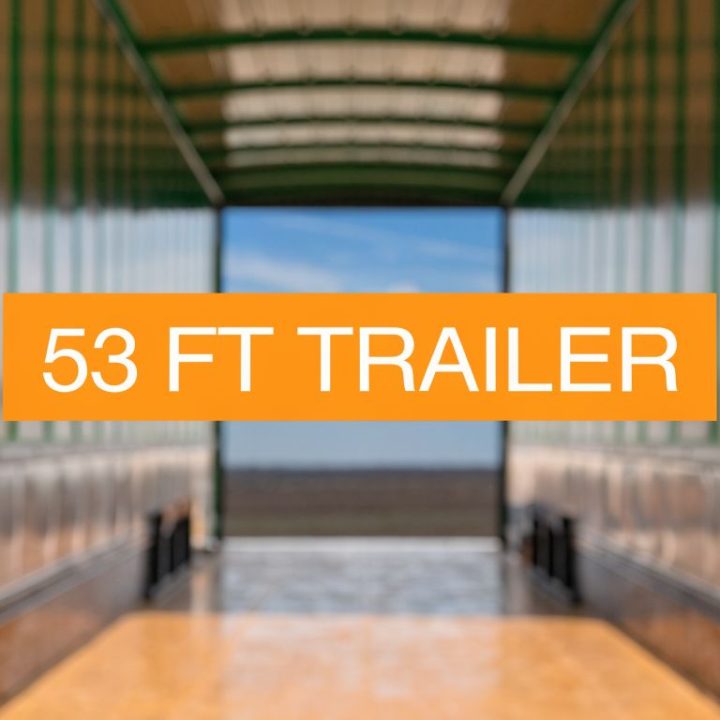
The most common standard semi trailer in North America is the 53-foot dry van, with a typical exterior width of 102 inches and standard legal height assumptions around 13 feet 6 inches. But for shippers, the number on the trailer side matters less than the usable interior space, because that's what determines whether your pallets, cartons, and inbound freight will fit and unload cleanly.
If you're booking freight for the first time, this is usually where the confusion starts. A carrier says they're sending a 53-footer. Your supplier says the load is “standard.” Your warehouse asks for pallet count, stack height, floor-loaded or palletized, and whether it's dock high. Those all sound like the same conversation, but they're not.
The mistake I see most often is treating trailer dimensions like a single number problem. They aren't. For e-commerce freight, trailer size affects receiving speed, pallet breakdown labor, trailer choice, and whether your inventory arrives ready for FBA prep or creates a bottleneck at the dock. The practical question isn't just how long is a trailer. It's how much of that trailer is usable for your specific load.
Why Standard Trailer Dimensions Are Not So Standard
A new seller usually looks up “standard semi truck trailer dimensions” expecting one clean answer. Instead, they find multiple lengths, inconsistent diagrams, and articles mixing legal limits with cargo space. That causes problems fast when you're trying to quote inbound freight or tell a factory how to build a shipment.
The biggest source of confusion is simple. “Standard” can mean three different things:
Exterior trailer size
What the equipment is called in the market, such as a 53-foot dry van.Legal road dimensions
The size envelope that keeps the shipment within common highway limits.Usable interior cargo space
The part that matters when you're planning pallets, cartons, and unload sequence.
Stream Logistics notes that many guides mix exterior size, interior cargo space, and legal road limits, even though shippers and 3PLs plan around interior capacity rather than the headline trailer number. That's exactly why two loads with the same quoted trailer length can behave very differently at receiving.
Practical rule: Never approve a shipment based on trailer length alone. Confirm pallet count, pallet footprint, stack height, total weight, and whether the load is floor-loaded or palletized.
A second issue is that sellers often hear 53-foot and assume that means every inch is available for freight. It doesn't. The trailer has structure. The load has geometry. The carrier has weight and axle constraints. Your dock has access limits. Even the rear opening can become the main restriction, especially with tall or awkward pallet builds.
What works is using “standard” as a starting point, not a final answer. For planning inbound e-commerce freight, I tell clients to separate the job into two checks:
What matters first
- Will the freight physically fit inside the trailer?
- Will it move legally by weight and axle distribution?
- Will your warehouse receive it efficiently once it arrives?
If you don't answer all three, you're still guessing.
Quick Reference Trailer Dimension Chart
A 53-foot trailer gets booked. Then the load arrives 4 pallets over plan, the warehouse needs a live unload instead of a standard dock appointment, and the carrier starts asking about piece count and weight distribution. That usually happens because the shipper planned off the trailer label, not the usable space.
This chart is built for first-pass operating decisions. It separates practical interior planning from broad trailer categories, so you can estimate fit, pallet count, and receiving effort before you book the truck.
Common Semi-Trailer Dimensions at a Glance
| Trailer Type | Usable Length | Usable Width | Usable Height | Max Payload (lbs) | Pallet Capacity |
|---|---|---|---|---|---|
| 53' Dry Van | About 52' to 53' interior | About 100" to 101" | About 108" to 110" | Often around 43,000 to 45,000, depending on tractor, trailer spec, and lane, based on C.H. Robinson's trailer equipment overview | Commonly 26 standard pallets straight-loaded, sometimes more with pinwheeling or smaller footprints |
| Refrigerated Trailer | Slightly less than a dry van | Slightly less than a dry van | Slightly less than a dry van | Usually lower than a dry van because the unit and insulated walls add weight | Usually fewer than a dry van because wall thickness reduces interior cube |
| Flatbed | Deck length varies by setup | Deck width is planned by deck, not interior wall clearance | Freight height depends on securement, route, and legal limits | Payload varies by trailer build and tractor weight. Verify before loading | Not usually planned by enclosed pallet count |
A few numbers matter more than the rest.
For palletized e-commerce freight, the width and rear door opening drive real capacity more often than trailer length. A trailer may be long enough on paper and still force a different pallet pattern, especially with 48" x 40" pallets, taller builds, or slip-sheeted freight. Reefer trailers create this problem more often because insulation and interior lining take away usable inches.
Flatbeds are a different planning exercise. The question is not how many pallets fit inside. The question is whether the freight can sit safely on the deck, stay within legal height, and unload without special equipment your receiver does not have.
How to use this chart
Use the chart to screen equipment fast, then confirm the exact trailer before pickup.
- For booking: match the freight to the trailer type before you request a quote
- For pallet planning: estimate whether the load will fit as straight-loaded pallets, turned pallets, or floor-loaded cartons
- For receiving: flag loads that need extra labor, a live unload, appointment protection, or yard space
If the shipment is heavy, tall, temperature-controlled, or awkward by shape, ask for the actual trailer spec sheet or exact interior dimensions from the carrier before your supplier loads. That one check prevents a lot of avoidable rework at the dock.
The Anatomy of a Semi Trailer Explained
A seller doesn't need to become a fleet mechanic, but you do need to know the parts of a trailer that affect loading. When a carrier, warehouse lead, or dock supervisor asks a question about axle position, door access, or landing gear clearance, they're trying to solve a practical problem, not talk shop.

The parts that affect your shipment
Kingpin
This is the connection point between the tractor and trailer. It matters because the trailer doesn't sit in isolation. Positioning and geometry affect turning, spacing, and how the full combination behaves on the road.
Landing gear
These are the retractable supports used when the trailer isn't attached to a tractor. For warehouse operations, they matter because damaged or poorly positioned landing gear can slow dock setup and create access issues.
Tandem axles
The rear wheel set does more than hold the trailer up. Axles affect weight distribution. If your load is heavy and packed poorly, legal movement can become an issue even if the freight technically fits.
A trailer can be the right size and still be the wrong setup if the weight sits in the wrong place.
Rear doors
This is one of the most overlooked constraints in receiving. Sellers focus on trailer length, but warehouses often care more about how the freight clears the door opening and how easily a forklift can enter, turn, and exit.
The dimensions that actually matter on the dock
When a warehouse team talks about trailer dimensions, they're usually thinking in terms of handling:
- Interior length affects total loadable footprint
- Interior width affects side-by-side pallet placement
- Interior height affects stackability and clearance
- Door opening affects whether the load can enter or leave without rework
Door and axle details change labor
Two trailers can both be called “standard” and still unload very differently. Swing doors usually provide cleaner rear access than door setups that reduce opening clearance. Axle setup also changes how the load should be distributed, especially for denser freight.
For a 3PL, these details drive labor planning. A well-built palletized load on standard enclosed equipment moves quickly. A floor-loaded trailer with mixed carton sizes, poor stack stability, and tight rear clearance turns a simple receiving appointment into a long unload.
Deep Dive The 53-Foot Dry Van
For most e-commerce brands, this is the trailer that matters. The 53-foot dry van is the default equipment for a huge share of long-haul and retail freight, and it has become the benchmark unit for dock design, warehouse compatibility, and load planning. In the U.S., the most widely used standard semi trailer length is 53 feet, while 48-foot trailers remain an older standard, and a typical tractor-trailer combination is generally 70 to 80 feet overall with standard assumptions of 102 inches in width, 13 feet 6 inches in height, and a federal gross weight ceiling of 80,000 pounds, as summarized by Highway and Heavy Parts.
Right away, that gives you one important distinction. A 53-foot trailer is not the same thing as the total vehicle on the road. That matters if your site has tight turns, shallow yard space, or limited approach angle at the dock.
A more detailed look at day-cab planning appears in Snappycrate's guide to the dimensions of a 53 ft trailer, which is useful when you're trying to match inbound freight assumptions with warehouse access.
Here's the visual teams often need before they build a load plan:

Why the 53-foot dry van became the standard
The market settled on this trailer size for a practical reason. It offers more cubic capacity than a 48-foot trailer while staying within standard width and height limits used across common highway operations. That makes it the normal choice for retail distribution, palletized freight, and general merchandise moves.
For e-commerce shippers, that translates to one useful assumption. If your supplier says they loaded a full truckload of standard consumer goods, there's a good chance they mean a 53-foot dry van unless they say otherwise.
What works well in a dry van
A dry van is usually the right fit when your freight is:
- Non-perishable
- Palletized and dock-loaded
- Cartonized consumer inventory
- Sensitive to weather but not temperature-controlled
- Going into standard warehouse receiving
This equipment works especially well for Amazon FBA prep inventory, case-packed products, bundled units, and mixed SKU pallet loads that need protection from weather and road debris.
The video below gives a useful real-world view of how this equipment is typically handled and loaded.
Where sellers get tripped up
The phrase 53-foot trailer can create false confidence. The practical loading benchmark is the exterior trailer length, but the loadable interior is always less forgiving than the headline number suggests. That gap matters most when your product has odd case dimensions, overhang risk, or inconsistent pallet builds.
If your freight plan only works on paper when every pallet is perfect, the plan probably won't survive real receiving.
The older 48-foot trailer still shows up often enough that it shouldn't be ignored. If your shipment was planned too tightly around a full 53-foot footprint, a substitution can force pallet rework, floor-loading, or split shipments. That's why good booking notes matter.
Guide to Specialty Semi Trailers
A dry van handles most inbound e-commerce freight, but not every load belongs in one. Specialty equipment becomes necessary when the product is temperature-sensitive, unusually tall, difficult to forklift through a rear door, or too irregular for enclosed van loading.

Reefer when protection includes temperature
A refrigerated trailer, or reefer, looks similar to a dry van from the outside, but the insulated build reduces interior space. That matters for sellers shipping goods that need temperature control, or goods that can be damaged by heat or freezing even if they aren't food.
For e-commerce, reefers come up with items like supplements, certain beauty products, specialty ingredients, and heat-sensitive packaged goods. If your product tolerances are narrow, don't assume a dry van is “close enough.”
Flatbed when the issue is access
A flatbed solves a different problem. You use it when the freight won't fit through a standard enclosed trailer door, needs side loading, or has dimensions that make enclosed loading impractical.
This is common with displays, oversized fixtures, crated machinery, long packaged components, and irregular freight that can't be turned or stacked safely.
- Choose flatbed when side or crane loading is required.
- Avoid flatbed if weather protection is mandatory and the load isn't properly covered.
- Plan securement early because strap points and load shape matter more than carton count.
Step deck and lowboy when height is the issue
Some cargo is too tall for standard enclosed equipment but doesn't justify a custom solution. That's where step deck equipment becomes useful. If you're comparing configurations, premium ANTS Trailers specifications are a good reference for understanding how drop-deck style equipment changes cargo fit and loading strategy.
A lowboy is more specialized and usually relevant for very heavy or very tall equipment rather than routine e-commerce inventory. Most online sellers won't need one unless they're moving industrial machinery, large fixtures, or infrastructure components.
Box truck versus trailer decisions
For shorter regional moves or smaller inbound appointments, a trailer might not be the right tool at all. If you're comparing local delivery equipment with dock access in mind, Snappycrate's box truck dimensions guide helps clarify when a box truck makes more sense than full trailer equipment.
The key is matching the trailer to the freight's actual problem. Temperature, height, loading method, and unload conditions decide that faster than the headline length ever will.
Calculating True Load Capacity Volume vs Weight
A 53-foot trailer can still be the wrong fit for your shipment.
I see this with inbound e-commerce loads all the time. The booking says "full truckload," but the freight either fills the box long before it gets heavy, or it reaches legal weight while a quarter of the trailer still looks open. That difference drives cost, pallet planning, and whether the load arrives in a form your warehouse can unload without rework.

Cubing out
Cubing out means space is the constraint.
This shows up with freight that is large for its weight, such as pillows, plastic housewares, light assembled items, or retail display materials. The trailer fills by volume, not by pounds. You may ship a full trailer and still leave a lot of payload unused.
For an e-commerce brand, the problem is straightforward. Freight cost per unit can jump because you are paying for occupied space, not weight capacity. Carton dimensions start to matter as much as product demand.
Weighing out
Weighing out means pounds are the constraint.
Dense products hit that limit fast. Common examples are metal parts, canned or jarred food, liquids in approved packaging, or compact cases with high unit weight. In these loads, empty floor space does not mean the trailer was loaded poorly. It usually means the shipment reached a legal weight limit before the trailer reached its interior volume limit.
That is why a load can look half-full and still be done.
The cheapest freight plan on paper often becomes the load that has to be reworked at pickup, reduced to stay legal, or split into two moves.
Why the headline dimensions are not enough
Length, width, and height tell you whether freight can fit. They do not tell you how much freight should go on the trailer.
For booking and inbound planning, the numbers that matter on the dock are:
- Total shipment weight
- Pallet count or floor-loaded carton count
- Case and pallet dimensions
- Weight per pallet
- How the weight is spread across the trailer
The last point gets missed often. Two loads with the same total weight can behave very differently if one is evenly distributed and the other is concentrated in a short section of the trailer. Carriers care because axle limits still apply even when the trailer has space left. If your team needs a quick baseline on understanding gross weight ratings, review that before you lock in assumptions on payload.
The practical move is simple. Send your 3PL or carrier real carton sizes, pallet footprint, and honest case weights before the appointment is booked. If your warehouse also performs checks at intake, a defined receiving and inspection process helps catch bad pallet builds, mixed-SKU floor loads, and overweight pallets before they turn into dock delays or inventory discrepancies.
How Trailer Dimensions Impact Warehouse Receiving
The receiving dock is where bad trailer assumptions become labor costs.
A shipment can be booked correctly and still arrive in a form that slows everything down. The issue usually isn't the carrier. It's that the load was planned around a trailer headline number instead of around unload reality.
What the warehouse actually cares about
Warehouse teams look at dimensions through an operations lens:
- Can the trailer back cleanly into the dock?
- Does the door opening allow safe forklift entry?
- Are pallets stable and reachable?
- Will the unload require simple putaway or manual breakdown?
If the load is floor-loaded with mixed cartons, receiving takes longer. If pallet heights are inconsistent or built too aggressively, the team may need to down-stack before inventory can move into storage or prep.
Small fit issues create large delays
A seller may think, “It's only one truck.” The warehouse sees labor sequencing, dock appointment windows, inspection flow, pallet breakdown requirements, and downstream order fulfillment commitments.
Accurate inbound communication matters. The more precise your advance shipment details are, the easier it is for the receiving team to stage labor, assign dock space, and plan inspection steps. For brands that need pallet checks, carton verification, or compliance handling before inventory is stored, a structured receiving and inspection workflow makes those handoffs cleaner.
What works best for e-commerce inbound
The easiest inbound trailers to receive usually share the same traits:
- Palletized freight with stable builds
- Clear pallet counts
- Consistent carton labeling
- Reasonable stack heights
- Accurate shipment paperwork
What doesn't work is vague booking language like “standard truckload” with no note on pallet count, no product dimensions, and no warning that half the load is hand-stacked loose. That kind of inbound turns receiving into detective work.
If you want faster putaway and fewer surprises, plan the trailer around warehouse handling, not just transportation cost.
Frequently Asked Questions on Trailer Dimensions
Is a 53-foot trailer always the right choice for e-commerce freight
No. It's the most common standard option, but not always the best one. If your shipment is smaller, local, temperature-sensitive, unusually tall, or difficult to unload through standard rear doors, another equipment type may fit better.
Does trailer length tell me how many pallets I can load
Not by itself. Trailer length is only one part of the answer. Pallet footprint, stack height, product overhang, shipment weight, and whether the freight is floor-loaded or palletized all affect real capacity.
Why does my warehouse ask for more than just the trailer size
Because receiving depends on handling details, not only transport equipment. A warehouse needs to know how the freight is built, how it will unload, whether it needs inspection, and whether pallet breakdown or relabeling will be required before storage or FBA prep.
What's the safest way to plan standard semi truck trailer dimensions for inbound freight
Use a simple checklist before booking:
- Confirm trailer type
- Confirm total shipment weight
- Confirm pallet count and pallet size
- Confirm stack height
- Confirm whether the load is palletized or floor-loaded
- Confirm receiving constraints at the destination
That approach prevents most of the avoidable problems sellers run into with first-time truckload and LTL bookings.
If your team needs a 3PL that can receive trailer freight, inspect inbound inventory, break down pallets, prep units for Amazon, and keep fulfillment moving, Snappycrate handles those warehouse-side steps as part of e-commerce operations.