Think of pick and pack fulfillment as the hands-on, behind-the-scenes engine that powers your ecommerce store. It’s a specialized service where a 3PL partner picks individual items from your stored inventory and packs them into a shippable box the moment a customer places an order.
What Are Pick and Pack Fulfillment Services
Imagine you’re the chef of a popular restaurant, busy creating amazing new dishes (your products). You don't have time to run out to the dining room for every order, right? That’s where your front-of-house team comes in. They take the order, assemble the plate perfectly, package it for takeout, and make sure it gets to the customer flawlessly.
A pick and pack fulfillment partner does the same thing for your online brand. They become an extension of your team, handling all the critical steps that happen after a customer clicks "buy." You ship your products to their warehouse in bulk, and they take it from there—freeing you from the daily grind of sorting inventory, printing labels, and running to the post office.
The Core Goal of Outsourcing Fulfillment
The real goal here is to turn your logistics from a headache into a competitive edge. Instead of getting buried in cardboard boxes and packing tape, you can finally focus your energy on what you do best: marketing, developing new products, and actually growing your brand.
A professional fulfillment partner brings expertise, technology, and an operational infrastructure that most growing businesses simply can't build or afford on their own.
At its heart, pick and pack fulfillment is about achieving speed, accuracy, and scalability. It’s the engine that ensures the promise you make on your website—a great product, delivered quickly and correctly—is kept every single time.
This process is absolutely essential for direct-to-consumer (DTC) brands and Amazon FBA sellers who are up against huge customer expectations for fast, reliable shipping. By partnering with an expert, you get instant access to a finely-tuned operation built to handle anything from a handful of orders to thousands during your busiest sales season. You can explore how different ecommerce order fulfillment services are structured to support brands just like yours.
Key Benefits for Growing Brands
Outsourcing your pick and pack operations gives you a few immediate wins that directly support growth and keep your customers happy. The main advantages really boil down to this:
- Faster Shipping Times: A good 3PL has strategically located warehouses and pre-negotiated rates with major carriers. This means faster, cheaper delivery for your customers, no matter where they live.
- Improved Order Accuracy: Professionals use barcode scanners and advanced software to make sure the right items go in the right box. This simple step drastically reduces costly errors and builds incredible customer trust.
- Scalability on Demand: Got a huge holiday sale coming up? A fulfillment partner can absorb a massive spike in order volume without you having to hire temporary staff or pull all-nighters. They scale with you, instantly.
How the Pick and Pack Process Works Step by Step
To really get why professional pick and pack fulfillment services are a game-changer, it helps to see the journey an item takes through a modern fulfillment center. This isn't just a simple "box-in, box-out" job. It's a finely tuned dance of speed, accuracy, and efficiency, all designed to get products off the warehouse shelf and onto your customer's doorstep without a single misstep.
Let's break down the entire flow into five key stages. Each one is critical to making sure an order is delivered perfectly.
Step 1: Receiving and Inspection
The process kicks off the moment your inventory arrives at the fulfillment center's loading dock. This could be a handful of boxes from a local supplier or entire shipping containers from overseas. The receiving team doesn't just toss these boxes onto a shelf; they start a crucial verification process right away.
Warehouse staff meticulously inspect the shipment, checking the contents against the packing list or Advanced Shipping Notice (ASN) you sent ahead. They count every item, look for any damage that might have happened in transit, and confirm the SKUs received are exactly what was expected. This first quality check is vital for keeping your inventory counts accurate from day one.
Step 2: Intelligent Storage
Once your products pass inspection, they’re officially checked into the Warehouse Management System (WMS) and assigned a specific storage spot. This isn't random. A smart WMS uses logic to find the perfect home for each SKU based on its size, weight, and how fast it sells.
Think of it like a grocery store that puts milk and eggs all the way in the back. A 3PL’s WMS does the opposite: it places your fastest-selling items in the most accessible locations—often right near the packing stations—to slash the time pickers spend walking through the warehouse.
This strategic placement, known as slotting, is the bedrock of efficient fulfillment. Slower-moving products can be stored on higher shelves or further back, while your best-sellers are kept within easy reach. For brands offering bundles or subscription boxes, this is also where a 3PL’s kitting and assembly services come into play, preparing multi-item kits ahead of time.
Step 3: Order Picking
This is the "pick" in pick and pack. As soon as a customer places an order on your Shopify store or Amazon page, that order gets zapped into the 3PL’s WMS. The system then generates a "pick list" for a warehouse associate to get to work.
The core process is pretty straightforward, as this diagram shows.

To make this happen as efficiently as possible, warehouses use specific methods guided by their WMS:
- Batch Picking: A picker grabs all the items needed for multiple orders in one trip. If ten different orders all need the same popular widget, the picker goes to that location once and collects all ten.
- Zone Picking: The warehouse is carved into zones, and each picker works exclusively in their assigned area. Orders move from zone to zone like they're on an assembly line until all items are collected.
- Wave Picking: This is a hybrid approach that combines batch and zone picking. Orders are grouped into "waves" and picked during scheduled times, often organized by shipping priority or carrier pickup schedules.
Step 4: Quality Control and Packing
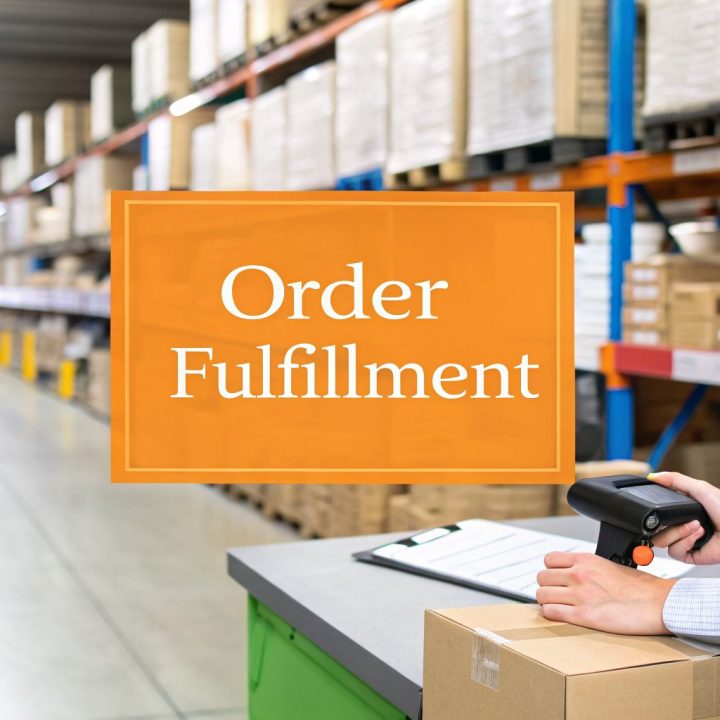
After all the items for an order are picked, they land at a packing station. This is where a second, critical quality check happens. The packer scans each item again to confirm it matches the order, pushing accuracy rates above 99%.
Next, the packer chooses the perfect-sized box and the right kind of dunnage (like bubble wrap or air pillows) to keep the products safe. This step is huge for keeping shipping costs down—no more paying for oversized boxes—and preventing damage. Finally, the order is securely packed, the packing slip is added, and the box is taped up, ready for a shipping label.
Step 5: Shipping and Handover
In the final stage, the WMS automatically prints the right shipping label with the correct carrier and service level (e.g., ground, 2-day). The label goes on the box, and it’s moved to the outbound shipping area with other completed orders.
Carriers like UPS, FedEx, and USPS arrive throughout the day to pick up the sorted packages. The moment a carrier scans the package, tracking information is pushed back to your e-commerce store, and an automated email goes out to your customer letting them know their order is on its way.
How Outsourcing Fulfillment Gives Your Brand a Serious Edge
Handing off your fulfillment isn't just about getting someone else to pack boxes. It's a strategic decision that frees you up to actually grow your brand. Partnering with a third-party logistics (3PL) provider for pick and pack fulfillment services turns one of your biggest time-sinks into a genuine asset.
For most entrepreneurs, the daily grind of printing labels, wrestling with inventory counts, and running to the post office is a huge drain. Those are hours you could be spending on marketing, product development, or talking to your customers.
When you offload those operational headaches, you get your most valuable resource back: your time. You can finally stop stressing about a backlog of orders and start planning your next big marketing campaign or sourcing a new best-selling product.
Give Your Direct-to-Consumer Brand a Competitive Advantage
For direct-to-consumer (DTC) brands, the customer experience is everything. How fast and accurately you get orders out the door directly impacts customer loyalty and whether they’ll ever buy from you again. A specialized fulfillment partner is your secret weapon here.
One of the most immediate perks is getting access to much lower shipping rates. 3PLs ship in massive volumes, which lets them negotiate deep discounts with carriers like FedEx, UPS, and USPS. These are savings you could never get on your own, and they go straight to your bottom line or let you offer cheaper shipping to your customers.
The real value of a 3PL isn’t just packing boxes. It's giving you a professional, scalable infrastructure that lets you compete with the big guys. It levels the playing field, so your customers get a 'big brand' delivery experience from a small business they love.
On top of that, a 3PL’s expertise means every package is packed correctly, which cuts down on products getting damaged in transit and reduces the headache of returns. A smooth pick and pack operation is one of the best ways to enhance customer experience and keep people coming back.
Master Amazon FBA Compliance Without the Headaches
Selling through Fulfillment by Amazon (FBA) gives you incredible reach, but it also comes with a notoriously strict rulebook. One tiny mistake in how you prep your inventory can lead to rejected shipments, expensive non-compliance fees, or even getting your selling privileges suspended. This is where a 3PL that specializes in FBA prep becomes an absolute lifesaver.
A good 3PL acts as your compliance shield, making sure every shipment you send to an Amazon fulfillment center is perfect. They take care of all the tedious and complex tasks that trip up so many sellers.
Key FBA prep services include:
- FNSKU Labeling: Every single item needs a unique Amazon barcode. Your 3PL can receive your inventory in bulk, unbox it, and stick the correct FNSKU label on each product with precision.
- Bundling and Kitting: If you sell products in a multipack, your partner can create those bundles according to Amazon's exact rules, often by shrink-wrapping them and adding a "Sold as a Set" label.
- Poly Bagging: A lot of products, from t-shirts to toys, need to be put in protective poly bags that have a specific suffocation warning. A prep center handles this so you don't have to worry about it.
- Inspection and Quality Control: Before anything gets shipped to Amazon, your partner will inspect it for damage, check the counts, and make sure it all matches your FBA shipment plan.
By delegating these critical tasks, you avoid the logistical nightmare of FBA rejections. Your 3PL gets your inventory checked in quickly so it’s available for sale without delay, protecting both your revenue and your seller reputation. It’s a smart partnership that reduces risk and keeps your Amazon business running smoothly.
How Pick and Pack Fulfillment Costs Are Calculated
Trying to understand a quote for pick and pack fulfillment services can feel like you're being handed a bill in a foreign language. It doesn't have to be that confusing. While every 3PL has its own way of doing things, the pricing almost always boils down to a few key charges. Once you know what they are, you can budget accurately and avoid any nasty surprises down the road.
Think of it like getting a bill from your mechanic. It’s not just one big number; it’s an itemized list for parts, labor, and shop fees. Fulfillment pricing is the same concept—you pay for each distinct step in the process.
The Four Pillars of Fulfillment Pricing
When you get a quote, you can bet it will be built around four core cost centers. These charges cover your product’s entire journey, from the moment it hits the warehouse dock to when it lands on your customer’s doorstep.
Receiving Fees: This is the first thing you’ll pay for. It’s the cost of getting your inventory checked in, which involves unloading pallets, inspecting products for damage, counting everything to make sure it matches the packing slip, and logging it all into the Warehouse Management System (WMS). Most 3PLs charge for this by the hour, per pallet, or per inbound shipment.
Storage Fees: Once your inventory is in the system, it needs a home. Storage fees cover the physical warehouse space your products take up. This is a recurring monthly cost, typically billed per pallet, per cubic foot, or per bin.
Fulfillment Fees: Here’s the main "pick and pack" cost. You're charged this every time an order goes out the door. The most common structure is a fee for the first item in an order, plus a smaller fee for each additional item. For example, a 3PL might charge $2.50 for the first item and $0.50 for each additional item in the same box.
Packaging Materials: This covers the actual boxes, mailers, bubble wrap, tape, and void fill used to keep your products safe during transit. Some partners roll standard packaging into their fulfillment fee, while others will bill you for materials as a separate line item.
Comparing 3PL Fulfillment Pricing Models
Digging into a quote, you'll see these costs presented in one of two ways. There isn't a single "best" model—the right choice hinges on your business's order volume, product mix, and how you prefer to manage your finances.
Your goal should be to find a pricing structure that gives you total transparency and predictability. You ought to be able to look at your sales forecast and know almost exactly what your fulfillment bill will be.
Here's a breakdown of the two pricing models you're most likely to encounter.
| Pricing Model | How It Works | Ideal For | Potential Pitfall |
|---|---|---|---|
| Itemized Pricing | Each service (receiving, storage, picking, etc.) is broken out as its own line item on your invoice. | Businesses with fluctuating order volumes, lots of SKUs, or custom needs who want to see exactly where their money goes. | Can feel complex if you're not used to it. Unexpected special projects can add up if not budgeted for. |
| All-in-One Pricing | A single flat fee is charged per order, bundling picking, packing, and sometimes standard packaging into one price. | Brands with simple, predictable orders (like a single hero product) who value simplicity and an easy-to-forecast cost-per-order. | The bundled price might hide higher costs for certain services, and you may pay for things you don't always need. |
Ultimately, a good partner will walk you through their pricing so you feel confident in what you're paying for.
Don't Forget Special Project Fees
Beyond the big four, you absolutely have to ask about costs for any work that falls outside the standard pick-pack-ship routine. These are usually billed at an hourly rate or a flat per-item fee and can quickly inflate your bill if you aren't prepared.
Common special projects include:
- Kitting and Assembly: Building multi-item bundles or subscription boxes before they are stored.
- FBA Prep: Applying FNSKU labels, poly bagging, or creating case packs to meet Amazon's strict requirements.
- Returns Processing: Inspecting returned items, deciding if they can be resold, and putting them back into inventory.
Getting clarity on these costs upfront is critical for creating a realistic budget. A transparent 3PL partner will be open about these charges, empowering you to scale your brand without getting hit by unexpected fees.
How to Choose the Right Fulfillment Partner

Picking a partner for your pick and pack fulfillment services is one of the biggest calls you'll make for your e-commerce brand. The right one will feel like a launchpad for growth, helping you scale up and keep customers happy. The wrong one? It's a fast track to operational chaos, a damaged reputation, and bleeding profits.
It’s tempting to just go with the lowest quote, but that's a classic mistake. A cheap price tag often hides operational weaknesses that will cost you way more in the long run through lost inventory, messed-up orders, and angry customers. To find a real partner, you have to dig deeper.
This checklist walks you through what to look for, so you can find a fulfillment provider that works like a true extension of your own team.
Technology and Seamless Integrations
The backbone of any modern fulfillment operation is its technology. Your 3PL’s software has to connect flawlessly with your sales channels, whether that's Shopify, WooCommerce, Amazon, or Walmart Marketplace. Think of this connection as the digital nervous system for your entire business.
A clunky integration means someone is manually entering orders, shipments are getting delayed, and your inventory counts are always wrong—a recipe for disaster. Before you sign anything, you need to see that the 3PL can establish a solid, real-time sync with your stores. A robust Warehouse Management System (WMS) is non-negotiable.
Ask for a demo of their client portal. You should be able to see:
- Real-Time Inventory Levels: Exactly how much stock you have on the shelf, right now.
- Order Status: A clear view of an order from the moment it’s placed until it’s out the door.
- Reporting and Analytics: Hard data on order accuracy, turnaround times, and which products are moving fastest.
A transparent system gives you the power to make smart business decisions without having to chase down an account manager for basic info. This level of insight is everything, since a well-run 3PL warehouse is the heart of your operation.
Scalability and Warehouse Network
You're building your business to grow, and your fulfillment partner needs to be able to keep up. A 3PL that handles 500 orders a month just fine might completely fall apart when you hit 5,000 orders during your Black Friday sale. You need a partner with a proven track record of handling massive volume spikes without sacrificing speed or accuracy.
The real test of a fulfillment partner isn't how they perform on a quiet Tuesday in May. It's how they perform on your busiest day of the year.
Beyond just volume, look at their physical footprint. A 3PL with a few warehouses strategically placed across the country can slash your shipping times and costs. By storing inventory closer to your customers, you can reach most of the US population with 2-day ground shipping—a massive competitive advantage.
Service Specialization and Experience
Let's be clear: not all 3PLs are created equal. Some are pros at handling apparel, while others specialize in fragile goods, electronics, or oversized items. It's crucial to find a partner who has experience with products just like yours. A fulfillment center that mostly ships tiny, lightweight items probably doesn't have the right equipment or workflows to handle heavy furniture.
Even more, if you sell on Amazon, FBA prep expertise is an absolute must. A partner who gets Amazon’s constantly changing rules for FNSKU labels, kitting, and poly bagging will save you from expensive compliance fees and rejected shipments. Always ask for case studies or references from brands in your niche.
Clear Communication and Support
When there's an urgent problem—like a wrong address on a big order or a surprise inventory issue—who do you call? The answer tells you everything you need to know about a 3PL’s service. Steer clear of partners that push you into a generic support ticket system with 24-48 hour response times.
You want a provider that gives you a dedicated account manager or a small, responsive team you can actually reach. Having a direct point of contact who knows your business and can put out fires quickly is invaluable. It’s this relationship, built on clear communication, that holds a great fulfillment partnership together.
How Expert Fulfillment Solves Common Growth Problems

As an e-commerce brand, there’s a moment when growth starts to feel less like a victory and more like a problem. The same hands-on tasks that got you here—packing orders at the kitchen table, running to the post office every afternoon—are now the very things holding you back.
This is the turning point where partnering with a professional for pick and pack fulfillment services becomes essential. An expert fulfillment partner isn’t just a service you hire; they are a problem-solving engine built to handle your biggest growth pains, letting you get back to building your brand.
Problem: Your Team Is Drowning in Orders
When your business takes off, your team's time becomes your most valuable asset. If your best people are spending their days printing labels, folding boxes, and waiting in line at UPS, they aren’t developing new products or launching your next big marketing campaign. That operational drag is a silent killer of momentum.
Solution: Handing off your pick and pack operations to a 3PL gives you that time back—instantly. By offloading the daily grind of fulfillment, you reclaim hundreds of hours. Your team can finally shift their focus from logistics to strategy, driving sales and innovation instead of getting buried in packing tape.
Problem: Your FBA Shipments Keep Getting Rejected
Amazon’s Fulfillment by Amazon (FBA) is a game-changer for sellers, but their inbound rules are famously rigid. A simple mistake with an FNSKU label, a bundle, or a poly bag can lead to costly fines, rejected shipments, and weeks of your inventory being out of stock. It’s a recipe for killing your sales velocity.
Solution: A fulfillment partner with real FBA prep experience is your shield against compliance headaches. They live and breathe Amazon's rulebook, ensuring every unit is labeled, kitted, and packed perfectly before it ever goes to an Amazon warehouse.
Your 3PL acts as your final quality control checkpoint, making sure 100% of your shipments meet Amazon’s constantly changing standards. This removes the risk of frustrating rejections and keeps your products in stock and selling.
Problem: High Shipping Costs Are Crushing Your Margins
For most growing brands, shipping costs are a constant battle. Without the shipping volume of a giant retailer, you're stuck paying standard rates from carriers. This makes it nearly impossible to offer the free or flat-rate shipping that customers have come to expect, putting you at a major disadvantage.
Solution: A good 3PL ships millions of packages a year. That volume gives them massive negotiating power with carriers like FedEx, UPS, and USPS. When you partner with them, you get to tap into their deeply discounted rates, slashing your shipping costs and boosting your profit margins overnight.
Problem: You Can't Keep Up with Sales Spikes
A killer promotion or a viral social media post is a dream come true for sales, but it can quickly become a logistical nightmare. When a sudden flood of orders hits, an in-house team can easily get overwhelmed. The result? Shipping delays, order errors, and a tidal wave of angry customer support tickets.
Solution: Expert pick and pack fulfillment services are designed for this exact scenario. A professional 3PL has the space, staff, and systems to handle huge swings in order volume without breaking a sweat. Whether you’re shipping 50 orders a day or 5,000, they absorb the surge seamlessly, ensuring every order goes out on time and with perfect accuracy.
Common Questions About Fulfillment Services
Switching to a 3PL is a big move, and it's smart to have questions. We get it. After helping countless brands make the jump, we've heard them all. Here are the straight-up answers to a few of the most common things founders ask us.
How Much Inventory Should I Send to a 3PL?
There’s no single magic number, but a solid rule of thumb is to start with 4 to 6 weeks of inventory based on your sales forecasts. This gives you a healthy cushion to avoid stockouts while everyone gets settled into the new workflow.
From there, we’ll work with you to analyze your sales velocity and set a reorder point. This isn't just about avoiding zero stock; it's about making sure your fulfillment partner has enough product on hand to organize it efficiently and keep operations running smoothly without tying up all your cash.
What Is a Warehouse Management System (WMS)?
A Warehouse Management System (WMS) is the technology backbone of any modern fulfillment center. It’s the software that tracks every single unit of your inventory—from the moment it's received at the dock to the second it’s scanned by the carrier on its way to your customer.
Think of the WMS as your command center. It gives you a real-time window into your inventory levels, order statuses, and shipping activity through a simple online portal. This is the tech that ensures order accuracy stays high and that your Shopify store talks seamlessly to the warehouse floor.
Can a 3PL Use My Custom Branded Packaging?
Absolutely. Any fulfillment partner worth their salt knows the unboxing experience is a huge part of your brand. You're not just selling a product; you're delivering a feeling.
You just send your custom boxes, mailers, thank-you cards, or tissue paper to the warehouse along with your products. We store them and pack every order exactly to your specs. Outsourcing the labor shouldn't mean sacrificing your brand, and the final package will always look and feel like it came directly from you.
Ready to stop worrying about fulfillment and get back to growing your brand? Snappycrate offers expert pick and pack, FBA prep, and inventory management for ambitious e-commerce businesses. See how we can become a reliable extension of your team by visiting https://www.snappycrate.com.