Skip to Content

Blog Archives

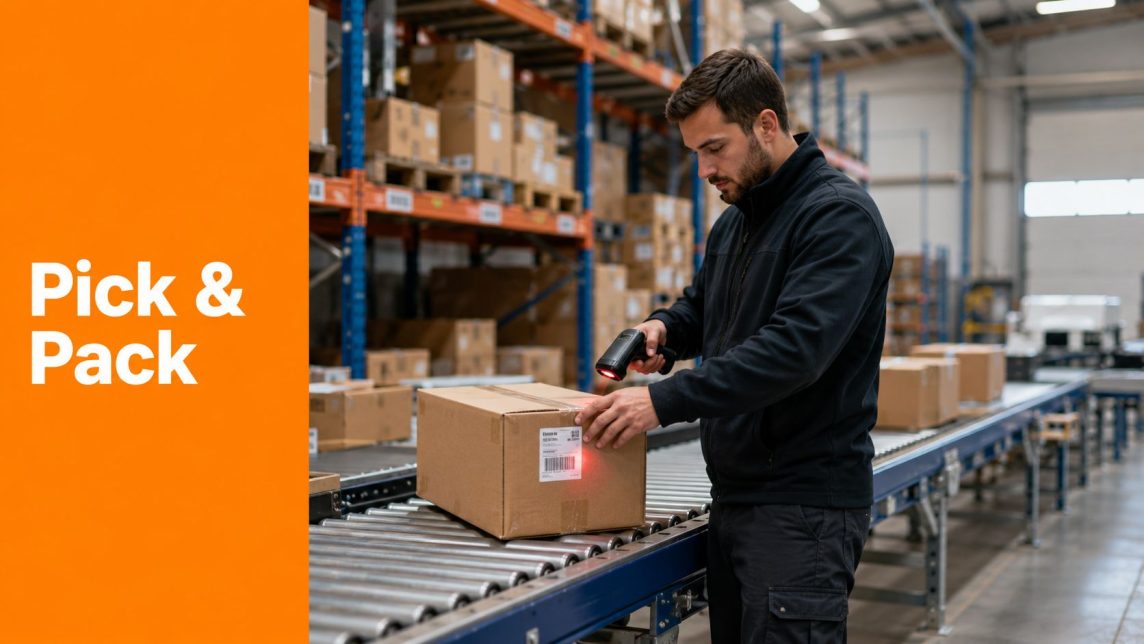
The Pick and Pack Process: A Guide to Flawless Fulfillment

Sales can climb while fulfillment gradually gets worse.

A brand owner usually notices it in the same sequence. Orders start coming in faster. Shelves that used to feel organized now look temporary. One team member knows where everything is, but nobody else does. Customer emails shift from “When will this ship?” to “I got the wrong item” and “Why was this sent in such a huge box?” At that point, the problem isn't demand. The problem is that the pick and pack process has outgrown the way the business is operating.

That process is where your customer experience becomes physical. Your ads, product pages, and post-purchase emails make a promise. Picking and packing is where your warehouse either keeps that promise or breaks it.

Why Your Order Fulfillment Is an Unhappy Customer Waiting to Happen

A growing e-commerce brand can survive a lot of imperfections. It usually can't survive fulfillment chaos for long.

One order goes out with the wrong size. Another is packed with too little protection. A third sits in staging because nobody printed the label before carrier cutoff. None of these mistakes looks catastrophic on its own. Together, they create refunds, replacement shipments, support tickets, and reviews that say your brand feels unreliable.

The symptoms usually show up before the cause is obvious

Most operators don't wake up and say, “Our pick and pack process is broken.” They say things like:

  • “We're shipping late again.” Orders are getting picked in the wrong sequence, or labor is tied up walking the warehouse instead of completing orders.
  • “Our team keeps fixing mistakes.” Staff spend more time checking, repacking, and searching for missing items than moving clean orders through the building.
  • “Packing costs feel random.” One order leaves in a mailer, the next in an oversized carton with too much void fill, and nobody can explain the rule.
  • “Amazon keeps flagging prep issues.” Labeling, bundling, and packaging discipline are inconsistent, which is usually a process problem rather than a people problem.

The warehouse doesn't need to be big for these issues to hurt. In fact, smaller operations often feel them first because one weak step affects everything downstream.

Practical rule: If your team relies on memory more than system logic, accuracy will fall as volume rises.

Fulfillment failures aren't isolated warehouse errors

They affect margin and reputation at the same time.

A mispick creates a customer service problem. A poor packing decision creates a shipping cost problem. A late handoff to the carrier creates a delivery promise problem. The reason experienced operators focus so heavily on pick and pack is simple: in this process, speed, cost, and accuracy collide every day.

Brands often think they have a shipping problem. What they usually have is a process design problem inside the warehouse.

The Seven Stages of an Order's Warehouse Journey

A clean warehouse workflow works like an assembly line. Each handoff needs to be correct, because the next step depends on it. If receiving is sloppy, storage gets messy. If storage is messy, picking slows down. If picking is rushed, packing and QC turn into rework.

A lot of what makes modern fulfillment possible came from barcode verification. The first UPC scan occurred on June 26, 1974, and barcode use later spread into warehouses because it improved item identification, reduced manual keying, and supported more accurate order processing, according to this overview of barcode-enabled warehouse fulfillment.

To keep the whole flow visible, use this simple map:

A diagram illustrating the seven stages of a warehouse order process from reception to final dispatch.

Stage 1 through Stage 3

The first half of the journey decides whether the back half will feel smooth or chaotic.

Stage What happens What goes wrong when it's weak
Goods receiving Incoming cartons or pallets are checked, counted, and entered into the system. Inventory starts inaccurate from day one.
Put-away and storage Each SKU is assigned to the right shelf, bin, rack, or zone. Fast movers end up too far away, and pickers waste steps.
Order picking Staff retrieve the exact items needed for each order. Wrong items, missed items, and avoidable walking time pile up.

Receiving sounds basic, but it sets the tone for everything else. If inbound stock isn't identified correctly when it enters the building, the warehouse carries that error forward.

Put-away matters just as much. High-turnover SKUs need locations that support fast retrieval, not whatever empty shelf happened to be available that morning.

A short walkthrough helps show how these stages connect in practice:

Stage 4 through Stage 7

Once items are picked, the order still has several chances to fail.

  1. Quality control and verification
    The warehouse confirms the right SKU, quantity, and condition before sealing the shipment. During this step, scan checks and visual checks earn their keep.

  2. Packing
    The team chooses the package format, adds protection, and prepares the order for transit. Poor packing creates avoidable damage, unnecessary dimensional weight, and ugly unboxing experiences.

  3. Labeling
    Shipping labels, internal routing labels, and any marketplace-specific labels are applied. One wrong label can send a perfect order to the wrong customer.

  4. Dispatching
    The shipment is sorted, staged, and handed to the right carrier on time. Miss the cutoff, and the whole cycle time stretches even if the order was packed correctly.

The warehouse should treat every scan, verification step, and handoff as a control point, not as an extra task.

Why handoffs matter more than isolated tasks

Many warehouse teams focus on individual productivity. That can be useful, but isolated speed often hides process weakness. A picker can move quickly and still flood packing with carts that arrive unsorted. A packing lead can push boxes out fast and still create relabeling work because staging wasn't organized.

The strongest pick and pack process doesn't just optimize each task. It protects the transition between tasks.

Choosing Your Picking Strategy to Reduce Warehouse Walk-Time

Picking is where most warehouses burn labor. Not because the work is mysterious, but because walking, searching, and backtracking, though seemingly minor, consume the day.

The wrong picking method makes that worse. The right one cuts motion without overloading packing.

An infographic showing four common warehouse picking strategies to reduce walk-time for efficient order fulfillment.

Four common methods and where they fit

Think of these approaches as operating models, not warehouse buzzwords.

Method Best fit Main risk
Piece picking Lower order volume, custom orders, simple workflows Too much walking as order count rises
Batch picking Many small orders with overlapping SKUs Sorting pressure at packing
Zone picking Larger footprints or varied product families Consolidation complexity
Wave picking Scheduled releases tied to carrier windows or order priority Packing congestion if waves are too large

Piece picking is the easiest to understand. One picker completes one order at a time. It works well when order volume is manageable or orders are unusual enough that batching doesn't help much.

Batch picking works when many orders share common items. One pass through the aisle serves multiple orders, which reduces travel. But the gain upstream can become pain downstream if the packing team has to spend too much time sorting mixed picks.

Zone picking assigns each worker to a section of the warehouse. Orders move across zones until complete. This usually helps when the warehouse is large enough that cross-building walking is the primary challenge.

Wave picking releases groups of orders at scheduled times. Done well, it aligns labor with carrier cutoffs and outbound flow. Done poorly, it sends a surge of partially organized work into packing all at once.

Choose by order profile, not by warehouse ego

A common mistake is picking a method because it sounds advanced.

Industry guidance often misses the real question: when does batch or wave picking create a downstream bottleneck? That trade-off matters most in operations handling mixed flows such as small DTC parcels and larger wholesale orders. Guidance summarized in this pick and pack process article from EasyPost also notes that high-velocity SKUs should be stored closer to packing.

If your packing tables are constantly buried under mixed carts, the problem may not be packing labor. It may be the release logic upstream.

A practical way to decide

Use these cues:

  • Choose piece picking when order complexity is high and the cost of sorting exceeds the savings from batching.
  • Choose batch picking when many orders contain the same fast movers and the team has a clean method for separating orders afterward.
  • Choose zone picking when your warehouse layout is causing excessive crossing, congestion, or training inconsistency.
  • Choose wave picking when outbound timing matters and you can control the size and composition of each release.

No method stays perfect forever. Order mix changes. Promotions distort SKU velocity. Marketplace orders behave differently from wholesale replenishment. Good operators revisit the method when the profile changes, not after service levels slip.

Best Practices for Packing Quality Control and Cost Savings

Packing is where warehouse execution becomes visible to the customer and measurable on the P&L.

A box that's too large wastes cube. A box that's too small creates damage risk. A package with the wrong label turns into a service issue. The pack station is not just a closing step. It's a decision point where cost, compliance, and customer experience all meet.

An infographic detailing five best practices for optimizing packing quality control and reducing shipping costs.

Right-sizing matters more than most brands expect

Packaging optimization is not only about protection. It's also about shipping logic. Industry guidance highlights cartonization as a way to select the optimal box size and reduce cube waste and dimensional-weight charges in the discussion of cartonization and packing decisions here.

That's why many growing brands eventually move away from “grab the nearest box” packing.

A stronger setup usually includes:

  • Defined box options so packers aren't improvising every order
  • Clear protection rules by product type, fragility, and presentation standard
  • Cartonization logic when order mix is broad enough to make manual box choice inconsistent
  • Station design that keeps tape, void fill, labels, scanners, and inserts within reach

For brands reviewing packaging formats or branded inserts, it helps to compare options through a practical vendor lens such as e-commerce packaging solutions.

Quality control should be built into the station

QC works best when it isn't treated as a separate cleanup crew.

A reliable pack station should verify item, quantity, condition, packaging choice, and label placement before the carton is sealed. If your team is catching frequent errors after sealing, the process is asking them to inspect too late.

This is also where equipment discipline matters. Label printers, tape machines, scales, and conveyors don't need to be fancy, but they do need to work consistently. Teams evaluating uptime and maintenance routines can borrow useful ideas from these strategies for equipment reliability in packaging operations.

Field note: Manual packing is fine until the team starts making different decisions for the same order type.

Track the process like an operator, not just a shipper

Warehouse teams often focus too heavily on carrier performance and not enough on internal execution. The more useful operational lens is whether the warehouse is creating clean orders efficiently.

Useful KPIs include:

  • Order picking accuracy to spot mispicks before they become returns
  • Total Order Cycle Time to see how long an order takes from release to shipment
  • Time on Dock to catch packed orders that sit too long before dispatch
  • Packing exceptions such as relabeling, repacks, damage holds, or missing inserts

Those metrics create a feedback loop. If cycle time is slipping, review release timing and station layout. If repacks are rising, review carton choices and verification steps. If label issues keep appearing, check printer placement, scanning flow, and staff sequence rather than blaming individuals.

Using WMS and Automation to Supercharge Your Process

At a certain order volume, effort alone stops working. People hustle harder, but output doesn't improve much because the system itself is limiting them.

That's where a warehouse management system, or WMS, changes the game. It acts as the operating layer that tells the team what to pick, where to find it, how to verify it, and what status the order is in right now.

Why software matters in a labor-driven process

Pick and pack is largely a labor problem measured in time. Warehouse labor models break picking and packing into timed activities, and industry guidance treats these workflows as some of the most costly and time-consuming work inside fulfillment. That's why operators watch order picking accuracy, Total Order Cycle Time, and Time on Dock, as outlined in this warehouse labor analysis for picking and packing.

The implication is practical. If labor time is the dominant cost driver, then reducing wasted seconds matters. A WMS helps by reducing searching, directing travel paths, and standardizing verification instead of relying on memory.

What a WMS actually improves

A solid setup usually gives you:

  • Task direction so pickers follow system logic rather than tribal knowledge
  • Barcode confirmation to verify the item and location before mistakes move downstream
  • Inventory visibility so stock status reflects warehouse reality, not last week's spreadsheet
  • Order prioritization so urgent orders, wave releases, and channel commitments don't collide blindly
  • Performance data so supervisors can fix process design, not just push staff harder

More advanced tools can layer in pick-to-light, voice picking, conveyors, AMRs, or automated storage systems. Those tools can help, but only when the underlying process is already stable.

Automation amplifies the process you already have. If the process is messy, automation just makes the mess move faster.

Integration is what keeps tools from becoming islands

A WMS has to connect cleanly with order platforms, printers, scanners, and operational systems around it. Otherwise, staff end up re-entering information and reconciling mismatched records.

Operations leaders who are bridging warehouse systems with broader business technology can borrow useful thinking from these OT/IT integration best practices. The context is broader than fulfillment, but the lesson applies directly: warehouse tools need clean handoffs with the rest of the business stack.

For brands comparing software-led improvements with physical automation, this overview of warehouse automation technologies is a practical starting point.

FBA Prep A High Stakes Test of Your Pick and Pack Process

Amazon doesn't care whether a prep mistake happened because your warehouse was busy, your labeling station was cramped, or a temporary employee guessed wrong. It only sees whether inbound inventory meets its rules.

That's why FBA prep is one of the clearest stress tests of your pick and pack discipline.

Small process gaps become expensive fast

Most FBA issues start with basic execution failures:

  • Labeling errors where the wrong barcode is applied, covered, or placed poorly
  • Poly bagging mistakes where required warnings or sealing standards are missed
  • Bundling confusion when a multi-unit set isn't clearly prepared and identified as one sellable unit
  • Case pack inconsistency when quantities and carton contents don't match the shipment plan
  • Inspection misses where damaged, incomplete, or mismatched units still get sent inbound

These are not separate “Amazon problems.” They're warehouse process problems showing up in a strict environment.

FBA rewards repeatable discipline

A compliant FBA workflow needs documented rules for each SKU type and each prep type. The team has to know what label goes where, when an item needs poly bagging, how a bundle is identified, and when an exception should stop the order for review.

One person knowing the answers isn't enough. The station, the instructions, and the checks have to support repeatable execution.

Brands that want a clearer breakdown of these requirements can review what FBA prep involves. It's useful when you're deciding whether your current setup can handle Amazon's inbound standards consistently.

Amazon prep exposes process weakness quickly because there's very little room for “close enough.”

How Snappycrate Delivers a Professional Pick and Pack Solution

A lot of brands don't need more warehouse theory. They need a workflow that works every day when inbound freight shows up, marketplace orders spike, and Amazon prep has to be right the first time.

That usually comes down to execution discipline. Inventory has to be received cleanly. Storage has to make sense. Picking has to follow system logic. Packing has to control cost without increasing damage or compliance risk. FBA prep has to be handled with the same consistency every time.

Screenshot from https://www.snappycrate.com

Where an outsourced workflow helps

A 3PL setup makes sense when internal fulfillment is consuming management attention, space, and labor flexibility.

In practical terms, that means a provider should be able to handle:

  • Storage and inventory control for organized SKU management and cleaner order release
  • Order fulfillment across channels so Amazon, Shopify, Walmart, and wholesale flows don't compete in an ad hoc system
  • Custom packing and kitting when the order isn't just a simple single-item carton
  • FBA prep services for labeling, poly bagging, bundling, inspections, and shipment readiness
  • Inbound freight handling for containers, pallet breakdowns, and case-level processing

Snappycrate fits into that model as a 3PL focused on storage, inventory management, order fulfillment, and Amazon FBA preparation for e-commerce sellers. For brands that have outgrown spreadsheets, improvised shelving, or inconsistent prep work, that type of operational coverage reduces the amount of fulfillment knowledge that has to live in one employee's head.

What brand owners usually gain

The biggest benefit isn't just that orders go out.

It's that fulfillment becomes more predictable. The business can spend less time fixing mispicks, repacking inbound units for Amazon, or chasing down where inventory is. Leadership can focus on purchasing, marketing, product development, and channel growth instead of acting like the warehouse escalation desk.

That's what a professional pick and pack process is supposed to do. It shouldn't create drama. It should smoothly support the rest of the business.


If your current fulfillment setup feels fragile, Snappycrate is worth a look. The company handles storage, pick and pack, custom packaging, and Amazon FBA prep for growing e-commerce brands that need a more controlled warehouse process.
0 Continue Reading →

What Is Kitting and Assembly? a Guide for Ecommerce

A lot of ecommerce brands hit the same wall at the same time. Orders are growing, bundles are selling, and what looked smart on the product page starts creating friction in the warehouse.

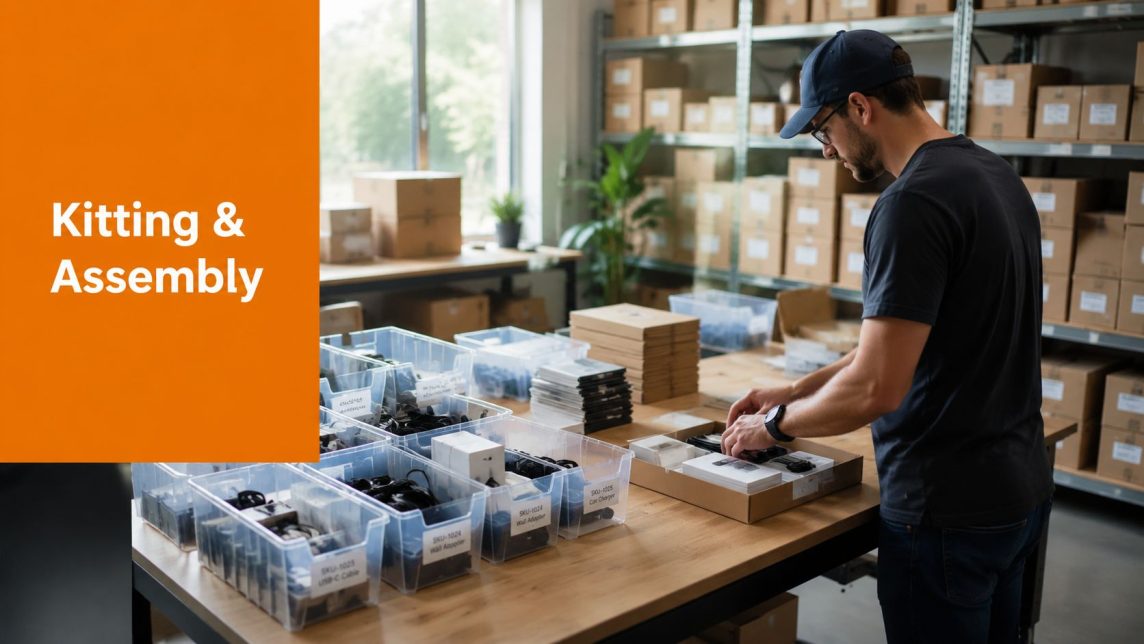
A customer buys a skincare starter set. Your team has to grab the cleanser from one shelf, the toner from another, the moisturizer from a third, then find the insert card, then pick the right box size, then hope nothing gets missed. That single order now takes more labor than it should, creates more chances for error, and usually produces a less polished unboxing experience than the brand promised.

That's where people start asking what is kitting and assembly, and whether either one will help the business make more money.

The short answer is yes, sometimes. But not every bundle should be kitted. Not every product should be assembled. And not every brand should do the work in-house. The key decision isn't about warehouse terminology. It's about whether pre-grouping or pre-building products lowers your total cost to serve while improving shipping speed, order accuracy, and customer experience.

The Hidden Cost of Shipping Separate Items

The cost problem usually shows up after a bundle starts selling well.

A brand adds a starter set, gift box, or buy-more-save-more offer. Revenue per order goes up, which looks great in Shopify. Then fulfillment starts eating the gain. The team walks farther, touches more SKUs, checks more line items, and spends more time making the shipment look like a planned bundle instead of a last-minute mix of products.

That gap matters because your P&L does not care whether margin disappeared in paid acquisition or on the warehouse floor.

Where margin starts leaking

Shipping separate items sounds simple until the same combination keeps showing up in order after order. If the products sit in different pick faces, each order requires multiple grabs, multiple scans, and another round of verification at packing. Add an insert card, tissue, or branded sleeve, and labor climbs again.

The extra cost usually shows up in four places:

  • Higher labor per order because each SKU is picked and checked separately
  • More preventable errors when one item is missed, swapped, or packed in the wrong quantity
  • Less consistent presentation when bundles are built manually at the pack station
  • Lower throughput during peak periods because multi-line orders take longer to clear

One order will not hurt much. A few hundred per week will.

A bundle can raise average order value and still lower contribution margin if fulfillment work grows faster than revenue.

This is the decision point many growing brands miss. They look at sales lift first and warehouse cost later. In practice, those numbers need to be reviewed together. If the bundle wins on the storefront but loses after pick, pack, packaging, and error-related reships, it is not a strong offer.

Brands that want a baseline for comparison should look at how standard pick and pack fulfillment services are priced and timed before deciding whether a repeated bundle should stay as separate picks.

Why kitting and assembly deserve management attention

For this reason, kitting and assembly should not be treated as minor warehouse chores. They are operating model decisions that change labor cost, order speed, storage setup, and error rates.

Kitting reduces repeated picking by turning a common combination into one ready-to-ship unit. Assembly makes sense when parts need to be combined into a finished or partially finished product before the order goes out. The important question is not which term sounds right. The important question is whether pre-work done once is cheaper than repeating the same work on every order.

That is the profitability lens. If your team keeps shipping the same combinations, picking them separately often becomes the expensive option.

Kitting and Assembly The Core Difference

Most confusion comes from the fact that people use the two terms loosely. In practice, they solve different problems.

Think of kitting like meal prep. You put the pasta, sauce packet, seasoning, and recipe card into one box so everything is ready when needed. Think of assembly like cooking the meal. You take those prepared components and turn them into the finished dish.

An infographic comparing the concepts of kitting and assembly using meal kit and toy car examples.

What kitting means in ecommerce

In ecommerce, kitting means taking separate sellable items and grouping them into a new bundled SKU. The original products still exist as individual units, but the warehouse now treats the grouped set as one pickable item.

Examples include:

  • Gift sets with a candle, matches, and gift note
  • Starter bundles with a device, charger, and case
  • Subscription box builds with products from several brands
  • Amazon multipacks prepared as one compliant unit

A kitted set is about preparation and speed. The products are grouped, packaged, labeled, and stored so fulfillment doesn't have to build the order from scratch every time. If you're comparing this with standard parcel operations, this pick and pack fulfillment services guide is useful because it shows where a normal order flow ends and value-added work like kitting begins.

What assembly means

Assembly means components are physically combined into a finished item or sub-assembly. That could be simple or more involved.

One manufacturing definition states that kitting prepares complete work-order inputs before production starts, while sub-assembly is the output. That sequencing reduces line-side searching and waiting, as explained in this manufacturing kitting overview.

A quick comparison makes the split clearer:

Process What happens Result
Kitting Separate items are grouped together A ready-to-ship or ready-to-use set
Assembly Components are joined or configured A new finished item or sub-assembly

Practical rule: If the parts stay separate inside one package, you're usually talking about kitting. If the parts become one working unit, you're in assembly.

A Look Inside a Kitting and Assembly Workflow

Inside a professional operation, this work is much more controlled than most brands expect. Good kitting isn't a folding table in the corner with tape guns and guesswork. It's a managed workflow with inventory control, work orders, QC, and clear SKU logic.

A useful way to think about it is this. The moment you decide to sell a bundle repeatedly, you're not just selling products together. You're creating a new operational object that has to be received, built, tracked, stored, and shipped correctly.

A seven-step infographic explaining the professional 3PL kitting and assembly workflow process from receipt to shipping.

How the workflow usually runs

A repeatable workflow tends to follow these stages:

  1. Create the kit SKU
    The warehouse management system needs a defined kit or assembly SKU plus a bill of materials. If that record is sloppy, inventory accuracy gets messy fast.

  2. Receive the components
    Each input item gets scanned into inventory by its own SKU, as the warehouse must still track component stock even after some units are consumed into kits.

  3. Stage a work order
    The team pulls the required quantities into a dedicated kitting station. Clear instructions matter here, especially for insert cards, tape placement, polybagging, labels, or retail-facing presentation.

  4. Build the kit or perform assembly
    For kitting, items are grouped and packed together. For assembly, parts are joined, configured, or attached before final packaging.

  5. Apply compliance labels
    This step is critical for Amazon and retail workflows. “Sold as set” markings, barcode placement, suffocation warnings, lot control, and case labeling need to be right before inventory moves out.

Quality control is where good margins are protected

A lot of failures happen after the physical work is done. Wrong insert. Missing accessory. Barcode covered by tape. Quantity mismatch inside a sealed bundle.

Here's the operational reality. At industrial scale, kitting can run as a high-throughput process. GEODIS says its U.S. network processes over 50 million kits annually using automation and quality-control systems, with each kit treated as a newly defined SKU. That tells you how mature this process has become.

Later in the flow, finished kits are either stored as ready inventory or moved directly into outbound fulfillment if the build is tied to a launch or promotion.

The warehouse should never “remember” how to build a kit. The system should tell the team exactly how to build it every time.

For brands shipping premium printed materials, collector boxes, or presentation-heavy products, packaging often becomes part of the kit itself. That's where resources on Integrated packaging solutions for books can help because they show how finishing, packaging, and kitting intersect when presentation matters as much as protection.

A short visual walkthrough helps if you want to see how this kind of process fits inside a fulfillment environment:

How Kitting Improves Your Bottom Line

The biggest reason brands adopt kitting isn't that it sounds organized. It's that the economics can get better fast when the same item combinations ship again and again.

If a warehouse picks one kit instead of four separate SKUs, labor drops. If the packer doesn't need to rebuild the same bundle every time, throughput gets steadier. If the customer receives the full set correctly, support tickets and reships tend to fall.

An infographic showing the benefits of kitting for e-commerce, highlighting improved efficiency, reduced waste, and higher profits.

The most direct P&L effects

The first gains usually show up in a few places:

  • Fulfillment labor gets compressed because one pick replaces several
  • Order accuracy improves because the build happens under controlled conditions instead of under order rush pressure
  • Packaging decisions become more standardized, which helps speed and presentation
  • Marketing flexibility improves because ops can support bundles, gift sets, promos, and launch packs without reinventing the wheel each time

Those benefits aren't theoretical. Peer-reviewed research on inventory reorganization found 36% to 49% reductions in kitting times and 30% to 36% improvements in warehouse space utilization. Those are warehouse metrics, but they roll straight into cost and capacity decisions.

Why speed matters more than people think

When brands look at fulfillment cost, they often focus only on the per-order fee. That misses the bigger issue. Slow, inconsistent handling creates hidden expense across the entire operation.

A cleaner bundle workflow helps you:

Area What improves
Labor planning Less scrambling during promos and seasonal spikes
Inventory clarity Easier tracking of bundle-ready stock
Customer experience More consistent presentation and fewer incomplete shipments

Faster fulfillment isn't only a warehouse win. It protects margin by reducing the amount of labor spent on preventable work.

If you're looking at broader process discipline beyond fulfillment, this guide for industrial efficiency improvements is a useful companion read because the same principles apply. Remove wasted motion, standardize repetitive work, and tighten control points before errors spread.

Practical Kitting Use Cases for Ecommerce Brands

Most brands don't need a textbook definition. They need to know whether this applies to their catalog.

It usually does when products are bought together often enough that the warehouse keeps rebuilding the same combination.

Subscription boxes and curated monthly sends

Subscription businesses are the obvious fit. Every month, the warehouse has to gather multiple products, inserts, and packaging components into one branded shipment.

If you build those boxes only after orders drop, labor gets unstable fast. If you pre-kit with controlled versioning, the operation gets much easier to run. This is especially true when each month's configuration has fixed contents.

Amazon FBA bundles and compliant multipacks

Amazon sellers use kitting for bundled offers, multipacks, and prep-heavy sets. The challenge isn't only putting items together. It's making sure the finished unit meets inbound requirements before it reaches the fulfillment center.

That means the kit needs the right outer packaging, barcode treatment, set labeling, and pack consistency. A warehouse team that treats FBA bundling as an afterthought usually learns the hard way through receiving delays and inventory exceptions.

Gift sets and seasonal promos

Holiday sets, launch bundles, and “buy this, get that” promotions are where many brands first test kitting. These programs work well because they turn existing inventory into a more compelling offer without changing the product itself.

A few common examples:

  • Beauty sets with a hero product, travel size, and applicator
  • Wellness bundles with a supplement, shaker bottle, and guide card
  • Holiday packs with themed packaging and a gift-ready presentation

This kind of kitting also helps when you need to move slower inventory by pairing it with a stronger seller.

Starter kits and onboarding bundles

Some products are easier to sell when the customer doesn't have to figure out what else they need. That's where starter kits do real work.

A hobby brand might combine a main item, refill pack, setup tool, and instruction insert. A tech accessory brand might bundle a device stand, cable, and cleaning cloth. The point isn't just convenience. It's removing hesitation at checkout while making fulfillment more repeatable.

If customer success depends on receiving several items together, that's a strong signal to consider kitting instead of separate picking.

Light assembly before shipment

Some brands need more than bundling. They need minor configuration before the order leaves the warehouse.

That can include attaching components, combining parts into a finished retail unit, or preparing a semi-built product for final sale. In those cases, assembly can improve consistency and reduce customer frustration, especially if the end user shouldn't be doing first-step setup work themselves.

Calculating the Costs and ROI of Kitting

Evaluating kitting involves a critical decision. Kitting can improve fulfillment economics, but it can also add cost if the bundle doesn't move predictably.

That trade-off is often missed in surface-level content. One source notes that while kitting can reduce picking time, it can also create higher per-unit costs because inventory management becomes more complex, especially when demand for the finished kit is volatile. The decision comes down to balancing labor savings against SKU overhead, as discussed in this cost-of-serving perspective on kitting and assembly trade-offs and in broader cost to serve analysis.

The cost side of the equation

Before you decide to kit, list the added costs fully:

  • Build labor for the initial kitting or assembly work
  • Extra storage complexity if you now hold both components and finished kits
  • SKU administration because bundles need their own setup, tracking, and replenishment logic
  • Obsolescence risk if demand shifts and prebuilt kits sit too long
  • Rework when marketing changes bundle contents midstream

These costs don't always kill the idea. But they need to be included.

A simple break-even framework

You don't need a complicated model to make a smart call. Start with four questions.

  1. How often does this exact combination sell?
    High repeatability supports kitting. One-off combinations usually don't.

  2. How much pick-pack effort does the kit replace?
    If a kit replaces several picks, checks, and packaging actions, the savings can be meaningful.

  3. How likely is demand to change?
    If bundle demand is volatile, prebuilding inventory becomes riskier.

  4. What happens when a kit is wrong or incomplete?
    High-error consequences make controlled kitting more attractive.

A practical worksheet might compare:

Decision factor In-house separate picking Pre-kitted SKU
Labor per order Higher for repeat bundles Lower once built
Inventory flexibility Higher Lower if demand changes
Error exposure Higher during live order picking Lower if QC is strong

Margin check: Don't ask whether kitting is cheaper in theory. Ask whether it lowers your total cost per shipped order after labor, storage, SKU management, and rework are all counted.

If the answer is yes, kit it. If not, keep picking the components separately or use an on-demand workflow instead of prebuilding inventory.

When to Outsource Kitting to a 3PL Partner

A common break point looks like this. Your team starts the day shipping orders, then gets pulled into relabeling retail bundles, building influencer kits, and fixing last-minute Amazon prep requirements. By the end of the week, labor is up, outbound speed is down, and no one can tell whether the bundle program is making money.

That is usually when kitting stops being a warehouse task and becomes a profitability decision.

A decision-making checklist infographic for businesses evaluating whether to outsource kitting services to a 3PL provider.

Signs it's time to hand it off

Outsourcing makes sense when the cost of doing it yourself is no longer limited to hourly labor. It starts showing up in slower shipping, crowded storage, stock mistakes, and management time pulled away from growth.

Watch for these signals:

  • Order volume swings hard and you keep staffing up and down for prep work
  • Warehouse space is tight and prebuilt kits are taking slots from faster-moving inventory
  • Bundle count keeps growing and kit-level inventory control is getting messy
  • FBA prep rules are creating friction around labeling, bundling, and packaging
  • Your team is spending too much time on operations instead of merchandising, sourcing, or marketing
  • Rework is becoming normal because bundle contents or packaging rules keep changing

The practical test is simple. If kitting is interrupting your core fulfillment flow, it belongs in a more controlled operation.

What a good 3PL should handle

A good partner should run kitting like a repeatable production process, not a side task at the end of the packing line. That means receiving components cleanly, tracking inventory at both the item and kit level, issuing work orders, checking accuracy, and moving finished kits into standard fulfillment without creating a second bottleneck.

They should also be honest about trade-offs. Prebuilding kits can cut pick time and improve order accuracy, but it can also tie up inventory if demand shifts. On-demand assembly preserves flexibility, but labor per order stays higher. A capable 3PL will help you choose the right model by SKU, not force every bundle into the same workflow.

If you need a baseline for that evaluation, this guide on what a 3PL warehouse does is a useful starting point.

One option in this category is Snappycrate, which handles storage, fulfillment, Amazon FBA prep, repackaging, and kitting workflows for ecommerce sellers that need extra operational capacity. The right partner does not replace your strategy. They protect margin by executing it with fewer errors, less internal distraction, and more consistent throughput.

If your team is repeatedly building the same bundles by hand, paying overtime to keep up, or missing ship windows because assembly work keeps jumping the line, outsourcing is worth serious review. The question is not whether your team can keep doing it. The question is whether they should.

0 Continue Reading →

How to Handle Customer Complaints: An E-commerce Guide

Your support inbox is open. A customer says the order arrived crushed, the product box is torn, and they've already posted a one-star review. At the same time, another buyer is asking where their package is, and your marketplace messages are filling up faster than your team can answer them.

That's where most complaint handling breaks down. People rush to write a polite reply, issue a refund, and move on.

That's not enough.

If you want to learn how to handle customer complaints in e-commerce, you need more than scripts. You need a process that catches issues early, routes them correctly, resolves them consistently, and feeds the answer back into fulfillment so the same problem doesn't keep hitting new orders.

A complaint is not just a service event. It's operational data. It can point to weak packaging, bad barcode discipline, a receiving error, poor carrier fit, or a prep workflow that looked fine until customers started proving otherwise. And if your systems are fragmented, it gets harder to connect those dots. That's why many teams invest in optimizing customer experience with cloud systems so support, order data, and fulfillment signals aren't stuck in separate silos.

Turning Customer Complaints into a Competitive Advantage

A buyer reports a crushed box, asks for a refund, and leaves a one-star review before your team finishes the first reply. If you treat that as a one-off service issue, you solve one ticket and keep the underlying fulfillment problem in place.

That is the expensive way to run support.

Complaints are one of the few places where customers describe the actual outcome of your operation in plain language. They tell you whether your packaging held up in transit, whether your pick and pack process produced the right order, and whether your carrier choice matched the product and destination. Support teams hear the pain first. Operations teams need to use it.

The key shift is simple. Stop treating complaints as isolated conversations and start treating them as structured operational inputs. A damage complaint can expose weak corner protection or poor carton fit. A missing-item complaint can point to a packing station check that is too loose. A spike in late-delivery tickets can show that your carrier rules are wrong for certain zones, weights, or order cutoffs.

One complaint does not prove a pattern. It does justify checking for one.

That is why complaint handling works best when support, order data, and fulfillment records sit close together instead of living in separate tools. Teams that invest in optimizing customer experience with cloud systems usually get a clearer view of what happened across the order lifecycle. The same applies when your support workflow can connect directly to CRM and order management processes, so agents are not guessing from partial information.

What strong teams do differently

Strong e-commerce teams close the ticket and log the operational lesson. They review complaint clusters by SKU, packaging type, warehouse shift, carrier, and marketplace channel. Then they change the process behind the complaint.

That often means tightening packaging specs, updating FBA prep instructions, separating lookalike SKUs at pick locations, or changing carrier selection rules for fragile orders. Those fixes are less visible than a polished apology email, but they reduce refunds, replacements, and repeat contacts.

Relying on memory is where this breaks down. One experienced support agent may notice that three buyers mentioned dented corners on the same item. Unless that pattern gets captured and routed back to operations, the fourth and fifth complaint are already on the way.

Used properly, complaints do more than protect retention. They help you find waste in fulfillment, fix recurring defects, and improve the customer experience at the source. That is where the competitive advantage shows up.

Building Your Intake and Triage System

A customer reports a broken item through Instagram. The same order also triggered a carrier delay alert, and your support inbox already has an email from the buyer's spouse asking for a replacement before the weekend. If those signals stay split across channels, your team wastes the first hour figuring out what happened instead of fixing it.

That is an intake failure, not a service failure.

Messages come in through email, marketplace portals, live chat, social DMs, review platforms, and contact forms. Without one workflow to catch and sort them, complaints get missed, duplicated, or routed to someone who cannot act on them.

A five-step infographic showing the process for building an effective customer complaint intake and triage system.

Build one front door

Set up one place where every complaint lands, even if it starts somewhere else. That can be a help desk, a CRM workflow, or a structured shared inbox. The specific tool matters less than the rule that every issue enters the same queue with the same required fields.

At minimum, your intake should capture:

  • Order reference: Order number, marketplace ID, or shipment ID
  • Channel of origin: Email, Amazon message, Shopify contact form, social media, review site, phone note
  • Complaint category: Damage, wrong item, missing item, defect, late delivery, return issue, billing, prep/compliance
  • Urgency: Public complaint, high-value customer, recurring pattern, time-sensitive replacement, potential chargeback
  • Evidence: Photos, screenshots, tracking details, lot or SKU info

That last field matters more than teams expect. A photo of crushed corners, an FNSKU label, or a screenshot of tracking history often tells operations whether the problem started in packing, prep, or final-mile delivery.

If you do not already have a structured intake form, a simple complaint form template can standardize what your team collects before the case gets routed.

Set categories that map to operations

Categories should point to a likely process owner. If your team logs everything as “shipping issue,” you lose the chance to separate a carton-strength problem from a carrier handoff problem.

Use categories that support action:

Complaint type Likely operational owner First internal check
Shipping damage Packaging or warehouse Packing materials, box fit, void fill
Wrong item Pick-pack team SKU scan, shelf location, label match
Missing item Packing or inventory control Pack verification, order weight, inventory movement
Late delivery Carrier or routing Service level, handoff timing, zone performance
Product defect Supplier or QA Batch review, inbound inspection, defect photos
FBA prep issue Prep team Labeling, poly bagging, bundling, compliance notes

Good categorization does more than keep reports tidy. It tells you who investigates, what evidence to pull first, and which recurring issues belong on the next warehouse review. That is how complaint handling starts improving fulfillment instead of staying stuck inside support.

Triage by impact, not tone

Angry language can make a minor issue look urgent. Calm language can hide a serious order failure. Your triage rules should rank complaints by business risk and recovery window, not by how frustrated the message sounds.

A practical order looks like this:

  1. Public complaints first
    Reviews and social posts can spread quickly and need early ownership.

  2. Order failure next
    Wrong item, missing item, and damaged product usually require replacement, refund, or warehouse review.

  3. Time-sensitive delivery issues
    Gift orders, launches, and event-driven shipments lose value fast when delays go unchecked.

  4. Information-only complaints
    Questions that need clarification but no operational fix can sit lower in the queue.

Treat each complaint as a possible pattern, not an isolated exception. As noted earlier, the customers who contact you usually represent a larger operational issue than the ticket count suggests.

Make routing automatic where possible

Once categories are in place, build simple routing rules. Damage claims go to support and warehouse review. Late delivery goes to support and a carrier check. FBA compliance complaints go straight to the prep lead.

Speed matters, but so does precision. If every damaged-order ticket goes to a general queue, no one owns the packaging review. If every late-delivery complaint lands with warehouse ops, your team spends time investigating handoff delays they did not cause. Routing rules prevent both problems.

If support and fulfillment data live in separate systems, connect them. A workflow tied to your CRM and order management process gives agents the order record, shipment events, SKU details, and previous contacts in one view. That helps teams stop chasing details across tabs and gets the case to the right owner faster.

The goal is simple. No complaint gets lost, and every complaint leaves a trail your operations team can use to fix the root cause.

Mastering the First Response to De-escalate and Build Trust

The first response does two jobs. It lowers the temperature, and it buys your team time to investigate properly.

That's why speed matters so much. According to Help Scout, 90% of customers rate an “immediate” response as essential or very important, and 60% define immediate as 10 minutes or less. The same source reports that 13% of customers tell 15 or more people about a negative experience. If you wait too long, the issue grows before the fix even starts.

A professional customer service representative wearing a headset while working at an office computer station.

What the first reply should do

Your first reply is not the final resolution. Don't force it to be.

It should do three things:

  • Acknowledge the issue clearly
  • Show empathy without sounding canned
  • Set a specific next step and timing

A weak first response says, “We're sorry for the inconvenience.” That tells the customer nothing.

A stronger response says, “I'm sorry your order arrived damaged. I'm reviewing the order and shipment details now. I'll update you within the hour with the next step.”

A fast acknowledgment beats a slow perfect answer.

Templates that work in real e-commerce situations

For a damaged item:

Hi [Name], I'm sorry your order arrived damaged. I understand why that's frustrating. I'm reviewing the shipment details now and checking the best resolution option for you. If you have a photo of the damage, please send it here so I can move this forward quickly. I'll follow up by [specific time] with the next step.

For a lost or stalled package:

Hi [Name], I'm sorry your order hasn't arrived as expected. I'm checking the tracking status and carrier scan history now. I'll come back to you by [specific time] with either an updated delivery path or the resolution options available.

For general dissatisfaction:

Hi [Name], thank you for flagging this. I'm sorry the experience didn't match what you expected. I've reviewed your message and I'm looking into the order details so I can give you a clear answer, not a generic one. I'll update you by [specific time].

A short training video can help teams hear the difference between polite language and actual de-escalation:

What not to say

The quickest way to make a complaint worse is to defend the operation before you understand the failure.

Avoid these moves:

  • Blaming the carrier immediately: The customer bought from you, not from your shipping vendor.
  • Promising a refund or replacement before verification: You may lock yourself into the wrong remedy.
  • Using scripted empathy with no action: Customers can spot filler instantly.
  • Telling the customer to wait without a timestamp: “We'll get back to you soon” feels like avoidance.

If the issue can't be solved right away, say that plainly. Customers usually handle bad news better than vague reassurance, as long as you keep ownership and give a real timeline.

Your Framework for Investigation and Resolution

Once the customer is acknowledged, the work shifts from tone to proof. Many teams lose consistency at this point. One agent refunds quickly. Another asks for too much evidence. A third sends a replacement without checking whether the order was packed correctly in the first place.

You need one framework.

An effective complaint-handling workflow follows a 5-step sequence: listen, acknowledge, show willingness to resolve, provide a specific solution, and thank the customer, as outlined by ECI Solutions. In e-commerce, that model works best when you layer in operational verification before you choose the remedy.

A six-step framework for complaint investigation and resolution, presented as a clear process flow chart.

Start with verification, not assumptions

Check the record before you decide anything. For a Shopify order, open the order timeline, item list, payment status, fulfillment timestamp, and tracking updates. For Amazon or Walmart, review the marketplace message history and shipment details. For warehouse-managed orders, check pick notes, pack confirmation, and any available photo evidence.

If the complaint involves dimensions, labeling, or prep standards, review whether the issue may trace back to inbound handling or packaging design. In operations teams that track outbound exceptions against warehouse specs, this kind of review often connects complaints back to carton size, dunnage choice, or prep compliance. If dimensional handling or parcel rating is part of your workflow, understanding what OS&D means in logistics also helps clarify whether the issue belongs under shortage, damage, or exception handling.

Use a simple investigation checklist

Don't let every agent invent their own process. Use a checklist.

  1. Confirm the claim
    Match the complaint against the order, SKU, shipment status, and customer message.

  2. Collect supporting evidence
    Photos from the customer, tracking scans, warehouse notes, return reason codes, and product history.

  3. Check for pattern history
    Has the same SKU, carrier lane, or packaging setup produced similar complaints recently?

  4. Identify likely root cause
    Separate customer expectation issues from actual fulfillment errors.

  5. Choose a resolution path
    Refund, replacement, partial credit, return label, or follow-up after carrier trace.

Decide refunds versus replacements with rules

This decision should not depend on who happens to answer the ticket.

Situation Usually best response Why
Wrong item shipped Replacement or corrected shipment The order failed operationally
Item arrived damaged Replacement if stock is available, refund if not Customer shouldn't carry the cost of damage
Missing item in multi-unit order Partial refund or shipment of missing unit Match remedy to the missing value
Delayed package still moving Clear timeline and monitored follow-up Don't create duplicate shipments too early
Stalled or lost package Replacement or refund after verification The customer needs a clean outcome
Customer dissatisfied but product is usable Partial credit, return option, or policy-based refund Balance fairness and margin

If you can't solve the complaint immediately, solve the uncertainty immediately. Tell the customer what happens next, who owns it, and when they'll hear from you again.

Keep return handling operationally tight

Returns create a second opportunity to either restore trust or create fresh confusion. If the customer needs to send an item back, provide the exact steps in writing. Include where to place the label, whether original packaging matters, and what happens after receipt.

Your internal SOP should also define what the warehouse checks when the return arrives:

  • Condition review: Is the item damaged, defective, opened, or resellable?
  • Photo capture: Useful for disputes, supplier claims, and training.
  • Inventory disposition: Restock, quarantine, refurbish, or discard.
  • Complaint closure note: What was found, and does it confirm the original root cause?

One mention here matters because it fits the workflow. A 3PL such as Snappycrate can support storage, fulfillment, FBA prep, and returns handling, which gives support teams warehouse visibility when they need to verify pack issues, inspect returned units, or reconcile prep-related complaints.

Close with clarity

A good resolution message is specific. It says what was done, when the customer should expect the next event, and how to reply if anything still looks wrong.

Weak close: “We've taken care of it.”

Strong close: “I've processed the replacement order today. You'll receive tracking as soon as the shipment is scanned. If the original package arrives later, reply here and I'll tell you whether it needs to be returned.”

That kind of clarity reduces repeat contacts and makes your process look controlled, because it is.

Tracking KPIs and Closing the Loop

Most complaint processes fail after the resolution. The customer may get a refund or replacement, but the business never captures what happened in a way that helps the next order.

That's why every complaint needs a central record. Expert complaint management guidance from Workpro stresses the need to log each case centrally, categorize complaints consistently, assign ownership, set internal SLAs, and use the process for cross-team review and preventive changes. If you skip that loop, you're just running a nicer version of chaos.

The KPIs worth tracking

You don't need a huge reporting stack to start. You need a clean complaint log and a few fields that stay consistent.

Focus on:

  • First response time
    How long it takes to acknowledge the complaint.

  • Average resolution time
    How long it takes to reach a final outcome.

  • Resolution status
    Resolved, pending customer reply, pending warehouse review, pending carrier trace, closed without action.

  • Complaint category trend
    Damage, wrong item, delay, missing parts, return friction, prep/compliance.

  • Post-resolution customer feedback
    A short satisfaction check after closure.

If you're building reporting discipline from scratch, this guide on how to track key performance metrics is a useful framing resource for deciding which measures are actionable.

What a useful complaint log looks like

A complaint log should answer operational questions, not just store messages.

Include fields like:

Field Why it matters
Complaint ID Prevents duplicate handling
Order number Connects support to fulfillment
SKU or bundle Helps spot product-level patterns
Category and subcategory Enables trend analysis
Channel Shows where complaints surface first
Owner Avoids orphaned tickets
First response timestamp Measures responsiveness
Resolution timestamp Measures process speed
Root cause Turns anecdote into process data
Final remedy Refund, replacement, credit, return, explanation

Closing the loop with the customer

Closing the ticket internally isn't the same as closing the loop with the buyer.

Send the final confirmation. Tell them the refund was processed, the replacement shipped, the claim was approved, or the return was received. If there's a delay between internal action and customer-visible outcome, say so clearly.

This final message matters for two reasons. First, it reduces “just checking” follow-ups. Second, it signals that your business didn't just react. It followed through.

The case is not finished when your team clicks “resolved.” It's finished when the customer can see the result.

Use reviews to trigger operational review

Once a week, pull the complaint log by category and look for clusters. Not big dashboards. Just patterns that deserve action.

Ask practical questions:

  • Are damage complaints tied to one packaging format?
  • Are wrong-item complaints tied to one picker shift or shelf layout?
  • Are delays concentrated on one carrier lane or service level?
  • Are return complaints coming from unclear instructions?

That's the point where support data becomes operations data. And that's when complaint handling starts paying back the time you put into it.

Turning Complaints into Proactive Fulfillment Improvements

Most guides stop too early. They teach the apology, the refund, and the calming script. They don't show you how to use complaint volume to improve warehouse execution.

That is a major advantage.

As the U.S. Chamber of Commerce notes, the operational value comes from using complaint trends for root-cause detection. For e-commerce, clusters around damaged goods or late deliveries should map directly to warehouse, packaging, or carrier fixes.

A diagram illustrating the six steps to turn customer complaint data into proactive business improvements and operations.

Map complaint categories to operational changes

Here's the simplest version of the playbook.

If customers complain about damage, review packaging first. Don't assume the carrier caused everything. Look at box size, crush protection, poly mailer use, void fill, corner protection, and whether fragile items are being combined with heavier SKUs in the same carton.

If customers complain about wrong items, inspect your pick-pack controls. Check shelf labeling, barcode scanning discipline, bundle assembly instructions, and whether visually similar SKUs live too close together. In FBA prep environments, this also means reviewing label placement, bundle component checks, and prep station verification.

If customers complain about missing components or units, inspect kitting and final pack verification. Multi-piece orders fail when teams rely on memory instead of scan checks or pack checklists.

If customers complain about late delivery, break the issue into two parts. Was the delay caused before carrier handoff or after? That single distinction tells you whether to review warehouse cutoff times or carrier selection and routing rules.

A simple root-cause review format

Run a weekly complaint review with support and fulfillment together. Keep it short and mechanical.

Use this format:

  1. What category increased
  2. Which SKUs, bundles, or lanes were involved
  3. What evidence supports the pattern
  4. What process likely caused it
  5. What change will be tested
  6. Who owns the fix and review date

That review shouldn't turn into a debate club. If five complaints mention crushed corners on the same product line, test a packaging change. If multiple returns show prep-label placement errors, rewrite the work instruction and retrain the station.

Complaints are often the fastest way to find weak spots in fulfillment because customers see the final output, not your internal assumptions.

Examples from common e-commerce pain points

A few patterns come up over and over:

  • Bubble mailer complaints on fragile cartons
    Move to a corrugated box, add void fill, and update pack rules by SKU class.

  • Wrong FNSKU or prep label issues
    Add a second verification step at the prep station and require photo capture for exception-prone SKUs.

  • Repeated damage on bundled products
    Review how components shift in transit. A bundle that survives shelf storage can still fail parcel handling.

  • Regional delivery complaints
    Compare carrier service levels by zone and consider changing the service used for problem lanes.

  • Confusing return complaints
    Tighten return instructions and align them with your product returns process so customers know exactly what to send back, how to package it, and what happens next.

What works versus what doesn't

What works is changing the process closest to the failure.

What doesn't work is solving every complaint with compensation and calling that customer care.

A refund may be necessary. It is not a process fix. A replacement may save the order. It does not correct a picking error, a weak package design, or a prep line that keeps making the same mistake.

The operators who get ahead of complaint volume use support tickets as fulfillment diagnostics. They don't just ask, “How do we make this customer whole?” They also ask, “What changed in our process that allowed this to happen?” That second question is the one that protects future orders.

Conclusion A Reliable Process Is Your Best Defense

The best complaint-handling systems don't depend on perfect wording or heroic support reps. They depend on a reliable process.

You need a clear intake path, fast first response, consistent investigation, documented resolution, and a routine for turning repeat issues into fulfillment changes. That's how to handle customer complaints without getting trapped in endless reactivity.

When you run complaint handling this way, every ticket does more than solve one customer's problem. It tests your packaging choices, your prep instructions, your carrier mix, your return workflow, and your internal communication. Some complaints will still happen. E-commerce has too many moving parts for anything else. But repeated complaints should become rarer because your team is learning from them.

That's the difference between a store that keeps paying for the same mistake and one that keeps tightening its operation.

A complaint is never fun to receive. It is useful to receive. If you treat it like operational evidence instead of interruption, you'll build a stronger business with fewer preventable failures and a support team that isn't constantly stuck in cleanup mode.


If you need a fulfillment partner that can support the operational side of complaint prevention, Snappycrate helps e-commerce brands with storage, order fulfillment, Amazon FBA prep, repackaging, and returns workflows so complaint patterns can be traced back to actual warehouse processes and corrected.

0 Continue Reading →

3PL Warehouse Companies: A Buyer’s Guide for Ecommerce

Orders start as a few boxes on a shelf. Then they take over a closet. Then the dining table. Then the floor near the front door becomes a staging lane for outgoing shipments, returns, and inbound cartons that still need to be counted.

That's usually when sellers start looking at 3pl warehouse companies seriously.

The breaking point isn't just lack of space. It's the moment operations begin stealing time from everything else. You're answering customer tickets with a tape gun in your hand. You're launching ads while checking whether a reorder arrived. You're trying to grow on Amazon, Shopify, and Walmart while your fulfillment process still depends on whoever is available to print labels.

A good 3PL fixes that. A bad one just moves the chaos to a larger building.

When Your Living Room Becomes a Warehouse

A lot of ecommerce brands wait too long to outsource fulfillment. They keep patching the problem with more bins, more shelving, and more late nights. That works for a while, until one promotion hits, one container arrives early, or one marketplace starts moving faster than expected.

Then the actual problem shows up. It's not just volume. It's coordination.

Amazon orders have one set of rules. Shopify orders need branded presentation and fast parcel movement. Walmart adds another set of routing and performance expectations. Most sellers don't struggle because they can't pack a box. They struggle because every channel adds another operational layer, and those layers collide.

That's why a lot of standard providers fall short. Standard 3PLs often struggle with flex capacity for fluctuating DTC order volumes from dozens to thousands of orders monthly across Amazon, Shopify, and Walmart, a key challenge for 70% of e-commerce brands. Those gaps can cause fulfillment delays of 15-25% when real-time channel syncing breaks down, according to Cubework's review of hidden 3PL bottlenecks.

You can survive a small fulfillment mess for a few weeks. You can't build a reliable brand on one.

The sellers who make the transition well usually stop asking, “Where can I store this inventory?” and start asking, “Who can run this operation without creating new problems?” That's the better question.

A 3PL isn't just overflow space. It's your shipping rhythm, your inventory discipline, and your error control. If the partner can't keep channels synced, follow marketplace requirements, and communicate clearly, the extra square footage won't help much.

If you're at the point where logistics is eating the hours you should spend on growth, this overview of third-party logistics benefits is a useful place to pressure-test whether outsourcing is the right next move.

What Is a 3PL Warehouse Company Really

A 3PL warehouse company is your outsourced physical operations team. It receives inventory, stores it, picks it, packs it, ships it, and often handles returns, prep work, and freight coordination too.

That sounds simple. In practice, it changes how an ecommerce business runs.

A diagram illustrating a strategic 3PL partnership between an online business and a logistics partner, outlining key services.

It's not rented space

A lot of sellers initially think of 3pl warehouse companies like paid storage with shipping attached. That's too narrow.

A capable 3PL operates more like a restaurant kitchen team. Customers place orders out front. The kitchen doesn't debate each ticket from scratch. It runs systems, prep rules, station assignments, timing, quality checks, and handoff processes. In ecommerce, your storefront might be Shopify or Amazon, but the 3PL is the back-of-house operation that keeps output consistent.

That operating role matters because the market is already large and specialized. The U.S. third-party logistics market reached $323.4 billion in gross revenue in 2025, and the Value-Added Warehousing and Distribution segment grew 4.4% to $72.7 billion, based on Transport Topics reporting on the 2025 3PL market. That VAWD category is the one most relevant to ecommerce brands that need storage, FBA prep, kitting, and fulfillment.

What a modern 3PL actually controls

When sellers hand off fulfillment, they're really handing off a chain of operational decisions:

  • Inbound receiving: Counting cartons, checking condition, reconciling what arrived against what was expected.
  • Inventory control: Assigning locations, tracking available units, and preventing stock from disappearing into bad warehouse habits.
  • Order execution: Turning marketplace orders into correctly packed shipments without constant manual intervention.
  • Exception handling: Catching damaged units, split shipments, labeling issues, or missing components before they become customer problems.
  • Returns flow: Receiving returned items, inspecting them, and routing them into restock, disposal, or review.

Practical rule: If a provider talks mostly about storage space and not about process control, they're probably not built for channel complexity.

Why that matters for growth

The main value of a 3PL isn't that someone else tapes boxes. It's that the business can keep selling while fulfillment becomes more disciplined.

That's the reason mature operators care so much about receiving workflows, warehouse systems, lot control, prep specs, and communication cadence. Those details are what separate a useful partner from a warehouse that only holds your inventory farther away from you.

Decoding the Core 3PL Service Models

Not all 3PL services solve the same problem. Sellers often compare vendors too broadly and miss the service layer that matters to their business model.

Storage and inventory management

This is the base layer. A provider receives product, places it in assigned locations, and keeps inventory usable. Good inventory management means your available stock is visible, count adjustments are explainable, and replenishment decisions aren't based on guesswork.

What matters most isn't just whether a warehouse has room. It's whether the inventory can be found, counted, and moved without confusion. If a 3PL can't maintain orderly bin, pallet, or case-level control, everything downstream gets shaky.

Pick and pack fulfillment

The warehouse is the point where an order becomes a shipment. It receives an order feed, pulls the right units, packs them into the right packaging, applies the correct labels, and hands them off to the carrier.

For a simple SKU catalog, pick and pack can look straightforward. It gets more complex fast when one order contains bundles, inserts, fragile items, or channel-specific packaging rules. That's why “we do fulfillment” isn't enough detail. You need to know how they handle exceptions.

FBA prep and marketplace compliance

Amazon sellers should treat this as its own discipline, not as an add-on.

FBA prep includes tasks like labeling, poly bagging, bundling, inspections, case pack prep, pallet breakdowns, and shipment-specific handling. A warehouse can be strong at parcel fulfillment and still be weak at Amazon prep. That mismatch causes pain quickly.

Traditional providers often present FBA prep as light rework done in spare labor windows. That's usually where accuracy drops. Amazon compliance work needs repeatable SOPs and staff who know what inbound acceptance demands.

Kitting and assembly

Kitting becomes important when brands stop selling one unit at a time and start selling combinations. Subscription boxes, gift sets, multipacks, influencer bundles, promotional inserts, and seasonal offers all fall into this category.

The practical question is whether the 3PL can build kits consistently without confusing live inventory. Some warehouses say yes to kitting but only handle it well in small volumes. Others can structure it as an ongoing workflow with proper component tracking.

Freight receiving and pallet breakdown

This service matters more than many sellers think.

If inventory arrives by container, truckload, or larger LTL shipments, the warehouse has to receive freight efficiently, unload it, inspect it, break down pallets when needed, and translate bulk inventory into ecommerce-ready stock. At this stage, many importers and growing brands either gain operational control or lose it immediately.

A warehouse that only shines at small-parcel outbound may struggle when freight arrives with mixed cartons, partial documentation, or items that need sorting before they can be sold.

For sellers comparing different operating models, this guide on the difference between 3 PL and 4 PL logistics helps clarify whether you need a hands-on warehouse operator or a broader network coordinator.

The right service mix depends less on your revenue and more on your order complexity, inbound profile, and channel rules.

Matching 3PL Capabilities to Your Business Needs

A seller on Amazon doesn't need the same warehouse setup as a Shopify brand with custom packaging. An importer unloading containers has a different priority set again. This disparity often leads to unsuccessful vendor searches. People ask for a generalist when they really need a specialist.

Two warehouse forklift operators moving packaged goods on wooden pallets within a large industrial logistics facility.

Amazon FBA sellers

For FBA sellers, compliance is mission-critical. The warehouse has to follow prep instructions exactly, or inventory gets delayed, rejected, or rerouted into avoidable cleanup work.

System integration brings operational payoffs. Effective integration between a 3PL's WMS and a brand's ecommerce platform can reduce pick errors by 40-60% and achieve over 99% order accuracy. It can also minimize transit times by up to 30% through multi-site fulfillment, according to Syncware's review of top 3PL capabilities for DTC brands. For Amazon operators, that same integration logic supports bundling rules, prep instructions, and cleaner inventory movement between channels.

Mission-critical:

  • FBA prep discipline: Labeling, poly bagging, bundling, inspection, and case-level handling.
  • Clear receiving workflow: Freight and cartons can't sit unprocessed while listings are live.
  • Exception management: Damaged or non-compliant units need fast decisions, not vague status notes.

Nice to have:

  • Custom packaging for non-Amazon orders
  • Retail-style kitting for promotions
  • Expanded reverse logistics options

Shopify and DTC brands

A Shopify brand usually feels fulfillment quality in two places. Delivery speed and unboxing consistency.

For DTC, a generic pick-pack operation can create subtle damage. Wrong inserts go out. Branded packaging gets skipped. Bundles break apart. Inventory available on the storefront doesn't match warehouse reality. If the 3PL's system can't sync orders, inventory, and routing cleanly, customer support teams end up absorbing warehouse mistakes.

Here's a useful walkthrough of what that looks like in practice:

For this seller type, the warehouse needs to support brand presentation without turning each order into a manual project.

Importers and wholesalers

Importers need a warehouse that can handle freight before it can handle ecommerce.

That means:

  • Container and pallet receiving
  • Pallet breakdown and carton sorting
  • Overflow storage with usable organization
  • Repackaging or relabeling before outbound movement

Many 3pl warehouse companies claim to support both freight and ecommerce. Ask how often they perform pallet breakdowns, mixed-SKU receiving, and channel-specific relabeling. The answer will indicate whether they operate in both worlds.

One example in this category is Snappycrate, which provides storage, inventory management, order fulfillment, and Amazon FBA prep for sellers operating across Amazon, Shopify, and Walmart.

If your sales channels have different rules, your warehouse partner needs operating procedures for each one. “We can probably handle it” isn't a real capability.

Your Practical Vendor Evaluation Checklist

Most 3PL sales conversations sound good on the surface. The warehouse is clean. The software demo looks polished. The rep says they support Amazon, Shopify, Walmart, and custom projects.

The useful work starts when you ask operational questions that are hard to answer vaguely.

Ask about system integration first

If the provider can't explain how orders, inventory, and tracking flow between systems, stop there.

You want specifics. Which platforms do they connect to? How do they handle order imports, inventory syncs, bundle logic, and tracking updates? If you sell across channels, ask what happens when inventory changes in one channel while orders are still open in another.

Good answer: they describe the workflow plainly and can show where exceptions appear.

Red flag: “Our team handles that manually if needed.”

Ask how they handle volume swings

Peak periods expose weak warehouses fast. Ask how they staff for promotions, holiday spikes, listing launches, and inbound surges.

Listen for operational detail:

  • Labor planning: How they add capacity without slowing receiving.
  • Queue management: How they prioritize urgent work.
  • Cutoff discipline: Whether same-day expectations are real or just sales language.

Ask where the warehouse sits relative to customers and ports

Location affects speed, cost, and routing flexibility. Strategic warehouse location can reduce transit times and freight costs by 20-35%, and top 3PLs use network modeling to place facilities within 100 miles of 80% of a brand's customer base, according to this overview of warehouse selection factors.

That doesn't mean every brand needs a national footprint. It means the warehouse should fit your demand pattern. If most customers are concentrated in one region, one well-positioned node may beat a scattered network.

Ask about marketplace compliance, not just fulfillment

A lot of providers are comfortable shipping orders. Fewer are strong at channel rules.

Ask:

  • Amazon: How do you handle FBA prep instructions, relabeling, and inbound inspection?
  • Shopify: Can you support branded inserts, custom packaging, and bundle logic?
  • Walmart: How do you manage channel-specific order handling and service expectations?

What works: Warehouses with documented SOPs by channel.
What fails: Warehouses that rely on tribal knowledge and memory.

Ask how the building itself supports fast operations

Operational quality isn't only software and labor. Facility design affects throughput too. If you're evaluating high-volume warehouses, it's worth understanding practical infrastructure details like dock flow, environmental separation, and high-speed door benefits for industrial facilities, especially when fast movement, cleanliness, and temperature stability matter.

3PL Vendor Evaluation Scorecard

Criteria What to Look For Importance (Low/Med/High)
Integration capability Clear WMS connection to your sales channels, order flow visibility, reliable tracking updates High
Channel compliance Documented handling for Amazon, Shopify, and Walmart requirements High
Receiving process Structured intake, reconciliation, inspection, and exception handling High
Volume flexibility Evidence they can absorb spikes without losing control High
Warehouse location Fit with customer concentration and inbound freight routes High
Kitting and prep Real capability for bundles, labeling, repacks, and inserts Med
Communication Fast issue resolution, named contacts, and proactive updates High
Returns handling Clear disposition paths and reporting Med
Facility readiness Organized layout, safe flow, and infrastructure that supports speed Med

Understanding Costs and Service Level Agreements

3PL pricing gets confusing when quotes bundle unlike things together. One warehouse looks cheaper until you notice that receiving, prep work, storage basis, and exception handling are all billed differently.

How most 3PL costs show up

You'll usually see a mix of charges tied to activity and space.

Common categories include:

  • Receiving fees: Charged when pallets, cartons, or freight arrive and need to be unloaded and checked in.
  • Storage fees: Billed by pallet position, bin, shelf, or cubic footprint depending on the warehouse model.
  • Pick and pack fees: Applied when customer orders are fulfilled. This may include a base order charge plus item-level handling.
  • Packaging and prep fees: Charged for things like relabeling, poly bagging, bundling, inserts, or repackaging.
  • Shipping charges: Usually passed through based on carrier service, package profile, and destination.

The practical mistake is comparing only the headline rate. A cheaper storage number doesn't help if every exception turns into extra labor charges and delays. Before signing anything, run your own sample month through the quote. Use your actual inbound profile, order mix, SKU count, and prep requirements.

If you need a starting point for modeling warehousing charges, a warehouse storage cost calculator can help frame the questions before you get on calls.

What the SLA should lock down

An SLA, or Service Level Agreement, is where the provider's promises become operating expectations.

A solid SLA should define:

  • Order accuracy expectations
  • Receiving turnaround
  • Fulfillment cutoff times
  • Inventory reporting cadence
  • Issue escalation process
  • Returns handling standards

Don't accept a contract that is precise on billing and vague on performance.

What to watch for in the fine print

Look closely at how the agreement handles unusual but common situations. Lost inventory. Mis-ships. Damage claims. Inbound discrepancies. Carrier delays. Seasonal overflow. Pause and termination terms matter too.

The best contract language doesn't try to predict every problem. It makes ownership clear when problems happen.

Onboarding and Marketplace Compliance Deep Dive

The handoff period tells you a lot about the partner you chose. Good onboarding feels structured. Bad onboarding feels like both sides are discovering the workflow in real time.

A person using a computer to manage warehouse integration software on a modern office desk.

What clean onboarding looks like

A reliable start usually includes system mapping, SKU setup, packaging rules, routing preferences, inbound scheduling, and a controlled first shipment. The warehouse should know what's arriving, how it should be received, where it belongs, and what rules apply once orders begin flowing.

I'd also expect a test phase. Push a small batch through first. Watch how inventory appears in the system, how orders route, how tracking posts back, and how the team handles an exception. A calm first week usually means the process was designed well.

Channel compliance is where mistakes get expensive

This matters most with Amazon. Many traditional 3PLs lack expertise in e-commerce-specific FBA prep services, leading to 30-50% higher error rates in inbound processing. Rejection fees can exceed 10-20% of an inbound shipment's value, according to this analysis of 3PL challenges for ecommerce sellers.

That's why specialized onboarding should include channel-specific instructions from day one.

For Amazon, the warehouse should have exact prep and labeling requirements tied to each SKU or shipment type.
For Shopify, the focus is usually branded execution, order speed, and inventory accuracy visible to the storefront.
For Walmart, the emphasis is consistent order handling and dependable operational follow-through.

A strong 3PL acts like a compliance firewall. Problems get caught before the marketplace sees them.

Go live slowly enough to stay in control

A rushed launch creates fake confidence. Orders may go out, but the hidden issues show up later as missing inventory, wrong prep, unclear billing, or marketplace friction.

Start with a measured rollout. Verify receiving. Check a sample of outbound shipments. Review status reporting. Make sure support contacts respond the way they said they would during the sales process. Good 3pl warehouse companies don't just take inventory in. They make channel operations predictable from the first live order onward.


If you're evaluating 3PL partners for Amazon FBA prep, Shopify fulfillment, Walmart orders, storage, kitting, or freight receiving, Snappycrate is one option built around those ecommerce workflows. The company handles storage, inventory management, order fulfillment, and channel-specific prep with support for Amazon, Shopify, and Walmart operations.

0 Continue Reading →

Top Challenges In Ecommerce 2026 & How 3PL Helps

Sales are coming in, but your day doesn’t feel more successful. It feels more crowded.

You’re answering “Where is my order?” emails before breakfast, checking whether Amazon will accept the next inbound shipment at lunch, and taping boxes as the day concludes when you should be reviewing margins, planning the next launch, or negotiating with suppliers. That’s the version of ecommerce growth a lot of sellers run into. Revenue moves up. Operational control moves down.

The hardest part is that many of these problems don’t start as big failures. They start as small frictions. One inaccurate SKU count. One carton packed to the wrong marketplace standard. One late handoff to a carrier. One stale inventory sync between Shopify and your warehouse. Then those frictions pile up and turn into significant challenges in ecommerce: missed sales, compliance holds, poor delivery experiences, and teams that are always busy but rarely ahead.

The Seller's Paradox You're Facing Today

The seller’s paradox is simple. Growth creates the exact strain that can stall more growth.

A brand can be selling well and still be operationally fragile. Orders increase, SKU counts get messier, channels multiply, and suddenly the founder or operations lead becomes the unofficial warehouse supervisor, customer service escalation point, and compliance checker all at once. That’s not scale. That’s overload wearing the clothes of progress.

A woman in a warehouse environment feels overwhelmed while looking at rising sales growth charts.

What I see most often is pressure building in three places at the same time:

  • Inside the operation: inventory drift, crowded storage, manual packing, late shipments, and no clean process for returns, kitting, or replenishment.
  • Across marketplaces: Amazon has one set of inbound rules, Walmart has another, Shopify orders have their own customer expectations, and social channels add more moving parts.
  • At the customer level: buyers expect fast delivery, accurate tracking, intact packaging, and a smooth experience after checkout.

If one of those areas slips, the others feel it fast. A warehouse issue becomes a customer complaint. A data issue becomes a marketplace chargeback. A compliance miss turns into stranded inventory right when demand picks up.

That’s why so many sellers feel confused when growth suddenly gets harder. The problem isn’t always marketing. Sometimes the business has outgrown a DIY fulfillment setup. If you’ve also been dealing with unexplained marketplace volatility, this breakdown of sudden sales drops in Q1 2026 is worth reading because it shows how quickly external platform shifts can magnify internal weaknesses.

Practical rule: When the team spends more time moving orders than managing the business, fulfillment has become a strategic problem, not just an admin task.

The way out isn’t working longer in the warehouse. It’s redesigning the operating model so logistics supports growth instead of interrupting it. Sellers that get past this stage usually stop asking, “How do we handle more orders ourselves?” and start asking, “What parts of this should be standardized, outsourced, or automated?” That’s the shift behind sustainable scale, and it’s the same logic behind learning how to scale an ecommerce business without letting operations eat the whole week.

Conquering Your Operational Hurdles

The most stubborn challenges in ecommerce usually aren’t glamorous. They sit in the back room, on warehouse shelves, in spreadsheet tabs, and inside the extra hour it takes to fix preventable mistakes.

That matters more now because the market keeps expanding while pressure on operations keeps tightening. The global e-commerce market is projected to exceed $6.4 trillion in 2025, but that growth is threatened by supply chain disruptions and rising customer acquisition costs, which is why businesses have to prioritize retention and efficiency according to Pimberly’s overview of ecommerce challenges.

Inventory problems don’t stay in inventory

A bad count on hand doesn’t remain a warehouse issue. It turns into overselling, backorders, split shipments, rushed replenishment, and customer service tickets.

Most sellers first notice the problem when a product that looks available online isn’t available on the shelf. The next failure depends on the channel. Shopify customers get delay emails. Marketplace orders trigger late handling pressure. The warehouse team starts hunting for units that were never really there, or they find them under the wrong SKU, in the wrong bin, or mixed into a promo bundle that wasn’t updated in the system.

A managed warehousing setup solves this at the process level. The goal isn’t just “store the inventory somewhere else.” The goal is controlled receiving, organized putaway, SKU-level tracking, and disciplined cycle handling so stock data stays usable.

Space constraints become process constraints

A seller can operate out of a garage, office, or small leased unit for a while. Then growth changes the math.

The physical issue looks obvious. There’s not enough room. But the deeper problem is that lack of space destroys flow. Pallets sit where pack stations should be. New inbound gets delayed because old stock hasn’t been reorganized. Bundles are assembled on any flat surface available. Team members spend time moving inventory around instead of fulfilling orders.

Here’s the practical difference between cramped self-storage and professional warehousing:

Setup What usually happens
Improvised storage Inventory gets stacked for space, not access
Shared office backroom Receiving interrupts packing and vice versa
Managed warehouse Inbound, storage, and outbound follow distinct workflows

That separation matters. Once receiving, storage, and shipping each have a defined place and sequence, order accuracy gets easier to maintain.

If your team has to “make room” every time a shipment arrives, your storage problem is already a fulfillment problem.

Pick and pack work expands faster than people expect

Order fulfillment starts looking easy when volume is low. Print a label. Grab a product. Tape a box. Done.

But manual fulfillment doesn’t scale in a straight line. It becomes slower and more fragile as SKU counts, packaging variants, insert rules, and channel requirements increase. The issue isn’t only labor. It’s mental load. Every order asks the team to remember details: which box size, which insert, which poly bag, which bundle configuration, which marketplace rule, which shipping cutoff.

That’s why pick, pack, and ship services matter. They reduce the number of fulfillment decisions happening ad hoc. A trained warehouse process can standardize order routing, carton selection, packaging instructions, and carrier handoff.

A good outsourced model also helps when volume swings. Some brands operate at one pace most of the month and another pace during promos, product drops, or seasonal spikes. In-house operations usually absorb that with stress, overtime, and mistakes. A fulfillment partner is supposed to absorb it with capacity planning.

If you’re evaluating what that looks like in practice, ecommerce order fulfillment services should be judged on workflow fit, not just storage cost. Ask how they receive freight, track inventory, process orders, handle exceptions, and support brand-specific packaging rules.

The operational fixes that actually work

Not every improvement requires a full rebuild. But the fixes have to be structural.

  • Clean receiving discipline: every inbound shipment needs inspection, count verification, and organized putaway before it touches available inventory.
  • Bin logic that people can follow: if location naming and SKU placement are inconsistent, accuracy falls fast under pressure.
  • Standard pack instructions: custom packaging, inserts, bundles, and channel rules should be documented in the workflow, not remembered by whoever’s on shift.
  • Exception handling: damaged goods, short shipments, and order holds need a process. Otherwise they clog daily fulfillment.
  • Scalable labor model: if the only plan for higher volume is “stay later,” the operation will break right when demand improves.

What doesn’t work is pretending these are temporary annoyances. They aren’t. They’re operating limits. Sellers usually hit them before they expect to, especially when a product starts selling across multiple channels.

Navigating the Marketplace Compliance Gauntlet

Selling across channels sounds like diversification. Operationally, it often feels like keeping several rulebooks open at once.

Amazon is the clearest example because its inbound standards are strict, detailed, and unforgiving when prep is inconsistent. But the same basic truth applies elsewhere. Each marketplace has its own packaging expectations, shipment documentation habits, service requirements, and performance thresholds. The more channels a seller adds, the more likely it becomes that one team tries to manage conflicting rules with manual checks and memory.

A visual guide titled Marketplace Compliance Checklist outlining key areas for ecommerce sellers to follow for success.

Why in-house prep gets risky fast

A lot of sellers underestimate marketplace prep because the individual tasks look simple. Label the unit. Poly bag the item. Bundle the set. Build the case pack. Palletize correctly. Confirm the shipment.

Each one is manageable on its own. The problem is consistency at volume.

When prep happens in-house, the usual failure pattern looks like this:

  1. A marketplace changes or tightens expectations.
  2. The update lives in one person’s head or one old SOP.
  3. A rushed inbound shipment gets prepped under the wrong assumptions.
  4. The marketplace flags, rejects, delays, or restricts the inventory.
  5. The seller spends days untangling what should have been caught before outbound.

That’s why FBA prep is a specialized service, not just a warehouse add-on. It requires routine handling of labeling, poly bagging, bundling, inspection, case pack preparation, pallet breakdowns, and freight coordination.

Compliance is no longer just an Amazon issue

The burden gets heavier when brands expand into social commerce or new geographic markets. The expansion into social commerce and emerging markets introduces a significant and often underestimated compliance burden because sellers have to manage fragmented regulations and channel-specific fulfillment requirements at the same time, as noted in Lyzer’s analysis of ecommerce growth challenges in emerging markets.

That means one team may be juggling Amazon barcode rules, Walmart shipment specs, direct-to-consumer packaging needs, and platform-specific shipping mandates from social channels. Generic ecommerce advice usually stops at “sell multichannel.” It doesn’t deal with the prep table, the carton labels, or the inbound rejection that ties up inventory for days.

A simple comparison makes the risk clear:

Channel situation Operational reality
Single channel One prep standard can be trained and repeated
Multi-channel retail Inventory may need different prep paths before outbound
Marketplace plus social commerce Packaging, labeling, and shipping rules become harder to standardize manually

What specialized 3PL services solve here

A 3PL helps when it handles the exact tasks that create compliance risk, not when it only stores boxes.

The useful services in this context are specific:

  • FBA labeling and relabeling: for units that need Amazon-ready identification before shipment.
  • Poly bagging and suffocation warning compliance: for products that can’t ship loose or exposed.
  • Bundling and kitting: for multi-item offers that must arrive as one compliant sellable unit.
  • Case pack and pallet handling: for freight that needs to match marketplace inbound expectations.
  • Inspection and exception review: so damaged packaging, missing barcodes, or mixed cartons get flagged before they become inbound problems.

One option sellers use for this is Snappycrate, which provides storage, order fulfillment, and Amazon FBA prep services including labeling, poly bagging, bundling, pallet breakdowns, inspection, and multi-channel handling. The important part isn’t the brand name. It’s whether the provider has a repeatable prep workflow for the marketplaces you sell on.

Operational advice: Don’t ask a warehouse if it can “also do FBA prep.” Ask how it handles exceptions when a shipment arrives mixed, unlabeled, or partially noncompliant.

Compliance also includes trust and privacy

Sellers often separate marketplace compliance from customer data compliance, but buyers don’t. If your store is selling into new regions, privacy obligations become part of the operational picture because customer information passes through platforms, apps, shipping systems, and support tools.

For Shopify merchants expanding into Europe, a practical place to start is this GDPR Compliance Checklist for Shopify Stores. It’s useful because it frames privacy as a store operations issue, not just a legal footnote.

What doesn’t work here is fragmented ownership. Marketing handles one rule. Ops handles another. The warehouse handles whatever hits the dock. That setup creates blind spots.

The sellers who manage this well treat compliance as a physical workflow and a system workflow. Inventory is prepped correctly. Data is handled correctly. Orders move through one controlled process instead of a stack of improvisations.

Winning the Customer on the Last Mile

Customers rarely care how hard fulfillment was behind the scenes. They care whether the order arrived on time, in good condition, and in packaging that feels trustworthy.

That’s why the last mile carries more weight than many sellers admit. It’s the point where all the hidden work becomes visible. A clean checkout can still end in a disappointing experience if the package shows up late, crushed, poorly packed, or with confusing tracking.

A delivery driver handing a packaged meal in a brown container to a smiling woman.

The customer judges the whole brand from one box

A shopper orders from a mobile phone while commuting. That’s already a fragile conversion path. Mobile devices account for 71% of all e-commerce site traffic, yet mobile conversion rates lag at 2% compared to 3% on desktop, and that gap contributes to cart abandonment, especially when checkout-to-delivery feels slow or unreliable, according to Ecommerce Statistics from Ecommercetrix.

That means fulfillment isn’t only a post-purchase concern. It affects whether the buyer trusts the purchase enough to complete it in the first place.

A weak last-mile experience usually looks like this:

  • Slow handoff: the order sits too long before it enters the carrier network.
  • Poor packing: the item shifts, leaks, bends, or arrives looking secondhand.
  • Low visibility: tracking updates are unclear, delayed, or inconsistent.
  • Forgettable presentation: the package says nothing about the brand and gives the customer no reason to come back.

A strong last-mile experience feels almost uneventful. The order goes out quickly. Tracking makes sense. The package protects the product. The unboxing feels intentional.

Fast shipping is only half the job

Many sellers think the solution is just “ship faster.” Fast matters, but reliable execution matters just as much.

If a team rushes to hit a carrier cutoff but uses the wrong dunnage, wrong carton, or wrong insert configuration, the customer still gets a bad outcome. In such cases, a disciplined 3PL process changes the customer experience without the customer ever seeing the warehouse.

Professional pick and pack work improves the last mile in three ways:

Fulfillment capability Customer-visible result
Rapid order processing Orders enter transit sooner
Professional packing methods Fewer damaged or poorly presented deliveries
Custom packaging and kitting A more branded, memorable unboxing

For brands selling products that need presentation, bundling, or special handling, kitting and brand-aligned packaging make a real difference. A set that arrives as a coherent kit feels premium. A reorder with thoughtful packaging feels deliberate. A fragile item that survives transit builds trust more effectively than any follow-up email.

Customers don’t separate your ad, checkout, packing table, and carrier handoff into different departments. They experience one brand.

A local or regional delivery strategy can also matter depending on the product and customer promise. If your operation needs tighter handoffs for pickups, returns, replenishment runs, or short-range dispatch, options like pickup and delivery support can close the gap between warehouse readiness and customer receipt.

What a better handoff looks like

This short video captures the broader expectation buyers now bring to delivery and fulfillment experiences:

The lesson isn’t that every brand needs the same delivery model. It’s that customers compare your experience to the smoothest one they’ve had recently, not just to your direct competitors.

What works is matching fulfillment design to the product and channel:

  • Fragile goods: use packing standards that prevent movement and corner damage.
  • Subscription or repeat-purchase items: make the package easy to recognize and easy to reorder from.
  • Giftable or premium products: add inserts, protective presentation, or kit assembly that supports the brand.
  • Marketplace plus DTC mix: keep marketplace efficiency separate from branded DTC packaging so one channel doesn’t degrade the other.

What doesn’t work is treating packaging as an afterthought. Buyers notice rushed tape jobs, oversized cartons, crushed inserts, and generic presentation. They may never complain directly. They just won’t reorder.

Stopping the Hidden Bleed from Disconnected Systems

A lot of operations teams normalize chaos because the business is still shipping. Orders go out. Inventory mostly updates. Customer service fixes the exceptions. Finance reconciles what it can. Everyone assumes this is just what scaling looks like.

It isn’t. It’s what fragmented systems look like.

A 3D graphic showing disconnected digital panels representing disconnected technology systems labeled as system silos.

The leak is small until it isn’t

A disconnected stack usually forms gradually. Shopify lives in one workflow. Amazon orders are checked somewhere else. Inventory is tracked in a spreadsheet or separate app. Fulfillment data arrives in batches. Customer service sees one version of stock. Finance sees another.

No single break looks catastrophic on day one. But the operational drain keeps spreading.

Failures in e-commerce data quality, including problems with accuracy, completeness, and timeliness, directly degrade logistics performance. A single incorrect address field or stale inventory count can trigger misdirected parcels, processing delays, and manual remediation, as explained in Data Enso’s breakdown of ecommerce data quality issues.

That’s the hidden bleed. One bad field creates a return. One stale stock number creates an oversell. One missing fulfillment instruction causes the warehouse to ship the wrong packaging configuration. Then several people spend time correcting a problem that should never have entered the workflow.

Where system fragmentation hurts most

This problem usually shows up in a few predictable places:

  • Order routing: orders don’t reach the warehouse cleanly or quickly.
  • Inventory visibility: available stock differs by channel because updates lag or fail.
  • Address integrity: incomplete or incorrect shipping data creates avoidable delivery problems.
  • SKU mapping: product variations don’t translate cleanly across platforms.
  • Custom instructions: kitting, bundling, or packaging notes get lost between systems.

A quick diagnostic helps:

Symptom Likely systems issue
Oversells despite “good” stock reports Inventory updates aren’t synchronized in real time
Warehouse asks repeated clarification questions Order data is incomplete or inconsistent
Customer service can’t trust tracking or stock info Teams are reading from different systems
Manual spreadsheet reconciliation every day Core platforms aren’t integrated well enough

Manual fixes are expensive even when they look cheap

A lot of brands stay in this state because the workarounds feel manageable. Someone checks orders in the morning. Someone exports a file in the afternoon. Someone corrects addresses before labels print. Someone updates a spreadsheet before finance closes the week.

But those aren’t free processes. They cost labor, focus, and reliability.

The most expensive workflow in ecommerce is the one that “usually works” until volume rises.

With integrated systems, a 3PL can do more than move cartons. It can act as the operating hub between channels, inventory, and fulfillment. The practical goal is simple: one flow of order data, one source of inventory truth, and fewer opportunities for manual re-entry.

What better system design looks like

You don’t need perfect software architecture. You need fewer failure points.

That usually means:

  1. Centralized order intake so channel orders flow into fulfillment without manual recreation.
  2. Inventory synchronization that keeps stock levels aligned across active sales channels.
  3. Exception visibility so held orders, address issues, and stock discrepancies are surfaced early.
  4. Structured fulfillment metadata for bundles, inserts, special packaging, and channel-specific requirements.
  5. Shared operational visibility so support, ops, and warehouse teams aren’t each using a different version of reality.

What doesn’t work is accepting manual synchronization as normal. It might be survivable at low volume. It becomes expensive once the business is trying to scale across multiple channels or product lines.

The sellers who regain control here usually make one decision: stop treating system friction as a team discipline problem. It’s a design problem. If the stack constantly requires heroic checking, the stack needs to change.

Turn Your Logistics from a Challenge to an Advantage

The decision isn’t whether ecommerce is hard. It is.

The decision is whether logistics will remain a recurring source of friction or become part of how the business competes.

By the time most sellers seriously consider outside fulfillment support, the signs are already obvious. The team is spending too much time packing. Inventory is spread across too many places. Amazon prep is creating stress before every inbound shipment. New channel launches feel operationally risky. Product launches are delayed because the back end isn’t ready. That’s not a failure. It’s usually a sign the business has reached the limit of its current operating model.

In 2026, fragmented ecommerce systems force teams to spend countless hours on manual synchronization instead of customer-focused work, and that hidden operational drain directly affects fulfillment speed and inventory visibility according to SolveIt’s discussion of ecommerce challenges. That’s why the logistics question is bigger than warehousing. It’s a focus question.

When it’s time to change the model

A shift usually makes sense when several of these are true at once:

  • Packing is crowding out leadership work: founders or operators are still acting as backup warehouse labor.
  • Compliance risk is increasing: marketplace prep errors, relabeling needs, or inbound issues keep recurring.
  • Product complexity is rising: bundles, kits, inserts, or branded packaging are now part of the offer.
  • Sales channels are multiplying: Amazon, Shopify, Walmart, and social channels are pulling inventory in different directions.
  • The team can’t trust the data flow: stock numbers, order statuses, and fulfillment instructions require constant manual checking.

The better frame for outsourcing

Too many sellers evaluate a 3PL as a storage expense. That’s too narrow.

The better question is what the partnership gives back to the business. More time for product and channel growth. Fewer compliance surprises. Better order flow. Cleaner inventory handling. A stronger customer delivery experience. Less dependence on one overextended internal team.

That’s why the strongest 3PL relationships don’t feel like task delegation. They feel like an operational multiplier. The business gets capacity, process discipline, and execution structure without building every piece in-house.

The point of outsourcing fulfillment isn’t to get boxes out of your office. It’s to remove friction from growth.

Challenges in ecommerce don’t disappear. But they do change form when the operation matures. Inventory becomes controlled instead of reactive. Marketplace compliance becomes procedural instead of stressful. Packaging becomes intentional. Data becomes more usable. Customer experience becomes more consistent.

That shift is where logistics stops being a cost center you tolerate and starts becoming an advantage you can build on.


If your team is spending too much time on storage, order fulfillment, or marketplace prep, Snappycrate is one option to evaluate. It handles warehousing, inventory management, pick and pack fulfillment, Amazon FBA prep, kitting, repackaging, and freight receiving for sellers that need a more controlled operation as order volume and channel complexity grow.

0 Continue Reading →

Difference between 3pl and 4pl logistics: A Concise Guide for 2026

Thinking about outsourcing your logistics? You've probably heard the terms 3PL and 4PL thrown around. They sound similar, but they represent two completely different approaches to managing your supply chain. Getting this choice right is crucial for scaling your e-commerce business without creating a logistical nightmare.

Let's cut through the jargon. The core difference between 3PL and 4PL logistics really comes down to one thing: execution vs. orchestration.

3PL vs 4PL Logistics: The Core Difference Explained

A 3PL (Third-Party Logistics) provider is your boots-on-the-ground partner. They're the ones physically handling your products—receiving inventory, storing it in a warehouse, and picking, packing, and shipping orders. They are a tactical, service-based partner.

A 4PL (Fourth-Party Logistics) provider is more like a general contractor for your entire supply chain. They manage the big picture, often hiring and coordinating multiple 3PLs, freight carriers, and tech platforms on your behalf. They are a strategic, management-based partner.

For most Amazon FBA sellers, Shopify merchants, and growing DTC brands, understanding this distinction is key.

Desk with a model warehouse, a cardboard box, and a laptop comparing 3PL and 4PL logistics.

Tactical Execution vs. Strategic Oversight

When you hire a 3PL, you're outsourcing the doing. You still call the shots on strategy, but you're handing off the daily grind of fulfillment. A 3PL owns or leases the warehouses, employs the pickers and packers, and negotiates rates with carriers. It's a direct relationship perfect for brands that want to offload operations but keep a firm grip on their overall supply chain strategy.

In contrast, partnering with a 4PL means outsourcing the managing. A 4PL is typically "asset-light," meaning they don't own the warehouses or trucks. Instead, their value is in their expertise and technology. They act as a single point of contact to design, build, and run your entire logistics network, optimizing for cost, speed, and efficiency across all partners.

The simplest way to think about it is this: A 3PL executes the logistics tasks you give them. A 4PL designs and manages the entire logistics system for you.

For an e-commerce brand, knowing which role you need to fill is everything. The table below breaks down the fundamental differences to give you a quick, at-a-glance comparison. This should help clarify whether you need a hands-on operational partner or a high-level supply chain architect.

3PL vs 4PL at a Glance

Aspect 3PL (Third-Party Logistics) 4PL (Fourth-Party Logistics)
Primary Role Tactical execution of physical logistics tasks like warehousing, picking, packing, and shipping. Strategic management and optimization of the entire supply chain.
Scope Focused on specific operational functions as defined by the client. A holistic view, managing all logistics partners, technology, and processes.
Assets Typically owns or leases physical assets like warehouses and fulfillment centers. Generally "asset-light," managing resources rather than owning them.
Client Relationship A service provider relationship, often transactional and based on specific tasks. A deeply integrated partnership, acting as a single point of contact for the supply chain.
Best For Scaling e-commerce brands, DTC sellers, and businesses needing operational support. Large enterprises with complex, global supply chains needing high-level orchestration.

Ultimately, a 3PL is a vendor you hire to perform a service, while a 4PL is a partner you bring in to manage an entire function of your business.

Understanding the Players in Your Supply Chain

Trying to figure out the difference between a 3PL and a 4PL can feel confusing, but it’s actually pretty straightforward once you get it. Think of it like building a house: your 3PL is the hands-on crew—the framers, electricians, and plumbers doing the physical work. Your 4PL is the general contractor overseeing the entire project, making sure all the crews work together on schedule.

Each one plays a totally different role. One is about doing the work, and the other is about managing the work. Let's dig into what that actually means for your business.

The 3PL: The Tactical Execution Engine

A third-party logistics (3PL) provider is your outsourced operations team. They are the specialists on the ground, physically handling your products every step of the way—from the warehouse shelf to your customer’s front door. They are focused entirely on tactical execution.

As an experienced 3PL, we see these as the core, non-negotiable services:

  • Multi-Channel Inventory Management: Keeping your stock organized and synced, whether you sell on Shopify, Walmart, or your own DTC site.
  • Pick-and-Pack Fulfillment: The moment an order comes in, they’re the ones grabbing the items, packing them securely, and getting them ready to ship out.
  • FBA Preparation Services: This is a big one. A good 3PL handles all of Amazon's tricky rules—FNSKU labeling, poly bagging, creating bundles, and building case packs so your inventory gets checked in at Amazon without a hitch.
  • Freight and Shipping Coordination: Managing everything from inbound container shipments to the daily grind of dispatching parcel orders. You can get a deeper dive by checking out our guide on what a 3PL warehouse does.

A 3PL is at its best when it's given a clear set of tasks. You tell them what needs to be done, and they use their warehouses, staff, and systems to do it efficiently.

There’s a reason this model is so popular with growing brands. The entire logistics sector is expected to hit $3,112.24 billion by 2034, and 3PLs are a massive part of that. They offer economies of scale that can cut your operational costs by 15-25% with a simple pay-per-service model. The global 3PL market alone is on track to nearly double to $1.9 trillion by 2030, which shows just how essential they are for brands that need to scale.

The 4PL: The Strategic Supply Chain Architect

A fourth-party logistics (4PL) provider, sometimes called a Lead Logistics Provider (LLP), sits a level above the day-to-day action. They don’t own the warehouses or the trucks. Instead, their main asset is their expertise and technology, which they use to manage your entire supply chain.

A 4PL is your single point of contact for orchestrating all the moving parts, including:

  • Hiring and managing multiple 3PLs or other vendors for you.
  • Overseeing all transportation and freight networks.
  • Putting in place the right supply chain software and technology.
  • Providing high-level data analytics to continuously find and fix weak spots in your network.

In short, you’re handing over the entire strategy and management of your logistics to a 4PL. They design the whole system and make sure every partner—including your 3PLs—is working in sync to hit your business goals. This makes them a true strategic partner, deeply woven into your company's long-term planning.

A Nuanced Comparison of 3PL and 4PL Services

Choosing between a 3PL and a 4PL is one of the most important decisions an e-commerce business can make. It’s not just about outsourcing a few tasks; it’s about defining who controls your supply chain. One gives you tactical muscle on the ground, while the other acts as your strategic command center.

So, how do you decide which is right for you? It really comes down to what you need: a doer or a manager.

A balance scale weighing a small item and a map on a tablet, with 'TACTICAL VS STRATEGIC' text.

Let's break down how their roles impact your operations, your budget, and your ability to scale. This comparison will cut through the noise and show you exactly what each partner brings to the table.

Scope: Execution vs. Orchestration

Think of a 3PL as your hands-on execution team. You hire them to perform specific, physical jobs: store your inventory, pick and pack your orders, and ship them out. They’re the experts at getting your product from point A to B efficiently. You’re still the one calling the shots and making the strategic decisions.

A 4PL, on the other hand, is your supply chain architect. They don’t just perform tasks; they design, manage, and optimize your entire logistics network. A 4PL is your single point of contact, responsible for everything from selecting vendors (including 3PLs and carriers) to integrating technology.

A 3PL is like a high-performance engine you install in your car. A 4PL is the master mechanic who designs the whole car for you—choosing the engine, transmission, and every other part to create a perfectly tuned machine.

Assets: Heavy vs. Light

Most 3PLs are asset-heavy, and for good reason. They own or lease the warehouses, forklifts, and packing stations. They employ the staff who physically handle your products. This direct control is a huge plus, giving them the ability to offer specialized services like FBA prep, kitting, or cold storage with reliability you can count on.

In contrast, 4PLs are typically asset-light. Their value isn’t in physical infrastructure; it's in their people, processes, and technology. They don’t own the trucks or warehouses. Instead, they act as a neutral party, using their network and expertise to find and manage the best asset-based providers (like 3PLs) for your specific needs. This lets them build a "best-of-breed" solution without being tied to their own locations.

The market reflects this divide. While the entire logistics market is booming, the 3PL sector is on track to hit $1.9 trillion by 2030, largely by executing physical fulfillment. A great 3PL can cut your costs by up to 25% through shared resources. A 4PL, focused on complex, multi-location operations, aims for network-wide efficiency gains of 15% or more.

Relationship: Service Provider vs. Integrated Partner

Your relationship with a 3PL is that of a service provider. It's built on a service level agreement (SLA) that clearly defines tasks, performance metrics, and costs. You pay for activities like storage space, picks, and shipments. A good 3PL is a trusted vendor, but the relationship is fundamentally transactional.

Working with a 4PL is a true integrated partnership. This model requires a deep level of trust because you’re handing over significant strategic control. The 4PL effectively becomes an extension of your leadership team, and their success is directly tied to your supply chain's overall cost and performance. This demands a strong cultural fit and aligned long-term goals.

If you want to see how this plays out in the real world, it's worth understanding the power of true supply chain integration.

Technology: Focused Tools vs. Holistic Platform

A 3PL's tech stack is built for operational excellence. They give you access to a Warehouse Management System (WMS) to track inventory and an Order Management System (OMS) to manage orders. These tools are designed to give you clear visibility into the specific tasks they are performing for you.

A 4PL, however, delivers a holistic visibility platform. Their technology is designed to pull data from everywhere—multiple 3PLs, carriers, suppliers, and sales channels—into one central dashboard. This gives you a complete, top-down view of your entire supply chain, enabling powerful analytics, demand forecasting, and network-wide optimization.

3PL vs. 4PL A Detailed Functional Breakdown

To make the choice crystal clear, we’ve put together a side-by-side comparison of how 3PLs and 4PLs function across the most important criteria for an e-commerce business.

Criterion 3PL (Third-Party Logistics) 4PL (Fourth-Party Logistics)
Scope of Work Tactical execution of warehousing, fulfillment, and shipping. Strategic orchestration of the entire supply chain, including vendor management.
Asset Ownership Often asset-heavy; owns or leases warehouses and equipment. Generally asset-light; manages resources and partners rather than owning them.
Client Relationship A transactional service provider focused on fulfilling defined tasks. A deeply integrated strategic partner focused on overall supply chain performance.
Technology Stack Focused tools like WMS/OMS for operational visibility. A comprehensive suite for end-to-end supply chain visibility and analytics.

This table lays out the core differences in black and white. A 3PL is a hands-on partner for getting things done, while a 4PL is a strategic brain trust for managing the entire system.

Choosing the Right Model for Your E-commerce Business

Knowing the textbook difference between a 3PL and a 4PL is one thing, but figuring out which one actually makes sense for your bottom line is what really counts. The right choice comes down to your business model, where you are in your growth journey, and the specific headaches you're trying to solve.

For the vast majority of e-commerce brands, the answer is pretty clear-cut. Let's walk through a few real-world scenarios to see why.

The Amazon FBA Seller

If you live and breathe Amazon, your biggest logistics challenge isn't just getting orders out the door—it's staying on Amazon's good side. Their inbound requirements for prepping, labeling, and bundling are notoriously strict. One small mistake can lead to costly rejections, long delays, and lost sales.

This is where a 3PL that specializes in FBA preparation becomes your best friend. They know Amazon's rulebook inside and out and make sure every shipment is 100% compliant before it ever leaves their facility.

  • FNSKU Labeling: They handle applying the correct Amazon-specific barcodes to every single unit.
  • Kitting and Bundling: Assembling multi-packs or promotional bundles exactly to Amazon's spec.
  • Inbound Coordination: They manage the freight and schedule the delivery appointments with Amazon's fulfillment centers, which can be a nightmare on your own.

A 4PL’s big-picture strategy is just overkill here. An FBA seller needs a partner on the ground who can execute prep work flawlessly and fast. That’s the core job of a specialized 3PL. As an e-commerce seller, a key decision is how to manage fulfillment, and understanding the nuances of models like Amazon FBA vs FBM can offer valuable perspective when selecting a logistics partner.

The Scaling Shopify Merchant

Picture a Shopify store that’s blowing up, going from 100 orders a month to over 1,000. Suddenly, packing boxes in the garage isn't just slow—it's a massive bottleneck holding the entire business back. The main hurdles are keeping up with fluctuating order volumes and maintaining fast shipping, all while keeping inventory levels accurate.

This is the classic scenario where partnering with a 3PL makes perfect sense. A good 3PL gives you the scalability you need without losing control. When a flash sale causes orders to spike, they have the team and systems to handle it. When things are quiet, you're not paying for a warehouse and staff to sit idle.

For Shopify stores hitting that critical growth phase, a 3PL is the ideal fit. It’s how you get fast, professional fulfillment without tying up all your capital. This is a major reason why brands that outsource to a 3PL achieve a 25% faster time-to-market. A 4PL, with its higher management fees and focus on complex supply chains, is designed for a level of complexity that most growing DTC brands simply don't have yet.

The DTC Brand Focused on Experience

For many direct-to-consumer (DTC) brands, the unboxing experience is everything. Custom boxes, branded tissue paper, and handwritten notes are part of what builds a loyal following. The challenge is delivering that special touch consistently, order after order, as you scale.

A flexible 3PL is the only partner that can pull this off. You can work directly with them to create Standard Operating Procedures (SOPs) for your unique packing ritual. A 4PL, on the other hand, is too far removed from the packing station—they manage other logistics providers, not the physical fulfillment itself.

A 3PL allows you to outsource the labor of fulfillment without outsourcing your brand identity. You maintain full control over the customer experience, while the 3PL provides the operational muscle to execute it perfectly every time.

In almost every common e-commerce situation, a 3PL provides the right blend of hands-on support, flexibility, and cost-effectiveness. The 4PL model, built for orchestrating massive, global supply chains, is simply more than what most online businesses need. Unless you’re a global enterprise juggling factories and distribution networks across multiple continents, a 3PL is almost always the right partner to help you grow.

Analyzing the Impact on Cost, Contracts, and Control

When you’re deciding between a 3PL and a 4PL, you're not just picking a vendor—you're making a choice that will ripple through your finances, legal agreements, and your day-to-day control over your brand. These three things—cost, contracts, and control—are tightly connected, and understanding the trade-offs is everything.

The first place you'll feel the difference is on your invoice. The cost structures for 3PLs and 4PLs are worlds apart, and it’s a crucial distinction.

Decoding the Cost Models

With a 3PL partnership, you’ll almost always find an activity-based, transactional pricing model. Think of it as 'pay-as-you-go' logistics. You only get billed for the specific services you actually use.

Most 3PL invoices break down into a few simple, itemized costs:

  • Storage Fees: Usually charged per pallet or per bin—the physical space your inventory takes up.
  • Pick-and-Pack Fees: A per-order or per-item charge for the labor it takes to get an order out the door.
  • Shipping Costs: The postage cost, which often includes a carrier discount that the 3PL passes on to you.

This model is incredibly flexible and transparent, which is perfect for growing e-commerce brands. Have a slow month? Your fulfillment costs drop. Hit a huge sales spike? You pay more, but you also have the support to meet that demand without hiring a full-time team.

A 4PL, on the other hand, runs on a strategic management fee structure. Instead of billing for each task, a 4PL charges a recurring fee, often a percentage of your total logistics spend or a flat retainer. This fee pays for them to manage your entire supply chain, from sourcing vendors to high-level optimization and analytics.

This approach really only makes sense for massive corporations with sprawling, global supply chains where the savings from network-wide optimization can offset that hefty management fee. For most e-commerce brands, it's an unnecessary and expensive fixed cost.

Comparing Contract Structures

The contracts you sign will reflect these different relationships. A 3PL agreement is operational and to the point. It's built around a Service Level Agreement (SLA) that spells out clear, measurable metrics: order accuracy rates, dock-to-stock times, and shipping deadlines. It’s a tactical document focused on making sure they do the job right.

A 4PL contract is a different beast entirely. It’s a complex, long-term strategic partnership agreement. It moves way beyond simple SLAs to outline broad goals like cost reduction targets, efficiency improvements, and total network optimization. These agreements require deep integration and shared risk, making the 4PL a core part of your company's strategic planning.

The core difference is simple: a 3PL contract is about what they will do, while a 4PL contract is about what you will achieve together. One is a service agreement; the other is a partnership charter.

The Critical Question of Control

Finally, we get to the most important piece of the puzzle for most founders: control.

When you partner with a 3PL, you keep full strategic command of your supply chain. You choose your 3PL, you direct their work, and you're the one making the final calls. A good 3PL acts as an extension of your own team, there to execute your vision.

Working with a 4PL means giving up a huge amount of operational and strategic oversight. You are literally handing the keys to an outside manager who will make critical decisions about your logistics network, including which carriers and even which 3PLs to use.

While that might free up some of your time, it puts a barrier between you and the people physically handling your products. You're entrusting them to manage critical functions on your behalf, and the best practices in inventory management are no longer under your direct supervision. For most brand owners who want to maintain a tight grip on their operations and customer experience, this loss of direct control is a total deal-breaker.

Your Decision-Making Checklist for a Logistics Partner

Choosing between a 3PL and a 4PL can feel overwhelming, but it gets a lot simpler once you know which questions to ask about your own business. We’ve seen hundreds of brands grapple with this decision, and it almost always comes down to a few key factors.

This isn't just a theoretical exercise. Your answers will point you directly to the right logistics model for where your business is today and where you want it to be tomorrow. Let's break it down.

What's Your Current Scale and Growth Plan?

First, get real about your numbers. Are you a Shopify brand that just jumped from 200 to 2,000 orders a month? Or are you a global enterprise juggling tens of thousands of orders across different continents?

  • If you're scaling from a few hundred to a few thousand monthly orders, a 3PL is almost always the right call. Their model is built for this exact kind of growth, with pricing that scales directly with your volume.
  • If you're managing a massive, multinational supply chain, the high-level strategic oversight of a 4PL starts to make sense.

What's the #1 Problem You're Trying to Solve?

Next, you need to identify your biggest headache. Is it the daily grind of getting orders picked, packed, and shipped out the door without errors? Or are you facing a bigger, more strategic challenge, like redesigning your entire supply chain from the ground up?

A 3PL solves the physical problems: warehousing, picking, and shipping. A 4PL solves the strategic problems: designing and managing the entire logistics network.

This flowchart maps out how your priorities should guide your choice.

Flowchart guiding logistics partner selection based on control, cost, and scale priorities.

As you can see, if you need to keep direct control over your brand and manage costs on a per-order basis, the path leads straight to a 3PL.

How Much Control Do You Want to Keep?

For most founders, this is a big one. Your brand's reputation is tied to the customer experience, from the custom unboxing to how fast that package lands on their doorstep. Giving up control over those details is often a non-starter.

  • Working with a 3PL means you outsource the hands-on work but keep full strategic control. You call the shots on packaging, carriers, and service levels; they execute your vision.
  • Signing on with a 4PL means you hand over significant control. You're trusting them to choose the vendors and run the whole show on your behalf.

What's Your Budget and Preferred Pricing Model?

Finally, it all comes down to the money. The way you pay for a 3PL versus a 4PL is fundamentally different and a major deciding factor. Are you looking for a flexible, 'pay-as-you-go' model, or can your business support a large, fixed management fee?

For the vast majority of e-commerce sellers, a 3PL’s clear, activity-based pricing provides the perfect blend of scalability and cost control. If you're just starting to explore outsourcing, our guide to the best 3PL for small business is a great place to begin your search. A good 3PL gives you the expert execution you need without forcing you to give up control of your brand.

Frequently Asked Questions

Even after you get the hang of the 3PL vs. 4PL difference, some practical questions always seem to pop up. Here are the answers to a few common ones we hear from brands trying to choose the right logistics partner.

Can a 3PL Handle International Shipping and Customs?

Absolutely. A good 3PL doesn't just stop at the water's edge. Many have deep expertise in international shipping and act as your all-in-one partner for getting products from an overseas factory to your customers' doorsteps.

This usually means they handle things like:

  • Customs Brokerage: Managing all the tedious paperwork, duties, and taxes to get your shipments cleared without a hitch.
  • Freight Forwarding: Coordinating the ocean or air freight needed to move your goods from your manufacturer to their warehouse.
  • Global Compliance: Keeping up with the constantly changing rules and regulations for different countries, which is a massive headache for brands to manage on their own.

While a 4PL can manage this process, a capable 3PL executes it directly. You get one point of contact for both your domestic fulfillment and your international freight.

A 3PL with global services simplifies your entire operation by combining physical fulfillment and international logistics under one roof. That means fewer vendors to juggle.

At What Scale Should a Business Consider a 4PL?

Honestly, a 4PL is overkill for the vast majority of e-commerce businesses. You should only start thinking about a 4PL when your supply chain becomes so massive and complex that a single 3PL just can't handle it all.

We're talking true enterprise-level stuff here:

  • Running multiple, separate distribution networks across different continents.
  • Juggling a complicated web of suppliers, factories, and specialized 3PL partners.
  • Needing one single technology platform to see what's happening across your entire global operation.

If your main goal is to scale from hundreds to thousands of orders a month, a solid 3PL is exactly what you need. The high-level strategic oversight a 4PL provides only makes sense (and becomes cost-effective) at a global, enterprise scale.

How Do I Transition from In-House Fulfillment to a 3PL?

Moving from packing boxes in your garage to outsourcing to a 3PL is a huge—and exciting—step. The key to a smooth switch is all about prep work and clear communication.

Start by mapping out exactly what you need operationally. Then, find potential partners and vet them on their ability to meet those needs. Once you've picked one, work closely with them to create a detailed onboarding plan to get your inventory moved and your systems connected.


Ready to scale your e-commerce business without the logistical headaches? Snappycrate offers expert 3PL services, including Amazon FBA prep and multi-channel fulfillment, designed to help you grow. Learn more and get a quote today.

0 Continue Reading →

Your Guide to Pick and Pack Fulfillment Services

Think of pick and pack fulfillment as the hands-on, behind-the-scenes engine that powers your ecommerce store. It’s a specialized service where a 3PL partner picks individual items from your stored inventory and packs them into a shippable box the moment a customer places an order.

What Are Pick and Pack Fulfillment Services

Imagine you’re the chef of a popular restaurant, busy creating amazing new dishes (your products). You don't have time to run out to the dining room for every order, right? That’s where your front-of-house team comes in. They take the order, assemble the plate perfectly, package it for takeout, and make sure it gets to the customer flawlessly.

A pick and pack fulfillment partner does the same thing for your online brand. They become an extension of your team, handling all the critical steps that happen after a customer clicks "buy." You ship your products to their warehouse in bulk, and they take it from there—freeing you from the daily grind of sorting inventory, printing labels, and running to the post office.

The Core Goal of Outsourcing Fulfillment

The real goal here is to turn your logistics from a headache into a competitive edge. Instead of getting buried in cardboard boxes and packing tape, you can finally focus your energy on what you do best: marketing, developing new products, and actually growing your brand.

A professional fulfillment partner brings expertise, technology, and an operational infrastructure that most growing businesses simply can't build or afford on their own.

At its heart, pick and pack fulfillment is about achieving speed, accuracy, and scalability. It’s the engine that ensures the promise you make on your website—a great product, delivered quickly and correctly—is kept every single time.

This process is absolutely essential for direct-to-consumer (DTC) brands and Amazon FBA sellers who are up against huge customer expectations for fast, reliable shipping. By partnering with an expert, you get instant access to a finely-tuned operation built to handle anything from a handful of orders to thousands during your busiest sales season. You can explore how different ecommerce order fulfillment services are structured to support brands just like yours.

Key Benefits for Growing Brands

Outsourcing your pick and pack operations gives you a few immediate wins that directly support growth and keep your customers happy. The main advantages really boil down to this:

  • Faster Shipping Times: A good 3PL has strategically located warehouses and pre-negotiated rates with major carriers. This means faster, cheaper delivery for your customers, no matter where they live.
  • Improved Order Accuracy: Professionals use barcode scanners and advanced software to make sure the right items go in the right box. This simple step drastically reduces costly errors and builds incredible customer trust.
  • Scalability on Demand: Got a huge holiday sale coming up? A fulfillment partner can absorb a massive spike in order volume without you having to hire temporary staff or pull all-nighters. They scale with you, instantly.

How the Pick and Pack Process Works Step by Step

To really get why professional pick and pack fulfillment services are a game-changer, it helps to see the journey an item takes through a modern fulfillment center. This isn't just a simple "box-in, box-out" job. It's a finely tuned dance of speed, accuracy, and efficiency, all designed to get products off the warehouse shelf and onto your customer's doorstep without a single misstep.

Let's break down the entire flow into five key stages. Each one is critical to making sure an order is delivered perfectly.

Step 1: Receiving and Inspection

The process kicks off the moment your inventory arrives at the fulfillment center's loading dock. This could be a handful of boxes from a local supplier or entire shipping containers from overseas. The receiving team doesn't just toss these boxes onto a shelf; they start a crucial verification process right away.

Warehouse staff meticulously inspect the shipment, checking the contents against the packing list or Advanced Shipping Notice (ASN) you sent ahead. They count every item, look for any damage that might have happened in transit, and confirm the SKUs received are exactly what was expected. This first quality check is vital for keeping your inventory counts accurate from day one.

Step 2: Intelligent Storage

Once your products pass inspection, they’re officially checked into the Warehouse Management System (WMS) and assigned a specific storage spot. This isn't random. A smart WMS uses logic to find the perfect home for each SKU based on its size, weight, and how fast it sells.

Think of it like a grocery store that puts milk and eggs all the way in the back. A 3PL’s WMS does the opposite: it places your fastest-selling items in the most accessible locations—often right near the packing stations—to slash the time pickers spend walking through the warehouse.

This strategic placement, known as slotting, is the bedrock of efficient fulfillment. Slower-moving products can be stored on higher shelves or further back, while your best-sellers are kept within easy reach. For brands offering bundles or subscription boxes, this is also where a 3PL’s kitting and assembly services come into play, preparing multi-item kits ahead of time.

Step 3: Order Picking

This is the "pick" in pick and pack. As soon as a customer places an order on your Shopify store or Amazon page, that order gets zapped into the 3PL’s WMS. The system then generates a "pick list" for a warehouse associate to get to work.

The core process is pretty straightforward, as this diagram shows.

A clear diagram illustrating the pick and pack fulfillment process flow with steps: Store, Pick, and Pack.

To make this happen as efficiently as possible, warehouses use specific methods guided by their WMS:

  • Batch Picking: A picker grabs all the items needed for multiple orders in one trip. If ten different orders all need the same popular widget, the picker goes to that location once and collects all ten.
  • Zone Picking: The warehouse is carved into zones, and each picker works exclusively in their assigned area. Orders move from zone to zone like they're on an assembly line until all items are collected.
  • Wave Picking: This is a hybrid approach that combines batch and zone picking. Orders are grouped into "waves" and picked during scheduled times, often organized by shipping priority or carrier pickup schedules.

Step 4: Quality Control and Packing

After all the items for an order are picked, they land at a packing station. This is where a second, critical quality check happens. The packer scans each item again to confirm it matches the order, pushing accuracy rates above 99%.

Next, the packer chooses the perfect-sized box and the right kind of dunnage (like bubble wrap or air pillows) to keep the products safe. This step is huge for keeping shipping costs down—no more paying for oversized boxes—and preventing damage. Finally, the order is securely packed, the packing slip is added, and the box is taped up, ready for a shipping label.

Step 5: Shipping and Handover

In the final stage, the WMS automatically prints the right shipping label with the correct carrier and service level (e.g., ground, 2-day). The label goes on the box, and it’s moved to the outbound shipping area with other completed orders.

Carriers like UPS, FedEx, and USPS arrive throughout the day to pick up the sorted packages. The moment a carrier scans the package, tracking information is pushed back to your e-commerce store, and an automated email goes out to your customer letting them know their order is on its way.

How Outsourcing Fulfillment Gives Your Brand a Serious Edge

Handing off your fulfillment isn't just about getting someone else to pack boxes. It's a strategic decision that frees you up to actually grow your brand. Partnering with a third-party logistics (3PL) provider for pick and pack fulfillment services turns one of your biggest time-sinks into a genuine asset.

For most entrepreneurs, the daily grind of printing labels, wrestling with inventory counts, and running to the post office is a huge drain. Those are hours you could be spending on marketing, product development, or talking to your customers.

When you offload those operational headaches, you get your most valuable resource back: your time. You can finally stop stressing about a backlog of orders and start planning your next big marketing campaign or sourcing a new best-selling product.

Give Your Direct-to-Consumer Brand a Competitive Advantage

For direct-to-consumer (DTC) brands, the customer experience is everything. How fast and accurately you get orders out the door directly impacts customer loyalty and whether they’ll ever buy from you again. A specialized fulfillment partner is your secret weapon here.

One of the most immediate perks is getting access to much lower shipping rates. 3PLs ship in massive volumes, which lets them negotiate deep discounts with carriers like FedEx, UPS, and USPS. These are savings you could never get on your own, and they go straight to your bottom line or let you offer cheaper shipping to your customers.

The real value of a 3PL isn’t just packing boxes. It's giving you a professional, scalable infrastructure that lets you compete with the big guys. It levels the playing field, so your customers get a 'big brand' delivery experience from a small business they love.

On top of that, a 3PL’s expertise means every package is packed correctly, which cuts down on products getting damaged in transit and reduces the headache of returns. A smooth pick and pack operation is one of the best ways to enhance customer experience and keep people coming back.

Master Amazon FBA Compliance Without the Headaches

Selling through Fulfillment by Amazon (FBA) gives you incredible reach, but it also comes with a notoriously strict rulebook. One tiny mistake in how you prep your inventory can lead to rejected shipments, expensive non-compliance fees, or even getting your selling privileges suspended. This is where a 3PL that specializes in FBA prep becomes an absolute lifesaver.

A good 3PL acts as your compliance shield, making sure every shipment you send to an Amazon fulfillment center is perfect. They take care of all the tedious and complex tasks that trip up so many sellers.

Key FBA prep services include:

  • FNSKU Labeling: Every single item needs a unique Amazon barcode. Your 3PL can receive your inventory in bulk, unbox it, and stick the correct FNSKU label on each product with precision.
  • Bundling and Kitting: If you sell products in a multipack, your partner can create those bundles according to Amazon's exact rules, often by shrink-wrapping them and adding a "Sold as a Set" label.
  • Poly Bagging: A lot of products, from t-shirts to toys, need to be put in protective poly bags that have a specific suffocation warning. A prep center handles this so you don't have to worry about it.
  • Inspection and Quality Control: Before anything gets shipped to Amazon, your partner will inspect it for damage, check the counts, and make sure it all matches your FBA shipment plan.

By delegating these critical tasks, you avoid the logistical nightmare of FBA rejections. Your 3PL gets your inventory checked in quickly so it’s available for sale without delay, protecting both your revenue and your seller reputation. It’s a smart partnership that reduces risk and keeps your Amazon business running smoothly.

How Pick and Pack Fulfillment Costs Are Calculated

Trying to understand a quote for pick and pack fulfillment services can feel like you're being handed a bill in a foreign language. It doesn't have to be that confusing. While every 3PL has its own way of doing things, the pricing almost always boils down to a few key charges. Once you know what they are, you can budget accurately and avoid any nasty surprises down the road.

Think of it like getting a bill from your mechanic. It’s not just one big number; it’s an itemized list for parts, labor, and shop fees. Fulfillment pricing is the same concept—you pay for each distinct step in the process.
The Four Pillars of Fulfillment Pricing

When you get a quote, you can bet it will be built around four core cost centers. These charges cover your product’s entire journey, from the moment it hits the warehouse dock to when it lands on your customer’s doorstep.

  1. Receiving Fees: This is the first thing you’ll pay for. It’s the cost of getting your inventory checked in, which involves unloading pallets, inspecting products for damage, counting everything to make sure it matches the packing slip, and logging it all into the Warehouse Management System (WMS). Most 3PLs charge for this by the hour, per pallet, or per inbound shipment.

  2. Storage Fees: Once your inventory is in the system, it needs a home. Storage fees cover the physical warehouse space your products take up. This is a recurring monthly cost, typically billed per pallet, per cubic foot, or per bin.

  3. Fulfillment Fees: Here’s the main "pick and pack" cost. You're charged this every time an order goes out the door. The most common structure is a fee for the first item in an order, plus a smaller fee for each additional item. For example, a 3PL might charge $2.50 for the first item and $0.50 for each additional item in the same box.

  4. Packaging Materials: This covers the actual boxes, mailers, bubble wrap, tape, and void fill used to keep your products safe during transit. Some partners roll standard packaging into their fulfillment fee, while others will bill you for materials as a separate line item.

Comparing 3PL Fulfillment Pricing Models

Digging into a quote, you'll see these costs presented in one of two ways. There isn't a single "best" model—the right choice hinges on your business's order volume, product mix, and how you prefer to manage your finances.

Your goal should be to find a pricing structure that gives you total transparency and predictability. You ought to be able to look at your sales forecast and know almost exactly what your fulfillment bill will be.

Here's a breakdown of the two pricing models you're most likely to encounter.

Pricing Model How It Works Ideal For Potential Pitfall
Itemized Pricing Each service (receiving, storage, picking, etc.) is broken out as its own line item on your invoice. Businesses with fluctuating order volumes, lots of SKUs, or custom needs who want to see exactly where their money goes. Can feel complex if you're not used to it. Unexpected special projects can add up if not budgeted for.
All-in-One Pricing A single flat fee is charged per order, bundling picking, packing, and sometimes standard packaging into one price. Brands with simple, predictable orders (like a single hero product) who value simplicity and an easy-to-forecast cost-per-order. The bundled price might hide higher costs for certain services, and you may pay for things you don't always need.

Ultimately, a good partner will walk you through their pricing so you feel confident in what you're paying for.

Don't Forget Special Project Fees

Beyond the big four, you absolutely have to ask about costs for any work that falls outside the standard pick-pack-ship routine. These are usually billed at an hourly rate or a flat per-item fee and can quickly inflate your bill if you aren't prepared.

Common special projects include:

  • Kitting and Assembly: Building multi-item bundles or subscription boxes before they are stored.
  • FBA Prep: Applying FNSKU labels, poly bagging, or creating case packs to meet Amazon's strict requirements.
  • Returns Processing: Inspecting returned items, deciding if they can be resold, and putting them back into inventory.

Getting clarity on these costs upfront is critical for creating a realistic budget. A transparent 3PL partner will be open about these charges, empowering you to scale your brand without getting hit by unexpected fees.

How to Choose the Right Fulfillment Partner

Two warehouse managers, one in a safety vest, reviewing logistics data on a tablet in a facility.

Picking a partner for your pick and pack fulfillment services is one of the biggest calls you'll make for your e-commerce brand. The right one will feel like a launchpad for growth, helping you scale up and keep customers happy. The wrong one? It's a fast track to operational chaos, a damaged reputation, and bleeding profits.

It’s tempting to just go with the lowest quote, but that's a classic mistake. A cheap price tag often hides operational weaknesses that will cost you way more in the long run through lost inventory, messed-up orders, and angry customers. To find a real partner, you have to dig deeper.

This checklist walks you through what to look for, so you can find a fulfillment provider that works like a true extension of your own team.

Technology and Seamless Integrations

The backbone of any modern fulfillment operation is its technology. Your 3PL’s software has to connect flawlessly with your sales channels, whether that's Shopify, WooCommerce, Amazon, or Walmart Marketplace. Think of this connection as the digital nervous system for your entire business.

A clunky integration means someone is manually entering orders, shipments are getting delayed, and your inventory counts are always wrong—a recipe for disaster. Before you sign anything, you need to see that the 3PL can establish a solid, real-time sync with your stores. A robust Warehouse Management System (WMS) is non-negotiable.

Ask for a demo of their client portal. You should be able to see:

  • Real-Time Inventory Levels: Exactly how much stock you have on the shelf, right now.
  • Order Status: A clear view of an order from the moment it’s placed until it’s out the door.
  • Reporting and Analytics: Hard data on order accuracy, turnaround times, and which products are moving fastest.

A transparent system gives you the power to make smart business decisions without having to chase down an account manager for basic info. This level of insight is everything, since a well-run 3PL warehouse is the heart of your operation.

Scalability and Warehouse Network

You're building your business to grow, and your fulfillment partner needs to be able to keep up. A 3PL that handles 500 orders a month just fine might completely fall apart when you hit 5,000 orders during your Black Friday sale. You need a partner with a proven track record of handling massive volume spikes without sacrificing speed or accuracy.

The real test of a fulfillment partner isn't how they perform on a quiet Tuesday in May. It's how they perform on your busiest day of the year.

Beyond just volume, look at their physical footprint. A 3PL with a few warehouses strategically placed across the country can slash your shipping times and costs. By storing inventory closer to your customers, you can reach most of the US population with 2-day ground shipping—a massive competitive advantage.

Service Specialization and Experience

Let's be clear: not all 3PLs are created equal. Some are pros at handling apparel, while others specialize in fragile goods, electronics, or oversized items. It's crucial to find a partner who has experience with products just like yours. A fulfillment center that mostly ships tiny, lightweight items probably doesn't have the right equipment or workflows to handle heavy furniture.

Even more, if you sell on Amazon, FBA prep expertise is an absolute must. A partner who gets Amazon’s constantly changing rules for FNSKU labels, kitting, and poly bagging will save you from expensive compliance fees and rejected shipments. Always ask for case studies or references from brands in your niche.

Clear Communication and Support

When there's an urgent problem—like a wrong address on a big order or a surprise inventory issue—who do you call? The answer tells you everything you need to know about a 3PL’s service. Steer clear of partners that push you into a generic support ticket system with 24-48 hour response times.

You want a provider that gives you a dedicated account manager or a small, responsive team you can actually reach. Having a direct point of contact who knows your business and can put out fires quickly is invaluable. It’s this relationship, built on clear communication, that holds a great fulfillment partnership together.

How Expert Fulfillment Solves Common Growth Problems

Smiling worker in a busy fulfillment center with boxes and colleagues, ready to scale operations seamlessly.

As an e-commerce brand, there’s a moment when growth starts to feel less like a victory and more like a problem. The same hands-on tasks that got you here—packing orders at the kitchen table, running to the post office every afternoon—are now the very things holding you back.

This is the turning point where partnering with a professional for pick and pack fulfillment services becomes essential. An expert fulfillment partner isn’t just a service you hire; they are a problem-solving engine built to handle your biggest growth pains, letting you get back to building your brand.

Problem: Your Team Is Drowning in Orders

When your business takes off, your team's time becomes your most valuable asset. If your best people are spending their days printing labels, folding boxes, and waiting in line at UPS, they aren’t developing new products or launching your next big marketing campaign. That operational drag is a silent killer of momentum.

Solution: Handing off your pick and pack operations to a 3PL gives you that time back—instantly. By offloading the daily grind of fulfillment, you reclaim hundreds of hours. Your team can finally shift their focus from logistics to strategy, driving sales and innovation instead of getting buried in packing tape.

Problem: Your FBA Shipments Keep Getting Rejected

Amazon’s Fulfillment by Amazon (FBA) is a game-changer for sellers, but their inbound rules are famously rigid. A simple mistake with an FNSKU label, a bundle, or a poly bag can lead to costly fines, rejected shipments, and weeks of your inventory being out of stock. It’s a recipe for killing your sales velocity.

Solution: A fulfillment partner with real FBA prep experience is your shield against compliance headaches. They live and breathe Amazon's rulebook, ensuring every unit is labeled, kitted, and packed perfectly before it ever goes to an Amazon warehouse.

Your 3PL acts as your final quality control checkpoint, making sure 100% of your shipments meet Amazon’s constantly changing standards. This removes the risk of frustrating rejections and keeps your products in stock and selling.

Problem: High Shipping Costs Are Crushing Your Margins

For most growing brands, shipping costs are a constant battle. Without the shipping volume of a giant retailer, you're stuck paying standard rates from carriers. This makes it nearly impossible to offer the free or flat-rate shipping that customers have come to expect, putting you at a major disadvantage.

Solution: A good 3PL ships millions of packages a year. That volume gives them massive negotiating power with carriers like FedEx, UPS, and USPS. When you partner with them, you get to tap into their deeply discounted rates, slashing your shipping costs and boosting your profit margins overnight.

Problem: You Can't Keep Up with Sales Spikes

A killer promotion or a viral social media post is a dream come true for sales, but it can quickly become a logistical nightmare. When a sudden flood of orders hits, an in-house team can easily get overwhelmed. The result? Shipping delays, order errors, and a tidal wave of angry customer support tickets.

Solution: Expert pick and pack fulfillment services are designed for this exact scenario. A professional 3PL has the space, staff, and systems to handle huge swings in order volume without breaking a sweat. Whether you’re shipping 50 orders a day or 5,000, they absorb the surge seamlessly, ensuring every order goes out on time and with perfect accuracy.

Common Questions About Fulfillment Services

Switching to a 3PL is a big move, and it's smart to have questions. We get it. After helping countless brands make the jump, we've heard them all. Here are the straight-up answers to a few of the most common things founders ask us.

How Much Inventory Should I Send to a 3PL?

There’s no single magic number, but a solid rule of thumb is to start with 4 to 6 weeks of inventory based on your sales forecasts. This gives you a healthy cushion to avoid stockouts while everyone gets settled into the new workflow.

From there, we’ll work with you to analyze your sales velocity and set a reorder point. This isn't just about avoiding zero stock; it's about making sure your fulfillment partner has enough product on hand to organize it efficiently and keep operations running smoothly without tying up all your cash.

What Is a Warehouse Management System (WMS)?

A Warehouse Management System (WMS) is the technology backbone of any modern fulfillment center. It’s the software that tracks every single unit of your inventory—from the moment it's received at the dock to the second it’s scanned by the carrier on its way to your customer.

Think of the WMS as your command center. It gives you a real-time window into your inventory levels, order statuses, and shipping activity through a simple online portal. This is the tech that ensures order accuracy stays high and that your Shopify store talks seamlessly to the warehouse floor.

Can a 3PL Use My Custom Branded Packaging?

Absolutely. Any fulfillment partner worth their salt knows the unboxing experience is a huge part of your brand. You're not just selling a product; you're delivering a feeling.

You just send your custom boxes, mailers, thank-you cards, or tissue paper to the warehouse along with your products. We store them and pack every order exactly to your specs. Outsourcing the labor shouldn't mean sacrificing your brand, and the final package will always look and feel like it came directly from you.


Ready to stop worrying about fulfillment and get back to growing your brand? Snappycrate offers expert pick and pack, FBA prep, and inventory management for ambitious e-commerce businesses. See how we can become a reliable extension of your team by visiting https://www.snappycrate.com.

0 Continue Reading →

Your Guide to the Ecommerce Order Fulfillment Process

The ecommerce order fulfillment process is everything that happens behind the scenes, turning a customer’s click into a package on their doorstep.

Think of it like a restaurant kitchen. A ticket comes in (the order), the line cooks gather the ingredients (pick the products), the head chef plates the meal (packs the box), and a server delivers it to the table (the shipping carrier). This entire sequence is your brand’s promise in action.

What Is The Ecommerce Order Fulfillment Process?

A rock-solid ecommerce order fulfillment process is the unsung hero of customer loyalty and scalable growth. It's the physical engine that connects your digital store to your customer's front door. Whether you're a fast-growing Shopify brand or navigating the complexities of Amazon FBA, getting this right is non-negotiable.

The Scale Of Ecommerce Fulfillment

And the stakes are only getting higher. The global e-commerce fulfillment market recently hit a massive $123.7 billion, growing at a steady clip of 12.9% year-over-year. With projections showing it will soar to $272 billion by 2030, a sharp pick, pack, and ship operation is absolutely critical for staying in the game.

To understand how your brand fits into this massive ecosystem, you first need to break down the core stages of the fulfillment lifecycle.

Here’s a look at the six essential steps every order goes through, from the moment inventory hits your warehouse to when it lands with your customer.

The 6 Core Stages of Order Fulfillment

Stage What Happens Key Goal
1. Receiving New inventory arrives, is inspected for accuracy and damage, and is officially logged into your system. Accurately account for all incoming stock so it’s ready to be sold.
2. Storage Products are put away in designated warehouse locations (bins, shelves, or pallets). Organize inventory for fast and easy access during the picking stage.
3. Picking Warehouse staff locate and retrieve the specific items needed to fulfill an open customer order. Gather all items for an order with 100% accuracy.
4. Packing Items are placed in appropriate packaging with protective dunnage and a shipping label is applied. Secure the products for transit and ensure the package is ready for the carrier.
5. Shipping The packed order is handed off to a shipping carrier (like USPS, FedEx, or UPS) for delivery. Get the order out the door and on its way to the customer on time.
6. Returns The customer sends an item back, which must be inspected, processed for a refund, and restocked or disposed of. Manage the reverse flow of goods efficiently to recover value and maintain customer satisfaction.

Each of these stages has its own set of challenges, but mastering them as a whole is what creates a seamless customer experience.

From Click To Customer

At its heart, the process is a simple, three-part flow: a customer places an order, your team packs it, and a carrier ships it.

Diagram illustrating the three steps of e-commerce fulfillment: order, pack, and ship.

While the concept looks straightforward, the execution is what makes or breaks your business. Every step needs to be handled with care to keep customers happy and protect your bottom line from costly mistakes like mis-ships or damaged goods.

The best operations run on a documented Standard Operating Procedure that ensures every team member handles every order with the same level of quality and consistency.

A great fulfillment operation doesn't just send products; it delivers on a brand's promise. Getting this sequence right is the difference between a one-time buyer and a lifelong customer. It’s your most powerful tool for building trust after the sale is complete.

Step 1: Receiving and Managing Your Inventory

Your entire fulfillment operation hinges on what happens the second a shipment from your supplier lands on your receiving dock. This first step, often called inbound logistics or receiving, is the absolute foundation for everything else.

Think of it this way: if your receiving process is sloppy, you'll end up with phantom inventory, inaccurate stock counts, and the dreaded oversell. Get this wrong, and you're setting yourself up for chaos. But a rock-solid, disciplined process ensures every single item is accounted for and ready to be picked the moment an order drops. This isn't just unpacking boxes—it’s where operational excellence begins.

The Inbound Receiving Workflow

A structured receiving process is your first line of defense against inventory errors. While the exact steps might vary a bit depending on your setup, every shipment—from a single box to a full container—needs to go through a few core actions.

A solid workflow always includes these key steps:

  1. Unload and Verify: The shipment is unloaded, and the contents are immediately checked against the purchase order (PO) or advance shipping notice (ASN). This is a simple but critical check to confirm you got what you actually ordered.
  2. Inspect for Quality: Every item needs a quick inspection for damage. A damaged product that slips through receiving and gets shipped to a customer is a guaranteed return and a bad review waiting to happen.
  3. Label and Identify: This is where each sellable unit gets its unique identifier—the Stock Keeping Unit (SKU). A SKU is like a product's fingerprint, an alphanumeric code that lets your system track it from the moment it arrives to the moment it ships out.
  4. Enter Into the System: Finally, the accurate count of good, sellable inventory is entered into your Warehouse Management System (WMS). This is the action that officially makes the stock "live" and available for sale on your storefront.

Best Practices for Accurate Receiving

A mistake made at receiving creates a ripple effect of problems that are a nightmare to fix later. To keep your inventory accurate and your operations smooth, you have to nail this part of the process.

For a much deeper look at this critical first step, our complete guide on a proper receiving and inspection process is packed with detailed checklists and pro tips.

Here are a few non-negotiable best practices:

  • Have a Designated Receiving Area: Don't just unload boxes in the middle of the floor. Set up a clear, dedicated space just for inbound shipments to prevent new stock from mixing with ready-to-ship inventory before it's been processed.
  • Use Barcode Scanners: Manual data entry is slow and full of typos. Using scanners to log items into your WMS is a game-changer for speed and accuracy, virtually eliminating human error.
  • Document Everything: Snap photos of any damaged boxes or products as they arrive. Note every discrepancy between the packing slip and what's actually in the box. This proof is your best friend when you need to file a claim with a supplier or freight carrier.

An error in receiving is like starting a marathon on the wrong foot. It doesn’t matter how fast you run later; you’ll always be correcting for that initial mistake. Inventory accuracy begins the moment a product enters your building, not when an order is placed.

Step 2 Smart Storage and Warehouse Organization

Warehouse workers managing inventory: one scans a package, another operates a pallet jack.

Once your inventory is checked in, where you put it matters. A lot. This isn't just about finding an empty shelf—it's about strategically placing your products to make the next step, picking, as fast and error-free as possible.

Think of it like setting up your kitchen. You wouldn't bury the coffee grounds you use every morning behind a stack of old Tupperware. You keep them right at the front for easy access. Your warehouse needs to follow the same logic. Good storage isn't a chore; it’s a competitive advantage.

Choosing Your Storage Strategy

How you organize your shelves directly impacts your pickers' speed and your overall efficiency. A disorganized warehouse means pickers spend more time walking and searching than actually picking, which kills your fulfillment times. Most modern warehouses use one of two main strategies.

  • Dedicated Slotting: Each SKU gets its own permanent home. It’s simple and predictable, like having a specific hook for every tool on a pegboard. The downside? If that product sells out, its prime location sits empty, wasting valuable space.
  • Chaotic Storage (Dynamic Slotting): This sounds messy, but it’s brutally efficient. A product goes into whatever open slot is available, and your Warehouse Management System (WMS) tracks its exact location. This maximizes every square inch of your warehouse. An item might be in Bin A-01 today and Slot C-34 tomorrow.

For most growing brands, a hybrid approach hits the sweet spot. You can dedicate slots for your top-selling rockstars while using a chaotic system for the rest of your inventory. This gives you a balance of predictability and flexibility.

Optimizing Your Warehouse Layout

Beyond slotting, the physical layout of your warehouse is critical. The main goal is to cut down the distance your team has to travel to grab the items for an order. Wasted steps are wasted time, and wasted time is wasted money.

Every extra minute a picker spends searching for a product is a minute an order is delayed. Smart warehouse organization isn't about tidiness for its own sake; it's about engineering speed and accuracy into your physical space. A well-organized facility is the silent engine of a fast fulfillment operation.

To make this happen, you need a logical flow. Put your fastest-moving products, your "A-movers," in the most accessible spots—close to the packing stations and at a comfortable height. Slower-moving "C" and "D" items can be stored further away or on higher shelves where they won't get in the way. For a deeper look at organizing your space, check out our guide on warehouse management for ecommerce for actionable layout plans.

Essential Organization Tactics

Finally, a few simple but powerful tactics will keep your operation humming and prevent costly mistakes.

  • Label Everything Clearly: Every single bin, shelf, and pallet location needs a clear, scannable barcode label. No exceptions. This allows your WMS to guide pickers to the exact spot without any guesswork.
  • Maintain Clean Aisles: Keep walkways clear of boxes, pallets, and clutter. A clean environment isn't just safer; it lets your team and equipment move faster.
  • Implement a "Golden Zone": This is the sweet spot between a picker's shoulders and knees. Storing your most popular 80% of SKUs in this zone drastically cuts down on physical strain and picking time because it eliminates the need to bend down or climb ladders for your best-sellers.

Step 3: The Art of Picking and Packing Orders

Once your inventory is received and organized, you’ve reached the most hands-on part of the fulfillment process. This is where a customer's click on your website becomes a real, physical package ready to head out the door. This two-part dance is called picking and packing, and it's where speed and accuracy truly make or break your operation.

The moment an order comes in, your team gets to work. The first job is to generate a pick list—basically, a shopping list for your warehouse staff. This list, whether it’s on a digital scanner or a simple piece of paper, tells the picker exactly what to grab and where to find it. A well-organized pick list is your roadmap to getting orders out quickly and without errors.

Choosing the Right Picking Strategy

Not all picking methods are the same. The best strategy for your business will depend on your order volume, how many different SKUs you sell, and the layout of your warehouse. Picking is usually the most labor-intensive part of fulfillment, so getting this workflow right can lead to huge savings and much faster shipping times.

Here are the most common strategies you'll see:

  • Single Order Picking: This is the simplest method. A picker takes one order, walks the warehouse to find all the items, and brings them to a packing station. It's straightforward and great for accuracy but gets very slow if you have more than a few orders a day.
  • Batch Picking: To get more efficient, a picker grabs items for several orders at the same time. For example, if three separate orders all need a blue t-shirt, the picker goes to the blue t-shirt bin just once and grabs three. This dramatically cuts down on travel time.
  • Zone Picking: In this setup, the warehouse is split into different zones, and pickers are assigned to work only within their specific area. An order moves from zone to zone like it's on an assembly line, with each picker adding the items from their section. This is best for very large operations with high order volumes.

For most growing brands, batch picking offers the best balance of speed and simplicity. It lets you process more orders with fewer trips through the warehouse, directly boosting your fulfillment capacity without needing a complex system overhaul.

Think of your pickers as personal shoppers who are racing against a clock. Every step they take costs you money. A smart picking strategy is all about minimizing those steps, making sure they spend their time grabbing products, not just wandering through aisles. This is where most fulfillment costs are either won or lost.

The Critical Packing Stage

After all the items for an order have been picked and checked for accuracy, they land at the packing station. This isn't just about throwing things in a box—it's your final chance to make a great impression on your customer and get a handle on your shipping costs.

The packing process comes down to a few key decisions:

  1. Selecting the Right Box: If your box is too big, you're literally paying to ship air. Carriers use a formula called dimensional weight (DIM weight) to set their prices, which means a big, light box can often cost more to ship than a small, heavy one. Choosing the smallest box that still protects your product is essential for managing costs.
  2. Using Branded Materials: Packing is a huge branding opportunity. Using things like custom tape, branded tissue paper, or even a simple thank-you note can create a memorable unboxing experience. This small touch turns a boring delivery into a powerful marketing moment that reinforces who you are as a brand.
  3. Ensuring Accuracy: Before that box gets sealed, one last check is crucial. The packer needs to verify the contents against the packing slip. This document lists everything in the shipment and acts as the customer's receipt. Sealing the box with an accurate packing slip inside prevents a lot of customer service headaches down the road.

By focusing on both efficiency and the customer experience, the packing stage gets the order ready for a successful final delivery. For more ideas on how to make your packages pop, check out our in-depth guide to ecommerce packaging solutions.

Step 4 Shipping and Last Mile Delivery

A person in a blue shirt packs a cardboard box on a desk, preparing an order for shipping.

You’ve picked and packed the order, and the box is sealed. Now for the moment of truth: shipping and last-mile delivery. This is the final, most visible leg of the journey, where the package actually leaves your warehouse and lands on your customer's doorstep.

Every step before this was behind the curtain. But shipping happens in full view of the customer, and their entire experience hinges on how well you handle it. A speedy, transparent delivery builds massive trust. A delay or a lost package can undo all your hard work in an instant.

Choosing the Right Shipping Carrier

Picking a carrier isn’t just about grabbing the cheapest rate. It's a strategic move balancing cost, speed, and reliability. The big three carriers—USPS, UPS, and FedEx—all have their sweet spots.

  • USPS (United States Postal Service) is your go-to for small, lightweight packages. If you're shipping products under two pounds, it's tough to beat the value of USPS First-Class and Priority Mail.
  • UPS (United Parcel Service) really shines with its reliable ground network for heavier domestic packages. Their tracking is top-notch, and guaranteed delivery times give you and your customer peace of mind.
  • FedEx (Federal Express) is legendary for its speed, especially for express and overnight services. If you promise premium, expedited shipping, FedEx is a must-have partner.

Smart sellers don't marry one carrier. A multi-carrier strategy lets you cherry-pick the best service for every single order, optimizing cost and speed on a package-by-package basis.

Decoding Shipping Costs

To make those smart choices, you have to understand how carriers actually price your shipments. Two concepts that trip up a lot of sellers are shipping zones and dimensional weight.

Think of shipping zones like concentric circles drawn around your warehouse. The farther away the destination, the higher the zone number—and the higher the cost. Shipping a package across town might be Zone 1, but shipping that same box across the country to New York will be Zone 8.

Dimensional (DIM) weight, which we touched on in the packing stage, is how carriers charge for a package’s size, not just what it weighs on a scale. They calculate a "billable weight" based on its length, width, and height. This is exactly why using the right-sized box is so crucial; you don't want to pay to ship air.

Shipping is the only part of your fulfillment process the customer actively watches. Providing automated, accurate tracking isn't a feature; it's a necessity. It turns customer anxiety into anticipation and drastically reduces the "Where Is My Order?" tickets that clog your support team.

The Shipping Station and Final Hand-Off

This all comes together at the shipping station. This is where the packed box gets weighed, a shipping label is printed and slapped on, and the tracking number is automatically fired off to the customer.

At the end of the day, all the outgoing orders are gathered, a manifest is created for the carrier, and the driver picks them up. That final hand-off officially starts the clock on the customer’s delivery experience.

Step 5: Managing Returns and Reverse Logistics

A brown cardboard box sits on a scale inside a shipping facility, with a delivery van waiting outside.

The job isn't done just because the package lands on the customer's porch. In fact, what happens after delivery is just as critical to your brand's reputation and bottom line. We're talking about reverse logistics—the entire process of handling customer returns.

Most brands see returns as a pure cost center, a frustrating but unavoidable part of doing business. But here's the secret: a smooth, easy returns process is one of the most powerful loyalty-building tools you have. When a customer knows they can send something back without a headache, they're far more likely to click "buy" again.

The Reverse Logistics Workflow

A well-managed return is a structured process, not a chaotic free-for-all. It's about more than just getting your product back; it's about recovering as much value as possible while keeping your customer happy. Every returned item should move through a clear sequence of steps.

This workflow almost always includes these five stages:

  1. Initiating the Return: It all starts when a customer decides they want to send an item back. The best systems let customers do this themselves through an online portal, where they can get a Return Merchandise Authorization (RMA) number and a shipping label instantly.
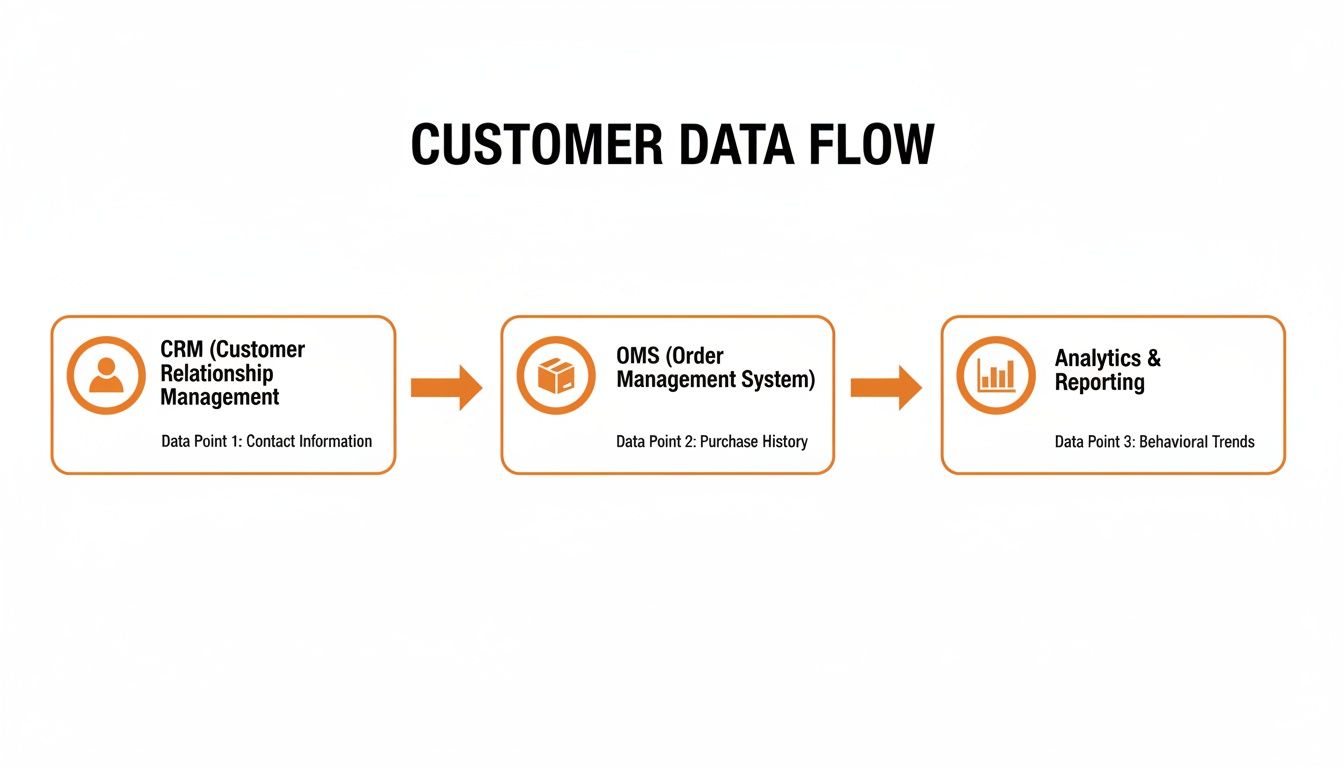
  2. Receiving the Return: The package arrives back at your warehouse. It needs to be scanned in and kept separate from your brand-new inbound inventory to avoid mix-ups.
  3. Inspecting the Product: This is a crucial step. Your team needs to inspect the item to determine its condition. Is it still in the plastic? Was it tried on once? Is it damaged beyond repair?
  4. Processing the Refund or Exchange: Based on the inspection and your return policy, you either issue a refund, give them store credit, or ship out a replacement product.
  5. Dispositioning the Item: Finally, you decide the product's fate. It might be restocked and sold as new, listed on a secondary marketplace, sent for refurbishment, or written off and disposed of.

Your return policy is a marketing tool. An easy, customer-friendly return process can turn a potentially negative experience into a positive one, building trust and encouraging repeat business. A difficult process, on the other hand, can cost you a customer for life.

Turning Returns into an Opportunity

Look, nobody wants returns. But a smart approach can minimize the financial sting and even strengthen your brand. The key is to see the process not just as a cost, but as another chance to interact with your customer and show them you care.

Efficiently handling seller-fulfilled returns is a huge part of this. A dialed-in operation gets products back into your sellable inventory faster, which means fewer lost sales.

Best Practices for Smart Returns Management

To make your reverse logistics as painless as possible, focus on a few key areas that deliver the biggest impact on both your bottom line and your customer's happiness.

  • Have a Clear, Published Policy: Your return policy needs to be dead simple to find and understand. Any confusion here just creates headaches for your customers and your support team.
  • Automate Where Possible: Use a returns management portal that lets customers start returns and print labels on their own. This saves your team countless hours and gives customers the self-service options they've come to expect.
  • Establish Clear Inspection Criteria: Don't leave it to guesswork. Create a simple checklist for your team to use when inspecting returned items. This ensures everyone is on the same page when deciding if a product can be resold as new, sold at a discount, or needs to be written off.

In-House Fulfillment Versus Outsourcing to a 3PL

As your brand grows, you eventually hit a wall. You're faced with a big decision: keep packing boxes yourself, or hand the whole operation over to a specialist? This is the classic dilemma of in-house fulfillment versus outsourcing to a Third-Party Logistics (3PL) provider.

Think of it like buying a house versus renting. Handling fulfillment in-house is like buying. You own everything and have total control over the process, from how your warehouse is organized to the branded tape on your boxes. But it also means a huge upfront investment in space, staff, and software.

Outsourcing to a 3PL is more like renting. You get instant access to a professional warehouse, an expert team, and the ability to scale up or down without tying up a ton of cash. This frees you up to focus on what actually grows your business: creating great products and marketing them.

Understanding the Trade-Offs

Picking the right path means taking an honest look at your budget, your growth plans, and how much time you really have. In-house gives you complete control, but it also means you carry the entire weight of operations. You're on the hook for every lease, every employee, and every software subscription.

A 3PL partner lifts that weight off your shoulders. They take care of the storage, picking, packing, and shipping, and they often get better shipping rates than you could on your own because of their massive volume. The trade-off? You give up some direct control and trust a key part of your customer experience to a partner.

When Does Outsourcing Make Sense?

The tipping point is different for every business, but it almost always comes down to growing pains. If you’re spending more time tangled in packing tape than you are building your brand, it might be time to look for help.

Here’s a quick checklist to see if you’re there:

  • Order Volume: Are you consistently shipping 50-100+ orders per month? This is often where the time you spend packing stops being worth it.
  • Space Constraints: Is your garage, spare room, or office completely overflowing with inventory? A 3PL gives you professional warehouse space without a scary commercial lease.
  • Growth Goals: Planning to expand to new channels like Amazon or even ship internationally? A 3PL already has the systems and know-how to make that happen smoothly.
  • Time Commitment: Is fulfillment eating up your nights and weekends? Outsourcing buys back your time—your most valuable asset.

Choosing to outsource isn't giving up; it's a strategic move to scale. It’s about admitting your time is better spent on marketing and product development than on managing a warehouse.

A Head-to-Head Comparison

To help you see it clearly, let's put in-house fulfillment and 3PLs side-by-side. This table breaks down the biggest differences.

In-House vs. 3PL Fulfillment Comparison

Factor In-House Fulfillment 3PL Partner (Outsourcing)
Control Total control over branding, process, and staff. Less direct control; you rely on the partner's processes.
Upfront Costs Very high (warehouse lease, equipment, software, staff). Low to none. You pay for services as you use them.
Scalability Difficult to scale. Requires more space and hiring. Easy to scale up or down to meet seasonal demand.
Expertise You must build all operational knowledge from scratch. Immediate access to industry expertise and best practices.
Shipping Rates You negotiate rates based on your volume alone. Access to the 3PL’s bulk-discounted shipping rates.

Ultimately, the decision to bring on a 3PL partner is about strategy. It lets you plug into a professional, efficient operation so you can get back to focusing on the parts of your business that only you can do.


Managing every step of the ecommerce order fulfillment process can be overwhelming. If you're ready to get out of the warehouse and get back to growing your brand, Snappycrate can help. We provide scalable fulfillment, Amazon FBA prep, and expert support to help you scale without the logistical headaches. Learn how we can become an extension of your team by visiting https://www.snappycrate.com.

0 Continue Reading →

Scale Your Store with 3PL Ecommerce Fulfillment Services

If you're running a growing e-commerce brand, you're probably a master of many things: product design, marketing, and customer service. But at some point, you find yourself buried in the one thing that’s holding you back—packing boxes.

You're so busy taping, labeling, and running to the post office that you can't focus on what actually grows your business.

This is exactly where 3PL e-commerce fulfillment services come into play. Think of a 3PL (Third-Party Logistics) provider as your dedicated operations partner, the expert ground crew that handles all the behind-the-scenes work so you can finally get back to flying the plane.

What Exactly Are 3PL Ecommerce Fulfillment Services

Man at desk with three screens overseeing warehouse operations and inventory management.

At its core, a 3PL takes the entire physical journey of your products off your hands. They're not just renting you shelf space; they're stepping in as the engine of your fulfillment operations.

The moment a customer hits "buy" on your website, your 3PL partner's team gets to work. They find the right item in the warehouse, pack it securely, and get it shipped out the door—all without you lifting a finger.

The Core Function of a 3PL Partner

A 3PL’s main job is to manage the entire lifecycle of your inventory once it arrives from your manufacturer. This means receiving your goods, storing them safely, and ensuring every single order is fulfilled accurately and on time. For a deeper dive, this resource does a great job explaining What is 3PL (Third Party Logistics) and its impact on e-commerce.

Working with a 3PL allows you to plug into a ready-made, professional logistics network. You get all the benefits of a massive warehouse, experienced staff, and discounted shipping rates, but without the crippling overhead.

By outsourcing logistics, brands can convert a significant portion of their fixed costs—like rent and employee salaries—into variable costs that scale directly with sales volume. This flexibility is a game-changer for managing cash flow and profitability.

More Than Just a Warehouse

It's easy to think of a 3PL as just a big building that holds your stuff. But that’s a common misconception. A simple warehouse just stores pallets. A true fulfillment center is a humming, dynamic hub designed for one thing: moving your products efficiently.

The real value is in the services they provide. A modern 3PL doesn't just store, they manage.

Here’s what they typically handle:

  • Receiving and Storing: They don’t just accept boxes. They inspect your inventory for damage, count it, and organize it for quick access.
  • Inventory Management: Using sophisticated software, they track your stock levels in real-time. No more surprise stockouts or overselling popular items.
  • Order Fulfillment: This is the classic pick, pack, and ship process, executed with speed and precision to keep your customers happy.
  • Returns Management: They also handle the messy part—customer returns. A smooth returns process (or reverse logistics) is crucial for protecting your brand's reputation.

By handing over these operational headaches to a 3PL, you free yourself up to focus on the things that only you can do: building your brand, developing new products, and connecting with your customers.

What a 3PL Actually Does for Your Business

When you bring on a 3PL partner, you're not just renting some shelf space. You’re handing over the keys to the most hands-on, time-sucking parts of your e-commerce business. Think of them as the central nervous system for your physical products, making sure every item is managed perfectly from the moment it leaves your supplier until it lands on a customer's doorstep.

It's a bit like running a professional kitchen. As the brand owner, you're the executive chef—the visionary creating the perfect product and brand. The 3PL is your entire kitchen staff. They expertly receive fresh ingredients (your inventory), organize the pantry (the warehouse), execute every order flawlessly, and make sure each plate goes out looking perfect, every single time.

This isn't just a "nice-to-have." The global e-commerce logistics market is expected to rocket to $3,646.79 billion by 2035, with 3PLs controlling a massive 69.1% of that market. That explosive growth, tracked by outlets like Precedence Research, shows just how essential they’ve become for brands that want to scale.

So, let's pull back the curtain and look at the core services that make up the engine of 3pl ecommerce fulfillment services.

Warehousing and Inventory Management

At the very foundation is warehousing and storage. But this is so much more than just a roof over your products' heads. A real fulfillment center is an active, highly organized environment built for speed and accuracy. When your inventory arrives, it's carefully received, checked for damage, counted, and given a specific home in the warehouse.

This whole operation is powered by a Warehouse Management System (WMS)—the software brain of the warehouse. The WMS tracks every single unit, giving you a real-time view of your stock levels so you can avoid overselling, get a better handle on demand forecasting, and know exactly when it’s time to reorder. By partnering with a 3PL, brands can stop worrying about mastering inventory management and logistics and get back to focusing on growth.

A huge pain point for growing brands is graduating from the garage or spare bedroom. A 3PL solves this instantly, offering scalable storage that grows right alongside your business—no need to get locked into an expensive, long-term warehouse lease.

The Pick, Pack, and Ship Trifecta

This three-step dance is the heart and soul of daily fulfillment. It’s where your customer’s experience is either made or broken.

  1. Picking: The second a customer clicks "buy" on your Shopify or Amazon store, the WMS spits out a "picking list." A warehouse team member then zooms through the aisles to grab the exact items for that order with lightning speed and precision.

  2. Packing: Next, the items land at a packing station. Here, they're carefully packed using the right materials—whether that’s your own custom branded boxes, poly mailers, or standard packaging—to make sure they arrive safe and sound.

  3. Shipping: Finally, the box gets a label. The 3PL’s system automatically finds the best shipping carrier and service based on a mix of cost and delivery speed. Because 3PLs ship in huge volumes, they get deep discounts from carriers like UPS, FedEx, and USPS, and they pass those savings right on to you.

This whole process is built for speed. Most quality 3PLs offer same-day fulfillment for orders that come in before a certain cutoff time, which is a massive advantage for meeting modern customer expectations. For a deeper dive, check out our guide on the complete e-commerce order fulfillment process.

Specialized Services That Make a Difference

Beyond the basics, the best 3PLs offer value-added services that solve the unique headaches of online sellers. These are the things that often separate a good 3PL from a truly great one.

Here's a quick look at the core services and the problems they solve:

Core 3PL Fulfillment Services at a Glance

Service Component What It Is Key Problem It Solves
Storage & Inventory Management Securely storing products and tracking stock levels with a WMS. Running out of space; overselling; poor inventory visibility.
Pick, Pack, & Ship Locating items, packing them securely, and shipping them to customers. Slow shipping times; inaccurate orders; high shipping costs.
Amazon FBA Prep Applying FNSKU labels, poly bagging, and ensuring compliance with FBA rules. FBA shipment rejections; costly non-compliance fees; account health issues.
Kitting & Assembly Combining multiple SKUs into a single bundled product or subscription box. Inability to offer product bundles or gift sets efficiently.
Freight & Receiving Managing inbound container or LTL shipments from suppliers. The logistical nightmare of unloading trucks and getting inventory ready for sale.

Let's break down a few of these specialized services a bit more.

  • Amazon FBA Prep and Compliance: Selling on FBA means playing by Amazon’s very strict rules. A savvy 3PL will handle all the tedious prep work—from FNSKU labeling and poly bagging to creating case packs—to make sure your inventory meets Amazon's rigid standards. This saves you from costly chargebacks or having an entire shipment rejected at the fulfillment center.

  • Kitting and Assembly: This is a game-changer for brands selling product bundles, gift sets, or subscription boxes. Your 3PL can assemble multiple different items (SKUs) into a new, single "kit" before it ships. This lets you create unique product offerings and a premium unboxing experience without ever having to touch the inventory yourself.

  • Freight and Receiving: Let's be honest, managing inbound freight is a huge headache. A full-service 3PL takes care of the entire receiving process. They'll schedule the freight appointments, unload containers or LTL (Less Than Truckload) shipments, break down the pallets, and get your products on the shelves and ready to sell.

By taking over these core—and often messy—operations, a 3PL doesn't just ship your orders. They build a reliable, scalable foundation that lets your brand grow without getting tangled in the weeds of logistics.

Why Smart Brands Outsource Their Fulfillment

Knowing what a 3PL does is one thing. Understanding why it’s a must-have for any ambitious e-commerce brand is where the real lightbulb moment happens. The decision to partner with 3pl ecommerce fulfillment services isn’t just about clearing out your garage—it’s a strategic move to build a stronger, more scalable business.

Picture this: your direct-to-consumer brand gets a surprise shout-out from a major influencer. Orders explode, jumping from 50 a day to 500. For a founder still packing their own boxes, this dream scenario spirals into a nightmare of sleepless nights, shipping errors, and angry customers.

This is the exact breaking point where a 3PL partner proves its worth. They’re built for this. A good 3PL can absorb massive order spikes without breaking a sweat, giving you the flexibility to handle seasonal rushes, viral moments, and fast growth—all without you having to gamble on a bigger warehouse or more staff.

The Financial Case for Outsourcing

One of the biggest reasons to make the switch is the impact on your bottom line. Instead of getting locked into fixed costs like warehouse rent and employee salaries, you shift your fulfillment spend to a variable cost that moves up and down with your sales.

This model gives you incredible financial flexibility. Slow month? Your fulfillment costs are low. Record-breaking holiday season? They scale right alongside your revenue. This frees up cash that you can pump back into what actually grows your brand: marketing, product development, and customer acquisition.

  • Shared Resources: You get access to a massive, professional warehouse without paying the whole lease.
  • Labor Efficiency: You tap into a trained workforce only when you need them, skipping the headaches of hiring, training, and managing your own team.
  • Discounted Shipping: 3PLs ship millions of packages a year. That volume gives them access to deeply discounted rates from carriers like UPS and FedEx that a single business could never get on its own.

A critical advantage of using a 3PL is turning fulfillment from a massive cost center into a strategic asset. By using their scale, you can offer faster, cheaper shipping that competes with major retailers, which directly boosts your conversion rates.

This is quickly becoming the new normal for a reason. In fact, 60% of online retailers now outsource at least part of their fulfillment, and another 20% hand over the entire operation. This trend is fueled by the need for real expertise, especially when tackling challenges like e-commerce returns, which can hit a staggering 30%. A specialized 3PL already has the reverse logistics systems in place to handle that chaos efficiently. You can dig into more e-commerce fulfillment statistics to see the full picture.

Gaining Strategic Freedom and a Competitive Edge

Forget the numbers for a second. Outsourcing your fulfillment buys back your most valuable asset: time. When you’re not spending your days printing labels and taping up boxes, you can finally focus on the high-level work that only you can do. We're talking marketing, product innovation, and building real relationships with your customers.

The flow chart below shows just how simple the process becomes when a 3PL takes over, freeing you up to think bigger.

A 3PL fulfillment process flow diagram showing steps from receiving to shipping, with key benefits.

This streamlined workflow means that from the moment your inventory hits their dock to the second it ships, it’s being handled by experts. That reliability creates a better customer experience—faster delivery, fewer mistakes, and a more professional feel—which is exactly what you need to earn repeat business and build a loyal following. By offloading logistics, you're not just getting boxes out the door; you're building a much more competitive brand.

How to Choose the Right 3PL Partner for Your Brand

Businessman using a tablet for logistics management in a modern warehouse, highlighting 'Right 3PL Partner'.

Picking your fulfillment partner is one of the biggest decisions you'll make for your e-commerce brand. This isn't just about renting shelf space. You're hiring a team that will become a direct extension of your brand—the one responsible for getting your products into your customers' hands.

A great 3PL can be your secret weapon for growth. The wrong one? A source of endless headaches, angry customers, and a damaged reputation.

Finding the right fit means you have to look past the price quote and dig into the nitty-gritty operational details. You need to size up their tech, their ability to scale, and whether they actually get your business model. Think of it like hiring a COO for your physical products. You need to trust them completely.

Technology and Platform Integrations

Let's start with the absolute deal-breaker: technology. A modern 3PL’s software must plug directly into your e-commerce platforms. If you're stuck entering orders by hand, you're setting yourself up for failure. It's a guaranteed recipe for errors, delays, and unhappy customers.

Your potential partner needs solid, pre-built integrations with the platforms you live on, whether it's Shopify, Amazon Seller Central, or Walmart Marketplace. When an order comes in, the data should flow automatically to their warehouse management system (WMS). Once it ships, tracking info should flow right back. This isn't a "nice-to-have"—it's essential.

For more on how these systems lock in together, check out our guide on CRM and order management.

Industry Specialization and Expertise

Not all 3pl ecommerce fulfillment services are created equal. A provider that's a rockstar at shipping huge B2B pallets might be totally clueless when it comes to the finicky prep rules for Amazon FBA. You absolutely must find a partner with proven experience in your niche.

Get specific and ask the right questions:

  • For Amazon FBA Sellers: Do you handle FNSKU labeling, poly bagging, and bundling? What's your process for making sure every shipment meets Amazon's strict compliance standards so we don't get rejected?
  • For DTC Brands: Can you handle our custom branded boxes? What about gift notes or marketing inserts? We need to create a killer unboxing experience.
  • For Importers: Are you set up to receive full containers or LTL freight? What’s your typical "dock-to-stock" time to get our new inventory on the shelves and ready to sell?

A partner who already speaks your language will know what you need before you do, helping you dodge common mistakes.

Choosing a 3PL with deep specialization in your sales channels is like hiring a veteran guide for a tricky trail. They know where the obstacles are and how to navigate them safely, saving you time, money, and stress.

Scalability and Flexibility

Your business today won't be your business a year from now. A huge factor in your decision should be the 3PL's ability to grow with you. Can they handle your volume if you go from shipping 100 orders a month to 10,000 during the holiday rush?

Talk to them about their capacity for both order volume and physical storage space. The last thing you want is to be forced to find a new provider right when your brand is taking off. True scalability is what turns a vendor into a long-term strategic partner.

Pricing Models and Communication Standards

Finally, you need absolute clarity on two things: cost and communication. A transparent pricing model is non-negotiable. Don't just accept a single number—ask for a detailed breakdown of all potential fees.

Make sure you understand:

  • Receiving: What does it cost to unload and process our inbound inventory?
  • Storage: How are we charged? Per pallet, per shelf, per bin?
  • Fulfillment: What are the pick-and-pack fees? Is it per order, per item, or both?
  • Shipping: How are carrier costs passed on to us?

Beyond the numbers, look at their communication. Will you get a dedicated account manager who knows your business and can jump on problems fast? When things go wrong—and they sometimes do—a responsive, knowledgeable contact is worth their weight in gold. Vetting these areas will help you find a partner who will truly help your brand thrive.

Understanding 3PL Pricing Models and Agreements

Trying to make sense of a 3PL quote can feel like you’re reading a foreign language. All those numbers and line items can be confusing at first, but they lay out the financial foundation of your relationship with a fulfillment partner. Getting this right is about finding a partner that delivers real value, not just the one with the lowest sticker price.

Think of it like getting a bill at a restaurant. You’re charged separately for appetizers, the main course, and drinks. A 3PL quote is no different—it breaks down the cost for each specific service they perform for your brand.

Common Fees in a 3PL Quote

To make a smart decision, you have to understand what goes into your total fulfillment cost. While every provider has its own way of doing things, the pricing structure for most 3pl ecommerce fulfillment services boils down to a few standard charges.

Here are the most common fees you’ll run into:

  • Receiving Fees: This is what you pay for the 3PL to accept, unload, inspect, and log your inventory when it arrives at their warehouse. It's usually charged by the hour, per pallet, or per carton.
  • Storage Fees: Think of this as the rent for the warehouse space your products occupy. It’s typically a monthly charge calculated per pallet, per shelf, or per bin.
  • Fulfillment Fees (Pick & Pack): This fee covers the hands-on labor of picking items for an order and packing them up for shipment. It can be a flat rate per order, a fee per item picked, or a mix of both.
  • Shipping Costs: This is the actual postage cost from carriers like UPS, FedEx, or USPS. 3PLs pass this cost directly to you, but the big win here is that you get to piggyback on their high-volume shipping discounts. You can learn more in our guide on how to reduce shipping costs.

The Importance of Service Level Agreements

Beyond the numbers, the most crucial part of any 3PL partnership is the Service Level Agreement (SLA). This is the formal contract that locks in the performance standards your 3PL promises to uphold. An SLA transforms vague promises into measurable, binding commitments that protect your brand.

An SLA is your brand's insurance policy. It guarantees that your fulfillment partner will consistently meet specific, measurable targets for accuracy and speed, ensuring your customer experience never suffers.

A solid SLA holds your partner accountable for the key performance indicators (KPIs) that directly affect your customers and your reputation. These aren't just buzzwords; they're the vital signs of a healthy fulfillment operation.

Essential SLA Metrics to Look For:

  1. Order Accuracy Rate: The percentage of orders shipped completely free of errors (like the wrong item or quantity). You should be aiming for 99.8% or higher.
  2. Inventory Accuracy Rate: How well the 3PL’s digital count matches the actual physical inventory on the shelves. This should also be above 99%.
  3. Dock-to-Stock Time: The speed at which new inventory is received, processed, and made available for sale. A good benchmark is 24-48 hours.
  4. Order Turnaround Time: How long it takes from the moment an order is placed to when it’s out the door. The industry standard is same-day shipping for orders placed before a cutoff time, like 2 PM.

The US 3PL market is projected to grow by an incredible $132.3 billion by 2029, with e-commerce driving a massive 70% of that expansion. It’s no surprise, considering businesses that work with a 3PL often cut costs by 7-9% by tapping into shared resources and economies of scale. When you’re vetting a 3PL, you aren't just comparing quotes—you're evaluating the total value and rock-solid reliability they can bring to your business.

Your Next Step Toward Scalable Fulfillment

Picking from the long list of 3pl ecommerce fulfillment services out there feels like a huge operational task, but it’s really a massive growth decision for your brand. Find the right partner, and they become a true extension of your team—the engine quietly powering your success behind the scenes.

When you offload the daily grind of logistics, you get back your two most valuable assets: time and focus. That freedom lets you pivot back to the things that actually grow your business, like marketing, creating new products, and building a community around your brand.

Think of your 3PL as mission control for your business. With an expert crew managing the messy backend of storing, packing, and shipping, you're free to explore new markets and hit new sales records without logistical headaches holding you back.

If you’re ready to get out of the fulfillment game for good, the most important step is finding a partner who gets your vision. This isn’t just about outsourcing a task; it's a strategic move to build a business that’s not just successful, but sustainable and ready for whatever comes next. The right partnership makes all the difference, clearing the path for your brand to finally reach its full potential.

Got Questions About 3PL Fulfillment? We've Got Answers.

Jumping into the world of 3pl ecommerce fulfillment services can feel like learning a new language. You’ve probably got a dozen questions floating around about when to make the leap, how the tech works, and what all the terms actually mean. We hear these questions all the time from brands just like yours.

Let's clear things up. Think of this as your quick-and-dirty guide to the most common questions we get, with straight-shooting answers to help you decide on your next move.

At What Point Should I Actually Start Looking for a 3PL?

Most brands start seriously poking around for a 3PL once they hit around 50-100 orders per month. But honestly, the number isn't the real story. The real trigger is a feeling—it’s that moment you realize you’re spending more time wrestling with packing tape than you are actually growing your business.

Here are the classic signs it’s time to call in a pro:

  • You're officially out of space. The garage, the spare room, the office—it's all overflowing with inventory.
  • The daily grind of printing labels and packing boxes is keeping you from marketing, product development, and sales.
  • You know you need to offer faster, cheaper shipping to compete, but you can't do it on your own.
  • You need help with the tricky stuff, like kitting products together or getting inventory prepped for Amazon FBA.

If fulfillment feels more like a bottleneck than a business function, it’s the perfect time to start the conversation.

How Does a 3PL Connect to My Shopify or Amazon Store?

This is where the magic happens. Modern 3PLs use powerful software that plugs directly into e-commerce platforms like Shopify, Amazon, and Walmart. It’s usually a quick, one-time setup using something called an API, which creates a totally automated connection between your store and the warehouse.

Once you're connected, every new order you get is automatically zapped over to the 3PL's system. As soon as they pick, pack, and ship it, the tracking number is pushed right back into your storefront, and an update is sent to your customer. No more manual copy-pasting or spreadsheet nightmares.

What’s the Difference Between a 3PL and a Fulfillment Center?

People throw these terms around interchangeably, but there's a key difference. A basic fulfillment center is just that—a place that fulfills orders. They’ll pick, pack, and ship. That's about it.

A true 3PL (Third-Party Logistics) provider, on the other hand, is a strategic partner.

A 3PL doesn’t just ship your orders. They manage your entire logistics operation—from inventory management and returns processing to freight coordination and specialized prep work. They’re an extension of your team.

Think of it this way: a fulfillment center just gets boxes out the door. A 3PL helps you build and manage the entire backend of your business, giving you a complete operational solution.

Can a 3PL Use My Custom Branded Packaging?

Absolutely. Any 3PL worth its salt—especially one that works with direct-to-consumer (DTC) brands—is built to handle custom packaging. It's a huge part of creating that "wow" unboxing experience customers love.

It's simple: you just send your branded boxes, poly mailers, custom tape, or thank-you cards straight to their warehouse. They'll store it all and use it exactly how you want when packing your orders. You get to keep your brand looking sharp and delight your customers, all without ever touching a roll of tape again.


Ready to stop packing boxes and start scaling your business? Snappycrate provides the expert fulfillment services you need to grow without the logistical headaches. Get in touch with a fulfillment expert today!

0 Continue Reading →

A Complete Guide to CRM and Order Management Integration

Think of your e-commerce business like a great neighborhood restaurant. Your Customer Relationship Management (CRM) system is the host at the front door—greeting regulars by name, remembering their favorite table, and knowing they prefer sparkling over still water. Meanwhile, your Order Management System (OMS) is the master chef in the kitchen, turning every ticket into a perfectly executed dish.

When they work separately, you might get decent service. But when they communicate seamlessly, you create an unforgettable experience that keeps customers coming back.

The Power Couple of E-commerce Operations

Smiling man shows tablet menu to customer at food stand with 'CRM + OMS' sign.

For any growing e-commerce brand, operational chaos is an all-too-familiar feeling. When your systems don't talk to each other, you end up with frustrating problems: overselling a hot-ticket item, shipping delays because of a manual data entry mistake, or a customer service team that has no idea where an order is. It’s a disjointed mess that creates friction for both your team and your customers.

This is exactly where integrating your CRM and order management systems saves the day. It creates a single, unified source of truth where all your customer data and logistics information can finally live together. This connection turns operational complexity into a smooth, scalable machine.

Let's quickly break down the core functions of each system.

CRM vs Order Management System At a Glance

This table gives you a snapshot of what each system is built to do. Think of it as the "front-of-house" versus the "back-of-house."

Aspect Customer Relationship Management (CRM) Order Management System (OMS)
Primary Goal Build and maintain customer relationships. Fulfill and manage customer orders efficiently.
Main Focus The person—their history, preferences, and interactions. The transaction—its status, inventory, and journey.
Key Data Contact info, communication history, support tickets, marketing segments. Order details, inventory levels, shipping status, returns, payment info.
Core Question "Who is this customer and what do they need?" "Where is this order and when will it arrive?"

As you can see, one is all about the relationship, and the other is all about the logistics. The magic happens when they share notes.

Bridging Customer Insights with Logistics

At its heart, a CRM is about the who and why of your customer relationships. It tracks every touchpoint, from the first ad they clicked to their most recent support email. In contrast, an OMS is all about the what, where, and when of fulfillment. It manages the entire lifecycle of an order from the moment a customer clicks “buy.”

When these two systems are integrated, they feed information back and forth, creating a powerful loop of intelligence.

An integrated system doesn't just process orders; it enhances the entire customer journey. It uses logistical data to inform customer interactions and customer data to fine-tune operations. This synergy is the key to proactive service and operational excellence.

For operations leaders and online sellers, this unification solves several massive headaches:

  • Eliminating Stockouts: Real-time inventory data from the OMS becomes visible in the CRM. This stops your sales team from promising products that are already sold out.
  • Improving Customer Service: Your support agents can see a customer's complete purchase history and the live status of their current order on a single screen. No more "Let me check another system." Just fast, accurate answers.
  • Enabling Personalization: Purchase data from the OMS flows back into the CRM, arming your marketing team with the insights to create hyper-targeted campaigns based on actual buying behavior.

This guide will walk you through exactly how to merge these two essential platforms, transforming your fulfillment process from a simple cost center into a powerful driver of customer loyalty.

Understanding Your Core E-commerce Systems

To really get a handle on how a CRM and order management system can supercharge your business, we first need to break down what each one actually does. They are two completely different engines, and mixing them up is a classic mistake that gums up the works for a lot of online sellers.

Think of your Customer Relationship Management (CRM) system as your company’s memory. It’s the central hub for every single customer conversation, and its focus is entirely on people.

A good CRM tracks every touchpoint—from the first ad a customer clicked to their most recent support ticket. Its job is to answer the ‘who’ and ‘why’ behind every single sale.

The Role of Your CRM

The CRM is where you get to know your customers. It's not concerned with what’s happening in the warehouse or which shipping carrier you’re using; it’s all about conversations, buying habits, and personal preferences.

Its main gigs include:

  • Contact Management: More than just names and emails, it’s a full profile of your customer.
  • Interaction History: A complete log of every call, email, and chat. No more asking a customer to repeat themselves.
  • Segmentation: Grouping customers for smart marketing, like creating a list of your VIPs or new buyers.
  • Sales Pipeline: For B2B or high-touch sales, it tracks leads long before they become a paid order.

Bottom line: The CRM is your master storyteller for every customer relationship.

The Role of Your OMS

Now, let's talk about the Order Management System (OMS). If the CRM is the memory, the OMS is the logistical brain. It is 100% process-focused.

The second a customer hits that "Pay Now" button, the OMS wakes up and takes over. It’s the behind-the-scenes workhorse managing the ‘what, where, and when’ for every order that comes through your store. It’s the unsung hero making sure the right product gets to the right person, on time, every time.

A great OMS provides a single, centralized view of the entire order lifecycle. It connects your sales channels, warehouses, and shipping partners to ensure every order flows through the system without manual intervention or costly errors.

This system is all about the physical journey of your products. Its core functions are worlds away from a CRM’s:

  1. Order Aggregation: It pulls in orders from all your storefronts—Shopify, Amazon, your own website, you name it.
  2. Inventory Tracking: It keeps a live, accurate count of your stock across every location. You can learn more about this in our guide to real-time inventory management.
  3. Fulfillment Routing: It intelligently sends the order to the best warehouse or 3PL for picking and packing.
  4. Shipment Management: It’s what generates the shipping label and shoots that tracking number over to the customer.

So, while one system builds relationships, the other executes logistics. Getting this distinction right is the first step to building an e-commerce machine where both systems work together in perfect harmony.

How Integrated Systems Transform E-commerce Fulfillment

When your CRM and order management system (OMS) are connected, they create a single source of truth that completely changes how you run your e-commerce operations. This isn't just some technical tweak; it's a strategic move that turns a bunch of disconnected steps into one smooth, intelligent workflow. The real magic happens when customer data meets logistics in real time.

Imagine a loyal customer is at checkout. Because your systems are talking, the CRM recognizes their VIP status and instantly triggers a special "thank you" discount that first-time buyers don't see. In that same split second, the OMS confirms the items in their cart are actually in stock, preventing the dreaded "oops, we oversold that" conversation.

This seamless data exchange makes for a smarter, more responsive customer experience from the very first click.

The visual below shows how customer information flows from the relationship-focused CRM to the logistics-driven OMS, creating a unified view that drives better decisions.

A flowchart illustrating the customer data flow from CRM to OMS and then to analytics.

This flow isn’t just about moving data around. It’s about using customer history to power accurate, efficient order processing, turning every transaction into an opportunity to strengthen the relationship.

From Checkout to Doorstep: A Single View

Once an order is placed, the integration kicks into high gear. The order details are instantly zapped from your storefront to the OMS, which then routes it to your 3PL or warehouse. Every single status update—from 'picked' and 'packed' to 'shipped'—is reflected back in both systems at the same time.

This creates a powerful, 360-degree view of the customer. Your support team no longer has to toggle between screens or put frustrated customers on hold.

When a customer calls to ask, "Where is my order?" your team can see their entire purchase history alongside their real-time shipping status, all on one screen. This transforms reactive problem-solving into proactive customer care, completely eliminating the dreaded phrase, "Let me check with the warehouse."

This kind of operational clarity is fast becoming non-negotiable. The global Order Management Systems (OMS) software market is projected to nearly double from $1 billion in 2021 to $1.9 billion by 2026, driven by a 12.3% compound annual growth rate. This explosion is a direct reflection of e-commerce's massive scale, where efficient order handling is make-or-break for businesses like Snappycrate that manage fulfillment for high-volume Amazon FBA and Shopify sellers. You can read more about the future trends of order management systems here.

Unlocking Key Operational Benefits

A tightly integrated CRM and order management platform delivers real, tangible benefits across your entire business—it’s not just about making customer service easier. It builds the foundation you need to scale.

Here’s how it empowers different teams in your operation:

  • For the Marketing Team: Purchase data from the OMS flows back into the CRM, making customer profiles smarter. This lets marketers create hyper-targeted campaigns based on what people actually buy, not just what they looked at.
  • For the Operations Team: Automation kills manual data entry, which drastically cuts down on human error in order processing. The result? Higher order accuracy, fewer returns from incorrect shipments, and lower operational costs.
  • For Leadership: Unified data provides a clear, accurate picture of business performance. Leaders can track key metrics like order fulfillment time, customer lifetime value, and inventory turnover with much greater precision.

Ultimately, this integration ensures that every part of your business is working from the same playbook. It guarantees the promises your marketing team makes are the ones your fulfillment team can keep, creating a consistent and reliable brand experience that builds lasting loyalty.

Choosing Your Integration Strategy

Connecting your CRM and order management systems isn't a simple plug-and-play affair. The right path for your business comes down to your size, your team's technical skills, and where you plan to be in a few years.

Getting this choice right from the start is crucial. It's the difference between building a scalable foundation for growth and creating a tangled mess that you'll have to rip out and replace in two years.

There are really three main ways to get your CRM and order management systems talking. Each has its own pros and cons, and they’re best suited for different stages of a business's journey. Let's break them down.

Direct Point-to-Point Connections

The most straightforward method is a direct, point-to-point integration. Think of it like building a single, dedicated bridge just for your CRM and OMS. This is usually done with APIs (Application Programming Interfaces) that shuttle specific data—like new order details or customer address changes—from one system directly to the other.

This approach can be a quick and cheap win for startups or small businesses with simple workflows. But be warned: it gets fragile fast. As soon as you add another sales channel or a new accounting software, you have to build another separate bridge. Before you know it, you’ve got a complex web of connections that’s a nightmare to manage and troubleshoot.

Want to see how broader connectivity can transform your operations? Check out our guide on unlocking growth with supply chain integration.

Using an Integration Platform (iPaaS)

A much more scalable approach is using an Integration Platform as a Service, or iPaaS. An iPaaS solution is like a central hub or a universal translator for all your software. Instead of connecting every system directly to every other system, you just connect each one to the central hub.

This model gives you incredible flexibility. When you want to add a new app, you just plug it into the hub instead of building a dozen new point-to-point connections. It’s the difference between a clean city grid and a chaotic mess of overlapping back roads.

This is the way to go for growing businesses that know they’ll be adding more tools to their tech stack. It keeps your data flowing cleanly, makes it easier to find and fix problems, and lets your entire system adapt to change without falling apart.

Adopting an All-in-One Platform

The final route is to just skip the integration headache altogether and go with an all-in-one platform that bundles CRM, order management, and other functions from the get-go. These unified systems are built with all the connections already in place.

This path offers the most seamless experience because all your data lives natively in one ecosystem. It’s a powerful choice for businesses that want a single source of truth without the hassle of juggling multiple vendors and integration projects.

This trend is only getting bigger. The cloud-based CRM market is expected to grow at a 13.43% CAGR from 2022 to 2027, largely driven by the demand for integrated solutions that combine sales with core operational functions. You can find more CRM market growth on emailvendorselection.com.

Actionable Tactics for Marketplace and DTC Sellers

A seller's workstation with shipping boxes, a tablet showing product listings, and a notebook with a pen.

All the theory is great, but let's get down to brass tacks. How does combining your CRM and order management actually make you more money? It’s not just about fancy software; it’s about solving the real, everyday headaches that cost you sales, whether you’re selling on Amazon or your own website.

For Amazon FBA sellers, this integration is your command center. It does way more than just track orders. It helps you nail FBA prep compliance, keep an eye on your inbound shipments heading to Amazon, and make sure your inventory numbers actually match what’s on the shelf. This unified view is a lifesaver for preventing stockouts on your fastest-moving products—a mistake that can absolutely crush your sales velocity and tank your product ranking.

For direct-to-consumer (DTC) brands, especially those on a platform like Shopify, the real magic is in hyper-personalized marketing. When your OMS feeds detailed purchase histories back into your CRM, you can slice and dice your customer list with surgical precision. Think targeted campaigns for your loyal repeat buyers or special “we miss you” offers for customers who haven’t shopped in a while. You can find more details in our guide to Shopify order fulfillment services.

Key Metrics to Track for Growth

To see if this is all working, you need to look past the vanity metrics. The right KPIs show you the true health of your operations and how happy your customers really are. This is how you turn all that data from your integrated systems into measurable improvements for your business.

  • Order Accuracy Rate: What percentage of your orders go out the door without a single mistake (wrong item, wrong quantity, wrong address)? An integrated system drives this number up by automating data entry, slashing the human errors that lead to expensive returns and frustrated customers.
  • On-Time Shipping Rate: Are you shipping orders within the timeframe you promised? Your OMS gives you the raw data, but your CRM can help you spot trends, like if a certain customer group is consistently facing delays.
  • Customer Lifetime Value (CLV): This is the ultimate report card for your integration. When you use CRM data to create a smooth, positive order experience, you earn repeat business. That directly boosts the total amount a customer spends with you over their entire relationship with your brand.

Tracking CLV is how you prove the long-term ROI of this investment. It shows that a seamless post-purchase experience—powered by integrated data—isn't just a cost center. It's a powerful engine for building a sustainable, profitable business.

And the market is catching on. The global Order Management Systems market was valued at $2.19 billion in 2021 and is expected to explode to $9.02 billion by 2033, growing at a 12.52% CAGR. This rush is being led by e-commerce sellers who need scalable, compliant fulfillment, especially in North America, which is on track to grab a $1.03 billion share by 2025. You can discover more insights about the OMS market on cognitivemarketresearch.com.

Building Your Blueprint for Seamless Operations

Let's be honest: integrating your CRM and order management system isn't just a nice-to-have anymore. It’s the absolute foundation for any e-commerce brand that wants to scale without breaking. When you connect customer data with your actual warehouse operations, you unlock a new level of efficiency and create a far better experience for your customers.

Think of this connected system as the blueprint for your growth. It frees you up to focus on building your brand and creating amazing products, because you know your operational backbone can handle whatever you throw at it. This is how you turn your fulfillment process from a pure cost center into a powerful engine for customer loyalty and repeat sales.

At the end of the day, a tight integration between your CRM and order management platform makes sure the promises your marketing team makes are the ones your fulfillment team can actually keep. That consistency builds a brand people trust, order after order.

Once your systems are talking to each other, you can finally stop playing defense and putting out fires. You get ahead of the game, managing the entire customer journey—from the first click to the package landing on their doorstep—proactively. This creates a smooth, predictable, and profitable operation built to last. It’s really the core of what it takes to win in e-commerce today.

Common Questions Answered

Even with the best game plan, connecting your CRM and order management systems can raise a few questions. Let's walk through the ones we hear most often so you feel confident making the move to a fully connected operation.

Can I Just Use My CRM to Manage Orders?

While it might be tempting, the short answer is no. Some CRMs let you track sales and see order history, but they aren't built for the heavy lifting of true order management. An Order Management System (OMS) is purpose-built to handle everything that happens after the customer clicks "buy"—from juggling inventory across different sales channels to managing complex fulfillment logic and processing returns.

Trying to use your CRM for this is like managing your company's accounting in a simple spreadsheet. It might work for the first handful of orders, but it breaks down fast as you grow, leading to frustrating bottlenecks and costly mistakes.

What's the Single Biggest Challenge When Integrating?

Nine times out of ten, the biggest headache is data mapping. This is the critical step where you make sure the data fields in both systems are speaking the same language. You have to meticulously connect the dots between customer records, product SKUs, order statuses, and shipping details so they communicate flawlessly.

A rushed or poorly planned data mapping strategy is the #1 reason these integrations fail. You end up with duplicate customer profiles, wrong order information, and a total loss of trust in your data—which defeats the whole point of integrating in the first place.

Before you write a single line of code, take the time to audit your data and draw up a clear mapping plan. Doing this work upfront is what separates a seamless, reliable system from a complete mess.

How Does This Actually Help My Customer Service Team?

It's a game-changer for them. This integration gives your support team a true 360-degree view of every single customer. When someone calls, your agent sees their entire history from the CRM right alongside the real-time status of their current order from the OMS—all on one screen.

No more switching between systems or putting people on hold to "go check with the warehouse." Agents can confidently answer shipping questions, start a return, or give an update with the full story in front of them. This means faster resolutions, happier customers, and a support team that feels empowered to deliver great service every time.


At Snappycrate, we handle the complexities of e-commerce fulfillment so you can focus on growth. From Amazon FBA prep to direct-to-consumer order processing, our 3PL services are built to scale with your brand. Learn how Snappycrate can become a reliable extension of your business.

0 Continue Reading →